
That toddler toy sitting in your living room might be quietly waiting to send your kid to the emergency room. The CPSC Product Recall List tracks thousands of dangerous products pulled from stores each year, from children’s toys with swallowable magnets to furniture that tips over and crushes toddlers. Most people don’t realize they’re using recalled products until something goes wrong. Checking the Consumer Product Safety Commission database takes three minutes and could prevent serious injury or death in your home. Here’s how to search current recalls, identify which products pose real risks, and get your refund or replacement before someone gets hurt.
Official CPSC Recall Database: How to Access and Search Current Product Recalls

The Consumer Product Safety Commission runs the recall database at cpsc.gov/recalls. It’s where you go for immediate access to current safety alerts. Each recalled item gets comprehensive details: full product names with brands, specific hazard descriptions that explain injury risks, model and serial numbers to identify affected units, recall announcement dates, quantities distributed, and complete remedy instructions about refunds, repairs, or replacements. Manufacturer contact info appears in every listing so you can arrange remedies directly.
Using the search function is straightforward. Enter a product name, select from category filters, specify date ranges for recent recalls, or input manufacturer names. The database returns matching results instantly, showing recall notices with photos and detailed identification info to verify whether your specific product is affected.
Key information fields in each recall entry:
- Product name and manufacturer: Complete brand, model designation, and company responsible
- Recall date and affected units: Announcement date and total quantity distributed before the recall
- Model/serial numbers and date codes: Specific identifiers that distinguish recalled units from safe products, often with manufacturing date ranges
- Specific hazard description: Detailed explanation of injury risk, mechanism of failure, and potential consequences (fires, burns, choking, or other serious harm)
- Remedy instructions: Clear directions for obtaining refunds, replacements, or repairs at no cost
- Manufacturer contact information: Phone numbers, websites, and email addresses for arranging remedies and asking questions
Check the database regularly for products in your home. Many people own recalled products without realizing it, continuing to use dangerous items that could cause serious injuries.
Hazard Types and Product Categories in Recent Recalls

Recent recalls cover product categories throughout the home. Children’s toys, nursery furniture, outdoor equipment, household appliances. The Consumer Product Safety Commission addresses hazards that can cause serious injury or death, requiring manufacturers to immediately halt sales and provide consumer remedies.
| Product Category | Common Hazards | Recent Examples |
|---|---|---|
| Children’s Toys | Choking, lead exposure, magnet ingestion, phthalates, burn risks from batteries | LED soccer hover balls, magnetic chess games, flashcard talking toys, Montessori puzzle toys |
| Furniture and Nursery Items | Fall hazards, entrapment risks, tip-over dangers, missing restraints | High chairs without crotch restraints, baby gates with floor spacing violations |
| Electronics and Appliances | Fire, electrical shock, burn injuries, overheating batteries, component degradation | LED light fixtures, steam cleaners with boiler rupture risks |
| Outdoor Equipment | Drowning, falls, structural failure, weather-related deterioration | Above-ground pools with compression straps creating climbing footholds |
| Sporting Goods | Impact injuries, equipment failure, inadequate protection, structural defects | Bicycle helmets failing retention and positional stability requirements |
| Household Items | Fire, chemical exposure, ingestion of detached parts, pressure buildup | Grill brushes with detachable bristles, lighters lacking child-resistant mechanisms |
| Seasonal Products | Fire, electrical hazards, decorative items with small parts or chemical violations | Christmas tree play sets with excessive lead in zipper pulls |
| Personal Care Items | Chemical burns, pressure-related injuries, product ejection, contamination | Bath foam sets with moisture causing pressure buildup and forceful ejection |
The most critical hazard types require immediate action. Fire and burn hazards stem from overheating components, flammability of materials, excessive battery temperatures beyond safe operating limits, and degrading electrical components that allow LED boards to come loose. Choking and ingestion hazards emerge from small parts violating size requirements for children under three, detachable bristles from grill brushes that can lodge in throats or puncture digestive tracts requiring emergency surgery, and loose magnets that cause intestinal perforation, twisting, blockage, blood poisoning, and death when children swallow multiple pieces. Fall and entrapment hazards include high chairs missing restraints that allow children to slip down and trap heads between seats and side rails, spacing violations in baby gates creating torso entrapment openings between gates and floors, and furniture lacking tip-over resistance. Drowning risks appear in above-ground pools where compression straps or structural features create footholds allowing unsupervised children to climb and access water. Chemical exposure violations involve lead content exceeding the 100 ppm federal limit and phthalates banned in children’s products. Laceration risks result from sharp edges on broken components and glass or plastic parts that shatter under normal use.
Children’s products see more frequent recalls because federal law imposes stricter safety standards. Young children face higher vulnerability to serious injury. Products designed for children twelve years and younger must undergo mandatory third-party testing, meet lower thresholds for hazardous substances, and include warnings about age-appropriate use. The scrutiny catches violations that wouldn’t trigger recalls in adult products. But the frequency also reflects the serious consequences when children encounter hazards their developmental stage prevents them from recognizing or avoiding.
Understanding Recall Classifications: Voluntary vs. Mandatory Actions

Voluntary recalls occur when manufacturers identify defects and work cooperatively with the Consumer Product Safety Commission to notify consumers and provide remedies. Most recalls follow this path. Companies discover problems through internal quality control, consumer complaints, or injury reports, then initiate recall procedures in coordination with CPSC staff. The voluntary classification doesn’t diminish the seriousness of hazards or reduce manufacturer obligations. It simply indicates that the company acted without requiring enforcement action.
Mandatory recalls happen when the CPSC orders companies to recall products after manufacturers fail to act on known hazards despite legal obligations to report defects within 24 hours of learning about them. The Commission exercises enforcement authority by filing administrative complaints, seeking federal court orders, and imposing substantial civil penalties for non-compliance. Companies that refuse mandatory recall orders face fines up to millions of dollars and criminal prosecution for willful violations that cause injuries or deaths.
Both voluntary and mandatory recalls carry identical legal weight for consumer remedies. Whether a manufacturer cooperates initially or requires enforcement action, consumers receive the same rights to refunds, replacements, or repairs at no cost. The classification affects only the procedural path to reaching consumers, not the remedies provided.
Take immediate action when your products appear on the CPSC recall list. The classification matters for regulatory compliance but not for the urgency of removing dangerous products from homes where they could cause injuries.
Children’s Product Safety: Enhanced Standards, Common Violations, and High-Risk Categories

Federal law imposes enhanced safety requirements on products designed or intended primarily for children twelve years and younger. The Consumer Product Safety Improvement Act mandates third-party testing by accredited laboratories before children’s products can be sold, requires manufacturers to certify compliance with applicable standards, and establishes lower limits for hazardous substances including lead and phthalates. These stricter standards recognize that children’s developmental stages prevent them from recognizing hazards adults would avoid, and that children’s smaller body sizes and developing organs face greater harm from toxic exposures.
Common Safety Violations in Children’s Products
Common violations:
- Lead content exceeding 100 ppm limit: Federal law bans lead in accessible substrate materials and surface coatings of children’s products, with recent recalls involving zipper pulls and toy components containing excessive levels
- Phthalate levels violating federal bans: Eight specific phthalates are prohibited in children’s toys and child care articles, with violations found in cord locks and other flexible plastic components
- Small parts creating choking hazards for children under 3: Products intended for young children can’t contain parts small enough to fit entirely in a test cylinder approximating a child’s throat
- Loose magnets failing ASTM F963 toy safety standard: Magnets must remain secured during use and testing to prevent ingestion of multiple pieces
- Battery compartments lacking secure fastening or exceeding temperature limits: Batteries must be inaccessible without tools, and surface temperatures during operation can’t exceed safe thresholds
- Excessive surface temperatures from electronics: LED toys and electronic products must limit heat generation to prevent burn injuries to children’s sensitive skin
- Missing age-appropriate warnings and labels: Products must display hazard warnings and age recommendations in required formats and languages
- Inadequate testing and certification documentation: Manufacturers must maintain test reports and certificates demonstrating compliance before importing or distributing products
Loose magnets pose particularly severe risks to young children. When a child swallows multiple small magnets, the powerful attraction between pieces causes them to find each other through intestinal walls, pinching tissue between them. This creates intestinal perforation allowing digestive contents to leak into the abdominal cavity, twisting that cuts off blood supply to sections of intestine, and blockage preventing food passage. The resulting infections cause blood poisoning. Without emergency surgery to remove magnets and repair damaged tissue, children die from complications. Even with treatment, children suffer permanent digestive system damage requiring long-term medical care.
Furniture and Nursery Item Hazards
Furniture and nursery products present entrapment and fall hazards when they violate mandatory safety standards. High chairs must include crotch restraints attached to the seat to prevent children from sliding down and becoming trapped with their heads caught between the seat and side rails. Recent recalls address products lacking these required restraints entirely, allowing falls that cause head injuries and creating entrapment situations where children can’t free themselves and may suffocate. Baby gates protecting stairs and doorways must meet spacing requirements preventing children’s torsos from fitting through openings between the gate and floor. Violations create entrapment risks where children’s bodies pass through but their heads can’t follow, leading to strangulation.
Safety checks for furniture and nursery items:
- Verify all restraint systems are present and functional: Check for crotch straps on high chairs, waist belts on changing tables, and harnesses on strollers before each use
- Check for spacing violations that could trap body parts: Measure gaps between slats, rails, and structural components to ensure they can’t trap heads, necks, or torsos
- Ensure stability and tip-over resistance: Verify furniture stands firmly without wobbling and can’t be pulled over by children climbing or leaning
- Confirm proper mounting and anchoring: Install anti-tip devices for dressers and bookcases, and mount baby gates according to manufacturer instructions using proper hardware
- Inspect for wear or damage regularly: Look for cracks, loose fasteners, torn fabric, and deteriorated components that compromise safety features
High-Risk Categories: Pools and Lighters
Above-ground pools 48 inches and taller face recalls when design features create footholds allowing unsupervised children to climb. Compression straps and other structural elements positioned on the outside of pool walls give children places to step while climbing, defeating the height barrier intended to prevent access. Once children reach the top rail, they can enter the water without adult supervision, creating drowning hazards. Recalls require manufacturers to provide replacement parts eliminating the climbing aids or implementing additional barriers.
Child-resistant lighter requirements under federal law mandate that disposable lighters must be difficult for children under five to operate. The standard requires designs that children can’t successfully ignite through pushing buttons, squeezing levers, or other actions within testing protocols. Lighters that lack these safety mechanisms entirely or that children can operate despite the mechanisms face immediate recalls. The requirements prevent children from causing fires and suffering burn injuries when they find lighters in homes, vehicles, or other locations.
Parents should immediately stop using recalled children’s products regardless of whether their child has experienced problems. Check model numbers against recall notices carefully, since not all units in a product line may be affected. Contact manufacturers promptly to arrange remedies, and never sell, donate, or give away recalled products to other families.
Electronics and Appliance Recalls: Fire and Burn Hazards
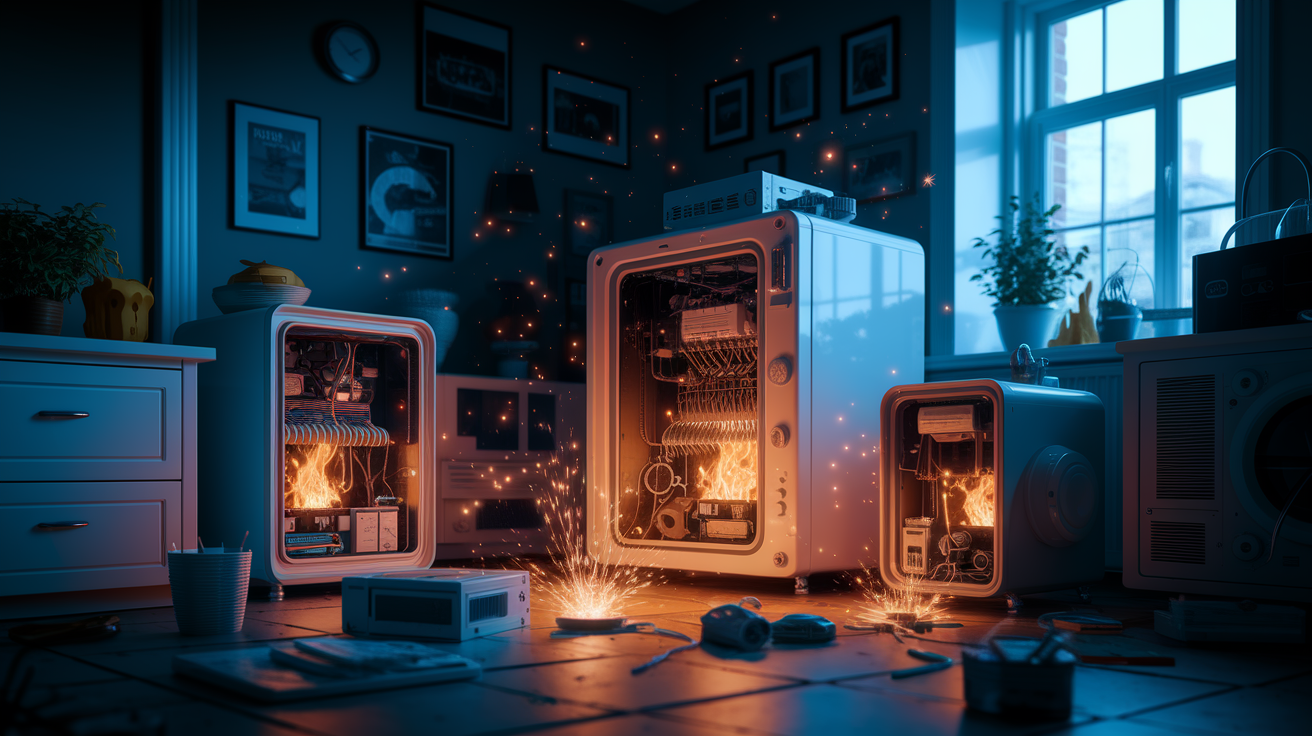
Electronics and appliances represent frequent recall categories because electrical malfunctions and thermal hazards create fire and burn risks. Component failures, manufacturing defects, and design flaws cause products to overheat, ignite, or expose consumers to dangerous temperatures during normal use.
Recent recalls demonstrate the range of hazards in this category. LED soccer hover balls contain batteries that reach surface temperatures exceeding allowable limits during charging and operation, causing second-degree burns to children’s hands and faces. High bay linear LED light fixtures installed in warehouses and commercial spaces have degrading retaining pins that allow LED boards to come loose from housings, dropping onto flammable materials below and creating fire hazards that have caused property damage. Neat steam cleaners face boiler rupture risks from three separate defects: overfilling beyond the maximum fill line printed on the tank, internal corrosion weakening the pressure vessel after extended use, and pressure release valve malfunctions that prevent steam from escaping safely. When boilers rupture, superheated water and steam spray onto users and nearby surfaces, causing severe burns requiring hospitalization.
| Appliance Type | Common Defect | Resulting Hazard |
|---|---|---|
| Battery-powered devices | Overcharging circuits, thermal runaway, inadequate ventilation, short circuits | Fires, burns from excessive surface heat, battery explosion, toxic fume release |
| Lighting fixtures | Component degradation, inadequate heat dissipation, loose electrical connections, ballast failures | Fires from ignited housings, electrical arcing, falling components, structure fires |
| Heating appliances | Thermostat failures, element exposure, inadequate insulation, automatic shutoff malfunctions | Surface burns, ignition of nearby materials, carbon monoxide from fuel-burning models |
| Kitchen appliances | Electrical shorts during moisture exposure, heating element defects, mechanical failures | Electrical shock, fires, steam burns, exploding glass components |
| Cleaning equipment | Pressure vessel failures, motor overheating, chemical leaks, cord damage | Burns from released steam or hot water, fires, chemical exposure, electrical shock |
| Power tools | Blade guards detaching, trigger locks failing, battery pack defects, housing cracks | Lacerations, fires from battery malfunctions, impact injuries from component ejection |
Recognize warning signs indicating potential defects requiring immediate action. Unusual odors resembling burning plastic, ozone, or chemicals suggest electrical components overheating or insulation melting. Excessive heat radiating from housings during normal operation indicates inadequate thermal management that may progress to fires. Sparking visible through vents or at electrical connections shows arcing between conductors that can ignite internal components. Irregular operation including intermittent power, unexpected shutdowns, or performance changes suggests developing failures that may cause hazards.
Stop using recalled electronics immediately and unplug devices from power sources pending remedy arrangements. Leaving recalled products plugged in maintains fire risks even when powered off, since charging circuits and standby components remain energized. Contact manufacturers promptly to obtain free repairs or replacements.
Recall Remedies: Refunds, Replacements, and Repair Options

Recalled products qualify for full refunds, free replacements, or free repairs at no cost to consumers depending on the remedy specified in each recall notice. Manufacturers bear responsibility for providing remedies regardless of whether consumers retain proof of purchase, where products were purchased, or how long ago the purchase occurred. Federal law requires companies to make consumers whole when defective products create hazards.
Steps to obtain recall remedies:
- Stop using the product immediately: Discontinue use even if the product appears to function normally, since defects may not manifest until failure causes injury
- Locate model and serial numbers: Find identification information on product labels, stamped into housings, or printed in user manuals to verify the specific unit is affected
- Visit the CPSC recall page for specific instructions: Read the complete recall notice at cpsc.gov/recalls to understand available remedy options and required procedures
- Contact the manufacturer directly using provided information: Call phone numbers or visit websites listed in recall notices rather than returning to retailers unless specifically instructed
- Provide proof of purchase if requested: Submit receipts, credit card statements, or warranty registrations when manufacturers require documentation, though many recalls process remedies without proof
- Follow return shipping instructions or repair procedures: Pack products according to shipping guidelines, deliver items to designated repair centers, or allow technicians to perform in-home repairs as specified
- Expect remedy processing within specified timeframes: Most refunds process within four to six weeks of manufacturer receiving returned products, while replacements ship after verification
Remedies cost consumers nothing. Manufacturers pay for return shipping, provide prepaid shipping labels, or arrange courier pickups for bulky items. Refunds equal the full purchase price regardless of how long consumers owned products or their current condition. Replacement products feature corrected designs eliminating recalled defects. Repairs fix specific problems through component replacement or design modifications, often performed at consumer homes for installed products.
Retailers may facilitate returns when consumers bring recalled products to stores, issuing immediate refunds or exchanges. But retailer participation varies, and recall notices typically direct consumers to contact manufacturers.
You retain legal rights even after remedy deadlines published in recall notices. Contact manufacturers regardless of how much time has passed since recall announcements, since companies remain obligated to provide remedies for hazardous products. Courts have upheld consumer claims years after recalls when manufacturers refused to honor remedy obligations.
Identifying Recalled Products: Model Numbers, Serial Numbers, and Date Codes

Specific identifiers distinguish recalled units from safe products within the same product line. Not all items sharing a brand name or general product description face recalls. Only specific models manufactured during particular date ranges with certain serial number sequences require remedies. Accurate identification prevents confusion and ensures consumers with genuinely recalled products receive remedies while those with unaffected units can continue using them safely.
Model numbers, serial numbers, and date codes appear in different locations depending on product types. Manufacturers print model information on labels affixed to products, packaging boxes, and user manual covers. Serial numbers get stamped, etched, or embossed directly onto product housings, usually on bottom surfaces, back panels, or areas normally hidden during use. Date codes indicating manufacturing periods appear as stamped numbers near serial numbers, printed on labels, or encoded within serial numbers themselves. Packaging materials and warranty registration cards also contain identification information when products themselves lack clear markings.
Checking if a product is recalled:
- Obtain the product’s model and serial numbers: Locate identifying information on the product itself rather than relying on memory or general descriptions
- Visit cpsc.gov/recalls or search the recall database: Access the official CPSC recall list rather than relying on third-party summaries that may be incomplete
- Enter or compare identification numbers with recall details: Type model numbers into search fields or manually compare numbers against those listed in recall notices
- Check manufacture date ranges: Verify the product’s manufacturing date falls within the period specified in recall notices
- Review affected unit quantities: Compare serial numbers against ranges listed as affected, since manufacturers sometimes recall only portions of production runs
- Confirm product matches recall description and photos: Compare physical features, colors, brand logos, and packaging against images in recall notices to verify exact matches
Products with missing or illegible identification numbers still qualify for remedies when consumers can demonstrate they match recalled products through other means. Contact manufacturers with photos showing product features, approximate purchase dates, and retailer information. Companies can often identify products through physical descriptions and provide remedies without requiring specific numbers.
Registering products with manufacturers enables direct recall notification when problems emerge. Warranty registration cards, online registration portals, and mobile apps capture ownership information linking consumers to specific serial numbers. When recalls occur, manufacturers use registration databases to send targeted notifications to affected owners rather than relying on consumers to discover recalls independently.
Reporting Product Incidents and Safety Concerns to CPSC

Consumer reports help identify dangerous products before they cause widespread harm. The Consumer Product Safety Commission investigates incidents, injuries, and deaths related to product defects based on reports submitted by consumers, medical professionals, and first responders. These reports reveal patterns of failures triggering recalls even before manufacturers acknowledge problems.
The CPSC maintains a public reporting system at SaferProducts.gov allowing anyone to submit incident reports online. Reports become part of a searchable database helping other consumers identify hazardous products and pressuring manufacturers to address safety issues. Companies must respond to reports naming their products, either addressing the alleged hazards or disputing the claims.
Information to include when reporting:
- Detailed product description and identifying information: Brand name, model number, serial number, purchase date, and retailer, along with photos clearly showing product details and any damage
- Description of the incident or hazard observed: Exactly what happened, including sequence of events, environmental conditions, and whether the product was being used as intended
- Date and location of incident: When and where the incident occurred, whether the product has failed multiple times, and if similar problems appeared in reviews or discussions
- Injuries or property damage sustained: Medical attention required, extent of injuries, recovery time, property repairs needed, and whether insurance covered costs
- Photos of product and any damage: Multiple angles showing the product before failure if available, damage afterward, and close-ups of defective components
- Purchase information and retailer: Where purchased, whether new or used, approximate price paid, and if warranty coverage applies
- Contact information for follow-up: Name, address, phone number, and email allowing CPSC investigators to request additional information
- Whether manufacturer was contacted: If you reported the incident to the company, their response, and whether they offered remedies or denied responsibility
Reports undergo investigation by CPSC staff who analyze patterns across multiple submissions. A single report rarely triggers recalls, but when investigators see consistent problems across many reports involving the same products, they initiate formal investigations. These investigations include requesting manufacturer records, testing products in CPSC laboratories, and issuing information requests under CPSC authority. Data from consumer reports has led to recalls of products causing fires, injuries, and deaths that manufacturers initially dismissed as isolated incidents.
Report even minor incidents since patterns of reports trigger investigations. Problems that seem trivial when experienced by one person reveal serious defects when dozens report similar failures. A small burn might indicate a design flaw causing severe burns to less fortunate users. A plastic component cracking suggests manufacturing defects creating injury risks.
Staying Informed: Recall Alerts and Notification Systems

Proactive recall monitoring protects families better than reactive checking after learning about problems through news coverage or injuries. Multiple notification systems deliver recall alerts automatically, eliminating the need to remember to check the CPSC website regularly.
| Notification Method | How to Subscribe | Update Frequency |
|---|---|---|
| CPSC email subscriptions | Visit cpsc.gov/Newsroom/Subscribe and enter email address to receive all recalls or filtered by category | Immediate notification when recalls are announced, typically same business day |
| CPSC mobile app | Download free app “SaferProducts” from iOS App Store or Google Play Store and enable push notifications | Real-time push alerts for new recalls within minutes of publication |
| CPSC social media accounts | Follow @USCPSC on Twitter and “U.S. Consumer Product Safety Commission” on Facebook for recall announcements | Multiple posts daily covering new recalls and safety tips |
| RSS feeds | Add cpsc.gov/Recalls feed URL to RSS reader applications for automated content delivery | Continuous updates as recalls publish, displayed in feed reader alongside other subscribed content |
| Manufacturer direct registration | Complete warranty cards or online registration forms when purchasing products to link ownership to serial numbers | Targeted notifications only for products registered to your account, delivered immediately when recalls affect those items |
| Retailer notification programs | Opt in to safety alerts when creating accounts with major retailers who maintain purchase history databases | Notifications triggered when recalled products match purchase records, typically within one week of recall announcement |
Using multiple notification channels ensures important safety information reaches you through at least one method even if individual systems fail. Email subscriptions provide detailed information with photos and complete instructions. Mobile apps deliver immediate alerts suitable for quick action. Social media posts reach consumers who check these platforms frequently throughout the day. Each channel serves different use cases and consumer preferences.
Registering products with manufacturers creates the most targeted notification system. When a recall affects a product registered to your account, manufacturers send personalized messages identifying the specific item you own rather than generic announcements about products you might own. Registration also enables manufacturers to reach consumers who don’t monitor general recall databases.
CPSC email subscriptions remain the most reliable notification method since they deliver complete recall information directly from the authoritative source. Subscribe at cpsc.gov/Newsroom/Subscribe to receive all recalls or select specific categories matching products in your home. For broader technology updates including safety information, resources like tech news updates subscription at devhelpcenter.com help consumers stay informed about important developments across multiple domains.
International and Cross-Border Product Recalls

CPSC authority extends to all products sold in the United States regardless of where manufacturing occurred. Imported products must meet the same federal safety standards as domestically manufactured items, and foreign manufacturers face the same recall obligations as U.S. companies. The Commission works with Customs and Border Protection to inspect imported shipments and prevent non-compliant products from entering the country.
International manufacturing creates challenges for recalls including tracing complex distribution channels through multiple importers and distributors, contacting manufacturers headquartered overseas who may operate through subsidiary companies or independent distributors in the U.S., and ensuring compliance with U.S. safety regulations when foreign companies may not fully understand American legal requirements. Recent recalls involve products manufactured by companies in China, sold through U.S. based importers, and distributed through online marketplaces by third-party sellers. A supply chain making it difficult to notify all consumers who purchased affected products.
Online marketplaces see frequent recalls of products sold by third-party sellers operating internationally. Platforms like Amazon host thousands of sellers who ship directly from overseas warehouses, often without maintaining U.S. business entities or permanent addresses. When these products face recalls, the CPSC names the marketplace sellers in recall notices, but many sellers close accounts and open new ones under different names, evading recall obligations. Consumers who purchased from sellers no longer operating through original accounts struggle to obtain remedies.
Verify that imported products meet U.S. safety certifications before purchase by checking for required labels and marks. Children’s products must display tracking labels showing manufacturer and batch codes. Many categories require certifications printed on packaging or products themselves. Avoid products lacking these markings, and check recalls frequently after purchasing internationally manufactured items since quality control issues may emerge across broad production runs.
Manufacturer and Retailer Responsibilities in Product Recalls
Manufacturers discovering defects or receiving injury reports about their products must report to the CPSC within 24 hours of obtaining information reasonably supporting the conclusion that a product creates substantial risk of injury, fails to comply with safety standards, or contains defects creating substantial risk of injury. After reporting, manufacturers work with CPSC staff to investigate the problem, determine appropriate remedies, develop consumer notification plans, and implement recall procedures. Companies must provide free remedies including refunds, replacements, or repairs depending on what the CPSC approves as adequate to address hazards.
Retailer responsibilities:
- Immediately stop selling recalled products: Remove items from physical store shelves and online listings as soon as recalls are announced
- Remove items from store shelves: Quarantine inventory to prevent accidental sales and arrange returns to manufacturers or destruction as instructed
- Notify customers through purchase records when available: Send emails or letters to customers who purchased recalled products using transaction databases linking products to customer accounts
- Accept returns and provide refunds: Process returns of recalled products at customer service desks even without receipts when customers present products matching recall descriptions
- Post recall notices in stores: Display official CPSC recall notices near customer service areas and in departments where recalled products were sold
- Cooperate with manufacturer and CPSC recall efforts: Provide sales data to help identify affected units, assist with customer notifications, and follow recall procedures
Enforcement mechanisms include civil penalties up to millions of dollars for failing to report defects or failing to comply with recall orders. The CPSC has assessed penalties exceeding $15 million against companies that delayed reporting or inadequately implemented recalls. Criminal prosecution applies to willful violations, with executives facing prison sentences when they knowingly concealed defects causing injuries or deaths.
Contact both manufacturers and retailers if either fails to honor recall obligations. File complaints with the CPSC when manufacturers refuse to provide remedies or retailers continue selling recalled products. The Commission investigates non-compliance and uses enforcement authority to compel proper recall implementation.
Product Testing and Safety Certifications
Mandatory testing requirements vary by product category, with the strictest standards applying to children’s products. Manufacturers must submit products to third-party testing laboratories accredited by the CPSC to verify compliance with applicable safety standards before importing or distributing items. Testing protocols measure specific hazards. Flammability tests expose fabrics to flames to verify they meet fire resistance standards, impact tests drop products to ensure they withstand normal use, and chemical analysis detects banned substances exceeding allowable limits.
Third-party testing laboratories maintain independence from manufacturers to ensure objective evaluation. The CPSC accredits laboratories meeting quality standards and audits facilities to verify proper procedures. Test results appear in certificates manufacturers must maintain and provide to retailers and the CPSC upon request. Products lacking required testing can’t legally be sold even if they would pass tests if evaluated.
Common certifications include ASTM standards developed by industry groups covering toy safety, furniture stability, sports equipment protection, and numerous other categories. CPSC certificates issued by third-party laboratories document compliance with federal safety rules. Product-specific safety marks like UL listings for electrical products and JPMA certifications for juvenile products indicate manufacturers submitted items for voluntary testing beyond minimum legal requirements.
Red flags indicating potentially unsafe products:
- Missing safety certifications and labels: Products lacking required marks, warning labels, or tracking codes suggest manufacturers skipped mandatory testing or deliberately removed evidence
- Unusually low prices suggesting corner-cutting: Products priced far below competitors may indicate manufacturers reduced costs by eliminating safety testing, using substandard materials, or ignoring regulations
- Unknown or unverifiable manufacturers: Companies without traceable business addresses, phone numbers, or websites can’t be held accountable when defects emerge
- Products lacking proper warnings and instructions: Missing documentation about hazards and safe operation suggests manufacturers didn’t conduct proper safety analysis
- Items that fail to meet described specifications: Products claiming certifications or features they don’t actually possess indicate dishonest sellers marketing non-compliant items
Even tested and certified products face recalls when defects emerge after market release. Testing evaluates products under controlled conditions but can’t predict every failure mode from real-world use, long-term wear, environmental exposure, and manufacturing variations across production runs. Ongoing recall monitoring remains essential regardless of initial certifications since previously compliant products may develop problems requiring corrective action.
Final Words
The CPSC product recall list remains your most reliable source for checking whether products in your home pose safety risks.
From electronics with fire hazards to children’s toys with choking risks, recalls span every product category and can affect items you use daily.
Check the official database regularly at cpsc.gov/recalls, sign up for email alerts, and register your products with manufacturers for direct notifications.
When you find a recalled item, stop using it immediately and contact the manufacturer for your free remedy, whether that’s a refund, replacement, or repair.
Report any product incidents to SaferProducts.gov to help protect others and trigger investigations into dangerous products before they cause widespread harm.
FAQ
Where can I find a list of recalled products?
You can find a list of recalled products on the official CPSC website at cpsc.gov/recalls. The Consumer Product Safety Commission maintains a searchable database that includes product names, manufacturers, hazard descriptions, model numbers, recall dates, and remedy instructions for all current recalls.
What peanut butter is on recall?
Peanut butter recalls are managed by the FDA, not the CPSC. For current food recalls including peanut butter, check the FDA recall database at fda.gov/safety/recalls. The CPSC handles consumer product recalls such as toys, furniture, electronics, and household items, not food products.
Are M&Ms recalled?
M&M recalls would be managed by the FDA since they are food products. The CPSC does not oversee food item recalls. Visit the FDA website at fda.gov/safety/recalls to check for any current candy or food recalls including M&Ms or similar products.
What products has the CPSC banned?
The CPSC has banned products including certain toys with small magnets, crib bumpers, children’s products exceeding lead limits of 100 ppm, lighters without child-resistant mechanisms, and lawn darts. Banned products pose serious injury or death risks and cannot be legally sold in the United States regardless of labeling.
How do I search the CPSC recall database?
You search the CPSC recall database by visiting cpsc.gov/recalls and entering product names, categories, manufacturers, or date ranges. The search tool filters results by hazard type, product category, recall date, and affected model numbers to help you quickly identify if your products are recalled.
What information is included in a CPSC recall notice?
A CPSC recall notice includes the product name and manufacturer, recall date and number of affected units, model and serial numbers, specific hazard description, remedy instructions such as refund or replacement options, and manufacturer contact information for arranging returns or repairs.
How often should I check for product recalls?
You should check for product recalls monthly or whenever you purchase new products. Signing up for CPSC email alerts at cpsc.gov provides automatic notifications about new recalls, ensuring you learn about hazards affecting products you own without needing to manually search the database.
What should I do if my product is recalled?
If your product is recalled, immediately stop using it and visit the CPSC recall page for specific instructions. Contact the manufacturer using the provided information to arrange a free refund, replacement, or repair, and follow the return or disposal instructions to eliminate the hazard.
What are the most common hazards in children’s product recalls?
The most common hazards in children’s product recalls include choking from small parts, lead and phthalate violations exceeding federal limits, loose magnets causing intestinal perforation and blood poisoning, burn risks from overheating batteries, fall hazards from missing restraints, and entrapment risks from spacing violations.
How do I find model and serial numbers on recalled products?
You find model and serial numbers on recalled products by checking product labels, packaging, user manuals, or stamps etched on the product body. Compare these numbers with the specific identifiers listed in the CPSC recall notice to verify if your particular unit is affected.
What remedies am I entitled to for recalled products?
You are entitled to a full refund, free replacement, or free repair for recalled products at no cost to you. Manufacturers must provide remedies regardless of whether you have proof of purchase, and you retain legal rights even after posted remedy deadlines expire.
How do I report a dangerous product to the CPSC?
You report a dangerous product to the CPSC by visiting SaferProducts.gov and submitting a detailed incident report. Include product identification, incident description, injury details, photos, purchase information, and your contact information so investigators can follow up and potentially initiate a recall investigation.
Do imported products have to meet U.S. safety standards?
Imported products must meet the same U.S. safety standards as domestically manufactured items. The CPSC has jurisdiction over all products sold in the United States regardless of where they were made, and imported items require the same testing, certification, and compliance with federal safety regulations.
What are retailer obligations during a product recall?
Retailer obligations during a product recall include immediately stopping sales, removing recalled items from shelves, notifying customers through purchase records when available, accepting returns and providing refunds, posting recall notices in stores, and cooperating with manufacturers and CPSC recall efforts.
What safety certifications should I look for when buying products?
You should look for ASTM safety standards, CPSC certificates, age-appropriate warnings on children’s products, and product-specific safety marks when buying products. Missing certifications, unusually low prices, unknown manufacturers, and lack of proper instructions are red flags indicating potentially unsafe products.