Is a safety alert just a recall in disguise?
Not exactly.
A recall legally forces removal, repair, or replacement when a device poses a confirmed danger.
A safety alert flags a possible risk and asks users to monitor, restrict use, or follow interim fixes while investigators dig deeper.
That gap changes how fast hospitals, clinics, and manufacturers must act and what steps they must take.
Read on to learn the core differences, who’s affected, and clear next steps for both alerts and Class I–III recalls.
Key Differences Between a Device Recall and a Safety Alert
A device recall means you’ve got to remove, repair, or replace a product that’s already out there because someone found a safety problem or regulatory violation. The FDA and USDA break recalls into three levels. Class I is the scary one: there’s a real chance of serious harm or death. Class II means you might see temporary or reversible harm, but serious consequences aren’t likely. Class III? You’re probably fine, health-wise. It’s just a regulatory or minor quality thing. Manufacturers, retailers, or the agencies themselves can kick off a recall. Once it starts, you stop distribution, tell everyone who’s affected, and set up returns, replacements, or refunds.
A safety alert is different. It’s a heads-up that a device might cause serious harm. But it doesn’t automatically pull the product off shelves. Instead, it tells healthcare providers and users about emerging risks and suggests steps to lower those risks, like watching things more closely, changing how you use it, or talking to patients. Sometimes an alert is just the first step. If the FDA keeps digging and finds the device really does need to come off the market, they’ll escalate to a formal recall. Other times the alert itself acts like a recall if the fix involves removing or repairing the product.
The real difference comes down to how fast you need to move and what you’re required to do. A Class I recall? You stop using it immediately. Quarantine the product. Follow the return or disposal instructions to the letter, because serious injury or death is on the table. A safety alert asks you to stay sharp: check lot numbers, follow the precautions they recommend, keep an eye on your patients, and be ready in case things escalate. For instance, the FDA made Abiomed’s Impella Gen 1 purge cassettes a Class I recall—stop, return, done. Cook Medical’s sizing catheters got an early alert for breakage risk, so providers were told to monitor and hold off using them while waiting for more guidance.
| Feature | Device Recall | Safety Alert |
|---|---|---|
| Definition | Action to remove, repair, or replace a marketed device due to safety problem or violation | Advisory that a device may present unreasonable risk of substantial harm; may recommend mitigation without immediate removal |
| Severity | Classified as Class I, II, or III; Class I is most severe (risk of serious injury or death) | Advisory; severity varies and may later trigger a recall if risk is confirmed |
| Initiator | Manufacturer voluntary action, FDA request, or FDA-ordered mandatory recall | Manufacturer or FDA issuing early alert; FDA can escalate to recall |
| Required Actions | Stop use, quarantine stock, follow return/repair/replace instructions, notify patients, report outcomes | Monitor device performance, follow interim mitigation steps, review lot numbers, prepare for escalation |
| Return vs Monitor | Usually requires product return, repair, replacement, or destruction | Typically requires monitoring or temporary usage changes; return not always mandated |
| Regulatory Force | Legal requirement to correct or remove; FDA can enforce via seizure, injunction, or criminal prosecution for noncompliance | Advisory; less likely enforcement action unless escalated to mandatory recall |
Regulatory Oversight: How Authorities Manage Recalls and Safety Alerts
The FDA runs the show for medical devices, drugs, cosmetics, supplements, and most food in the U.S. When a device looks risky, the FDA can ask the manufacturer to do a voluntary recall, or if there’s a real chance of serious harm or death, they can order a mandatory recall. They classify each one into those three classes based on how bad the risk is, and they rely on manufacturer reports, healthcare provider MedWatch filings, and consumer complaints to spot problems early. For meat, poultry, and eggs, the USDA’s Food Safety and Inspection Service handles recalls using the same three-class setup. The CDC investigates outbreaks tied to contaminated products and coordinates responses across states, but they don’t issue recalls directly. They provide the outbreak data that helps the FDA or USDA decide whether to recall.
In the EU, national authorities and the Medical Device Coordination Group manage device safety alerts. In the UK, the MHRA puts out Field Safety Notices for devices sold there. Both systems work a lot like the FDA’s: manufacturers report safety issues, fix things in the field, and notify end users. No matter where you are, the core ideas are the same. You need traceability, timely notification, and corrective action. Manufacturers document everything from the first incident report to the final disposition of recalled products so they can pass audits and prove the recall or alert actually worked.
Mandatory recalls happen when regulators decide voluntary action isn’t cutting it or the manufacturer won’t act. The FDA can seize products that don’t comply, get court injunctions to stop distribution, and pursue criminal charges for deliberate violations. These enforcement tools come into play when a manufacturer doesn’t notify customers, keeps selling a recalled device, or misses deadlines for corrective measures. The power to force a recall shows the gap between advisory safety alerts, which suggest precautions, and legally binding recall orders that can land you in criminal court if you ignore them.
Severity Levels in Device Recalls Compared to Safety Alerts

Class I recalls are the top of the severity ladder. There’s a real chance that using or being exposed to the product will cause serious harm or death. Devices under Class I recall come off service immediately. Healthcare facilities quarantine stock, figure out which patients were exposed, and follow the manufacturer’s return or destruction instructions. Take the Merit Medical 16F Dual-Valved Splittable Sheath Introducer. It had a design flaw that could cause hemorrhage, embolization, and loss of vascular access, all Class I risks that demanded urgent fixes.
Class II recalls cover situations where use or exposure might cause temporary or reversible harm, or where the chance of serious consequences is low. You still need to take corrective action, but you might get a longer timeline and be allowed to keep using the device under certain conditions until replacements show up. Class III recalls deal with products that aren’t likely to cause any health problems. Often it’s a labeling mistake or a minor quality issue that still needs fixing to stay compliant. Safety alerts don’t come with an automatic classification. They signal potential or emerging risks. An alert might tell you to monitor, restrict usage, or try interim fixes while investigations continue. If the investigation confirms Class I or II criteria, the alert gets upgraded to a formal recall with the matching severity and required actions.
The severity structure shapes how you respond. When you get a Class I recall notice, treat it like a medical emergency. Stop use, check every device in your inventory, notify exposed patients, and arrange immediate removal or repair. When you get a safety alert, increase your monitoring and follow the recommended precautions, but don’t assume it’ll turn into a recall. Many alerts close with updated labeling or minor fixes. Here’s how the three tiers break down:
- Class I: Real probability that use will cause serious harm or death. Immediate action required to quarantine and remove the product.
- Class II: Use may cause temporary or reversible harm, or the probability of serious consequences is remote. Corrective action required within a set timeline.
- Class III: Use isn’t likely to cause health problems. Correction addresses regulatory compliance or minor quality issues.
Manufacturer Obligations in Recalls vs Safety Alerts

When a recall starts, manufacturers stop making and distributing the affected product, notify the FDA or USDA within the deadlines, and inform all direct customers and downstream users by mail, email, or public notices. The manufacturer designs and runs a recall strategy that spells out return, repair, replacement, or disposal instructions, and tracks how well the recall is working by documenting how much product went out and how much has been recovered or corrected. For Class I recalls these tracking reports go to the FDA on a schedule, and the agency can audit the manufacturer’s records to check compliance. Manufacturers also have to implement corrective and preventive action (CAPA) to fix the root cause and stop the defect from happening again in future production.
Safety alerts bring a different set of obligations, but they’re still serious. When a manufacturer spots an emerging risk that doesn’t yet meet recall criteria, it issues a safety communication to affected users, provides interim steps to reduce the risk, and reports the issue to the FDA or the relevant authority. The communication includes device model numbers, affected lot or serial numbers, what the risk is, and what to do—maybe increased monitoring or temporary usage restrictions. If the investigation continues and confirms a defect that hits recall thresholds, the manufacturer escalates the safety alert to a voluntary recall or complies with a mandatory recall order. Voluntary recalls are way more common than mandatory ones because manufacturers who act fast and stay transparent avoid enforcement actions and keep regulators happy.
Field corrections sit between full recalls and safety alerts. The product stays in use at customer sites but needs a modification, adjustment, or labeling update to lower the risk. The Abiomed Impella RP with SmartAssist got a Class I field correction for inaccurate displayed flow readings. That required on-site software updates instead of sending the product back. Field corrections still need strict tracking and effectiveness checks. Manufacturers report completion rates and adverse events to regulators and make sure every affected unit is accounted for and corrected.
Here’s what manufacturers must do during a device recall:
- Stop production and distribution of the affected product right away, and notify the FDA or USDA within the regulatory deadline.
- Identify and notify all direct customers, distributors, healthcare facilities, and end users with clear instructions for return, repair, replacement, or disposal.
- Run a recall strategy with effectiveness checks, tracking the quantity distributed versus quantity recovered or corrected, and submit regular status reports to regulators.
- Conduct a root-cause investigation and execute CAPA to prevent it from happening again, documenting all findings and corrective measures for regulatory review and audit.
User and Healthcare Provider Actions for Device Recalls vs Safety Alerts

When you get a device recall notice, stop using the affected product immediately, even if it looks fine. Check every unit in your inventory against the lot numbers, serial numbers, or model identifiers in the notice, and quarantine any matches so nobody uses them by accident. Follow the manufacturer or regulatory agency instructions exactly. Some recalls want you to return the device for a refund or replacement. Others tell you to destroy the product on-site and send photographic proof. Still others offer repair or field-correction services. If patients have already been treated with the recalled device, pull their records, notify them of the recall and any recommended follow-up care, and document all communications for liability protection and regulatory audit.
For safety alerts, start by reviewing the alert details and figuring out whether you have the identified device model and lots in use or in stock. If you do, implement the recommended interim steps. That might mean closer monitoring of device performance, temporary usage restrictions for high-risk patients, or watching more carefully for specific adverse events. Prepare contingency plans in case the alert escalates to a recall, like identifying alternative devices and making sure your clinical teams understand the new protocols. Keep monitoring FDA and manufacturer communications for updates, and report any adverse events or device malfunctions to the FDA’s MedWatch system and to the manufacturer. Early reporting speeds up investigations and helps regulators decide whether to escalate to a formal recall.
Both recalls and safety alerts require detailed records. Document which devices were affected, the dates you received the notice and took action, the patient notifications you sent, and what happened to each unit (returned, repaired, destroyed, or held pending further instructions). These records satisfy regulatory inspection requirements and give you legal protection if patient harm claims come up. Good inventory management and traceability systems let you respond within hours instead of days, cutting patient exposure and showing regulators and accreditors you did your due diligence.
Here are the five essential steps when responding to a device recall or safety alert:
- Stop use immediately: Stop using any device that matches the recall or alert identifiers, even if the device seems to be working normally.
- Check lot and serial numbers: Compare your inventory against the notice details. Quarantine matching units and label them clearly to prevent accidental use.
- Follow return, repair, or disposal instructions: Comply exactly with manufacturer or FDA directions. Keep proof of compliance like shipping receipts or destruction photographs.
- Monitor and notify patients: Identify any patients who were treated with the affected device, inform them of the recall and recommended follow-up, and document all patient communications.
- Report adverse events: File reports with the FDA MedWatch program and the device manufacturer if you see malfunctions, injuries, or other safety issues related to the recalled or alerted device.
Real‑World Examples Illustrating Recalls vs Safety Alerts
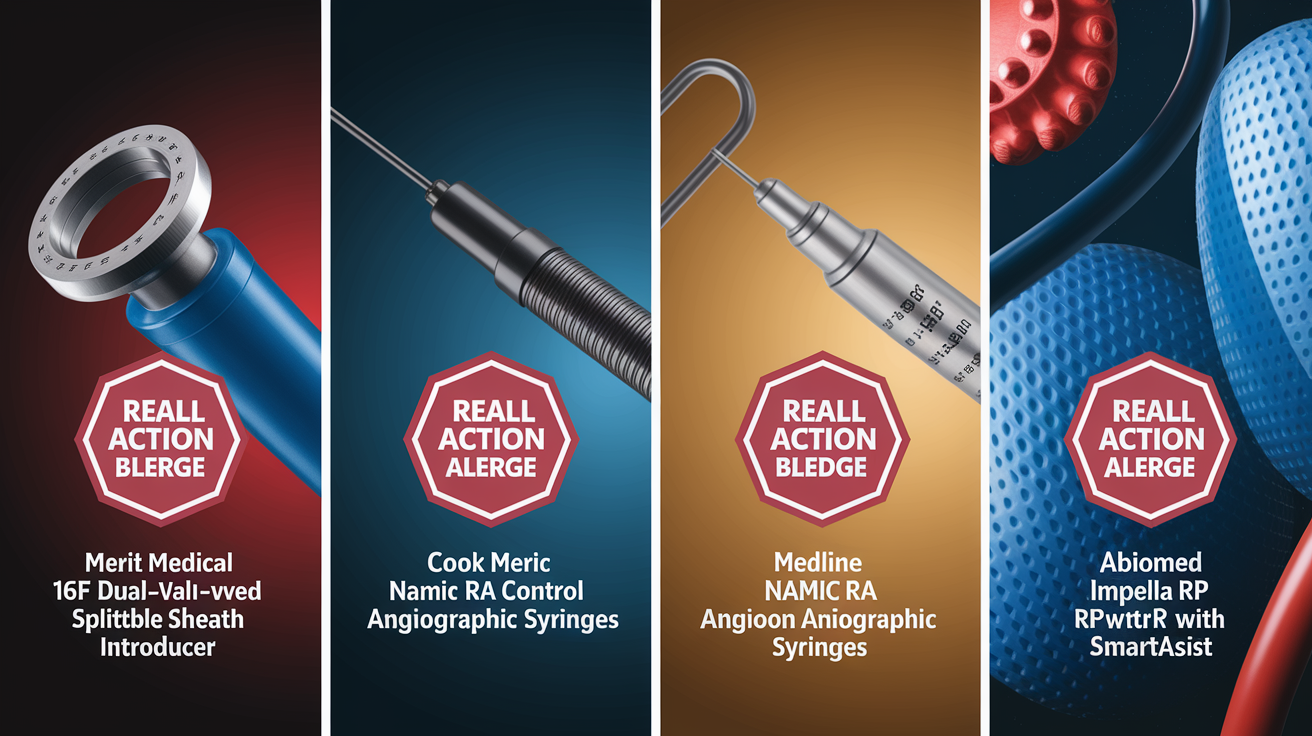
The Merit Medical 16F Dual-Valved Splittable Sheath Introducer got a Class I recall designation because of a design defect that could cause hemorrhage, embolization, and loss of vascular access during interventional procedures. Any of those outcomes can lead to death or permanent injury, so immediate removal from all facilities was required. Providers were told to stop using the device, return all inventory, and review patient records to identify anyone who’d been treated with the sheath and might need follow-up imaging or monitoring. This recall shows what Class I actions look like: the risk is confirmed, the harm is serious, and the corrective action is mandatory.
Cook Medical put out an early safety alert for certain sizing catheters after reports of device breakage during procedures. The alert didn’t immediately require product return. Instead, it recommended that providers hold off on using them pending further investigation and monitor patients who’d had recent procedures with the affected lots. Because the investigation was ongoing and the probability and severity of harm hadn’t been fully characterized yet, the communication stayed an advisory rather than a formal recall. Within weeks the manufacturer and FDA determined that the risk warranted a recall, and the alert was escalated to require product return and patient notification. This sequence shows how safety alerts work as an early-warning system that can transition to a recall once evidence piles up.
Medline Industries recalled the Namic RA Control angiographic syringes under an urgent Class I notice due to risk of syringe disconnection and air embolism. The recall instructions required immediate stop of use, return of all affected units, and patient monitoring for signs of air embolism if the syringes had been used in recent procedures. The urgent classification reflected both the severity of potential harm (air embolism can cause stroke or death) and the confirmed nature of the defect. Facilities that followed the recall protocol quarantined their stock within hours of getting the notice and contacted every patient treated in the preceding 30 days.
Abiomed issued two related Class I actions for its Impella product line: a recall of the Gen 1 purge cassettes and pump sets, and a Class I correction for the Impella RP with SmartAssist and Impella RP Flex with SmartAssist due to inaccurate flow readings. The Gen 1 cassette recall required product return and replacement with updated components, while the RP correction involved on-site software updates performed by Abiomed field representatives. Both were classified as Class I because inaccurate flow data or cassette failure during hemodynamic support can result in patient death, yet the corrective actions differed: one required physical product removal, the other a field correction. These examples show that Class I severity doesn’t always mean full product return. Field corrections can also carry the highest classification when the risk is life-threatening.
| Device Name | Issue Summary | Recall or Alert | Required Action |
|---|---|---|---|
| Merit Medical 16F Dual-Valved Splittable Sheath Introducer | Design defect causing hemorrhage, embolization, loss of vascular access | Class I Recall | Stop use immediately; return all inventory; identify and monitor exposed patients |
| Cook Medical Sizing Catheters | Risk of device breakage during procedure | Early Safety Alert (escalated to Recall) | Withhold use pending investigation; monitor patients; escalated to product return after risk confirmed |
| Medline Namic RA Control Angiographic Syringes | Syringe disconnection and air embolism risk | Urgent Class I Recall | Cease use; return affected units; monitor patients for air embolism symptoms |
| Abiomed Impella RP with SmartAssist / RP Flex with SmartAssist | Inaccurate displayed flow readings during hemodynamic support | Class I Correction | On-site software update by manufacturer field representatives; no product return required |
When a Safety Alert Becomes a Recall
A safety alert escalates to a formal recall when ongoing investigation confirms that the device defect or contamination meets recall criteria: a real probability of serious harm or death (Class I), or a probability of temporary or reversible harm (Class II). The FDA or USDA evaluates evidence from adverse event reports, manufacturer root-cause analyses, clinical data, and field observations. If the data show that continued use poses a defined and measurable risk, the advisory transitions to a recall with mandatory corrective actions including product removal, repair, or labeling changes. Manufacturers who issue early safety alerts and cooperate fully with investigations can often manage the transition to a voluntary recall, avoiding the legal and reputational hit of a mandatory order.
Regulatory risk thresholds focus on harm probability and severity. A single serious injury linked to a device malfunction might not automatically trigger a recall if the event is isolated and root cause is unclear, but multiple reports showing a pattern of failure will prompt rapid escalation. For example, if an initial alert warns of potential software errors and subsequent reports confirm that the errors caused incorrect therapy delivery resulting in patient harm, the alert will be upgraded to a Class I or Class II recall. How fast escalation happens depends on how quickly evidence accumulates and how transparent the manufacturer is in sharing data with regulators.
Escalation triggers include:
- Confirmed defect with patient harm: Investigation identifies a specific design, manufacturing, or labeling flaw that has caused or is likely to cause serious injury or death.
- Regulatory risk thresholds met: The probability and severity of harm cross FDA or USDA criteria for Class I or Class II, requiring mandatory corrective action.
- Pattern of adverse events: Multiple independent reports of similar malfunctions or injuries establish that the risk is widespread and not isolated to a single batch or user error.
Traceability and Identification in Recalls and Safety Alerts

Lot numbers and serial numbers are the foundation of device traceability. A lot number identifies a batch of devices manufactured under the same conditions during a defined time period. All units in that lot share the same materials, processes, and quality checks. A serial number is a unique identifier assigned to an individual device, allowing tracking from manufacturing through distribution to end use and, in some cases, individual patient implantation. When a recall or safety alert references specific lot or serial numbers, you cross-reference your inventory and usage logs to figure out whether you have affected units and which patients were exposed. Facilities that maintain real-time electronic inventory systems can complete this cross-reference in minutes. Those relying on manual logs may need hours or days.
Audit trails and recall records serve multiple purposes. They satisfy regulatory inspection requirements, provide legal documentation in the event of patient harm claims, and enable effectiveness checks that measure how much product was recovered versus how much was distributed. The FDA expects manufacturers to report recall effectiveness at intervals throughout the process, and healthcare facilities must be able to show that they acted promptly on recall notices. Good documentation includes the date and time the recall notice was received, the names of staff who conducted the inventory search, the list of affected devices found and their disposition, patient notification records, and communications with the manufacturer or regulatory agency.
Traceability supports faster recalls by enabling targeted rather than broad-spectrum actions. If a defect is isolated to a single production lot, only that lot need be recalled, cutting disruption and cost. If traceability is poor, manufacturers may be forced to recall entire product lines spanning multiple years of production, causing widespread shortages and patient care delays. The FDA and other regulators increasingly require unique device identifiers (UDIs) on medical devices, creating a standardized global system for tracking and recall management.
Here are the four key traceability and documentation steps:
- Maintain accurate inventory records: Log lot numbers, serial numbers, receipt dates, and usage dates in a database or electronic health record system that can be searched rapidly.
- Cross-reference recall notices immediately: Compare the lot or serial numbers in the notice against your inventory and usage logs as soon as you receive the alert or recall.
- Document all actions and communications: Record the date you received the notice, the inventory search results, the disposition of each affected unit, patient notifications sent, and any correspondence with the manufacturer or FDA.
- Retain records for the full regulatory retention period: Keep recall and alert documentation for at least the duration specified by FDA regulations (typically several years) to support audits, legal defense, and continuous quality improvement.
Lessons Learned: Improving Recall Preparedness and Safety Alert Response

Good recall and safety alert response starts long before a notice arrives. Facilities that invest in preparedness (training staff, establishing clear communication channels, and maintaining robust inventory traceability) can execute recalls in hours rather than days and cut patient exposure. Cross-functional recall teams should include representatives from clinical departments, biomedical engineering, supply chain, risk management, quality assurance, and legal counsel. These teams develop recall response plans, conduct regular tabletop exercises to practice the protocol, and review real recall events to identify gaps and improvement opportunities.
Training ensures that frontline staff recognize the difference between a recall and a safety alert and know how to escalate appropriately. Clinical users must understand that a Class I recall is a stop-use order, not a suggestion, and that patient safety takes absolute priority over operational convenience. Supply chain and biomedical teams must be able to locate and quarantine devices quickly, even during nights, weekends, and holidays when administrative support is minimal. Regular drills reinforce these skills and reveal weaknesses in inventory systems, communication pathways, and documentation practices before a real recall tests them under pressure.
Communication planning is critical. Recalls and safety alerts require timely notification to multiple audiences: clinical staff who use the device, patients who have been treated with it, purchasing and supply chain teams who manage inventory, and executive leadership who oversee risk and regulatory compliance. Templates for internal alerts, patient letters, and regulatory reports streamline the process and reduce the chance of error or omission. Designating a single point of contact for manufacturer and FDA communications prevents conflicting instructions and ensures accountability.
Here are six practical preparation steps to improve recall preparedness and safety alert response:
- Form a cross-functional recall response team: Include clinical, engineering, supply chain, quality, risk management, and legal representatives. Assign clear roles and decision authority.
- Conduct regular training and tabletop exercises: Practice recall scenarios, test communication pathways, and review real-world examples to identify and close gaps in your response plan.
- Maintain real-time inventory traceability: Implement electronic systems that track lot and serial numbers from receipt through patient use, enabling rapid cross-referencing during recalls.
- Create communication templates and escalation protocols: Pre-draft internal alerts, patient notification letters, and regulatory reports. Define who communicates what information to whom and on what timeline.
- Establish a single point of contact for manufacturer and regulatory communications: Designate one person or role to receive, log, and distribute recall and alert notices to prevent missed or duplicate actions.
- Review and document every recall and alert: After each event, conduct a debrief to capture lessons learned, update response plans, and share insights across your organization and peer networks.
Final Words
in the action, we laid out how recalls require removal, repair, or replacement and map to Class I–III, while safety alerts are advisories that may escalate if evidence shows serious risk.
This affects manufacturers, regulators (FDA/USDA/CDC), providers, and patients—manufacturers must notify and track fixes; users should stop use, quarantine items, or follow interim mitigation steps.
Knowing the difference — device recall vs safety alert — clarifies what to do and speeds response. Stay prepared and follow official guidance to reduce risk.
FAQ
Q: What are the three types of recalls?
A: The three types of recalls are Class I, Class II, and Class III; Class I risks serious injury or death, Class II risks temporary or reversible harm, and Class III is unlikely to cause adverse health effects.
Q: Can a dealership sell you a car with a safety recall?
A: A dealership can sell you a car with an open safety recall in many places, but requirements vary—dealers usually must disclose recalls and some states require repair before sale.
Q: Are you entitled to a refund if a product is recalled?
A: You may be entitled to a refund, repair, or replacement when a product is recalled, but the specific remedy depends on the recall notice, manufacturer policy, and local consumer-protection rules.
Q: What does recall alert mean?
A: A recall alert means an advisory warning users about a possible product hazard; it may ask for monitoring, interim fixes, or return and can become a full recall if risk is confirmed.