Can one judge topple Google’s search empire?
On August 5, 2024, Judge Amit Mehta ruled Google broke the law by maintaining a search monopoly.
His 280-page decision says Google’s default deals and multibillion-dollar payments locked out rivals and inflated ad prices.
The verdict affects advertisers, device makers, browsers, and everyday users because it could force changes to defaults, ad markets, and how search works.
This post explains what the ruling means, who needs to act, and what to watch as remedies and appeals play out.
Core Facts and Current Status of the Google Search Monopoly Lawsuit
August 5, 2024: Judge Amit Mehta ruled Google broke the law by maintaining a search monopoly. The 280-page decision came after a trial that stretched from September through November 2023, wrapping with closing arguments in early May 2024.
The case started when the DOJ filed suit on October 20, 2020. Eleven states joined. A month later, 38 more states filed their own complaint, and everything got consolidated in January 2021.
Judge Mehta found Google held about 90% of desktop search when the suit was filed. On mobile? Roughly 95%. He identified two markets where Google had monopoly power: general search engine services and search text advertising. The evidence showed Google paid over $20 billion to lock down default search placement with Apple, Samsung, Verizon, AT&T, and T-Mobile.
What broke the rules:
- Exclusive default contracts that shut competitors out of half the U.S. search query volume
- Revenue-sharing deals with carriers that kept Google as the default in exchange for a cut of ad money
- Agreements that blocked access to 45% of the search text ad market, letting Google charge more while delivering less
- Using monopoly power to squash rivals and jack up advertising prices through a self-reinforcing loop
First time the feds have beaten a Big Tech company in court since the 1998 Microsoft case. Google’s appealing. A separate remedies trial will decide what Google actually has to do to fix the mess.
Legal Foundations Behind the Google Search Antitrust Claims

The Sherman Act, passed in 1890, is the backbone of U.S. antitrust law. Section 2 bans monopolization and attempts to monopolize. Section 1 targets conspiracies and restraints on trade. The Clayton Act fills in gaps around mergers and tying arrangements. Google got hit under Sherman Act Section 2, with the government arguing the company didn’t just win on merit but kept its throne through exclusionary deals.
Here’s the thing: having a monopoly isn’t illegal. You can dominate a market through better products, smarter operations, or just being what customers want. The violation happens when you maintain that dominance by blocking rivals instead of beating them fair and square. Courts look at two things: does monopoly power exist in a properly defined market, and did the company use exclusionary tactics beyond normal competition to keep it?
How Courts Determine Unlawful Maintenance of Monopoly
The D.C. Circuit’s Microsoft case set the standard for proving monopoly maintenance. Plaintiffs have to show the exclusionary conduct was “reasonably capable of making a significant contribution” to keeping the monopoly going. Judge Mehta used that framework instead of the stricter “but-for” test from Rambus, which would’ve forced the government to prove Google’s monopoly wouldn’t exist without the challenged agreements.
The Microsoft standard makes things easier for prosecutors. Courts can infer anticompetitive harm when conduct meaningfully blocks rivals from distribution or customer access, even without a detailed model showing exactly what the market would look like otherwise. This lowered the bar for the government. They could establish liability by showing Google’s exclusive deals shut competitors out of a big chunk of search distribution and stopped them from reaching the scale needed to compete.
Google’s Default Search Agreements and Distribution Practices in the Lawsuit
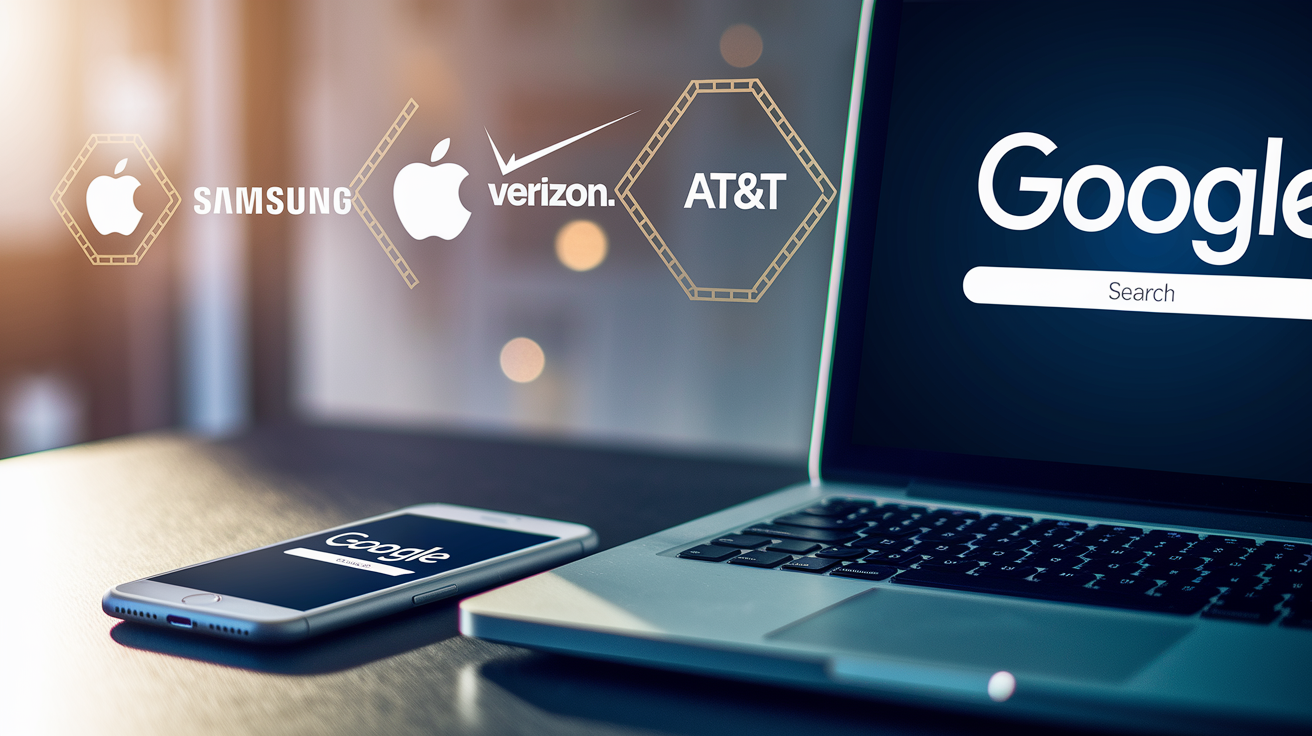
Google’s strategy for staying on top came down to one thing: be the default everywhere users start their searches. The company cut multibillion-dollar deals with device makers, browser developers, and mobile carriers to ensure Google showed up out of the box as the preset search engine. Trial evidence showed Google paid Apple north of $20 billion in one year just to stay the default in Safari across iPhones, iPads, and Macs. Similar contracts covered Android distributors, Samsung devices, and Mozilla’s Firefox.
Revenue-sharing agreements with Verizon, AT&T, and T-Mobile tied a slice of Google’s search ad revenue to exclusive default placement on devices those carriers sold. The RSAs gave carriers a financial reason to keep Google in place and avoid cutting deals with rival engines. The court found these contracts foreclosed 50% of U.S. search queries. Half of all searches ran through access points where Google was preloaded. In the text ad market, the deals locked up 45%, restricting where advertisers could reach audiences and letting Google keep ad prices high with less competitive pressure.
| Partner Type | Example Partner | Contract Effect |
|---|---|---|
| Device manufacturer (OEM) | Apple, Samsung | Preinstalled Google as default search; blocked rival engines from prominent placement; payments exceeded $20B annually |
| Browser developer | Mozilla (Firefox) | Made Google default search in Firefox; limited ability to experiment with alternative engines or choice screens |
| Mobile carrier | Verizon, AT&T, T-Mobile | Revenue-sharing agreements (RSAs) tied carrier income to Google’s ad revenue; incentivized carriers to maintain exclusive defaults |
| Android distribution partners | Various device makers | Google Play licensing required bundling Google Search and Chrome; restricted ability to ship competing search engines as defaults |
The government’s argument was simple. Default placement drove query volume. More queries meant more data. Better data improved search quality and ad targeting. Better results brought in more revenue. More revenue funded bigger payments to partners. Bing and DuckDuckGo couldn’t access the same default distribution, couldn’t gather enough data to refine their algorithms, and couldn’t pay partners enough to kick Google off its perch.
Evidence, Expert Testimony, and Economic Models in the Google Search Monopoly Lawsuit

The government built its case on economic analysis and Google’s internal documents. Dr. Michael Whinston, a plaintiffs’ expert, crunched the numbers and showed that 50% of general search queries in the U.S. ran through default access points locked up by Google’s exclusive agreements. His work proved the scale of foreclosure and showed rivals were systematically blocked from the distribution they needed. The court used Whinston’s market share calculations but passed on one of his more speculative models, “Super Duck,” which tried to project what the market might look like if a rival had gained scale.
Google’s internal emails and strategy presentations told the story. Executives understood the “power of defaults.” They talked about the “moat” exclusive distribution created and the risk that competitors might break through if defaults opened up to choice screens or competitive bidding. These documents backed the plaintiffs’ theory that Google’s payments weren’t rewards for quality. They were strategic moves to keep rivals away from users and the query volume needed to improve their products.
The 280-page opinion pulled together testimony from company executives, economic experts, and tech witnesses who explained how search algorithms get better with scale, how advertisers allocate budgets based on reach, and how default settings shape user behavior. The court found most users never change their default search engine. Controlling defaults meant controlling traffic. This evidence let the judge conclude Google’s exclusive agreements were exclusionary in intent and effect, blocking competitors and sustaining monopoly power beyond what product quality alone could support.
Google’s Defense Arguments and the Court’s Rejection
Google said its market position came from building the best product, not from breaking the rules. The company pointed to user satisfaction scores, search result quality, and the fact that users could switch to rival search engines with a few clicks. Google argued rivals like Bing failed because they built worse products users didn’t want. The company also challenged the market definitions plaintiffs used, suggesting the relevant market should include social media, e-commerce sites, and other places users look for information, which would shrink Google’s measured share.
The court didn’t buy it. Judge Mehta reviewed the foreclosure evidence and expert testimony and found that while Google did maintain a quality product, the exclusive distribution deals stopped rivals from reaching the scale they needed to compete on equal footing. Quality alone didn’t explain Google’s dominance when competitors were blocked from half the market’s query volume. The opinion noted even a superior product can violate antitrust law if it’s maintained through exclusionary contracts instead of open competition. The court accepted the plaintiffs’ narrower market definitions, concluding general search services and text advertising were distinct markets where Google held monopoly power.
Arguments the court gave some weight:
- Google’s point that specialized search engines like shopping and travel sites compete in specific niches, though that didn’t erase monopoly in general search
- Evidence that individual users face low switching costs, though defaults still drive behavior at scale because most users don’t switch
- The acknowledgment that Google has no legal duty to share its platform or data with rivals, which knocked down some of the plaintiffs’ broader access claims
The court also sided with Google on procedural issues, including denying certain sanctions motions and rejecting the argument that Google had to actively deal with competitors. These partial wins didn’t change the core liability finding but shaped what remedies might look like.
Remedies Sought and Potential Penalties in the Google Search Monopoly Lawsuit

October 8, 2024: the DOJ filed its opening remedies proposal. Four categories of relief aimed at restoring competition in search and ad markets. The categories hit (1) search distribution and revenue sharing, (2) generation and display of search results, (3) advertising scale and monetization, and (4) data accumulation and use. The filing hinted at behavioral restrictions like banning exclusive defaults or capping partner payments, plus structural remedies that could mean breaking up parts of Google’s business to separate search from ads or spinning off Chrome or Android.
Behavioral remedies would restrict Google’s ability to enter or enforce exclusive contracts without splitting the company up. Options include banning payments for default placement, requiring choice screens that show users multiple search engines, forcing data sharing with rivals to level the algorithmic playing field, or putting compliance monitoring and third-party audits in place to keep Google from reimposing exclusionary practices. Structural remedies would go further: force Google to sell off business units, potentially separating Chrome or Android to kill the integrated distribution advantages that reinforced search dominance. The government hasn’t specified which remedies it’ll formally request. The court hasn’t issued a remedies order yet.
| Remedy Type | Description | Possible Impact |
|---|---|---|
| Ban on exclusive defaults | Prohibit Google from paying for or requiring default search placement on devices and browsers | Opens distribution to rivals; reduces Google query volume; cuts multibillion-dollar revenue streams to Apple and carriers |
| Mandatory choice screens | Require OEMs and browsers to present users with multiple search engine options at setup | Increases user exposure to Bing, DuckDuckGo, and other engines; may shift modest market share to competitors |
| Data-sharing or syndication | Compel Google to share search query data or index data with rivals to improve their algorithms | Lowers barriers to entry; accelerates rival improvement; raises privacy and trade-secret concerns |
| Structural divestiture | Force sale of Chrome, Android, or ad-tech units to break vertical integration | Eliminates tied distribution; may reduce synergies; uncertain effect on competition and innovation |
The remedies trial will weigh what works against what breaks. Google will argue structural breakups hurt consumers, cut investment in search quality, and mess up integrated services people actually like. The final remedy depends on what the court thinks is necessary to restore competitive conditions without imposing costs bigger than the benefits.
Impact of the Google Search Monopoly Ruling on Rivals, Advertisers, and Consumers

If remedies kill or limit Google’s default agreements, rival search engines get a shot at distribution channels that’ve been locked for years. Bing, run by Microsoft, could see more queries if choice screens or open defaults let it compete on product quality instead of preinstalled dominance. DuckDuckGo, the privacy-focused engine, has argued foreclosure stopped it from reaching scale even though it offered something different for privacy-conscious users. Removing exclusionary barriers might let these and other competitors grow, invest in improvements, and actually challenge Google over time.
Advertisers worry Google’s monopoly in search text advertising let the company raise prices and cut ad quality without facing competitive pressure. If remedies boost competition, advertisers might gain bargaining power to negotiate better rates, get more transparent pricing, and spread spending across multiple search platforms. Publishers are concerned about Google’s AI-generated overviews, which sit at the top of search results and answer queries without requiring users to click through to websites. That setup concentrates traffic and ad revenue with Google while cutting referral traffic to content creators. A coalition of independent publishers filed an EU antitrust complaint on June 30, 2025, alleging these AI overviews misuse web content and tank publisher revenue. They’re seeking interim measures to stop the traffic bleed.
Consumers might see more search engine choices if defaults change, though the real impact depends on how choice screens get designed and whether users bother selecting alternatives. Privacy advocates note competition could push all search engines to improve privacy protections as a differentiator. If Google’s ad monopoly weakens, consumers might see shifts in ad relevance, frequency, and the balance between organic results and paid placements. Long-term effect on search quality is anyone’s guess. Competition could spur innovation or scatter investment across smaller players without the scale to fund algorithmic improvements.
International and Multi-jurisdictional Developments Linked to the Google Search Monopoly Case

Regulators outside the U.S. are watching the Google search case and running parallel enforcement actions. The European Commission has a track record of hitting Google with multi-billion-euro fines for antitrust violations tied to shopping comparison services, Android licensing, and ad practices. European enforcers are looking at similar worries about search defaults, data advantages, and how AI-generated overviews affect publisher traffic. June 30, 2025: a group of independent European publishers and advocacy organizations filed a formal EU antitrust complaint targeting Google’s AI overviews, claiming they steal content and divert traffic publishers depend on for ad revenue.
The UK’s Competition and Markets Authority has investigations going into digital ad markets and is reviewing search distribution practices as part of broader efforts to regulate dominant tech platforms. Global regulators coordinate informally through groups like the International Competition Network, sharing evidence, legal theories, and enforcement tactics to tackle cross-border monopolistic conduct. Enforcement gets messy because remedies imposed in one place don’t extend to others, and companies can structure operations to dodge exposure or shift practices to less regulated markets.
Key international actions:
- European Commission’s ongoing scrutiny of Google’s search and ad practices, building on earlier Android and Shopping cases
- UK CMA investigations into digital ad markets and search distribution mechanisms
- EU antitrust complaint filed June 30, 2025 by publishers targeting AI overviews and traffic diversion
- Coordination among competition authorities in North America, Europe, and Asia to align enforcement approaches and share investigative resources
These international moves pile pressure on Google to change its business practices globally. Fragmented compliance across jurisdictions gets expensive and complicated. The U.S. ruling might serve as a template or reference point for foreign enforcers building their own cases.
Appeals, Future Trials, and What Happens Next in the Google Search Monopoly Lawsuit

Google’s appealing the August 5, 2024 ruling. That process could drag on for years as the case moves through the D.C. Circuit Court of Appeals and possibly up to the U.S. Supreme Court. While the appeal runs, the district court will move ahead with a remedies trial to figure out what Google actually has to do to fix the antitrust violations. Timeline for that trial depends on scheduling and how complicated the proposed remedies get. Both sides will bring expert testimony on whether behavioral or structural relief is workable, what it costs, and what it does to competition.
Parallel enforcement actions add more uncertainty. A second DOJ antitrust trial targeting Google’s ad tech business started September 9, 2024, claiming the company used its ad tools to lock in advertisers and publishers while charging high fees. April 17, 2025: a U.S. district judge in Virginia ruled Google established and maintained monopoly power in ad-tech markets by tying publisher tools and exchange services together. The court tossed some claims about advertiser harm and specific acquisitions like DoubleClick, Invite Media, and AdMeld. Google’s appealing that one too.
Combined legal exposure from the search and ad-tech cases creates pressure for settlement talks, though the government hasn’t shown much interest in negotiated deals that don’t include structural changes. If appellate courts uphold the search monopoly ruling and the remedies trial results in divestiture orders, Google could face a breakup separating search, advertising, browser, and mobile OS businesses. If appeals succeed or remedies stay behavioral, the company might keep its integrated structure but operate under court-supervised restrictions on default agreements, data use, and distribution practices. The outcome will shape antitrust enforcement against other Big Tech firms as the DOJ and state enforcers go after Amazon, Apple, and Meta using similar monopolization theories.
Final Words
In the action, this post mapped who filed the cases, key dates (Oct 20, 2020; Dec 17, 2020; trial Sept–Nov 2023; closing arguments May 2–3, 2024; ruling Aug 5, 2024), the court’s market findings, and the judge’s ruling that Google unlawfully maintained monopoly power.
We laid out the legal tests, default deals and $20B+ payments, the economic evidence, remedies and international ripple effects. The google search monopoly lawsuit is heading to appeal and remedial proceedings, but it should push toward clearer rules and more real choice for users.
FAQ
Q: Did Google lose the monopoly lawsuit?
A: Google lost the monopoly lawsuit: Judge Amit Mehta ruled on Aug 5, 2024 that Google unlawfully maintained monopoly power under Sherman Act Section 2, while some claims were decided differently.
Q: Who is eligible for Google’s $700 million settlement payout?
A: Who is eligible for Google’s $700 million settlement payout depends on whether you’re a member of the defined settlement class, meeting date, location, and harm criteria; check the official claims site for exact rules.
Q: How to claim Google settlement money?
A: To claim Google settlement money, visit the settlement’s official claims website, complete and submit the claim form with any required proof by the deadline, and watch the site for distribution updates.
Q: Is Google’s online search monopoly illegal?
A: Whether Google’s online search monopoly is illegal: monopoly status alone isn’t illegal, but the court found Google unlawfully maintained monopoly power under Sherman Act Section 2 in the Aug 5, 2024 ruling.