Did Apple just lose its chokehold on how developers talk to iPhone users?
Not exactly. A judge largely sided with Apple in the Epic Games antitrust case, but barred Apple’s anti-steering rules that stopped apps from pointing users to other payment options.
For developers, that split decision matters: you can now tell customers about external buys, while the bigger monopoly claims fell short.
This post shows what changed, who’s affected, why it matters, and the quick steps teams should consider next.
Key Outcomes of the Epic Games–Apple Antitrust Ruling

Judge Yvonne Gonzalez Rogers dropped a 185-page decision on 10 September 2021 after a three-week bench trial in Epic Games, Inc. v. Apple Inc., No. 4:20-cv-05640-YGR (N.D. Cal.). Apple won 9 out of 10 of Epic’s legal claims. The court said Apple didn’t violate federal antitrust law under either Section 1 or Section 2 of the Sherman Act, and also tossed Epic’s claims under California’s Cartwright Act. But the court found that Apple’s anti-steering rules violated California’s Unfair Competition Law (UCL) because they “hide critical information from consumers and illegally stifle consumer choice.”
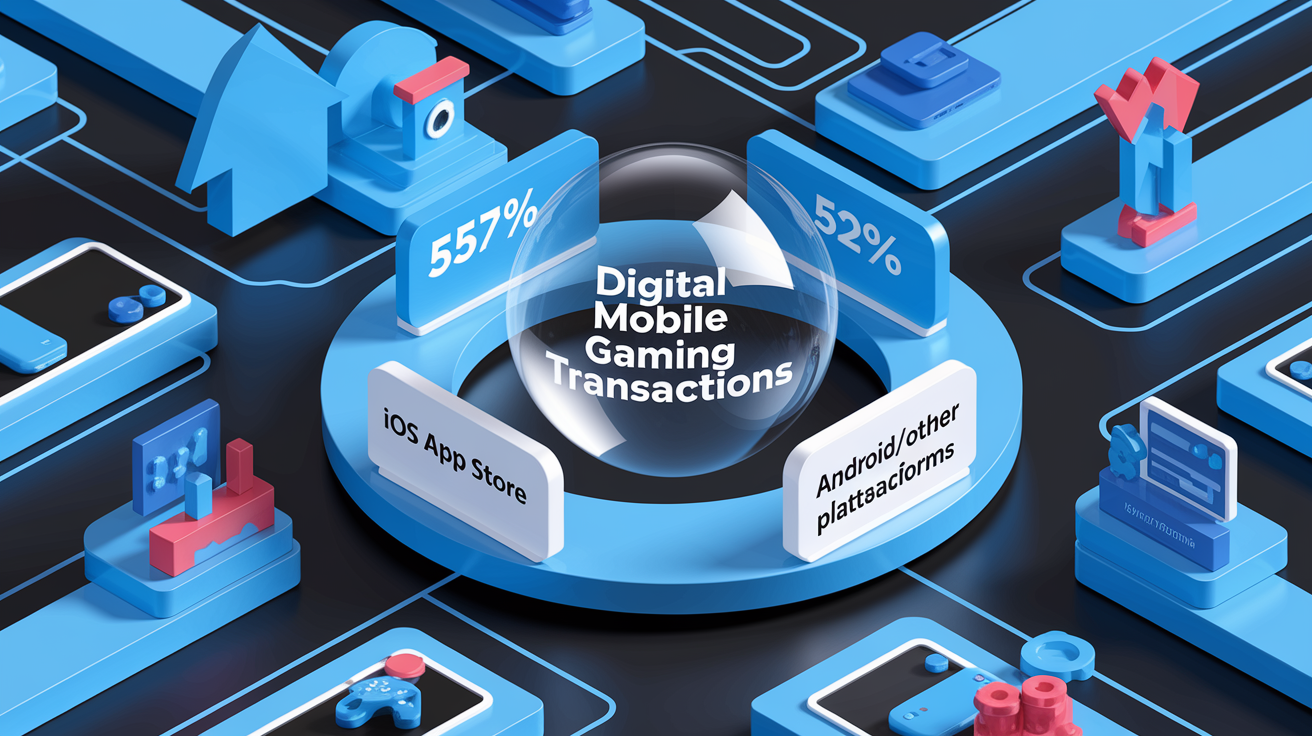
The court defined the relevant product market as “digital mobile gaming transactions.” That’s broader than Epic’s proposed single-brand iOS aftermarket but narrower than Apple’s all-digital-game-transaction theory. Within that market, the court said Apple controlled a 52–57% share. Despite holding more than half the market, the judge concluded Apple didn’t possess monopoly power sufficient to support a Sherman Act Section 2 claim. The court acknowledged some anticompetitive effects from Apple’s distribution restrictions but found those effects were outweighed by procompetitive justifications, including security, intellectual property protection, and interbrand competition.
The court issued a permanent nationwide injunction barring Apple from enforcing anti-steering provisions that prohibited developers from informing users about alternative purchasing methods. Apple could no longer prevent apps from including buttons, external links, or other calls to action directing users to purchasing mechanisms outside Apple’s in-app payment system. The injunction also allowed developers to communicate with customers through contact information users voluntarily provided via in-app account registration. Apple got a 90-day compliance window, setting a deadline of 9 December 2021, though appeals and procedural motions created implementation uncertainty.
Background Factors Driving the Epic Games–Apple Legal Conflict
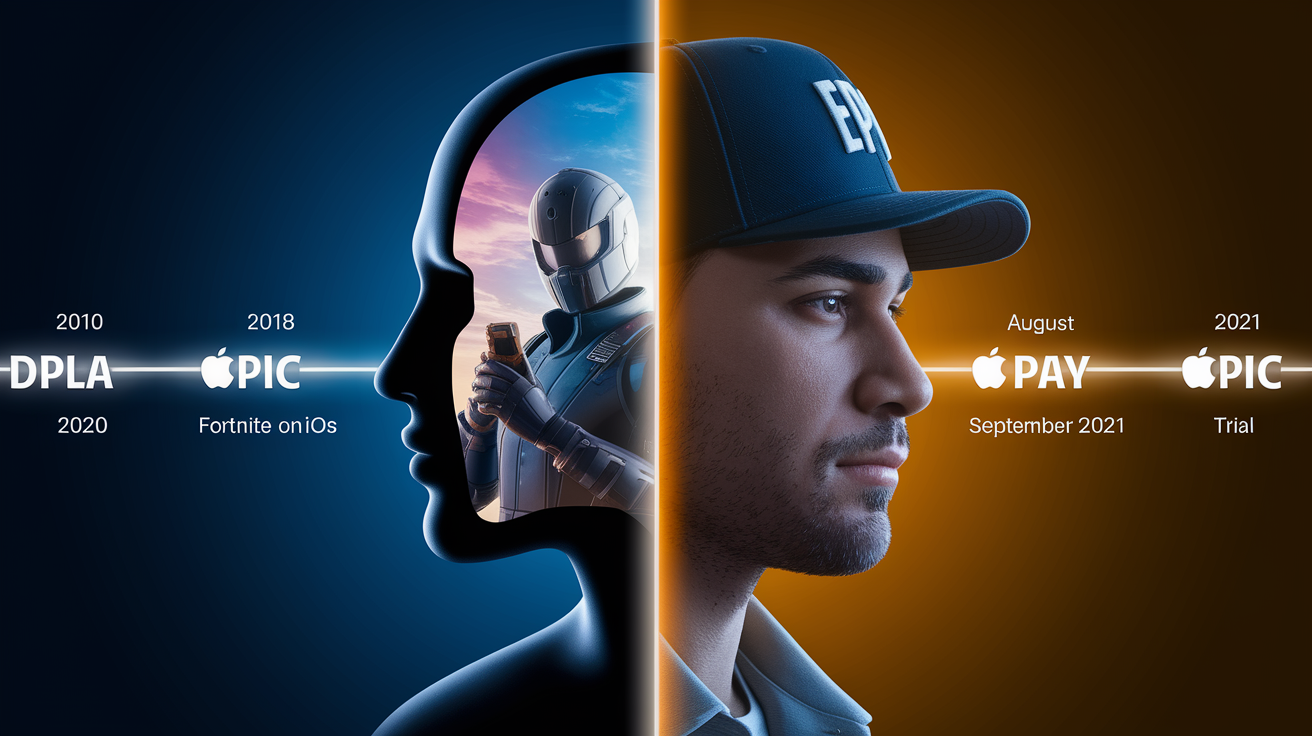
Epic Games first distributed apps through Apple’s App Store in 2010 after signing the Developer Product Licensing Agreement (DPLA). The DPLA required a $99 annual registration fee and mandated that all iOS apps use Apple’s in-app payment processor (IAP), which collected a 30% commission on app sales, subscriptions, and in-app purchases. The agreement also restricted distribution exclusively to Apple’s App Store and prohibited developers from directing users to alternative payment methods outside the app. Epic’s flagship title Fortnite launched on iOS in 2018 and quickly became one of the top-grossing games on the platform.
In 2020, Epic sought to renegotiate the DPLA, requesting permission to distribute its own app store on iOS and to use Epic Direct Pay instead of Apple’s IAP. Apple said no to both. Epic responded by pushing a Fortnite “hotfix” update that activated Epic Direct Pay, allowing users to purchase in-game currency at a 20% discount by bypassing Apple’s payment system. Apple removed Fortnite from the App Store within hours, citing breach of the DPLA. Epic immediately filed suit and sought emergency injunctive relief to force reinstatement.
The dispute unfolded through these major events:
-
2010 – Epic signed Apple’s DPLA and began distributing apps through the App Store under terms requiring exclusive distribution, mandatory IAP use, and a 30% commission.
-
2018 – Fortnite debuted on iOS and became a commercial success, generating hundreds of millions in revenue subject to Apple’s commission structure.
-
August 2020 – Epic renewed the DPLA but simultaneously activated Epic Direct Pay via a hotfix update, triggering immediate removal of Fortnite from the App Store.
-
May 2021 – The parties presented evidence during a three-week bench trial before Judge Yvonne Gonzalez Rogers in the Northern District of California.
-
September 2021 – Judge Rogers issued the 185-page ruling addressing Epic’s ten causes of action and ordering injunctive relief on anti-steering provisions under California’s UCL.
How the Court Defined the Market in the Epic–Apple Antitrust Ruling
Market definition became a central battleground because the scope of the relevant market determines whether a defendant holds enough share to exercise monopoly power. Epic proposed a narrow single-brand aftermarket limited to iOS app distribution, arguing that once consumers purchased an iPhone they were locked into Apple’s ecosystem with no practical alternatives. Apple countered with a broad market encompassing all digital video game transactions across all platforms, including consoles, PCs, and Android devices. The court rejected both extremes as inconsistent with competitive realities and consumer behavior.
Judge Rogers defined the relevant market as “digital mobile gaming transactions,” explicitly including transactions occurring both inside and outside Apple’s App Store. This middle-ground definition recognized that mobile gaming competes primarily with other mobile gaming rather than with console or PC gaming, while also acknowledging that users can access mobile games through Android devices and alternative mobile platforms. Within this market, the court found Apple controlled more than half, specifically a 52–57% share. The judge concluded this share, while substantial, didn’t demonstrate monopoly power because it didn’t reflect the ability to control prices or exclude competition in a way that harmed the competitive process.
The three competing market definitions and their practical implications looked like this:
| Proposed Market | Scope | Apple’s Share | Legal Implication |
|---|---|---|---|
| Epic’s single-brand aftermarket | iOS app distribution only | 100% (by definition) | Would establish monopoly power automatically |
| Apple’s all-digital-game market | All digital game transactions (console, PC, mobile) | Less than 10% | Would eliminate any monopoly finding |
| Court’s mobile gaming market | Digital mobile gaming transactions across platforms | 52–57% | Substantial but insufficient for Section 2 liability |
The court’s reasoning emphasized that consumers face meaningful choices at the point of initial platform purchase. Unlike the Eastman Kodak case (504 U.S. 451), where buyers of photocopiers were unaware of aftermarket lock-in at purchase time, iPhone buyers know Apple’s ecosystem is closed before they buy. This awareness, the court held, disciplines Apple’s conduct through interbrand competition with Android and other mobile platforms, limiting Apple’s ability to exercise monopoly power even within its own ecosystem.
Antitrust Findings in the Epic Games–Apple Ruling
Section 2 (Monopoly) Outcome
The court found Apple didn’t violate Section 2 of the Sherman Act because it lacked monopoly power in the relevant market. While Apple’s 52–57% share of digital mobile gaming transactions was significant, the judge concluded it fell short of the threshold needed to demonstrate monopoly power. The court examined whether Apple possessed the power to control prices or exclude competition, applying the standard that monopoly power requires “the power to control prices or exclude competition.” Evidence showed that Apple faced competitive pressure from Android devices and that consumers could and did switch between platforms based on features, pricing, and app availability. The court noted that interbrand competition between iOS and Android devices constrained Apple’s ability to raise prices arbitrarily or degrade services without losing customers to competing mobile ecosystems.
Section 1 (Restraints) Findings
Under Section 1 of the Sherman Act, the court acknowledged that Apple’s distribution restrictions produced some anticompetitive effects. The evidence showed an “artificially high” commission structure and barriers to innovation in payment processing and app distribution. But the judge applied a rule-of-reason analysis and weighed these harms against Apple’s procompetitive justifications. The court credited Apple’s arguments that the closed App Store model promoted security by screening apps for malware, protected Apple’s intellectual property investments in iOS development, and enhanced interbrand competition by differentiating the iPhone experience from Android. The judge concluded the procompetitive benefits outweighed the anticompetitive harms, meaning the restrictions didn’t constitute an unreasonable restraint of trade under Section 1.
Precedent and Economic Reasoning
Epic relied heavily on Eastman Kodak Co. v. Image Technical Services, Inc., 504 U.S. 451 (1992), which recognized that single-brand aftermarkets can constitute relevant antitrust markets when consumers lack awareness of lock-in at the time of initial purchase. The court rejected this analogy, noting that iPhone buyers are fully aware of Apple’s closed ecosystem, mandatory IAP requirements, and commission structure before purchasing their devices. This transparency, the judge reasoned, allows interbrand competition to discipline Apple’s conduct. The court also considered economic testimony about the costs of platform development, security screening, and payment processing, finding that Apple’s 30% commission reflected a bundle of services rather than pure monopoly rent extraction.
Key antitrust takeaways from the ruling:
- Apple’s 52–57% market share in digital mobile gaming transactions was insufficient to establish monopoly power under Section 2 standards.
- Anticompetitive effects from Apple’s distribution restrictions were real but outweighed by procompetitive justifications related to security, IP protection, and interbrand competition.
- The Kodak single-brand aftermarket theory doesn’t apply when consumers have full awareness of platform restrictions at the time of initial device purchase.
- Rule-of-reason analysis under Section 1 permits vertical restraints that produce net procompetitive benefits even when some anticompetitive effects exist.
The Anti‑Steering Injunction and California UCL Findings
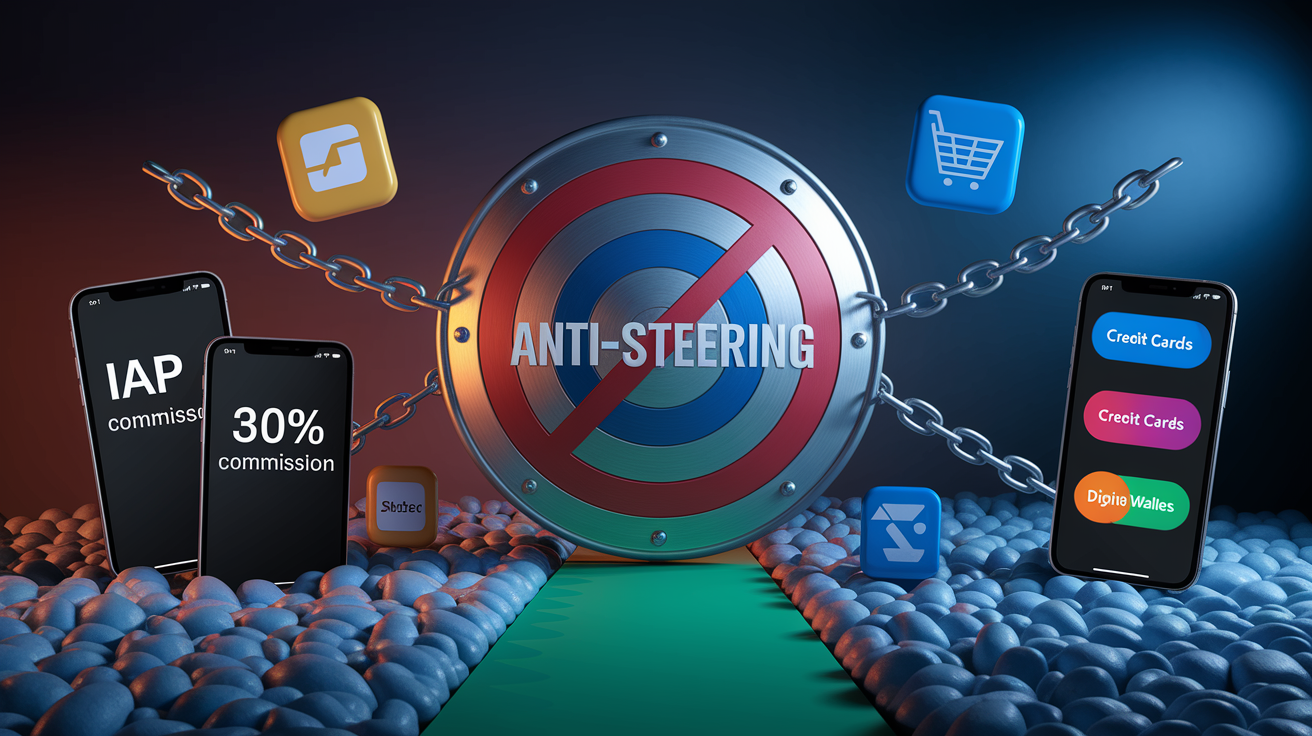
The court’s sole ruling in Epic’s favor came under California’s Unfair Competition Law. Judge Rogers found that Apple’s anti-steering provisions were “unfair” because they suppressed information that consumers needed to make informed purchasing decisions and artificially restricted competition in payment processing. The provisions prohibited developers from including buttons, external links, or any calls to action directing users to purchasing mechanisms outside Apple’s IAP. They also barred developers from contacting customers through voluntarily provided contact information to inform them about alternative payment options or pricing. The court held these restrictions went beyond what was necessary to protect Apple’s legitimate business interests and instead illegally stifled consumer choice.
The permanent nationwide injunction issued by the court prohibited Apple from enforcing these anti-steering rules across all of its DPLA accounts, not just Epic’s. This broad relief extended to all App Store developers because the court found that limiting the injunction to Epic alone would be inadequate to remedy the competitive harm. Consumers across the entire iOS ecosystem were being denied information about substitute purchasing options, and monetary damages couldn’t restore the suppressed competition or inform consumers about alternatives. The court applied the precedent from Sonner v. Premier Nutrition Corp., 971 F.3d 834 (9th Cir. 2020), which permits broad injunctive relief when necessary to prevent ongoing unfair conduct affecting a class of consumers.
Under the injunction, developers gained specific new communication rights:
- Apps can include buttons or links that direct users to external websites where purchases can be completed outside Apple’s IAP system.
- App metadata (descriptions, promotional materials) can reference alternative purchasing mechanisms and inform users about pricing differences between IAP and external options.
- Developers can communicate directly with customers using contact information voluntarily provided through in-app account registration, including emails informing users about external payment options.
- Apps can disclose the 30% commission Apple charges and explain how external purchases avoid that fee.
- Developers can offer discounts or incentives for purchases made through external payment methods, as Epic did with its 20% discount for Epic Direct Pay transactions.
The 90-day compliance window gave Apple until 9 December 2021 to implement changes, though the injunction’s practical effect was delayed by appeals and procedural motions that stayed enforcement.
Appeals and Next Steps After the Epic Games–Apple Antitrust Ruling
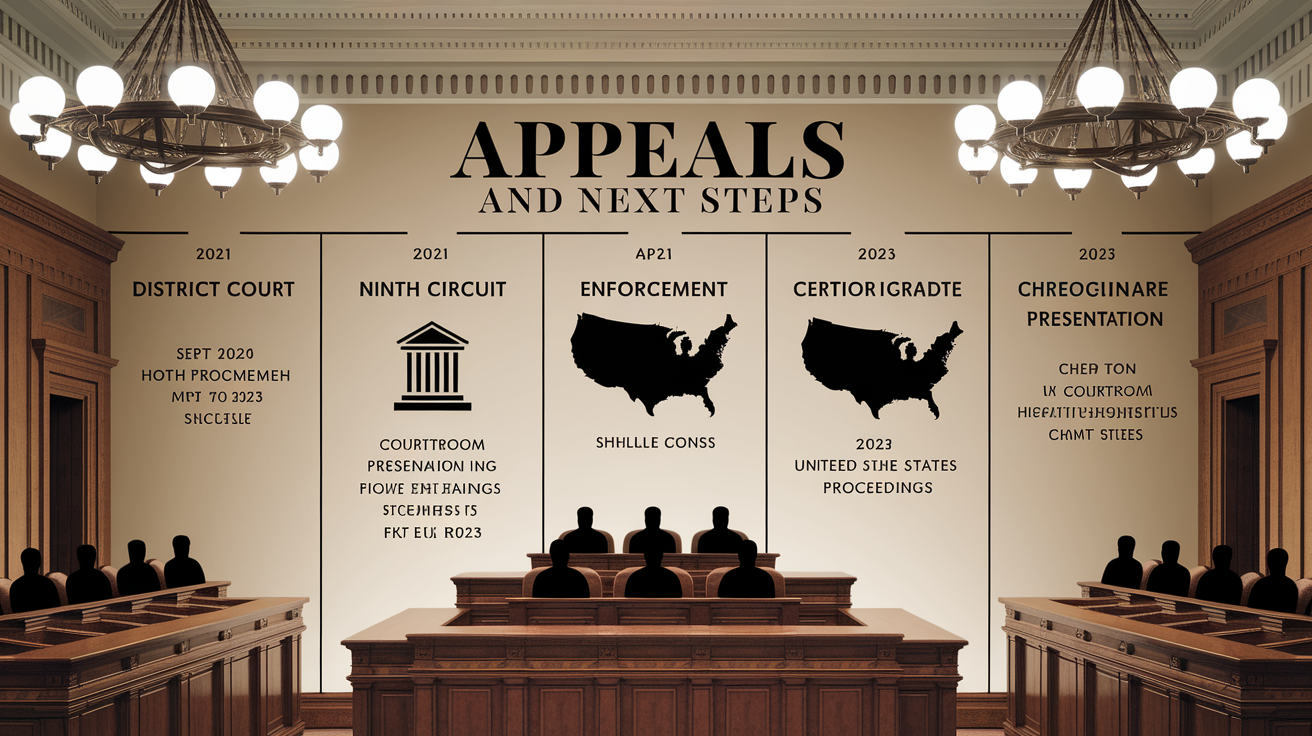
Both parties immediately signaled their intent to appeal. Epic filed a notice of appeal the same day the district court issued its ruling, seeking reversal of the antitrust findings and broader relief. Apple indicated general satisfaction with the outcome but reserved the right to challenge the anti-steering injunction. The appellate process stretched across multiple years and reached the highest levels of the federal court system.
The Ninth Circuit Court of Appeals heard oral arguments and issued its opinion on 24 April 2023, affirming the district court’s UCL finding and the scope of the nationwide injunction. The appellate court specifically upheld the district court’s determination that limiting injunctive relief to Epic alone would be inadequate because Apple’s anti-steering rules affected all App Store developers and suppressed information across the entire iOS ecosystem. The Ninth Circuit also affirmed that monetary damages were an insufficient remedy, supporting the need for broad behavioral relief. Epic’s appeal of the antitrust findings was unsuccessful. The Ninth Circuit agreed that Apple didn’t violate the Sherman Act.
Apple then sought further review from the U.S. Supreme Court. On 17 July 2023, the Ninth Circuit granted Apple’s request to stay issuance of the mandate, effectively pausing enforcement of the anti-steering injunction while Apple prepared a petition for certiorari. This stay gave Apple 90 days to file its Supreme Court petition. Epic responded by filing an emergency application with the Supreme Court on 25 July 2023, arguing that the stay improperly delayed relief and allowed Apple to continue unlawful conduct. On 9 August 2023, the Supreme Court denied Epic’s emergency request, leaving the injunction stayed while Apple’s certiorari petition remained pending.
Major appellate events unfolded as follows:
-
10 September 2021 – District court issued its 185-page ruling. Both parties filed notices indicating intent to appeal.
-
24 April 2023 – The Ninth Circuit affirmed the district court’s UCL ruling and injunction scope while rejecting Epic’s appeal of the Sherman Act findings.
-
17 July 2023 – The Ninth Circuit stayed issuance of its mandate, pausing enforcement of the anti-steering injunction for 90 days to allow Apple time to petition the Supreme Court.
-
9 August 2023 – The Supreme Court denied Epic’s emergency application to lift the stay, meaning Apple’s anti-steering rules remained in effect while the certiorari process continued.
As of the analyzed rulings, Apple’s petition for certiorari remained a live procedural matter with no final resolution on whether the Supreme Court would grant review or allow the Ninth Circuit’s decision to stand.
Developer and Consumer Impacts of the Epic–Apple Antitrust Ruling

The anti-steering injunction, if and when fully enforced, fundamentally changes how developers can communicate pricing and payment options to iOS users. Developers can now inform customers about external purchasing mechanisms, link directly to off-platform payment pages, and contact users through voluntarily provided information to explain alternative payment methods. This opens the door for developers to route transactions outside Apple’s IAP system and avoid the 30% commission on digital goods and services. Apps like Netflix, Spotify, and other subscription services that historically avoided offering in-app sign-up due to commission costs can now guide users to their own payment systems while still maintaining an iOS presence.
But significant practical uncertainties remain. The injunction doesn’t specify how external purchases will sync with in-app functionality. If a user buys content on a developer’s website, it’s unclear what technical integration Apple must permit to reflect that purchase inside the iOS app. Apple retains broad contractual authority to terminate developer accounts “at any time and at [Apple’s] sole discretion,” creating a chilling effect for developers who fear retaliation if they exercise their new steering rights aggressively. The injunction also doesn’t define what constitutes acceptable link placement, button design, or messaging, leaving developers to navigate compliance risk without clear technical guidelines.
For consumers, the ruling promises more information and potentially lower prices. Apps can now disclose the 30% commission and explain that external purchases avoid this fee, making pricing transparency a competitive factor. Subscription services and digital content providers might offer discounts for direct billing, mirroring Epic’s 20% discount for Epic Direct Pay. Cross-platform substitution becomes easier when users can compare in-app versus external pricing and choose the most cost-effective option. The user experience could fragment if different apps adopt different external payment flows, and consumers face new considerations about payment security and data handling when transacting outside Apple’s ecosystem.
| Impact Area | Developer Effects | Consumer Effects |
|---|---|---|
| Payment options | Can offer external links, buttons, and direct billing; might reduce commission costs from 30% to processing fees of 2–5% | Access to alternative payment methods; potential for discounts on subscriptions and digital content |
| Pricing transparency | Can disclose Apple’s 30% commission and explain pricing differences between IAP and external purchases | Full visibility into why in-app purchases cost more; ability to compare pricing across channels |
| Communication rights | Can contact users via voluntarily provided contact info to promote external payment options and special offers | Receive information about deals, alternative purchase options, and subscription management outside the app |
| Technical integration | Uncertainty about how external purchases sync with in-app functionality; might face fragmented user experience | Potential friction if external purchases don’t seamlessly unlock in-app content; questions about payment security |
| Account termination risk | Apple retains broad contractual termination rights; developers fear retaliation for aggressive steering | Risk that favorite apps could be removed from the App Store if disputes escalate |
| Competitive effects | Smaller developers might gain ability to compete on price; larger platforms could negotiate preferential terms | More choices and potentially lower costs, but also increased complexity in managing accounts and payments across platforms |
The ruling’s broader implications extend beyond Epic and Apple. Other platform operators that combine payment systems with communication restrictions now face heightened exposure under state unfair competition statutes, even where federal antitrust liability is absent. The Ninth Circuit’s acceptance of nationwide injunctive relief under California’s UCL creates a potential avenue for plaintiffs to obtain behavioral remedies that change platform practices for all users and developers. Companies building app marketplaces, digital storefronts, and subscription platforms need to reassess policies that restrict communication about alternative payment options, as such restrictions could violate state consumer protection laws regardless of their competitive effects under federal antitrust standards.
Final Words
In the action, the judge largely sided with Apple: nine of ten claims failed and the court rejected a Sherman Act monopoly finding, but it ruled Apple’s anti‑steering rules violated California’s Unfair Competition Law and ordered a nationwide injunction with a compliance window.
The court defined the market as digital mobile gaming transactions and found Apple’s 52–57% share didn’t prove monopoly power, so most antitrust claims didn’t stick.
For developers and users, the epic games apple antitrust ruling nudged App Store policy toward more openness. Appeals slowed immediate change, but the decision should lead to clearer payment options and more choice over time.
FAQ
Q: Did Epic win the case against Apple? Did Apple win the antitrust lawsuit?
A: The Epic Games–Apple ruling split the outcome: the court rejected most antitrust claims (no Sherman Act violation) but found Epic won a California UCL anti‑steering claim and ordered an injunction.
Q: Why was Epic banned from Apple?
A: Epic was banned from Apple’s App Store because it pushed a 2020 hotfix that routed payments outside Apple’s in‑app purchase system, breaching the App Store’s DPLA terms requiring IAP and the 30% commission.
Q: Why did Epic win against Google but not Apple?
A: Epic won parts of its Google case but not Apple because courts treated the markets and restraints differently: judges found some Google practices unlawful, while the Apple ruling used a narrow market definition and accepted Apple’s procompetitive defenses.