Can an open-weight model really rival closed-source giants in real-world tasks?
Qwen 2.5, released by Alibaba Cloud in 2024, spans 0.5B–72B parameters, a 128,000-token context window, and up to 18 trillion pretraining tokens.
It includes focused Coder and Math variants and improves instruction-following, structured output, and long-form generation to cut engineering overhead.
This article breaks down Qwen 2.5’s architecture, benchmark results, and practical developer integration steps so teams can decide whether and how to adopt it.
Overview and Purpose of Qwen 2.5

Qwen 2.5 is a family of large language models developed by Alibaba Cloud, released in 2024 as the successor to the Qwen 2 series. The model family includes dense, decoder-only transformers available in sizes ranging from 0.5 billion to 72 billion parameters, alongside specialized variants such as Qwen2.5-Coder and Qwen2.5-Math. Pretrained on up to 18 trillion tokens, Qwen 2.5 targets developers, researchers, and enterprises that need multilingual generation, advanced reasoning, and reliable structured output for production systems.
The release addresses common developer pain points around instruction-following reliability, long-context generation, and structured data understanding. Qwen 2.5 supports context windows of up to 128,000 tokens and can generate outputs of up to 8,000 tokens in a single pass. That makes it suitable for summarization, document analysis, and retrieval-augmented generation workflows. Post-training improvements emphasize robustness to diverse system prompts, better handling of tabular data, and more predictable JSON generation. These capabilities reduce engineering overhead when building agent systems or chat interfaces.
The model family supports over 29 languages. Chinese, English, French, Spanish, Portuguese, German, Italian, Russian, Japanese, Korean, Vietnamese, Thai, and Arabic are all included. Most variants are released under the Apache 2.0 license, with the exception of the 3B and 72B models, which use different terms. Weights are distributed through Hugging Face, and cloud APIs are available for flagship models like Qwen-Plus and Qwen-Turbo via Alibaba’s Model Studio. Teams can choose between self-hosted deployment and managed inference depending on latency, cost, and control requirements.
Architecture and Model Variants

Qwen 2.5 uses a dense, decoder-only transformer architecture with improvements to attention mechanisms and training data diversity compared to earlier versions. The context window extends to 128,000 tokens, and the generation limit increases to 8,000 tokens per output. This enables longer-form completions without chunking. The tokenizer is based on byte-pair encoding with vocabulary optimizations for both Chinese and English, reducing token fragmentation and improving inference efficiency for multilingual text.
Training data scale varies by variant. The base Qwen2.5 models are pretrained on up to 18 trillion tokens drawn from web documents, code repositories, books, and dialogue datasets. Qwen2.5-Coder is trained on 5.5 trillion code-related tokens, while Qwen2.5-Math incorporates synthetic reasoning data generated by earlier Qwen2-Math models. Post-training includes instruction tuning and reinforcement learning from human feedback to improve alignment, safety, and adherence to structured output formats.
Available model variants include:
- Qwen2.5 (dense, decoder-only): 0.5B, 1.5B, 3B, 7B, 14B, 32B, 72B
- Qwen2.5-Coder: 1.5B, 7B (32B variant announced but not yet released)
- Qwen2.5-Math: 1.5B, 7B, 72B
- Qwen2-VL-72B (vision-language model with improved multimodal performance)
- API models: Qwen-Plus and Qwen-Turbo (parameter counts not publicly disclosed)
Performance Benchmarks and Evaluations

Qwen 2.5 shows measurable gains over prior versions and competitive models across academic benchmarks and specialized evaluations. The 72B instruction-tuned variant scores above 85 percent on MMLU (Massive Multitask Language Understanding) and achieves over 85 percent on HumanEval for code generation tasks. That places it in the top tier of open-weight models released in 2024.
| Benchmark | Qwen 2.5 Score | Comparison Model | Result Summary |
|---|---|---|---|
| MMLU | ~85+ | Llama-3.1-70B | Competitive or ahead on multi-domain knowledge |
| HumanEval | ~85+ | Mistral-Large-V2 | Stronger pass@1 on Python code generation |
| MATH (advanced reasoning) | ~80+ (72B-Math-Instruct) | GPT-4o | Qwen2.5-Math-72B surpasses GPT-4o on math tasks |
| C-Eval (Chinese NLU) | High percentile | Qwen 2 baseline | Improved Chinese-language understanding and generation |
| Qwen-Plus (API) vs GPT-4o | Competitive on some tasks | GPT-4o, Claude-3.5-Sonnet | Behind GPT-4o and Claude-3.5-Sonnet on certain metrics; ahead of DeepSeek-V2.5 |
These results translate to practical advantages in production environments. The MMLU scores indicate reliable performance across knowledge-intensive tasks such as customer support, technical documentation retrieval, and educational tutoring. HumanEval performance means the model can generate syntactically correct and logically sound code snippets with fewer errors. That reduces manual review overhead. The math reasoning improvements in Qwen2.5-Math-72B-Instruct make it suitable for applications in finance, engineering simulations, and data analysis workflows where symbolic reasoning and multi-step problem solving are required. Even smaller variants like Qwen2.5-Math-1.5B-Instruct remain competitive, offering a lower-latency option for edge deployment or high-throughput batch processing.
Key Features and Capabilities
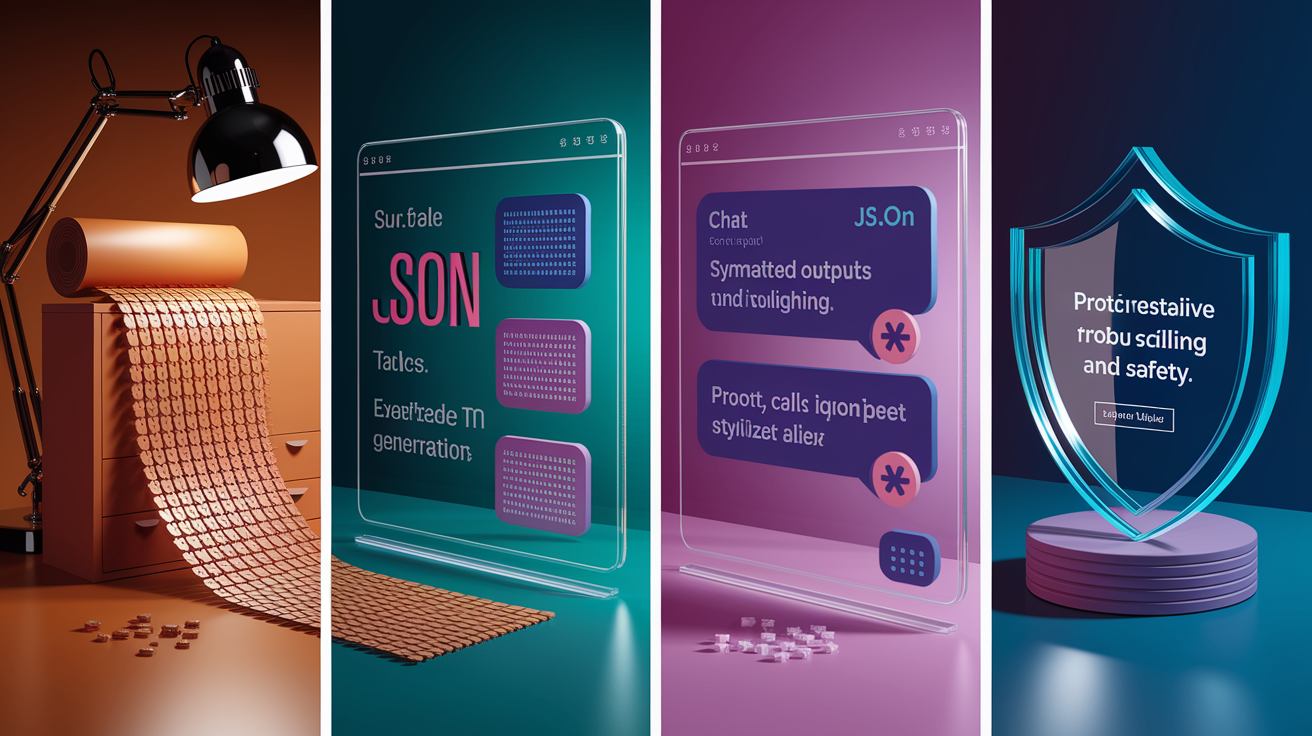
Qwen 2.5 introduces four major post-training updates that improve developer experience and output reliability. First is extended generation capability. The model can produce up to 8,000 tokens in a single completion, which is useful for long-form article drafting, detailed technical explanations, and comprehensive document summarization without requiring multiple API calls or manual stitching. Second is structured data comprehension. Training enhancements improve the model’s ability to parse and reason over tables, JSON objects, and hierarchical data formats commonly found in enterprise datasets.
The third improvement targets structured output generation. Qwen 2.5 is more consistent in producing valid JSON, Markdown, and other formatted responses when prompted. This reduces the failure rate of agent systems that parse model outputs for downstream automation. The model’s chat template includes native tool-calling support inspired by the Nous Hermes format, maintaining backward compatibility with Qwen 2 and Qwen-Agent templates while simplifying integration with frameworks that expect OpenAI-style function-calling interfaces.
Safety and instruction-following robustness form the fourth area of enhancement. Qwen 2.5 demonstrates greater tolerance to diverse system prompts and role-play scenarios. You can define custom personas, context, and constraints without the model breaking character or ignoring instructions. This robustness comes from reinforcement learning techniques applied during post-training, combined with expanded datasets that include conversational examples, multi-turn dialogues, and task-oriented interactions. The result is a model that handles ambiguous or complex instructions more reliably, reducing the need for extensive prompt engineering or retry logic in production code.
Comparison With Previous Qwen Versions

Qwen 2.5 builds on the Qwen 2 foundation with architectural refinements, larger pretraining datasets, and improved post-training methods. The most visible upgrade is context window expansion from prior limits to 128,000 tokens. This enables long-document processing and retrieval-augmented generation over large corpora without chunking penalties. Training data diversity also increased, with Qwen 2.5 incorporating more code, multilingual text, and synthetic reasoning examples generated through iterative self-improvement techniques.
Post-training updates in Qwen 2.5 emphasize practical deployment concerns that earlier versions handled less consistently. Instruction-following reliability improved through reinforcement learning, while structured output generation received targeted fine-tuning to reduce malformed JSON and formatting errors. The reintroduction of mid-sized variants at 14B and 32B parameters fills a gap left by Qwen 2. These sizes offer balance points between latency, cost, and capability that suit resource-constrained deployments.
Key differences include:
- Context window increased to 128K tokens (up from shorter limits in Qwen 2)
- Generation limit raised to 8K tokens per completion
- Pretraining scale expanded to 18 trillion tokens for base models
- Improved multilingual coverage with explicit support for 29+ languages
- Better structured-data understanding and JSON generation reliability
Practical Use Cases and Applications

Qwen 2.5 supports enterprise automation workflows that require reliable instruction-following and structured output. Teams deploy the model for internal chatbots, where the 128K context window allows the assistant to reference entire project documentation or codebases in a single session. The improved JSON generation makes it practical to build agent systems that query databases, call APIs, and return formatted data without manual parsing corrections. You’re reducing the engineering overhead of brittle output parsers.
Multilingual communication tools benefit from Qwen 2.5’s coverage of over 29 languages and its stronger performance on non-English benchmarks. Customer support systems use the model to handle inquiries in Chinese, Spanish, French, and other languages without switching models or degrading response quality. The context length supports multi-turn conversations with full history retention, allowing the model to reference earlier points in a dialogue without losing coherence or requiring session state management in external databases.
Code generation and debugging represent another deployment area. Qwen2.5-Coder, trained on 5.5 trillion code tokens, handles multi-language programming tasks with high pass@1 scores on HumanEval and similar benchmarks. Developers integrate it into IDEs for code suggestions, bug identification, and docstring generation. The smaller 1.5B and 7B Coder variants run efficiently on developer workstations or CI/CD pipelines, offering fast completions for inline assistance without cloud API latency.
Common applications include:
- Retrieval-augmented generation systems for legal, medical, and financial document analysis
- Long-form content generation for marketing, technical writing, and educational materials
- Agent frameworks with tool-calling and API orchestration (vLLM, Ollama, Hugging Face Transformers support)
- Mathematical reasoning pipelines using Qwen2.5-Math variants with Chain-of-Thought, Program-of-Thought, and Tool-Integrated Reasoning methods
Licensing, Availability, and Deployment Options
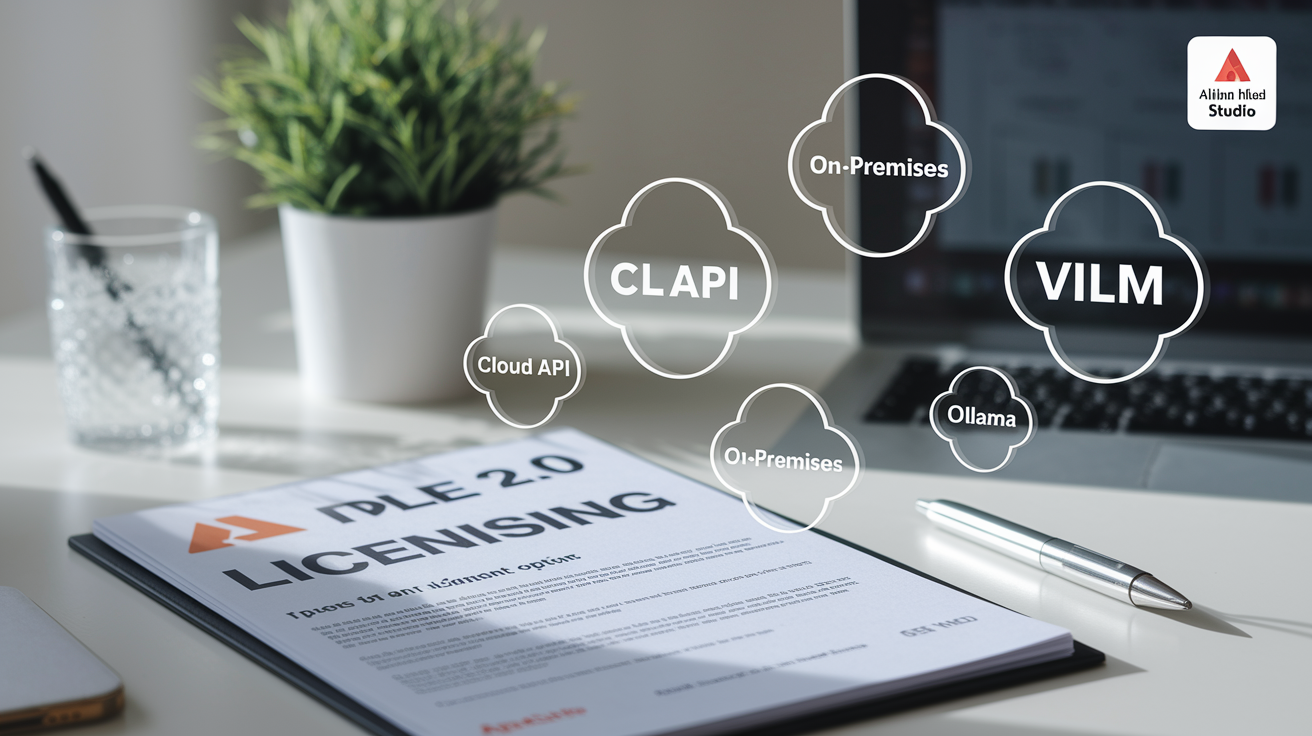
Most Qwen 2.5 models are released under the Apache 2.0 license. You can use them commercially, modify them, and redistribute them without licensing fees. The 3B and 72B variants use different license terms. Developers should review the license files in the respective Hugging Face model repositories before deploying these sizes in production. Model weights are distributed through Hugging Face, with cards and configuration files included for straightforward integration into Transformers, vLLM, and other inference frameworks.
Cloud deployment is available via Alibaba’s Model Studio, which hosts API endpoints for Qwen-Plus and Qwen-Turbo. These managed services handle scaling, load balancing, and infrastructure maintenance. You’re trading some control for reduced operational overhead. For teams that require on-premises deployment or custom hardware configurations, Qwen 2.5 supports vLLM for high-throughput serving (requires vLLM >= 0.5.3; tool-calling requires >= 0.6), Ollama for local runtime, and TensorRT-LLM for NVIDIA GPU optimization. Quantization options include AutoGPTQ and AutoAWQ for 8-bit and 4-bit inference, reducing memory footprints on consumer GPUs or edge devices.
| Platform | Deployment Type | Recommended Use Case |
|---|---|---|
| Hugging Face Transformers | Self-hosted (GPU/CPU) | Research, prototyping, custom fine-tuning workflows |
| vLLM / TensorRT-LLM | High-throughput inference server | Production APIs, batch processing, low-latency applications requiring OpenAI-compatible endpoints |
| Alibaba Model Studio (API) | Managed cloud service | Enterprise applications, scalable chat systems, teams without infrastructure resources |
Final Words
You’ve seen what qwen 2.5 delivers: a clear definition and release context, architecture and size options, benchmark gains, feature improvements, comparisons with Qwen 2, real-world use cases, and deployment and licensing routes.
If you’re evaluating options, pick a model size that matches latency and budget, run focused tests, and review safety alignment. The qwen 2.5 model brings stronger reasoning, coding, and multilingual performance, so it’s worth piloting in your stack. Overall, it’s a practical upgrade to try now.
FAQ
Q: What is the Qwen 2.5 model?
A: The Qwen 2.5 model is Alibaba’s 2024 update to the Qwen series, adding stronger reasoning, coding, and multilingual capabilities and offering multiple sizes for developer and enterprise deployments.
Q: Is Qwen 2.5 Max better than ChatGPT?
A: Qwen 2.5 Max can outperform ChatGPT on certain benchmarks (reasoning, coding, multilingual); which is better depends on the specific task, integration needs, availability, and support or safety requirements.
Q: Is Qwen an LLM or SLM?
A: Qwen is a large language model (LLM) family, not an SLM, with scalable variants designed for different parameter sizes and deployment scenarios.
Q: What is the best Qwen model?
A: The best Qwen model depends on your needs: pick Qwen 2.5 Max for top accuracy, mid-size variants for balanced cost and performance, and lightweight models for on-device or low-latency use.