
What if a 671-billion-parameter model only uses 37 billion of its weights for each token?
DeepSeek V3, released December 2024, does exactly that with a mixture-of-experts design that cuts compute and training costs while keeping strong reasoning and coding skills.
Developers and researchers get long-context support (later builds reach 128K tokens), lower inference memory, and competitive benchmark results versus GPT and Claude.
This post breaks down the technical specs, routing and training math, real-world benchmarks, and practical next steps for deployment.
Technical Overview of the DeepSeek V3 Model Architecture

DeepSeek V3 dropped in December 2024 as a Mixture-of-Experts foundation model built to deliver frontier reasoning and coding at a fraction of what training usually costs. The model packs 671 billion total parameters but only fires up 37 billion per token during inference. That selective activation cuts compute overhead while keeping the expressive range you’d expect from a much bigger dense model. Pre-training ate up 2.788 million H800 GPU hours at around $5.6 million, making it one of the most cost-efficient large-scale builds out there.
The MoE setup routes each token through a small cluster of specialized expert networks instead of running it through all 671 billion parameters. A gating mechanism scores each expert during forward passes and picks the top performers, usually activating 37 billion parameters per token. This lets different experts get good at different things (math, code, natural language, multilingual stuff) while keeping memory and compute closer to a 37B dense model when you’re running inference. Extended versions like V3.1 handle context windows up to 128,000 tokens, so you can reason over full novels, big codebases, or stacks of research documents.
For developers and researchers, the practical side matters. Memory footprint scales with activated parameters, not total parameters, so you can deploy on hardware that’d choke on a 671B dense model. Training compute grows sublinearly compared to dense equivalents. Long-context handling stays manageable even at 128K tokens. You’ll still need multi-GPU setups for production workloads, and the routing overhead adds a bit of latency compared to dense models of the same activated size.
Key architectural characteristics:
- MoE expert routing – Gating network picks active experts per token, enabling specialization and efficiency.
- Long-context support – Native training up to 32K tokens, stretched to 128K in V3.1 through continued training.
- Expert specialization – Different experts develop domain strengths during pre-training, boosting task accuracy.
- Inference efficiency – Only 37B of 671B parameters activated per forward pass, cutting FLOPs and memory bandwidth needs.
- Training dataset scale – Pre-trained on trillions of tokens; V3.1 long-context extension alone consumed 630B + 209B tokens across two phases.
- Hardware accessibility – Runs on multi-GPU setups smaller than those needed for equivalent dense models, though still resource-hungry.
Core Capabilities and Model Behavior Across DeepSeek V3 Variants
DeepSeek V3 handles chain-of-thought reasoning, multi-step math, code generation, and multilingual understanding really well. The base V3 model generates explicit reasoning traces when you prompt it, breaking complex questions into steps before landing on answers. V3-0324, released in March 2025, brought post-training improvements that reportedly beat GPT-4.5 on certain math and coding tests. V3.1, launched in August 2025, introduced a hybrid mode that mixes fast direct responses with optional chain-of-thought. When chain-of-thought is on, V3.1 compresses reasoning tokens by 20 to 50 percent compared to earlier models, giving you similar reasoning quality with fewer tokens and faster first-token times.
The V3 family supports over 100 languages with near-native skill, showing real gains on low-resource languages that don’t have massive monolingual datasets. Coding benchmarks show strong performance on software engineering tasks like automated debugging, code completion, and agent-driven compile-test-fix loops. Reasoning improvements across V3 variants come from scaled reinforcement learning during post-training, with V3.2 investing more than 10 percent of its pre-training compute budget into RL alignment. This narrows the gap with closed models on agentic tasks and structured tool use.
Core capabilities summary:
- Extended reasoning chains – Generates multi-step logical traces for math, science, and planning.
- Tool-friendly outputs – Produces structured function calls and intermediate reasoning histories that work with agent frameworks.
- Multilingual robustness – Handles 100+ languages, with better accuracy on underrepresented language families.
- Compressed chain-of-thought – V3.1 cuts reasoning token overhead by up to 50 percent while keeping answer quality intact.
Performance Benchmarks of the DeepSeek V3 Model
DeepSeek V3-0324 beats GPT-4.5 on selected math and coding benchmarks, showing competitive reasoning accuracy at way lower training cost. R1-linked derivatives of the V3 architecture cut hallucinations by 45 to 50 percent on summarization, rewriting, and reading comprehension compared to earlier releases. V3.1 matches R1-0528 quality on reasoning-heavy tests while responding faster because of chain-of-thought compression. V3.2-Speciale, a high-compute research variant, scores gold-medal results on the 2025 International Mathematical Olympiad and International Olympiad in Informatics, putting it among the strongest reasoning models tested on competition problems.
Math reasoning benchmarks highlight V3’s strength in step-by-step problem breakdown. Coding tests show improved performance on real-world software engineering tasks, including multi-file codebases and integration tests. Function-calling scores on agent benchmarks like Tau-Bench hit 53.5 on airline booking tasks and 63.9 on retail scenarios, though tool use during reasoning mode is still being worked on. Hallucination metrics improved a lot after post-training optimization, with V3.1 and V3.2 showing more conservative answer generation and better calibration on factual questions.
V3 variants trail top closed models on some general conversation tasks and nuanced multimodal work but compete closely on structured reasoning, code generation, and long-context workflows. Head-to-head tests against GPT-4 Turbo, Claude 3.5, and Gemini Pro show DeepSeek V3 holding advantages in math-heavy reasoning and matching or slightly trailing on open-ended creative writing and real-time knowledge tasks.
| Benchmark Category | DeepSeek V3 Performance | Competitor Reference |
|---|---|---|
| Mathematical reasoning (AIME, MATH-500) | Strong step-by-step decomposition; V3-0324 beats GPT-4.5 on select tests | Competitive with OpenAI o1-mini and Claude 3.5 |
| Coding and software engineering | Improved multi-file reasoning and debugging; strong on LiveCodeBench tasks | Matches or exceeds GPT-4 Turbo on structured code generation |
| Hallucination and factual accuracy | 45–50% reduction in hallucinations on summarization and reading comprehension | More conservative than earlier open models; trails GPT-4 on real-time knowledge |
| Agent tool calling (Tau-Bench) | 53.5 (airline) and 63.9 (retail); reasoning mode tool use in development | Competitive with mid-tier closed models; trails Gemini Pro on complex workflows |
Comparing DeepSeek V3 With Competitor Models
DeepSeek V3 goes head-to-head with GPT-4 Turbo, Claude 3.5, and Gemini Pro on reasoning-heavy tasks, offering comparable or better performance on math, coding, and long-context work at a fraction of the training cost. V3-0324 outperforms GPT-4.5 on specific math tests, and V3.2-Speciale matches Gemini 3.0 Pro level reasoning on competition problems. But V3 variants generally trail the best closed models on general conversation, real-time factual knowledge, and tightly integrated multimodal tasks. The open-weight advantage lets you self-host, customize post-training, and dodge usage limits, but deployment needs serious hardware and expertise.
The main limitation compared to frontier closed models is world knowledge currency. V3’s pre-training data is finite, so it’s not great as a real-time news oracle or for tasks needing up-to-the-minute info without retrieval help. Token efficiency (how concisely the model expresses reasoning or summarizes content) lags some proprietary models, meaning longer context usage can mean higher token costs. For extremely difficult constraint-heavy reasoning tasks like formal theorem proving or nuanced philosophical arguments, V3 might trail the absolute best closed models, though V3.2-Speciale closes this gap a lot on structured competition problems.
Competitive strengths and positioning:
- Against GPT-series models – Matches or beats GPT-4 Turbo on math and coding; trails on general conversation fluency and real-time knowledge.
- Against Claude-series models – Competitive on reasoning and code generation; trails on nuanced creative writing and conversational flow.
- Against Gemini-series models – V3.2-Speciale reaches Gemini 3.0 Pro level reasoning on structured tasks; trails on tightly integrated multimodal workflows.
- Against open frontier models – Among the strongest open-weight reasoning models; better reasoning-to-cost ratio than most open alternatives.
- Against long-context engines – V3.1’s 128K-token context and V4’s million-token support outpace many competitors; efficiency improvements cut inference cost at scale.
Training Methodology and Compute Behind the DeepSeek V3 Model

DeepSeek V3 was pre-trained over 2.788 million H800 GPU hours at around $5.6 million, way lower than the $50–100 million estimates for models like GPT-4. The MoE architecture enabled this by activating only a subset of parameters during each training step, cutting FLOPs per token while keeping expressive capacity. Pre-training consumed trillions of tokens across different domains, with careful data curation to balance coding, math, multilingual text, and general knowledge. The resulting base model became the foundation for supervised fine-tuning, reinforcement learning, and long-context extension phases.
Post-training for the R1 variant cost about $294,000, mostly on H800 GPUs, and focused on reinforcement learning to improve chain-of-thought reasoning and cut hallucinations. V3.1’s long-context extension involved two-phase continued training: 630 billion tokens at 32K context length, then 209 billion tokens at 128K context length. This phased approach let the model gradually adapt its attention patterns and positional encodings without catastrophic forgetting. V3.2 invested over 10 percent of its pre-training compute budget into post-training reinforcement learning, using custom reward models for correctness, fluency, and tool-use consistency.
Distillation played a big role in creating smaller deployable variants. The team generated 800,000 high-quality reasoning samples using the R1 model, then fine-tuned six smaller models (ranging from 1.5B to 70B parameters) built on Llama 3.1, Llama 3.3, and Qwen 2.5 base checkpoints. This distillation pipeline proved more efficient than training smaller models with reinforcement learning alone; an RL-only attempt on a 32B base model underperformed the distilled version even after more than 10,000 RL steps. The distilled models inherit much of the reasoning capability of the larger teacher while staying deployable on consumer and edge hardware.
Practical Deployment of DeepSeek V3 Models
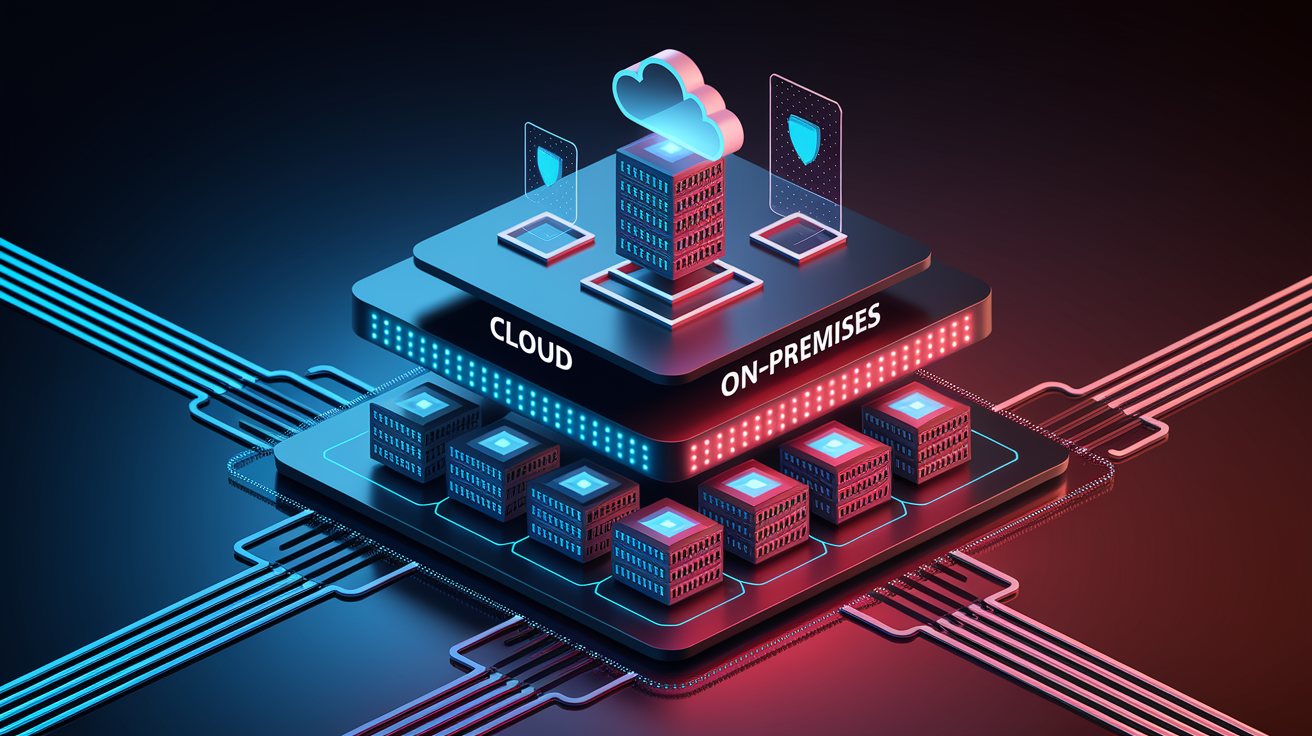
Deploying DeepSeek V3 in production takes careful hardware planning. Running the largest V3 or R1 variants at full precision usually needs eight NVIDIA H200 GPUs, each with 141 GB of memory, to handle the 671B total parameter count and keep inference latency reasonable. Smaller distilled models (1.5B to 70B) can run on single high-end GPUs or multi-GPU consumer setups, making them accessible for prototyping and moderate-scale work. Cloud providers offer managed endpoints for some V3 variants, taking care of infrastructure complexity but bringing usage limits and per-token pricing. On-premise deployments keep full control over data, latency, and cost structure but need expertise in distributed inference and model serving.
Cloud deployment offers the fastest path to production for teams without specialized ML infrastructure. Providers like Amazon Bedrock support DeepSeek V3.1 with fully managed endpoints, integrated security controls, and simple API access via InvokeModel or Converse APIs. But high-volume workloads can rack up costs, and model access policies might change. On-premise deployment using tools like BentoML enables multi-GPU inference orchestration, custom post-training, and full data sovereignty. BentoML supports bring-your-own-cloud setups and multi-cloud orchestration, letting teams deploy across AWS, GCP, Azure, or private data centers.
Containerization with Docker simplifies environment consistency and dependency management. Wrapping the model server, inference runtime, and required libraries in a Docker image ensures reproducibility across development, staging, and production. Kubernetes orchestration becomes necessary for large-scale deployments, enabling autoscaling, load balancing, and rolling updates across GPU-equipped nodes. For teams running V3 models in Kubernetes, dedicated GPU pools and careful resource quota management prevent resource fights and ensure predictable latency.
Research-only variants like V3.2-Speciale are tuned for reasoning benchmarks and competition problems but don’t support tool calling or general chat workflows. These models deliver exceptional performance on structured tasks but need careful evaluation before production use. Production-friendly variants like V3.1 and standard V3 Chat models balance reasoning, conversation, and tool use, making them suitable for customer-facing applications and agentic workflows.
Recommended deployment strategies:
- Cloud managed endpoints – Fastest deployment; good for proof-of-concept and moderate workloads; watch for usage limits and per-token costs.
- Hybrid cloud + on-prem – Route high-sensitivity workloads to on-prem infrastructure; use cloud for overflow and development.
- Fully on-premise – Retain complete data control; requires dedicated GPU infrastructure and MLOps expertise.
- Edge and constrained environments – Use distilled models (1.5B–14B) for latency-critical or bandwidth-limited deployments.
- Production maturity considerations – Prefer Chat and V3.1 variants for general use; reserve Speciale and research variants for evaluation and specialized tasks.
Optimizing Inference for the DeepSeek V3 Model

DeepSeek V3’s 671B total parameter count and 37B activated parameters create unique inference optimization challenges. Latency scales with activated parameter count and context length, while memory usage depends on both model weights and key-value cache size. For 128K-token contexts, the KV cache alone can eat tens of gigabytes, even with shared key-value representations across attention heads. Batching multiple requests can spread fixed overhead and improve GPU utilization, but large batch sizes increase KV cache memory pressure, so you need careful tuning based on available VRAM and target throughput.
Mixed-precision inference cuts memory footprint and speeds up computation without much quality loss. Running activations and KV cache in FP16 or BF16 cuts memory usage roughly in half compared to FP32, while model weights can often be quantized to INT8 or even lower precision with minimal accuracy hit. V3.1’s chain-of-thought compression naturally reduces output token count by 20 to 50 percent, directly lowering inference cost for reasoning-heavy workloads. For applications where reasoning transparency is optional, toggling off explicit chain-of-thought can further improve latency and reduce token usage.
Throughput optimization starts with right-sizing batch sizes to max out GPU utilization without triggering out-of-memory errors. Dynamic batching, where requests of varying lengths get grouped intelligently, prevents padding waste and improves effective throughput. Continuous batching techniques let new requests join in-progress batches, cutting idle time and improving responsiveness. For multi-GPU deployments, tensor parallelism splits model layers across devices, while pipeline parallelism stages different layers on different GPUs. Combining both strategies enables efficient scaling to very large models and high-concurrency workloads.
Inference optimization best practices:
- Use mixed precision – Run activations in FP16/BF16 and quantize weights to INT8 where quality permits; cuts memory and speeds compute.
- Tune batch sizes dynamically – Start with small batches and increase until you hit memory or latency constraints; use continuous batching for high-concurrency scenarios.
- Enable chain-of-thought compression – For V3.1, toggle compressed reasoning mode to cut output tokens by 20–50% with minimal quality loss.
- Profile and monitor KV cache – Long-context workloads can exhaust memory; consider KV cache eviction strategies or context windowing for extremely long sessions.
API Integration and Tooling for DeepSeek V3
DeepSeek V3 models are accessible via hosted APIs and cloud provider integrations. Amazon Bedrock supports DeepSeek V3.1 with InvokeModel and Converse APIs, letting developers integrate reasoning capabilities into AWS-based applications without managing inference infrastructure. The Bedrock console provides a playground interface where you can select the DeepSeek model category, configure reasoning mode (thinking or non-thinking), and test prompts interactively. AWS CLI and SDK access allows programmatic invocation, with standard request-response patterns and JSON payloads.
Reasoning-mode selection is a key feature in some API integrations. In thinking mode, the model generates explicit chain-of-thought traces before producing final answers, increasing output tokens but improving reasoning transparency and accuracy. Non-thinking mode returns direct answers faster, suitable for tasks where intermediate reasoning isn’t necessary. You can toggle this parameter per request, enabling hybrid workflows where complex queries use thinking mode and simple lookups use non-thinking mode. Troubleshooting common errors typically involves verifying IAM permissions, checking region availability, and ensuring request payloads match the expected schema for the selected API endpoint.
Common integration steps:
- Authenticate and configure access – Set up IAM roles or API keys with appropriate permissions; verify model access is enabled in the target region.
- Select reasoning mode – Choose thinking mode for complex reasoning tasks; use non-thinking mode for speed-critical or simple queries.
- Handle responses and parse outputs – Extract final answers from structured JSON responses; log chain-of-thought traces for debugging and evaluation.
Distillation, Model Compression, and Smaller DeepSeek V3 Derivatives

DeepSeek’s distillation pipeline transfers reasoning capability from the large V3 and R1 models into smaller, more deployable variants. The process started by generating 800,000 high-quality reasoning samples using R1 as the teacher model. These samples were then used to fine-tune six smaller student models built on Llama 3.1, Llama 3.3, and Qwen 2.5 base checkpoints, ranging from 1.5B to 70B parameters. The resulting distilled models inherit much of the step-by-step reasoning behavior of the teacher while running on far less hardware. DeepSeek-R1-Distill-Qwen-1.5B outperforms GPT-4o and Claude 3.5 Sonnet on AIME and MATH-500, showing that even billion-parameter models can hit frontier-level reasoning on specific tasks.
Performance across distilled models scales predictably with size. The 1.5B variant excels at math reasoning but struggles on coding benchmarks, scoring only 16.9 on LiveCodeBench. The 7B and 8B variants balance math and coding performance, making them suitable for general-purpose applications on modest hardware. The 32B variant hits 72.6 on AIME and 94.3 on MATH-500 with a CodeForces rating of 1691, placing it among the best distilled performers. The 70B variant reaches 94.5 on MATH-500 and 57.5 on LiveCodeBench, the highest coding score among distilled models, making it the closest small-model equivalent to the full R1 teacher.
Distillation proved more effective than reinforcement learning for transferring reasoning to smaller models. An attempt to train a 32B base model using RL alone required over 10,000 steps and still underperformed the distilled version. This suggests that distillation from high-quality reasoning traces is a more sample-efficient and stable method for scaling reasoning down to smaller parameter counts. Tradeoffs remain: small models lack the breadth of knowledge and conversational fluency of larger models, and they perform poorly on tasks requiring deep world knowledge or nuanced context handling.
| Model Size | Strengths | Best Use Case |
|---|---|---|
| 1.5B–7B | Exceptional math reasoning; very low hardware requirements; fast inference | Edge devices, rapid prototyping, math-focused applications with limited resources |
| 8B–14B | Balanced math and coding; runs on single consumer GPUs; good reasoning-to-size ratio | General-purpose assistants, coding tools, moderate-scale production deployments |
| 32B | High math reasoning (AIME 72.6); strong coding (CodeForces 1691); fits on high-end GPUs | Advanced coding agents, competitive programming tools, research workflows |
| 70B | Closest distilled model to full R1; top LiveCodeBench score (57.5); broad task coverage | Production reasoning engines, multi-domain applications, enterprise deployments with GPU capacity |
| 671B (V3/R1 full models) | Frontier reasoning; extensive world knowledge; long-context support; multimodal readiness | Research, large-scale production, tasks requiring maximum reasoning depth and breadth |
Retrieval-Augmented Generation (RAG) and DeepSeek V3 Integration
DeepSeek V3’s strong reasoning capabilities make it a solid backbone for retrieval-augmented generation workflows. While the model handles long-context and step-by-step reasoning well, it benefits a lot from external retrieval for tasks needing real-time factual accuracy, domain-specific knowledge, or information beyond its training cutoff. RAG architectures combine V3’s reasoning engine with vector search over up-to-date or proprietary knowledge bases, enabling applications to answer questions grounded in recent data, internal documents, or specialized corpora.
Recommended retrieval architectures typically follow a two-stage pattern: retrieve relevant context via semantic search, then pass the context and user query to DeepSeek V3 for reasoning and synthesis. Embedding generation is the first step; you encode documents into dense vectors using a separate embedding model tuned for semantic similarity. These embeddings get stored in a vector database such as Pinecone, Weaviate, or Qdrant. At query time, the user’s question is embedded and compared against the stored vectors to retrieve the top-k most relevant passages. These passages get concatenated with the original query and sent to DeepSeek V3, which synthesizes a final answer grounded in the retrieved evidence.
Integration with vector databases requires careful attention to chunking strategies, embedding model selection, and retrieval thresholds. Documents should be split into semantically coherent chunks (typically 256–512 tokens) to balance granularity and context. Embedding models like OpenAI’s text-embedding-3 or open alternatives like Sentence-BERT produce high-quality vector representations. Retrieval thresholds and top-k values should be tuned based on task requirements; higher k provides more context but increases input tokens and latency. DeepSeek V3.2’s sparse attention efficiency makes RAG workflows more scalable by cutting the inference cost of processing long retrieved contexts.
Best practices for RAG pipelines with DeepSeek V3:
- Chunk documents semantically – Use natural boundaries (paragraphs, sections) and aim for 256–512 tokens per chunk to preserve context.
- Select high-quality embeddings – Use domain-tuned or general-purpose embedding models tuned for semantic similarity; validate retrieval quality with offline metrics.
- Tune retrieval top-k and thresholds – Start with k=3–5 for focused tasks; increase for complex queries requiring broad context; filter low-similarity results.
- Format retrieved context clearly – Prepend retrieved passages with metadata (source, timestamp) and separate them visually from the user query to improve answer attribution.
- Monitor and iterate – Log retrieval quality, answer correctness, and latency; A/B test chunking strategies, embedding models, and prompt templates to tune performance.
Safety, Alignment, and Enterprise Use of DeepSeek V3
DeepSeek V3’s chain-of-thought reasoning provides valuable transparency for safety and alignment monitoring. The model’s explicit step-by-step outputs make it easier to detect logical errors, hallucinations, and unsafe reasoning paths compared to opaque black-box models. R1-0528 showed hallucination cuts of 45 to 50 percent on summarization, rewriting, and reading comprehension tasks, reflecting improvements in post-training alignment and calibration. Chain-of-thought compression in V3.1 reduces token overhead while preserving reasoning transparency, letting organizations audit decision-making processes without excessive logging costs.
Enterprise governance and access controls are critical for production deployments. Amazon Bedrock integrations support V3.1 with built-in guardrails, IAM-based access policies, and Service Control Policies (SCPs) that let administrators restrict model access at the account or organizational level. Automatic enablement of serverless foundation models in AWS accounts as of October 2025 simplifies onboarding but requires proactive IAM configuration to enforce least-privilege access. Organizations should log all model invocations, monitor usage patterns for anomalies, and integrate guardrails to filter unsafe inputs and outputs before user exposure.
Privacy, regulatory compliance, and model drift pose ongoing operational challenges. Deploying publicly available models like DeepSeek V3 requires careful evaluation of data privacy implications, especially for applications handling sensitive or regulated data. GDPR and similar frameworks demand clear data processing agreements, user consent mechanisms, and rights to erasure, which can conflict with stateless API usage patterns. Bias checking should be performed across deployment-relevant demographics and languages, with particular attention to low-resource languages where training data might be sparse. Drift detection methods (comparing model outputs over time against reference datasets) help spot degradation in reasoning quality, factual accuracy, or safety alignment as usage patterns evolve.
Final Words
Here’s the quick recap: DeepSeek V3’s 671B/37B MoE design and long‑context variants deliver stronger reasoning, coding, and noticeably lower hallucination compared with prior releases.
Practical details—training scale, hardware and deployment tradeoffs, inference optimizations, RAG integration, and safety controls—drive real-world value and cost.
If you’re evaluating modern LLMs, the deepseek v3 model strikes a solid balance of power and deployability. Try a distilled variant or a cloud integration first to see gains without massive hardware. Overall, it’s a capable, practical step forward.
FAQ
Q: What is DeepSeek-V3?
A: DeepSeek‑V3 is a large Mixture‑of‑Experts (MoE) language model launched in December 2024, built for long‑context reasoning, stronger coding/math performance, and multimodal tasks across tuned variants.
Q: Is DeepSeek-V3 2 free?
A: DeepSeek‑V3.2 is not generally free; access and pricing depend on the provider. Some research‑only variants may be restricted, while hosted APIs typically charge per request or subscription.
Q: How much does it cost to use DeepSeek-V3?
A: The cost to use DeepSeek‑V3 varies: hosted API calls are billed by provider, while self‑hosting large variants needs multiple H200‑class GPUs and can run tens to hundreds of dollars per hour; check your vendor pricing.
Q: What is the model size of DeepSeek-V3?
A: The model size of DeepSeek‑V3 is about 671 billion total parameters, with roughly 37 billion activated per token via MoE routing; some extended variants support contexts up to 128K tokens.