
Can a 70B model really match a 405B while cutting inference cost by roughly 80%?
Meta’s Llama 3.3 70B, released December 6, 2024, makes that claim with open weights, a 128k token context window, and training on over 15 trillion tokens.
It uses Grouped Query Attention to speed long-context decoding and focuses on text-only, non-reasoning outputs.
This post explains the architecture changes, runs the benchmarks, shows real-world performance and cost trade-offs, and helps you decide when to pick Llama 3.3 70B for production.
Overview of the Llama 3.3 70B Model

Meta dropped the Llama 3.3 70B Instruct model on December 6, 2024. It’s a 70 billion parameter text system that performs at the level of its much bigger predecessor while slashing inference costs by around 80 percent. The model comes with open weights under the Llama 3.3 Community License Agreement, which lets you use it commercially, and it handles a context window between 128,000 and 130,000 tokens. Training data pulls from over 15 trillion tokens with a knowledge cutoff in December 2023. The system scored 14 on the Artificial Analysis Intelligence Index v4.0, sitting above the median of 13 for comparable open-weights, non-reasoning models in the 40B to 150B parameter range.
Llama 3.3 70B takes architectural upgrades from the Llama 3.1 and 3.2 series and runs with them. It uses Grouped Query Attention (GQA) to speed up inference on long sequences, plus an auto-regressive transformer design tuned for performance. Text in, text out. No images, no video. Meta applied Supervised Fine-Tuning (SFT) and Reinforcement Learning with Human Feedback (RLHF) during alignment, which pushed performance higher on coding, reasoning, tool use, and function-calling tasks that spit out structured JSON. Multilingual support covers eight languages, and the tokenizer vocabulary spans 128,000 entries.
Key specs:
- Parameters: 70 billion (dense architecture, non-reasoning variant)
- Context window: roughly 128 to 130k tokens (good for large retrieval contexts in RAG workflows)
- Knowledge cutoff: December 2023
- Supported languages: English, German, French, Italian, Portuguese, Hindi, Spanish, Thai
- Median output speed: 86.3 tokens per second (class median: 76.4 t/s)
- Time to first token: 1.40 seconds (class median: 1.75 s)
Architectural Foundations of the 3.3 70B Model

Llama 3.3 70B runs on an auto-regressive transformer architecture refined for throughput and memory efficiency at 70 billion parameters. The model uses Grouped Query Attention instead of standard multi-head attention. GQA shares key and value projections across multiple query heads, which cuts the memory footprint during inference and speeds up decoding on sequences that push the 128k token limit. This design lets the model serve longer contexts without demanding proportionally larger GPU VRAM. That matters when you’re deploying on hardware with memory constraints or processing retrieval-augmented generation prompts that stack many retrieved documents together.
Meta trained the system on more than 15 trillion tokens. That’s a bigger data scale than earlier Llama releases, and it shows in the model’s performance on benchmarks like GPQA Diamond, MATH, and IFEval. The training pipeline started with Supervised Fine-Tuning to align base capabilities, then added Reinforcement Learning with Human Feedback to improve conversational quality, tool invocation accuracy, and the generation of structured JSON for function-calling workflows. Knowledge cutoff sits in December 2023. The model doesn’t know about events or information published after that date. If you’re building something that needs real-time or recent data, you’ll want to integrate retrieval or external APIs to fill the gap.
Llama 3.3 70B is text-only, unlike the multimodal variants in the Llama 3.2 series. It takes natural-language text as input and produces natural-language text as output. This single-modality focus keeps the parameter budget concentrated on language understanding and generation, which contributes to the model’s benchmark performance relative to its size. The non-reasoning label means Llama 3.3 70B doesn’t produce extended chain-of-thought outputs during inference. It delivers direct answers instead of showing intermediate reasoning steps, which reduces latency and output token counts for use cases that don’t require transparency into the model’s internal logic.
Tokenizer Enhancements
The tokenizer for Llama 3.3 supports a vocabulary of 128,000 tokens. That’s up from the smaller vocabularies used in earlier Llama releases. A larger vocabulary reduces the average number of tokens required to encode a given text span. Fewer tokens mean faster inference and lower costs, since you’re running fewer forward passes through the model and paying less per API call when pricing is calculated per token. The expanded vocabulary also distributes coverage more evenly across the eight supported languages, reducing the tokenization inefficiency that multilingual models often hit when non-English text gets split into many subword fragments. A sentence in Hindi or Thai that might have needed 20 percent more tokens under an English-centric vocabulary can now be encoded with token counts closer to the English baseline. This makes cross-lingual applications more practical and cost-effective.
Performance Benchmarks and Evaluation Results

Llama 3.3 70B scored 14 on the Artificial Analysis Intelligence Index v4.0, putting it one point above the median score of 13 for open-weights, non-reasoning models in the 40B to 150B parameter range. The Intelligence Index aggregates performance across ten evaluations that test general reasoning, domain-specific knowledge, code generation, and instruction-following precision. During the benchmark run, Llama 3.3 70B produced 3.8 million output tokens. That’s described as “very concise” compared to the class median of 6.5 million tokens. The model generates shorter, more direct answers than many of its peers while matching or exceeding accuracy.
On specific tasks, the model beat Llama 3.1 405B on GPQA Diamond, MATH, and IFEval. Careful architecture tuning and training-data curation can offset raw parameter count in certain benchmark categories. Meta’s announcement claims stronger performance on coding, reasoning, and tool use compared to earlier 70B releases. The model’s ability to generate structured JSON for function-calling workflows expands its utility in agentic applications that need reliable tool invocation. High benchmark scores plus low verbosity translates into faster end-to-end latency for interactive use cases, since the model spends less time generating extraneous text.
| Benchmark | Score | Comparison Target |
|---|---|---|
| Artificial Analysis Intelligence Index v4.0 | 14 | Class median: 13 (40B to 150B open-weights, non-reasoning) |
| GPQA Diamond | Above Llama 3.1 405B | Llama 3.1 405B (not numerically specified) |
| MATH | Above Llama 3.1 405B | Llama 3.1 405B (not numerically specified) |
| IFEval | Above Llama 3.1 405B | Llama 3.1 405B (not numerically specified) |
| Output verbosity (tokens produced during Intelligence Index) | 3.8 million | Class median: 6.5 million (41% reduction) |
Comparison to Competing Large Models

Llama 3.3 70B positions itself as a cost-effective alternative to frontier models in the 70B to 100B class. It claims performance parity with Llama 3.1 405B on several benchmarks despite being roughly one-fifth the inference cost. Competing models like GPT-4 variants and closed-source systems from Anthropic or Google typically carry higher per-token API charges and don’t release weights for self-hosting. Open-weights alternatives like Mistral’s 70B offerings compete directly on both licensing and cost. Llama 3.3 70B’s median input price of $0.58 per million tokens sits above the class median of $0.43, but the output price of $0.71 per million tokens falls below the class median of $0.80. This makes the model more economical for workloads that generate substantial text, like coding assistants, content drafting, and conversational agents.
The model’s 128k to 130k context window matches or exceeds the context limits of many commercial APIs at the December 2024 release date. This enables retrieval-augmented generation workflows that concatenate dozens of documents or long codebases without truncation. Open licensing under the Llama 3.3 Community License Agreement permits commercial use and redistribution of derivatives. That’s a key differentiator from closed models that restrict fine-tuning, embedding into proprietary products, or deployment in regulated industries. Multilingual support for eight languages gives Llama 3.3 70B an edge over English-only competitors in global applications, though models from Google and OpenAI often cover more languages through separate multilingual releases or unified multimodal systems.
Latency and throughput metrics favor Llama 3.3 70B over the class median. Median output speed hits 86.3 tokens per second versus 76.4 t/s, and time to first token clocks in at 1.40 seconds versus 1.75 seconds. These speed advantages matter for interactive chat, real-time code completion, and agent workflows where sub-second response starts improve user experience. But the model stays text-only and non-multimodal. Applications requiring image understanding, video analysis, or vision-language reasoning need to integrate separate models or use a different system entirely.
Competitive strengths:
- Open weights with permissive commercial licensing, enabling fine-tuning and on-premise deployment
- Lower inference cost than 405B-class models while matching or exceeding several benchmark scores
- Faster median output speed (86.3 t/s) and quicker time to first token (1.40 s) than class peers
- Extended context window (128k to 130k tokens) suitable for large-document reasoning and RAG workflows
Fine-Tuning and Customization Options

Fine-tuning Llama 3.3 70B lets you adapt the model’s behavior, tone, domain knowledge, or task-specific accuracy by training on custom datasets. The model supports both full fine-tuning, which updates all 70 billion parameters, and parameter-efficient methods like Low-Rank Adaptation (LoRA). LoRA freezes the base weights and trains small adapter matrices to reduce memory and compute requirements. It’s practical for teams with limited GPU budgets because it can run on configurations that can’t accommodate full fine-tuning gradients. For instance, training a LoRA adapter might need 4×A100 80GB GPUs instead of the 8×A100 setup required for full updates.
Meta applied Supervised Fine-Tuning and Reinforcement Learning with Human Feedback during the model’s alignment phase. You can replicate similar workflows using open-source frameworks like Hugging Face Transformers, Axolotl, or DeepSpeed. Custom datasets should be formatted as instruction-response pairs or multi-turn conversations, depending on the target use case. Training stability improvements in the Llama 3 series, such as better initialization, gradient clipping, and learning-rate schedules, reduce the risk of divergence or catastrophic forgetting when fine-tuning on narrow domain data. This makes the process more accessible to practitioners without extensive hyperparameter-tuning experience.
To fine-tune Llama 3.3 70B:
- Obtain model weights from the Hugging Face gated repository by filling the access form and generating a READ token (free, requires accepting the Llama 3.3 Community License Agreement).
- Prepare training data in JSONL or Parquet format, with each example containing a prompt and target completion (or system/user/assistant turn structure for chat models).
- Select a fine-tuning method: use LoRA for memory-constrained setups (rank 8 to 64 adapters), or full fine-tuning if sufficient GPU memory is available.
- Configure training arguments: set learning rate (typically 1e-5 to 5e-5), batch size, gradient accumulation steps, number of epochs (often 1 to 3 for instruction tuning), and warmup ratio (0.03 to 0.1).
- Launch training using a distributed framework (DeepSpeed ZeRO-3 or Fully Sharded Data Parallel) across multiple GPUs, monitoring validation loss and example outputs to detect overfitting.
- Evaluate and merge the trained adapter or checkpoint, then test on held-out prompts to verify that the model maintains general capabilities while improving on the target task (for example, “Generate a Python function to parse CSV files” should produce syntactically correct, executable code after fine-tuning on coding data).
Hardware Requirements for Running the 70B Model

Running Llama 3.3 70B in FP16 precision requires approximately 140 GB of GPU memory to load the model weights alone, plus additional VRAM for intermediate activations during inference. A typical production setup uses 8×A100 80GB GPUs (640 GB total VRAM) to host the model with comfortable headroom for batch inference or concurrent requests. Smaller configurations are possible with quantization. 8-bit quantization reduces memory requirements to roughly 70 GB, fitting on 2×A100 80GB GPUs. 4-bit quantization can bring the footprint below 40 GB, enabling single-GPU inference on an A100 or H100 with careful memory management. Quantized models trade a small accuracy loss (typically 1 to 3 percent on benchmarks) for substantial cost savings and faster startup times.
CPU-only inference is technically feasible but impractical for production workloads due to latency measured in minutes per response rather than seconds. Developers experimenting with the model on local machines can use 4-bit or even lower-precision quantization with frameworks like llama.cpp or GGUF formats, which optimize for consumer hardware and can run on systems with 32 to 64 GB of RAM at the expense of throughput. Multi-node configurations distribute the model across multiple servers connected via high-speed networking (InfiniBand or NVLink) and are common in large-scale deployments serving thousands of requests per hour. These setups introduce pipeline parallelism or tensor parallelism to overlap computation and communication, reducing per-request latency compared to single-node serving.
| Configuration | Minimum Requirements | Recommended Setup |
|---|---|---|
| FP16 (full precision) | 8×A100 40GB or 4×A100 80GB | 8×A100 80GB or 8×H100 80GB |
| 8-bit quantization | 2×A100 80GB | 4×A100 80GB (for batching) |
| 4-bit quantization | 1×A100 80GB or 1×H100 80GB | 2×A100 80GB (for concurrent requests) |
| CPU inference (experimental) | 64 GB RAM, 32-core CPU | 128 GB RAM, high core count (not production-viable) |
| Multi-node (tensor parallelism) | 16×A100 80GB across 2 nodes, InfiniBand | 32×H100 80GB across 4 nodes, NVLink/InfiniBand |
API Access and Deployment Methods

You can access Llama 3.3 70B through multiple channels: third-party API providers that host the model as a managed service, enterprise AI platforms such as IBM’s watsonx.ai, or self-hosted deployments using the open weights from Hugging Face. Managed API providers abstract infrastructure complexity and offer pay-per-token pricing. The median input price across providers is $0.58 per million tokens, with output priced at $0.71 per million tokens and a blended 3:1 input-to-output rate of $0.62 per million tokens. Some providers implement prompt caching to reduce costs on repeated context prefixes. Cache hit pricing averages $0.585 per million tokens, but cache write fees, storage charges, and time-to-live policies vary by vendor (Anthropic charges cache writes with configurable TTL; Google bills per hour of cache storage; OpenAI and others may only charge on cache hits).
Self-hosting the model requires downloading the gated repository from Hugging Face after accepting the license and generating a READ token. You can then load the model into frameworks like Hugging Face Transformers, vLLM, or Text Generation Inference (TGI), which handle batching, quantization, and serving over HTTP or gRPC endpoints. Self-hosting eliminates per-token API fees and gives full control over hardware, latency, and data residency, but shifts the cost burden to GPU rentals, DevOps overhead, and model-loading time. For teams with sustained high-volume inference (millions of tokens per day), self-hosting often becomes more economical than managed APIs within weeks, especially when using spot instances or reserved GPU capacity.
Enterprise platforms such as watsonx.ai offer a middle path. The model is hosted in a managed environment, but customers retain control over fine-tuning, prompt management, and integration with internal tools. These platforms typically bundle inference with training, testing, and deployment workflows, and provide governance features like audit logs, role-based access control, compliance certifications that managed API providers may not expose. Rate limits, endpoint structure, and supported frameworks differ across providers. You should verify that a given API supports the required context length (up to 128k to 130k tokens), function-calling JSON outputs, and multi-turn conversation state before committing to a provider.
Licensing and Usage Restrictions

Llama 3.3 70B is released under the Llama 3.3 Community License Agreement, which permits commercial use, fine-tuning, and redistribution of derivative models. Organizations with fewer than 700 million monthly active users can deploy the model in production without seeking additional permissions from Meta. That makes it accessible to startups, mid-sized enterprises, and research institutions. Entities exceeding the 700 million user threshold must request a separate license from Meta. This restriction is designed to ensure fair use terms for the largest technology platforms.
The license allows redistribution of modified weights, such as fine-tuned versions or quantized variants, provided that redistributors include the original license terms and acknowledge Meta’s authorship. You can embed Llama 3.3 70B into commercial products, host it as a service, or integrate it into proprietary workflows without royalty obligations. But the license includes safety-related usage restrictions that prohibit deploying the model in ways that facilitate illegal activity, promote violence, or violate privacy regulations. These clauses are common in open AI licenses and are typically enforced through community norms and legal recourse rather than technical controls.
Key licensing points:
- Commercial use permitted for organizations below the 700 million monthly active user threshold (custom license required above that limit)
- Fine-tuning and redistribution allowed with attribution and inclusion of original license terms
- No royalty or per-token fees when self-hosting; API providers set their own pricing independently
- Safety and responsible-use clauses prohibit deployment for illegal activities, though enforcement relies on legal frameworks rather than technical restrictions
Practical Implementation Guidance and Use Cases
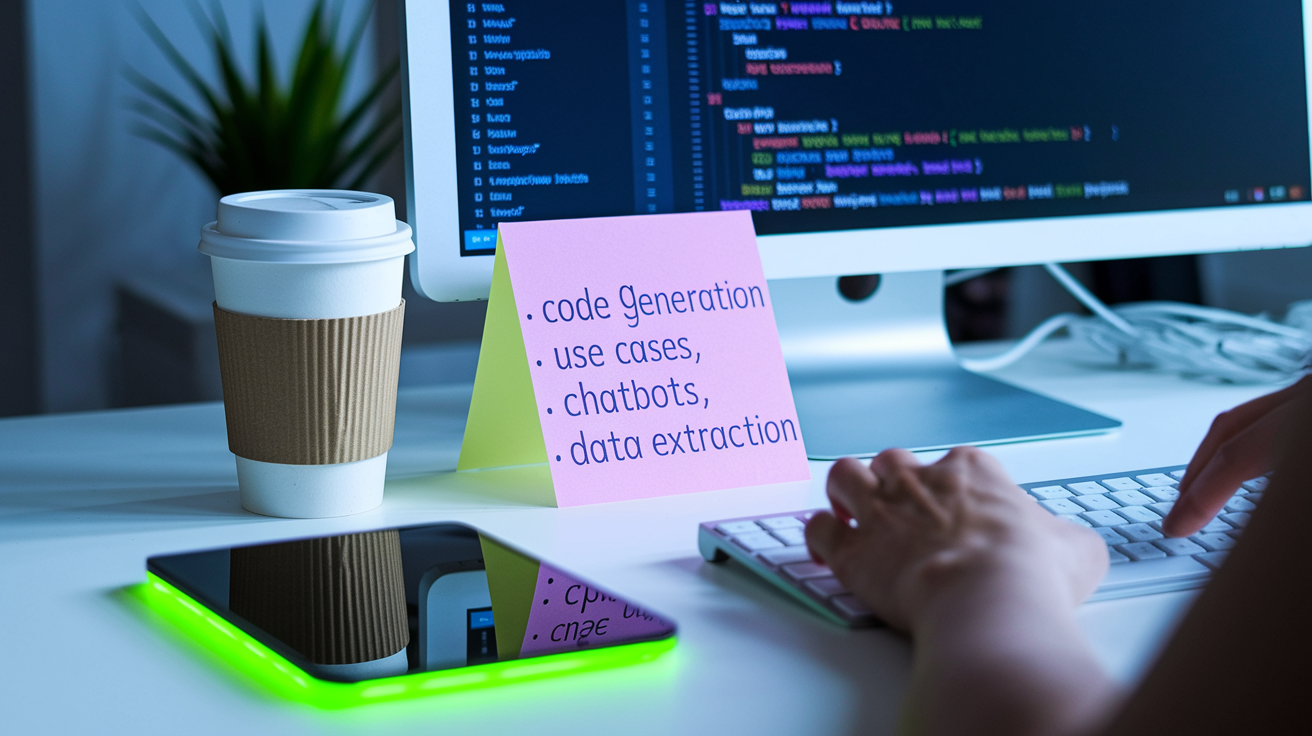
Integrating Llama 3.3 70B into applications starts with selecting a deployment path. Managed API, enterprise platform, or self-hosted inference, based on cost, latency, and control requirements. For rapid prototyping, managed APIs offer the fastest onboarding. You call a standard OpenAI-compatible endpoint, send a prompt array with system and user messages, and receive streamed or batched responses. Production deployments benefit from caching strategies that store repeated context prefixes (such as system instructions, retrieval documents, or conversation history) to cut input token costs by 40 to 60 percent. When crafting prompts, keep instructions concise and place critical task details early in the message. Llama 3.3 70B’s low verbosity means it responds directly without excessive preamble, so prompts that ask for step-by-step reasoning should explicitly request numbered lists or chain-of-thought formatting: “Explain your reasoning in three steps: (1) identify the core issue, (2) evaluate options, (3) recommend a solution.”
The model excels in coding assistance. It generates syntactically correct Python, JavaScript, or SQL from natural-language descriptions and provides error feedback with automatic fix suggestions. A prompt like “Write a Python function to read a CSV file, filter rows where column ‘status’ equals ‘active’, and return a list of dictionaries” produces clean, executable code with minimal boilerplate. For chatbot applications, the 128k to 130k context window supports long multi-turn conversations or the inclusion of large knowledge-base articles without truncation. This makes Llama 3.3 70B suitable for customer-support bots that reference documentation, internal wikis, or policy manuals in real time. Function-calling and tool-use capabilities let the model invoke APIs, databases, or search engines by emitting structured JSON that specifies the tool name and arguments, like “Call the weather_api with location=’San Francisco’ and units=’metric’.” This enables agentic workflows that combine language understanding with external data retrieval.
Practical use cases:
- Code generation and debugging: drafting functions, explaining error messages, refactoring legacy code, generating unit tests from docstrings
- Conversational agents: customer support, virtual assistants, internal knowledge bots (leveraging the 128k context for long conversations or reference documents)
- Structured data extraction: parsing invoices, contracts, or logs into JSON schemas; transforming unstructured text into database-ready records
- Report and content drafting: summarizing research papers, generating product descriptions, drafting email templates or documentation sections
- Multi-step reasoning and planning: building agentic systems that combine tool invocation, retrieval-augmented generation, and iterative refinement (for example, “Research three competitors, compare pricing, and draft a summary table”)
Final Words
We covered the Llama 3.3 70B model’s core strengths: 70B parameters, expanded context length, tokenizer and safety upgrades, and where it sits versus other large models.
We also walked through architecture, benchmarks, fine‑tuning options, hardware needs, deployment paths, licensing, and practical use cases so you know what to plan for.
If you’re choosing a foundation for apps or research, the llama 3.3 70b model balances performance and practicality — a dependable option to build on.
FAQ
Q: What is the model name of Llama 3.3 70B?
A: The model name of Llama 3.3 70B is Llama 3.3 70B, a 70‑billion‑parameter member of Meta’s Llama 3.3 series built for large-scale language tasks.
Q: What is the Llama 3.3 70B used for?
A: The Llama 3.3 70B is used for chatbots, coding assistants, summarization, search, multilingual tasks, and complex reasoning where strong language understanding and context matter.
Q: Is Llama 3.3 70B any good and is it better than DeepSeek 70B?
A: The Llama 3.3 70B is generally strong on reasoning, coding, and multilingual benchmarks; whether it’s better than DeepSeek 70B depends on the specific task, latency, cost, and published benchmark results.