Was TikTok born in 2018—or did it already exist years earlier?
Short answer: TikTok went global in August 2018 when ByteDance merged Musical.ly into TikTok, turning two regional hits into one worldwide app.
That merger is the pivot: it gave TikTok instant U.S. and European reach, Douyin’s recommendation tech, and the brand that exploded into mainstream culture.
This post walks the timeline, explains why August 2018 mattered, and shows what that shift meant for users, creators, and companies around the world.
Global Launch Timeline and the Exact Date TikTok Became Worldwide

TikTok went global in August 2018 when ByteDance merged Musical.ly into TikTok. That’s the moment everything clicked. One app, one brand, one user base covering every market except mainland China, where Douyin kept running separately.
But the story started earlier. Douyin launched in China back in September 2016 and hit 100 million users in its first year. Proof that ByteDance’s short-video formula actually worked. In September 2017, ByteDance pushed an international version called TikTok into markets outside China. Then in November 2017, they acquired Musical.ly, the lip-sync app that already had traction in the U.S. and Europe, for about $1 billion. Instant reach, proven playbook.
- September 2016: Douyin launches in China, reaches 100 million users in 12 months.
- September 2017: ByteDance releases TikTok internationally as a separate product.
- November 2017: ByteDance buys Musical.ly for roughly $1 billion.
- August 2018: Musical.ly merges into TikTok, creating the global app.
By early 2019, just months after the August 2018 consolidation, TikTok crossed 1 billion downloads worldwide. In September 2021, it reached 1 billion monthly active users globally. Faster than any legacy social platform. Projections suggest TikTok’s on pace to hit 2 billion global users by late 2025.
TikTok’s Early Foundations: Douyin, Musical.ly, and Pre‑Global Roots
Douyin launched in September 2016 as ByteDance’s experiment in short-form video for the Chinese market. Fifteen-second clips, dancing, lip-syncing, comedy sketches. The app leaned hard on a recommendation algorithm that surfaced content based on behavior, not follower counts. Within one year, Douyin crossed 100 million users. That success gave ByteDance the confidence to expand beyond China.
Musical.ly had a parallel story. Launched in 2014 under the name Cicada, pivoted to 15-second lip-sync videos when the founders had about 8 percent of their runway left. They added a watermark to every exported video. “Adding a watermark to Musical.ly videos led to top placement on the Apple App Store within 2 months.” By 2017, Musical.ly had built a loyal user base in the U.S. and Europe, but ByteDance saw an opportunity to combine its recommendation engine with Musical.ly’s Western traction. In November 2017, ByteDance acquired Musical.ly for around $1 billion, setting up the global TikTok merger nine months later.
Key Pre‑TikTok Milestones
Musical.ly launched in July 2014 and quickly gained traction among teens who recorded lip-sync performances and shared them with friends. The watermark strategy turned users into marketers. Organic growth without heavy ad spend. Meanwhile, Douyin’s September 2016 debut in China validated ByteDance’s algorithmic approach at massive scale. The November 2017 acquisition brought Musical.ly’s content library, user relationships, and Western market knowledge under ByteDance’s roof, letting the company merge both platforms into a single global product by mid-2018.
Inside the 2018 Merger: Technical Integration, User Migration, and Strategic Product Changes
The August 2018 merger required ByteDance to migrate millions of Musical.ly user accounts, video libraries, follower graphs, and engagement data into TikTok’s infrastructure without losing content or relationships. Engineers unified backend systems, moved user profiles to TikTok’s servers, and made sure every Musical.ly video kept its view counts, likes, and comments under the new TikTok brand. Musical.ly users opened the app one day to find it had become TikTok. Their accounts, followers, and upload history stayed intact. The migration happened over a short window to minimize confusion, and ByteDance provided in-app messaging explaining the change. Because Musical.ly and Douyin already shared core technology (both were ByteDance products), the technical lift focused on branding, localization, and aligning recommendation models rather than rebuilding the platform from scratch.
After the merger, ByteDance standardized features across markets, tuned the For You Page algorithm to serve a broader range of content types, and invested in global content moderation and trust-and-safety teams. The company unified branding assets, updated app icons and splash screens worldwide, and launched coordinated marketing campaigns to position TikTok as a global entertainment platform rather than a regional lip-sync tool. Product teams consolidated duplicated features, removed legacy Musical.ly branding from user interfaces, and rolled out new creator tools like Duet, Stitch, and live streaming. By the end of 2018, TikTok was one of the world’s most-downloaded apps, powered by Musical.ly’s established U.S. and European user base and Douyin’s proven algorithm.
| Integration Area | Description |
|---|---|
| User migration system | Moved Musical.ly accounts, followers, and engagement data to TikTok servers with zero data loss |
| Backend data merge | Unified video storage, recommendation engine inputs, and content moderation pipelines |
| Product feature unification | Standardized creator tools, removed duplicate features, aligned UI and branding globally |
| Global branding transition | Replaced Musical.ly icons, splash screens, and in-app messaging with TikTok branding worldwide |
TikTok Global Growth Milestones After the 2018 Release

The August 2018 merger set off one of the fastest adoption curves in social-media history. Within months, TikTok climbed app-store charts in dozens of countries, pulled in new user cohorts beyond Musical.ly’s teen demographic, and started appearing in mainstream media coverage as the next platform to watch.
- February 2019: TikTok surpassed 1 billion downloads worldwide. The FTC fined the app $5.7 million for collecting children’s data under age 13 without parental consent.
- 2020: Global lockdowns during the COVID-19 pandemic drove usage sharply higher. U.S. monthly active users exceeded 100 million during the surge.
- September 2021: TikTok reached 1 billion monthly active users globally. Faster than Facebook, Instagram, or any other legacy social platform.
- June 2020: TikTok for Business launched, offering self-serve ad tools for brands and small businesses.
- 2025 projection: Analysts estimate TikTok will approach 2 billion global users by late 2025, continuing its trajectory despite regional regulatory challenges.
Several factors fueled that growth. The For You Page algorithm tested every new video on a small audience, then scaled distribution based on engagement signals like watch time, shares, and completion rate. Unknown creators could go viral without needing existing followers. Short-form video fit mobile usage patterns and attention spans better than long YouTube uploads or static Instagram photos. Viral challenges and trending sounds created network effects, pulling in users who wanted to participate in or watch the latest meme. By 2021, TikTok had become a cultural force, influencing music charts, fashion trends, and even political activism, all while adding hundreds of millions of users per year.
Regional Expansion and Regulatory Challenges Following TikTok’s Global Launch
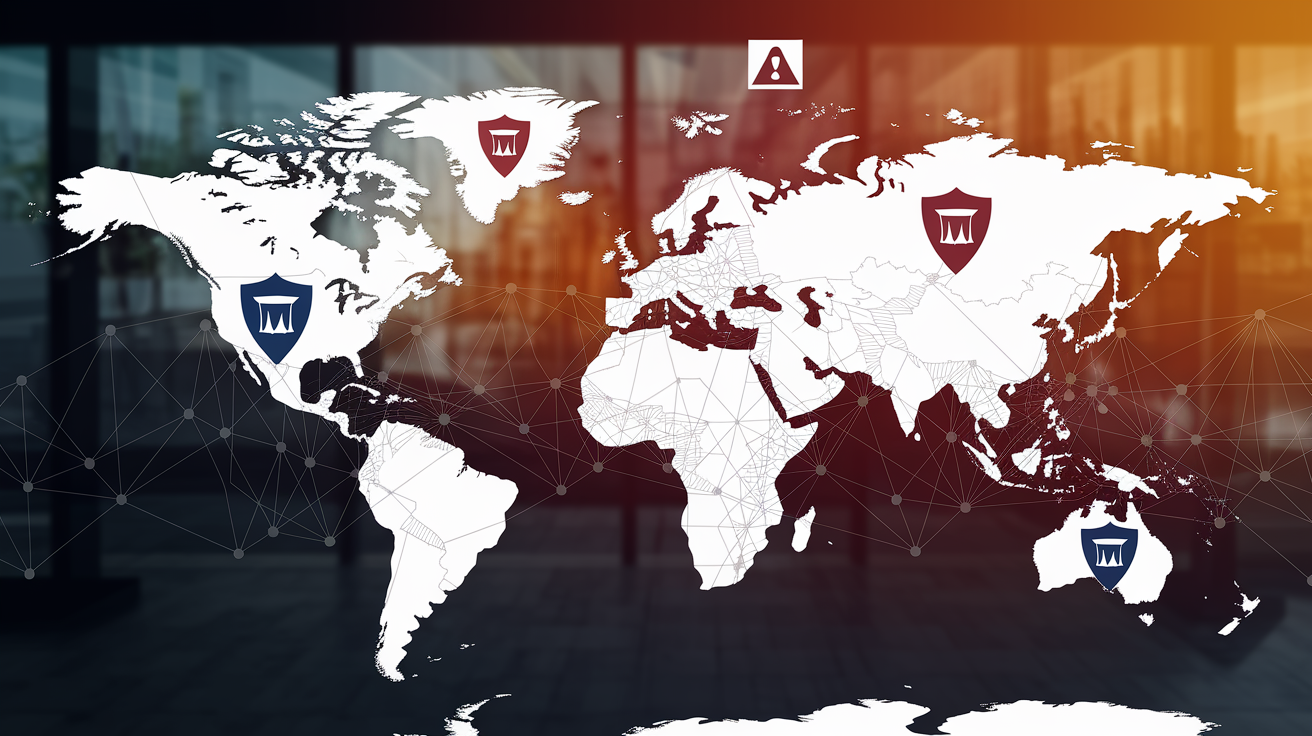
TikTok’s post-2018 expansion brought both explosive user growth and intense government scrutiny. The app scaled rapidly across North America, Europe, Southeast Asia, and Latin America, but data-security concerns and geopolitical tensions led several governments to investigate or restrict the platform. India became one of TikTok’s largest markets by user count in 2019, but the Indian government banned the app in June 2020 amid border disputes with China. Over 200 million users cut off instantly. That ban remains in effect, making India a cautionary example of how quickly regulatory decisions can reshape TikTok’s global footprint.
In the United States, TikTok faced repeated attempts at bans or forced sales starting in 2020. An August 2020 executive order sought to compel ByteDance to divest TikTok’s U.S. operations, but federal courts blocked enforcement in December 2020. The Biden administration launched a fresh national-security review in 2021, and in 2024 the U.S. Senate passed legislation requiring ByteDance to sell TikTok or face a nationwide ban by a set deadline. On January 19, 2025, TikTok went offline in the U.S. for 14 hours ahead of that deadline, then returned after an executive order extended the deadline by 75 days to April 5, 2025. By February 2025, an estimated 170 million Americans were still using the app, and traffic had returned to normal levels. European markets saw fewer availability disruptions, though regulators scrutinized TikTok’s data practices and content-moderation policies under evolving privacy laws.
Key Post‑Launch Regulatory Events
- June 2020: India bans TikTok, removing the app from one of its largest user bases overnight.
- August 2020: U.S. executive order attempts to force ByteDance to sell TikTok. Courts block enforcement in December 2020.
- 2024: U.S. Senate passes a divest-or-ban bill with a deadline for ByteDance to sell TikTok’s U.S. operations.
- January 2025: TikTok goes offline in the U.S. for 14 hours, then returns after a 75-day deadline extension to April 5, 2025.
How TikTok’s Features, Algorithm, and Music Licensing Supported Its Global Release Momentum

TikTok’s rapid global adoption after August 2018 rested on a combination of technical, content, and operational strengths. The For You Page algorithm tests new uploads on small audiences, measures engagement through likes, shares, comments, and watch time, then scales distribution for high-performing content. “The ‘For You Page’ tests new videos on small audiences, scaling based on engagement signals.” That system gave unknown creators a path to visibility without needing existing followers, lowering barriers to participation and fueling a constant stream of fresh content. TikTok also licensed music from Sony Music, Warner Music, and Universal Music, building a massive “Sounds” library that let users legally add popular tracks to videos. That accelerated dance and lip-sync trends and helped songs go viral on the platform.
- Duet and Stitch: Users can record split-screen responses or remix others’ videos, creating conversational threads and challenge chains that spread across the platform.
- Original Sound linking: Every audio clip is tagged and searchable, so users can find and reuse sounds from viral videos, amplifying trends.
- Live streaming: Creators broadcast in real time, accept virtual gifts, and engage directly with audiences, adding a revenue stream and deepening community ties.
- Localization and language support: TikTok operates in 154 countries and supports 75 languages, tailoring content recommendations and moderation to regional cultures and regulations.
Those features combined to create a self-reinforcing growth loop. More users meant more content, which improved recommendation quality, which attracted more users. By 2020, TikTok averaged roughly 1 billion video views daily and reported that 90 percent of users opened the app daily, with average session times around 95 minutes per day. The platform’s 41 percent user share in the 16–24 age bracket showed it had captured the attention of the next generation of social-media users, positioning TikTok as a long-term player alongside Facebook, Instagram, and YouTube despite launching globally only in 2018.
Final Words
August 2018: ByteDance merged Musical.ly into TikTok and the app went global, consolidating international users under a single product.
That followed Douyin’s 2016 China debut, TikTok’s 2017 international build, and the November 2017 Musical.ly acquisition. The merger unified features, tuned the algorithm for a worldwide audience, and helped TikTok hit huge download and user milestones soon after.
If you’re asking when did tiktok launch globally, the answer is August 2018 — a move that unlocked rapid growth and a platform that’s still expanding today.
FAQ
Q: When did TikTok go global / release internationally? Did TikTok come out in 2018?
A: TikTok went global in August 2018 when ByteDance merged Musical.ly into TikTok; the international TikTok app first launched in September 2017, while Douyin debuted in China in 2016.
Q: When did TikTok first get popular?
A: TikTok first gained major popularity after the August 2018 Musical.ly merger, boosted by Musical.ly’s U.S. and European users, and reached over 1 billion downloads by February 2019.