Controversial take: Instagram copied Snapchat, and it worked.
Instagram launched Stories on August 2, 2016, and rolled it out globally on iOS and Android that month.
With roughly 500 million monthly users and 300 million daily users, Stories hit a massive audience immediately.
It let people share short photos or videos that disappeared after 24 hours, right at the top of your feed.
In this post you’ll get the exact launch facts, why Instagram added Stories as a direct Snapchat response, and how the move reshaped creator behavior, brands, and the app’s product path.
Launch Details of Instagram Stories and the Exact 2016 Release Date
Instagram launched Stories on August 2, 2016. The rollout happened globally across iOS and Android throughout that August. At the time, Instagram had around 500 million monthly active users, 300 million people using it daily, and 250 million sending Direct messages. Stories showed up in a horizontal row at the top of your feed, right inside the app you were already using with the audience you’d already built.
The first version was simple. Photo or video slides that disappeared after 24 hours, about 10 seconds max per slide. You could shoot in the app or upload from your camera roll. Each Story showed you who watched it, and viewers could reply through DMs. But unlike standalone apps doing the same thing, Instagram didn’t make you start over or download something new.
A few basics from launch:
- Date: August 2, 2016
- Availability: Global on iOS and Android through August 2016
- Media limits: Around 10 seconds per slide
- User scale: Roughly 500M monthly, 300M daily at launch
Why Instagram Stories Was Introduced and Its Competitive Purpose

Stories was Instagram’s answer to Snapchat Stories, which had been around since October 2013. Instagram didn’t pretend otherwise. Leadership openly said Snapchat invented the format, and they were just adapting it. People called it a clone. They weren’t wrong. But Instagram’s edge wasn’t originality, it was distribution.
The pitch was about capturing everyday stuff that didn’t feel polished enough for your grid. Your main feed had become this museum of your best life. Stories was supposed to feel casual. It vanished in 24 hours, had no Likes, no public comments. Less pressure. More posting.
Snapchat made you go to a different app. Instagram put Stories at the very top of your feed. Every time you opened the app, there they were. Previous attempts to copy Snapchat with standalone apps flopped. Embedding Stories into Instagram gave it instant reach across hundreds of millions of people without asking them to rebuild their followings.
What Instagram wanted:
- Stop losing younger users to Snapchat
- Make it easier to post without worrying about likes or comments
- Use their existing network to grow faster than any competitor could from scratch
- Give brands a new way to share time-sensitive content
- Set up a future ad format that could actually make money
How Instagram Stories Worked at Release: Format, Features, and User Interface

You could create Stories with the in-app camera or upload from your phone. Each slide lasted up to 10 seconds, gone after a day. Swipe right from your feed or tap the Stories icon to start. Watching was simple: tap right to skip ahead, tap left to go back, hold to pause. Replies went to DMs, and you could see who watched.
Instagram gave you three drawing tools at launch. A standard brush, a translucent highlighter, and a neon-outlined one. You could pick custom colors. But a lot was missing. No location filters. No selfie lenses. No stickers, 3D effects, or speed controls. You could use third-party apps like MSQRD and share the result, but nothing was built in. No screenshot alerts either, and you couldn’t save your whole day’s Story as one file.
| Feature | Description |
|---|---|
| 24-hour lifespan | Everything disappears after one day |
| Drawing tools | Three brushes (standard, highlighter, neon) with color controls |
| Camera access | Swipe right or tap Stories icon, upload or shoot in-app |
| Viewer interactions | See who watched, replies go to Direct |
| Slide controls | Tap right to skip, left to go back, hold to pause |
| Missing features | No location tags, selfie lenses, stickers, or screenshot detection |
Early Reception, Controversy, and User Adoption Patterns

People were not kind. Media and users alike called it a Snapchat ripoff. The look, the mechanics, even the name felt copied. Instagram didn’t really argue. But here’s the thing: they didn’t need a new idea. They needed a new feature inside an app people already loved.
Stories changed how posting felt. No Likes meant no anxiety about whether your post was “good enough.” No public comments meant less performance pressure. You could share whatever, and if it sucked, it’d be gone tomorrow. That mindset shift got people posting more. A lot more.
With 300 million daily users at launch, Stories had instant visibility. Top of the feed, every single time you opened Instagram. Within months, people who barely posted to their grids were sharing multiple times a day. Brands caught on fast. Real-time updates, behind-the-scenes stuff, event coverage. All things that felt weird on a permanent feed but perfect for Stories.
Why it took off:
- Your followers were already there, no need to start over
- Stories sat at the top of your feed, impossible to miss
- Removing Likes killed the performance anxiety
- The 24-hour timer made everything feel casual and urgent at the same time
Timeline of Instagram Stories’ Feature Evolution (2016–2018)
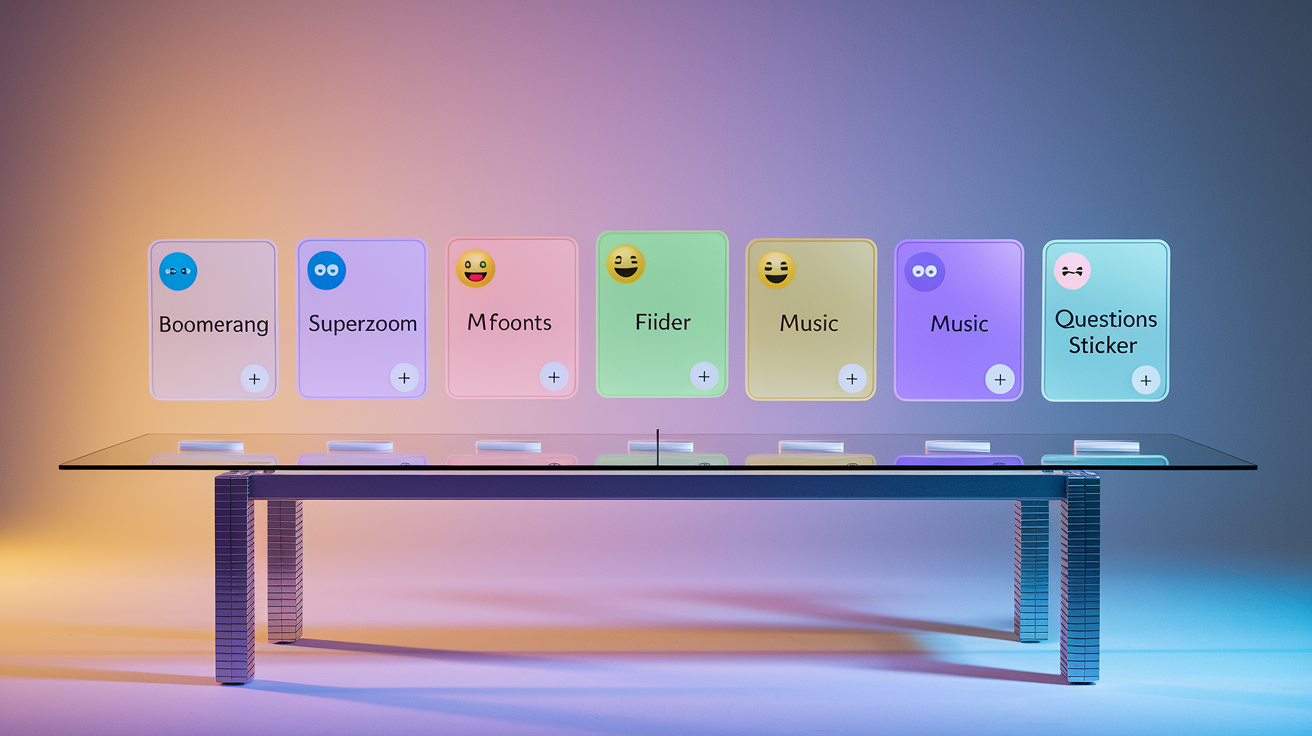
Instagram moved fast after launch. They filled gaps and added interactive stuff that started pulling Stories away from just being a Snapchat copy.
- November 2016 — Boomerang got baked in, letting you make looping videos without leaving the app
- October 2017 — Superzoom showed up with dramatic zooms and audio, Polls let your audience vote on stuff
- February 2018 — New fonts for text overlays
- May 2018 — Emoji slider sticker launched, giving people a scale to respond instead of just yes or no
- June 2018 — Licensed music became available (depending on where you lived)
- July 2018 — Questions sticker dropped, so followers could ask you stuff and you could answer in your next Story
Each update gave people something new to play with. Polls, Questions, emoji sliders turned Stories into actual conversations instead of just broadcasting. These weren’t just catching up to Snapchat anymore. Instagram was building something different.
Brands got new ways to engage customers. Creators got new formats to test. And Instagram showed they were serious about Stories as a core part of the app, not just a gimmick. That steady rollout helped Stories pass Snapchat’s daily user count within a year and cemented ephemeral content as permanent on Instagram.
Impact of Instagram Stories on Creator Behavior and Platform Strategy
Stories rewired how people thought about content on Instagram. Real-time vertical video became normal. Creators started posting spontaneous, authentic stuff that would’ve felt too rough for their grids. Behind-the-scenes clips, live event updates, day-in-the-life moments. The lack of Likes shifted focus from chasing metrics to just showing up consistently.
Brands jumped in early. Product launches, flash sales, event coverage. Instagram hinted at future ad opportunities from the start, and the temporary format created natural urgency. Perfect for limited-time offers.
Stories also shaped where Instagram went next. The success of ephemeral, full-screen vertical video informed IGTV in 2018. When TikTok got big, Instagram answered with Reels, borrowing Stories’ vertical design. Stories became a testing ground for shopping features, product tags, and swipe-up links that turned posts into sales funnels.
Long-term shifts from Stories:
- Creator habits — Daily, casual posting replaced infrequent, polished grid posts. Authenticity and real-time engagement beat production quality.
- Ad formats — Full-screen vertical ads and swipe-up links turned Stories into a direct-response channel.
- Product direction — Stories validated ephemeral and vertical video as core to the platform, shaping IGTV, Reels, and shopping integrations.
Final Words
Instagram launched Stories on August 2, 2016, rolling the feature out globally to iOS and Android in the weeks after. It introduced 24-hour disappearing photo/video slides (about 10-second media limits), a top-of-feed Stories bar, and private replies – all inside Instagram’s existing network.
Built to match Snapchat’s ephemeral format, Stories quickly changed how people and brands post and spurred fast feature updates that broadened creative tools.
If you’re still asking when did instagram introduce stories – that’s August 2, 2016 – and it’s since become a core tool for creators and businesses.
FAQ
Q: When did stories become a thing on Instagram? Did Instagram have stories in 2016?
A: Stories became a thing on Instagram on August 2, 2016, when Instagram launched Stories globally on iOS and Android; they were 24-hour disappearing photo/video slides with view lists and private replies.
Q: What is the 5-3-1 rule on Instagram?
A: The 5-3-1 rule on Instagram is a content-mix guide: five curated or shared posts, three original posts, and one promotional post, balancing value, original voice, and occasional promotion.
Q: How do men flirt on Instagram?
A: Men flirt on Instagram by liking and saving your posts, commenting with emojis or playful lines, replying to Stories, sending DMs, tagging you in posts, and consistently engaging to show interest.