Was WhatsApp snapped up overnight, or did Facebook’s takeover take months to finish?
Facebook announced it was buying WhatsApp on February 19, 2014 for about $19 billion, and the purchase officially closed on October 6, 2014 after regulators signed off.
In this post we’ll run through the key dates between the announcement and the close, explain the deal’s cash, stock, and RSU (restricted stock units) split, and show why that timeline mattered for regulators, WhatsApp’s team, and users.
The Key Dates of the WhatsApp Acquisition by Facebook

Facebook announced it was buying WhatsApp on February 19, 2014, for about $19 billion. The deal closed on October 6, 2014, after regulators across several countries signed off. Between the announcement and the close, Facebook broke the payment into three pieces: $4 billion cash, roughly $12 billion in Facebook stock, and about $3 billion in restricted stock units that would vest over four years.
The gap between announcement and close gave regulators in the U.S., the EU, and elsewhere time to review what this meant for competition and privacy. WhatsApp kept running as its own thing during this stretch, with leadership handling day-to-day work while Facebook planned the integration.
- February 19, 2014 – Facebook and WhatsApp went public with the deal and the $19 billion price tag.
- Spring–Summer 2014 – U.S. and EU antitrust teams reviewed the acquisition. No major strings attached at this stage.
- October 2014 – RSU vesting kicked in for WhatsApp founders and employees, locking key people into multi-year retention schedules.
- October 6, 2014 – The transaction closed. WhatsApp became part of the Facebook family of apps.
Understanding the WhatsApp–Facebook Deal Structure and Purchase Price
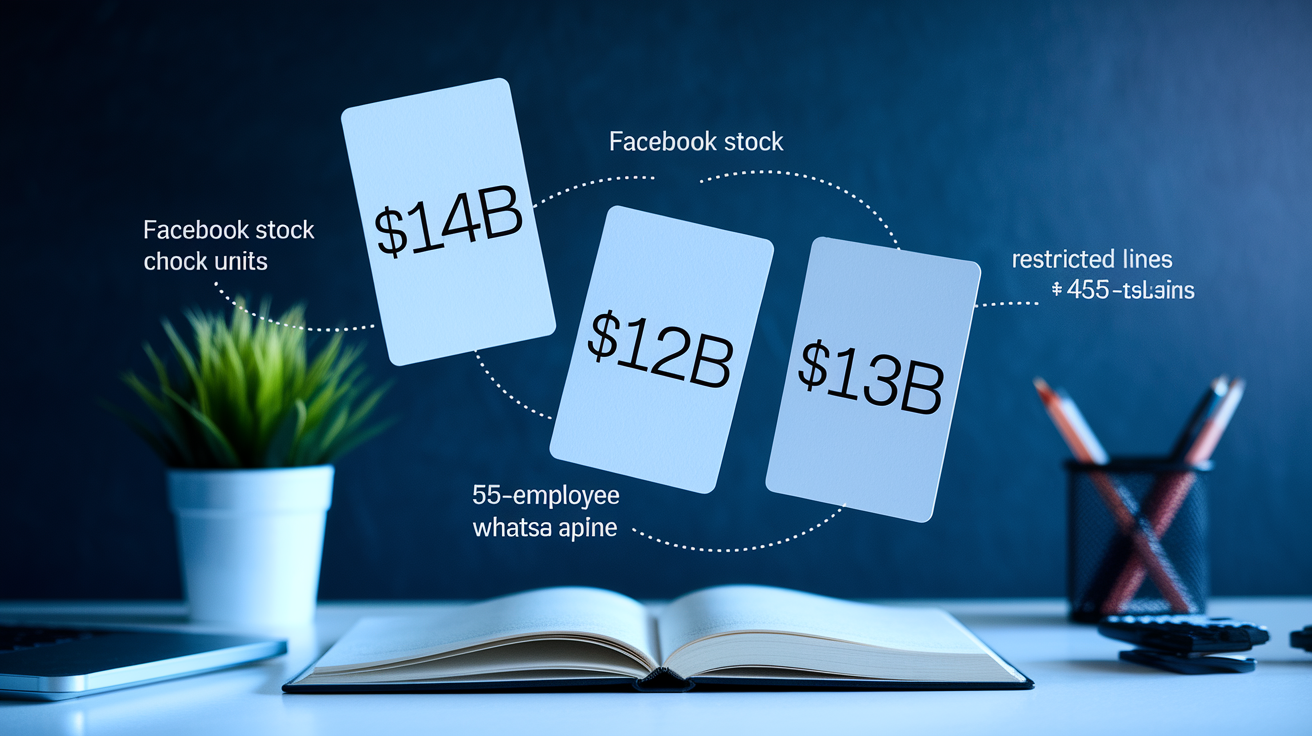
The $19 billion figure split into three parts designed to cover immediate cash, stock upside, and long-term retention. Facebook put down roughly $4 billion in cash, issued about $12 billion in Facebook Class A stock, and committed around $3 billion in restricted stock units to WhatsApp’s founders and team. The RSUs vested over four years, making sure Jan Koum, Brian Acton, and the core group stayed invested in what came next.
WhatsApp had only 55 employees when the deal went through. Divide the full purchase price across that headcount and you get a per-employee valuation around $345 million. That number became a conversation starter in tech and finance, especially compared to Facebook’s 2012 Instagram buy for $1 billion. Instagram had more staff and visibility at the time, but WhatsApp’s lean setup and explosive user growth made the premium make sense to Facebook. The RSU piece worked as a retention tool, stopping immediate exits and tying WhatsApp leadership to Facebook’s multi-year plans.
| Component | Amount | Purpose |
|---|---|---|
| Cash | ~$4 billion | Immediate liquidity for WhatsApp shareholders |
| Facebook Stock | ~$12 billion | Equity upside tied to Facebook’s performance |
| Restricted Stock Units (RSUs) | ~$3 billion | Four-year vesting schedule to retain founders and key employees |
Why Facebook Wanted WhatsApp: Strategic Motivations in 2014
Facebook’s interest in WhatsApp came from a mix of offense and defense in the mobile messaging market. By early 2014, WhatsApp had around 450 million monthly active users, with about 70 percent logging in daily. That engagement rate beat Facebook’s own main app at the time. The service was growing fast in emerging markets across Africa, Asia, and Latin America, places where Facebook’s core product hadn’t gained much traction and where local competitors were picking up steam.
Mark Zuckerberg saw WhatsApp as a way to lock down Facebook’s future in mobile messaging before a rival platform could build similar scale. Could’ve been a regional player or a well-funded startup. Either way, the acquisition hedged against the possibility that another tech giant would swoop in and shut Facebook out of key geographies. Zuckerberg publicly talked about a path to one billion users, which, at WhatsApp’s $1-per-year fee model, suggested potential annual revenue approaching $1 billion. Monetization details stayed vague at the announcement, though.
Beyond the defensive angle, the deal fit with Facebook’s broader mobile-first shift. Facebook was still refining its mobile advertising stack in 2014, and owning the world’s most popular messaging app opened up potential for commerce, customer service, and deeper user lock-in. Even if those features would take years to build out.
- Emerging-market dominance – WhatsApp held leading positions in regions where Facebook’s main app couldn’t get the same share of daily communication.
- High daily engagement – A 70 percent daily active user rate showed sticky behavior that could support future product work.
- Defensive acquisition – Stopping competitors from grabbing WhatsApp removed a big threat.
- Rapid growth – User counts were climbing fast, with clear momentum toward the billion-user milestone Zuckerberg mentioned.
- Mobile messaging dominance – Owning both Facebook Messenger and WhatsApp positioned Facebook as the gatekeeper of global mobile conversation.
WhatsApp’s Scale and Performance at the Time of the Acquisition

When the deal was announced in February 2014, WhatsApp reported about 450 million monthly active users, with daily engagement near 70 percent. The platform handled around 19 billion messages sent per day and 34 billion messages received per day. Those numbers showed both the volume of activity and the gap between broadcast-style messages and one-on-one conversations. Despite this scale, WhatsApp ran with only about 55 employees. That figure highlighted the service’s technical efficiency and lean approach.
WhatsApp’s revenue model was simple: free for the first year, then $1 per year after that. This setup avoided ads and in-app purchases, appealing to privacy-conscious users but generating modest revenue compared to the headline acquisition price. The combination of explosive user growth, high engagement, minimal staff overhead, and a clear monetization path helped Facebook justify the $19 billion valuation. Outside analysts debated whether the price was too high given the lack of immediate revenue.
Regulatory Review and Approval Timeline for the WhatsApp Purchase
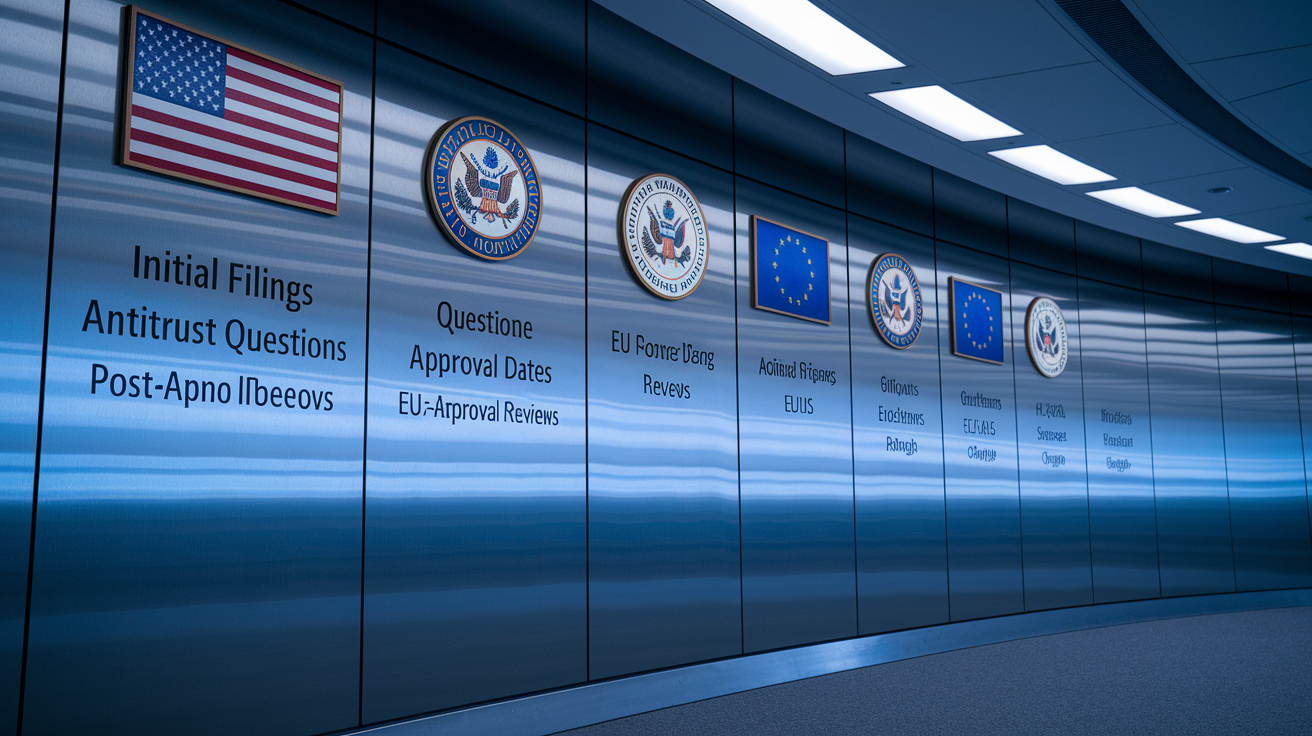
After the February 19, 2014 announcement, the deal entered a multi-month regulatory review across the United States, the European Union, and other jurisdictions where both Facebook and WhatsApp had big user bases. Antitrust authorities looked at whether the combined entity would reduce competition in social networking or mobile messaging. Privacy regulators examined potential data-sharing setups between the two services.
Regulatory Milestones
- Initial filings (Spring 2014) – Facebook and WhatsApp filed merger notifications with the U.S. Federal Trade Commission, the European Commission, and other national competition authorities.
- Antitrust questions (Spring–Summer 2014) – Regulators asked whether combining Facebook Messenger and WhatsApp would hurt competitors or reduce user choice. Early assessments found enough remaining competition from other messaging apps.
- Approval dates (Summer 2014) – U.S. authorities cleared the deal without conditions. The European Commission approved in October 2014 after a standard review.
- EU concerns about data privacy (2014 onward) – European regulators flagged potential cross-platform data sharing, especially around user phone numbers and advertising profiles. These concerns were noted but didn’t block the deal at the time.
- Post-approval reviews (2016–2018) – Years later, the European Commission fined Facebook for providing misleading information during the merger review. Specifically around the technical feasibility of linking WhatsApp and Facebook user accounts, a claim Facebook had downplayed in 2014.
Post-Acquisition Changes to WhatsApp and Long-Term Effects
When the deal closed in October 2014, Facebook said WhatsApp would keep running independently, preserving its ad-free model and user experience. For the first two years, that promise mostly held. WhatsApp stayed a standalone app with its own branding, leadership, and product plans. In 2016, the service rolled out full end-to-end encryption across all messages, calls, and media. That move reinforced WhatsApp’s privacy-focused identity and set it apart from other Facebook properties.
Over time, integration pressures showed up. Internal debates over monetization and data sharing got more intense, creating public tension between WhatsApp’s founding team and Facebook leadership. Jan Koum and Brian Acton, the co-founders who stayed on after the acquisition, both left the company in later years. They cited concerns over privacy policy changes and the push to introduce business-focused features and advertising. WhatsApp Business launched in 2018, offering tools for small companies to communicate with customers. A step toward monetization that respected the consumer app’s ad-free status but marked a clear shift from the founders’ original vision.
Data-sharing controversies popped up in 2016 and again in 2021, when WhatsApp updated its privacy policy to allow certain business-message data to flow into Facebook’s ecosystem. These changes triggered user backlash, regulatory scrutiny, and a brief surge in downloads for rival apps like Signal and Telegram. The tension between WhatsApp’s independence pledge and Facebook’s drive for cross-platform integration became a recurring theme in tech and privacy debates.
Privacy and Encryption Timeline
| Year | Change | Impact |
|---|---|---|
| 2014 | Independence pledge at acquisition close | WhatsApp promised to remain ad-free and autonomous within Facebook |
| 2016 | Full end-to-end encryption rollout | All messages, calls, and media secured by default, strengthening privacy reputation |
| 2018 | Data-sharing policy updates and business features | Controversies over linking WhatsApp data with Facebook accounts; founder departures followed |
Final Words
In the action, Facebook announced the $19 billion purchase on February 19, 2014 and the deal officially closed on October 6, 2014.
We broke down the price ($4B cash, $12B stock, $3B RSUs), WhatsApp’s scale (~450M MAUs), the regulatory review, and later changes like full encryption and leadership exits.
If you still wonder when did whatsapp get acquired by facebook, the answer is Feb 19, 2014 announcement and Oct 6, 2014 close. Use those dates to update timelines, privacy checks, and integration plans — it’s a clear milestone that still guides decisions today.
FAQ
Q: Why did Zuckerberg buy WhatsApp?
A: Zuckerberg bought WhatsApp to secure mobile messaging dominance, tap its ~450 million users and global reach, block competitors, and accelerate Facebook’s growth in emerging markets and daily engagement.
Q: What year did Mark Zuckerberg buy Instagram?
A: The year Mark Zuckerberg bought Instagram was 2012; Facebook announced the roughly $1 billion acquisition in April 2012 to expand into mobile photo sharing.
Q: Is WhatsApp owned by Facebook?
A: WhatsApp is owned by Facebook (now Meta Platforms); Facebook acquired it for $19 billion, announced February 19, 2014, and closed the deal October 6, 2014.
Q: Does Mark Zuckerberg use WhatsApp?
A: Whether Mark Zuckerberg uses WhatsApp personally hasn’t been publicly confirmed; he promotes the platform and the company uses it, but his private messaging habits aren’t disclosed.