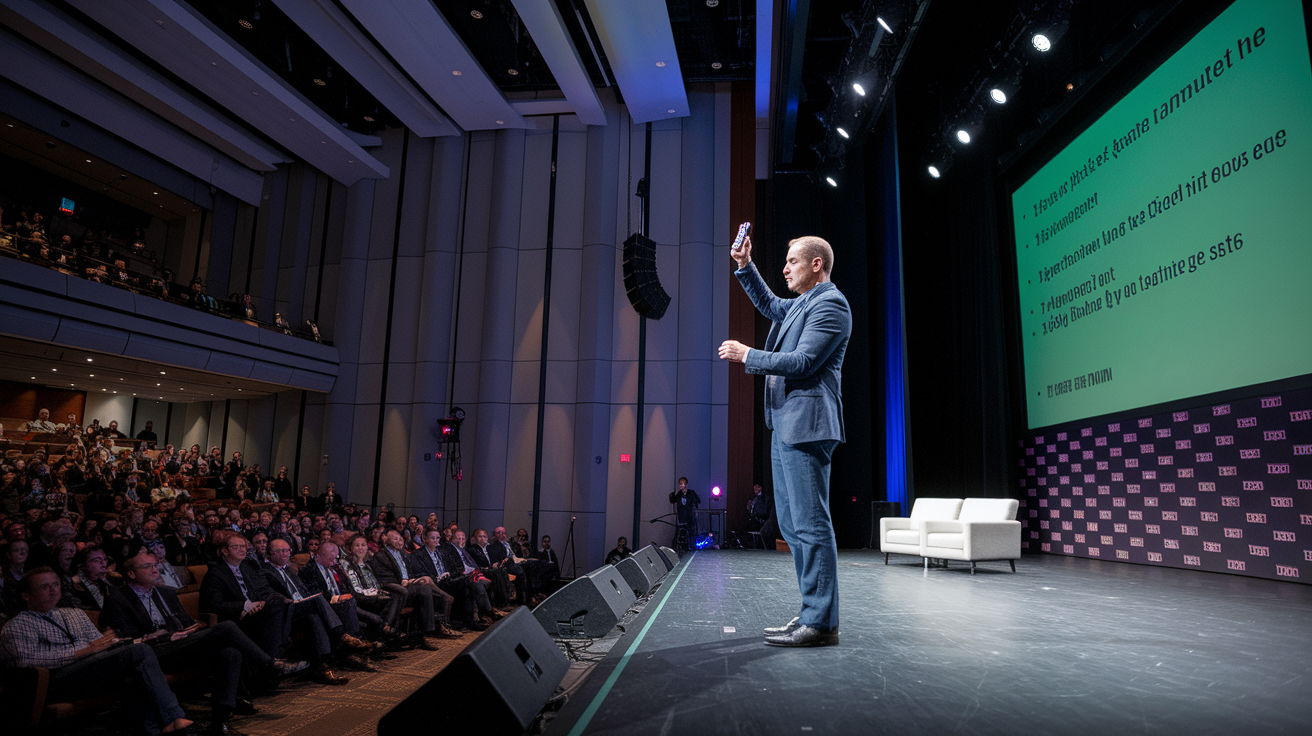
Remember when Steve Jobs held up a phone and tech reporters actually gasped? That happened January 9, 2007, at Macworld in San Francisco, when Apple announced the first iPhone. Jobs didn’t just reveal another gadget. He showed a device that ditched the keyboard entirely, ran a real web browser, and controlled everything with finger taps on glass. The announcement created a five-month wait before anyone could actually buy one, but those months changed how the industry thought about what a phone could be.
Apple’s Historic iPhone Announcement: Date, Event, and Launch Details

Apple announced the first iPhone on January 9, 2007, during Steve Jobs’ keynote at the Macworld Conference. The announcement happened at Moscone Center in San Francisco, where Jobs walked onstage and delivered what became one of the most influential product presentations in tech history.
The atmosphere inside Moscone Center that morning carried unusual anticipation. Tech journalists and Apple enthusiasts packed the venue, aware that Jobs had teased something significant without revealing specifics. The room held skepticism mixed with excitement, particularly among industry veterans who’d watched countless mobile phone launches promise innovation but deliver incremental changes. When Jobs began his presentation wearing his signature black turtleneck and jeans, few in the audience could’ve predicted they were about to witness a product that would redefine an entire industry within a decade.
Jobs employed a masterful presentation technique that built suspense throughout his reveal. He announced that Apple was introducing three revolutionary products: a widescreen iPod with touch controls, a breakthrough internet communications device, and a revolutionary mobile phone. He repeated these three categories, letting the audience absorb each one, before revealing they weren’t three separate devices at all. They were one product called iPhone. The crowd erupted as Jobs demonstrated the multi-touch interface, using his fingers to scroll through contacts, pinch to zoom on photos, and navigate web pages in ways that seemed almost magical compared to the stylus driven touchscreens of 2007. He showed how the interface responded to finger gestures, how the phone automatically switched orientation when rotated, and how visual voicemail let users see their messages instead of calling a number to retrieve them. “This changes everything,” Jobs said as he demonstrated scrolling through a webpage with a simple flick of his finger.
The announcement created a 5.5 month anticipation period before consumers could actually purchase an iPhone. Apple set the official release date for June 29, 2007, giving the company time to finalize manufacturing, complete carrier negotiations, and build marketing momentum. This gap between announcement and availability was unusual for consumer electronics but proved strategic, generating sustained media coverage and public interest that traditional product launches rarely achieved.
The immediate media and industry response confirmed the announcement’s historic significance. Tech publications dissected every revealed feature, competitors scrambled to understand the implications, and the keynote video circulated rapidly online. Jobs’ presentation style, building narrative tension, demonstrating features live rather than through slides, and positioning products within broader cultural contexts, influenced how tech companies approached product launches for years to come. January 9, 2007 established a template that would be copied, studied, and referenced whenever companies wanted to convey that their announcement represented something genuinely transformative rather than iterative.
The Original iPhone Features Unveiled at Launch
The 3.5 inch multi-touch display represented the most visible departure from existing mobile phones. Jobs eliminated the physical keyboard entirely, replacing dozens of fixed buttons with a glass screen that changed its interface based on what task the user was performing. When typing a text message, a keyboard appeared. When viewing a photo, the keyboard disappeared to maximize screen space. This adaptive interface meant the iPhone could be simultaneously simpler (fewer physical buttons) and more complex (more functions) than devices like the BlackBerry Curve or Nokia N95 that dominated early 2007.
Jobs positioned the device as three products merged into one integrated experience. As a phone, it offered visual voicemail that let users see a list of messages and choose which to hear first, rather than listening sequentially through a traditional voicemail system. As a widescreen iPod, it played music and videos on a screen larger than any previous iPod model, with users navigating their media library through finger swipes rather than click wheel rotations. As an internet communicator, it ran a full version of Safari browser, displaying actual websites instead of the stripped down mobile versions that other phones rendered through WAP browsers. Email worked through a desktop class interface, and the device handled photos with an ease that made it feel more like a camera that happened to make calls than a phone with a camera attachment.
| Feature | Specification |
|---|---|
| Display | 3.5-inch multi-touch screen |
| Camera | 2-megapixel rear camera |
| Connectivity | Wi-Fi and EDGE data network support |
| Visual Voicemail | Visual list interface for voicemail messages |
| Browser | Mobile Safari with full webpage rendering |
| Design | Glass front with aluminum back, minimalist button layout |
These features contrasted sharply with the devices that controlled the 2007 market. Nokia phones offered durability and battery life but clunky internet experiences. BlackBerry devices excelled at email and messaging but treated web browsing as an afterthought, rendering pages slowly on small screens with limited functionality. Both relied on physical keyboards that occupied half the device’s front surface, leaving small screens for content display. The iPhone’s approach, treating the screen as the primary interface and everything else as secondary, inverted the design philosophy that had guided mobile phone development since the 1990s.
iPhone Development Journey Before the Announcement

Apple internally code named the iPhone project “Project Purple,” keeping development details confined to a small team working in secured areas of the company’s Cupertino campus. Engineers on the project signed additional confidentiality agreements beyond standard Apple employment terms, and even within the company, most employees had no knowledge of what Project Purple entailed until Jobs revealed it publicly.
Steve Jobs pushed the development team to solve problems that seemed incompatible in 2007. He wanted a large screen for content but a pocketable device size. He wanted an intuitive interface but one capable of complex tasks. Most challenging, he wanted a touchscreen that responded to fingers rather than styluses, which required developing entirely new sensor technology. Early prototypes frustrated testers because the capacitive touch sensors couldn’t distinguish between intentional taps and accidental touches when users held the device. The engineering team eventually solved this through software that analyzed touch patterns. A finger tap registered differently than a palm or cheek resting against the screen. This software hardware integration became fundamental to making the iPhone’s interface feel responsive rather than clumsy, separating it from earlier touchscreen phones that required careful stylus precision for every interaction.
The competitive landscape in early 2007 offered Apple a clear opportunity despite the risks. Nokia commanded roughly 40% of global mobile phone market share, selling hundreds of millions of devices annually, but most were basic phones focused on calls and text messaging. BlackBerry owned the smartphone segment, particularly among business users, but their devices were deliberately utilitarian, designed for efficient email and calendar management rather than media consumption or web browsing. Both companies viewed phones primarily as communication tools with some additional features, whereas Jobs envisioned a pocket computer that happened to make calls. This philosophical difference created space for a different kind of device, if Apple could execute the technology properly.
Apple developed iOS (initially called iPhone OS) specifically to enable the touch interface Jobs demanded. The operating system had to be responsive enough that on screen interactions felt immediate, efficient enough to run on mobile processors with limited power, and flexible enough to adapt the interface for different tasks. Apple built iOS on a modified version of OS X, the operating system running Mac computers, which gave iPhone access to mature software frameworks but required significant optimization to work within mobile device constraints.
AT&T Partnership and iPhone Pricing Strategy
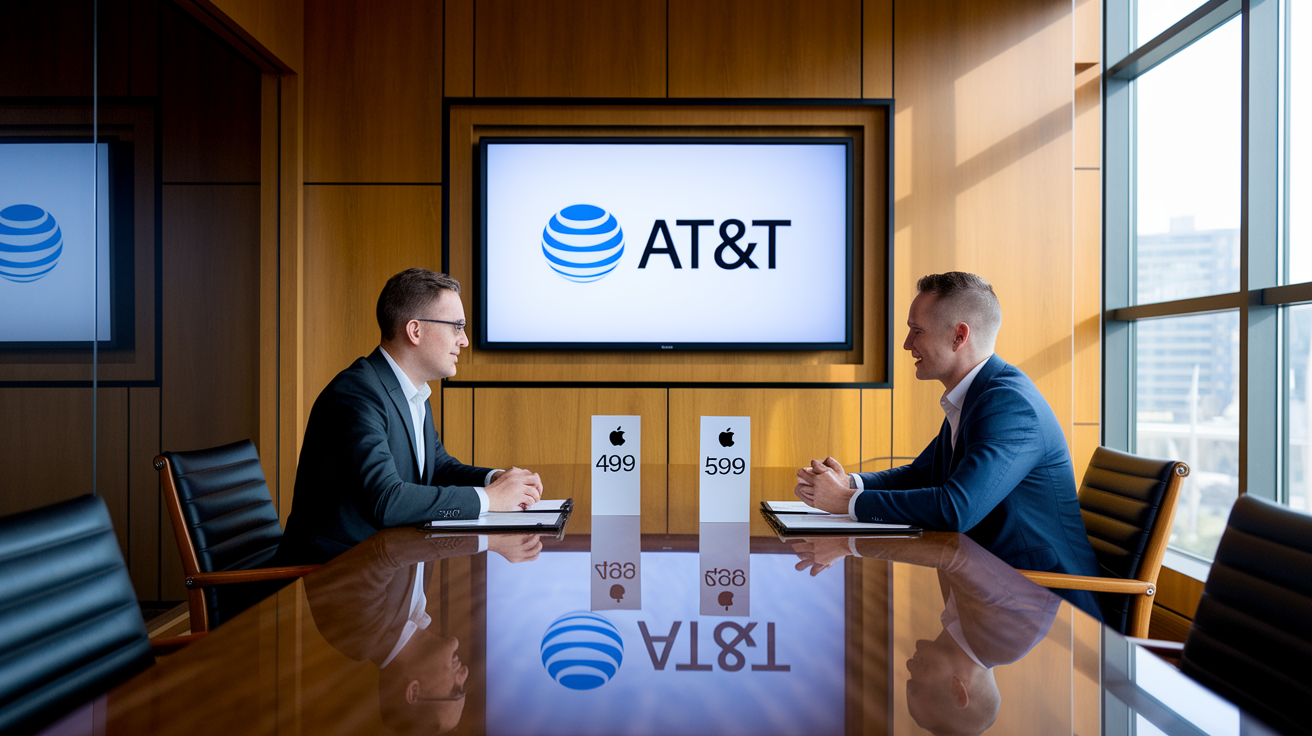
Apple negotiated an exclusive carrier partnership with AT&T (still branded as Cingular when negotiations began) that gave AT&T sole rights to sell iPhone service in the United States. This single carrier approach was unusual for a new device without established market demand, but it gave Apple negotiating leverage. Rather than accepting standard carrier terms where the network operator controlled device features, software updates, and branding, Apple retained control over the iPhone’s user experience. AT&T agreed to let Apple handle software updates, keep carrier branding minimal, and receive a portion of monthly service revenue. Terms that established carriers like Verizon had rejected when Apple approached them first.
Jobs announced two iPhone models at launch: a 4GB version priced at $499 and an 8GB version priced at $599. Both prices required a two year AT&T service contract, bringing the total cost of ownership above $1,700 when including minimum monthly service fees. The pricing positioned iPhone as a premium device, targeting early adopters and Apple enthusiasts willing to pay significantly more than typical mobile phone costs. Storage capacity was the only difference between the two models, with the 8GB version offering double the space for music, photos, and other content.
AT&T service plans for iPhone started at $59.99 per month, including 450 voice minutes, unlimited data, 200 text messages, and visual voicemail. Higher tier plans offered more voice minutes and text messages, but all plans included unlimited data, a crucial feature since the iPhone’s design encouraged constant web browsing, email checking, and content downloading. The service contract locked customers to AT&T for two years, with early termination fees applying if they cancelled service before the contract expired.
Compared to other smartphones available in early 2007, iPhone’s pricing stood at the premium end. The BlackBerry Curve 8300 sold for around $199 with a contract, offering proven email functionality that business users trusted. The Palm Treo 750 cost roughly $299 with a contract and ran Windows Mobile with support for Microsoft Exchange email. Consumer reception of iPhone’s pricing split between enthusiasm from Apple fans who’d pay whatever Apple charged and skepticism from mainstream buyers who questioned whether a phone justified $599 plus expensive monthly service, especially when it lacked features like 3G connectivity, a physical keyboard, or third party app support.
First iPhone Impact on Mobile Phone Industry
Nokia controlled approximately 40% of the global mobile phone market in early 2007, selling devices that ranged from basic feature phones to their N series smartphones. BlackBerry dominated the corporate smartphone segment, with devices like the BlackBerry Pearl and Curve becoming standard equipment for business professionals who needed constant email access. Both companies designed around physical keyboards. Nokia’s numeric keypads for basic phones and QWERTY keyboards for smartphones, BlackBerry’s optimized QWERTY layouts that users operated with two thumbs. Neither company prioritized web browsing or media consumption, viewing phones primarily as communication tools where calls, text messages, and email mattered most. Their market dominance seemed secure, built on years of carrier relationships, enterprise IT integration, and manufacturing scale that a computer company like Apple couldn’t easily replicate.
The January 9 announcement forced immediate strategic reassessments throughout the mobile phone industry. Nokia’s stock price dropped as investors questioned whether the company’s Symbian operating system could compete with iPhone’s touch interface. Microsoft, whose Windows Mobile powered many smartphones, accelerated touchscreen development efforts. Google, which had been developing Android as a BlackBerry style keyboard based smartphone platform, pivoted toward touchscreen designs. Palm, inventor of the original smartphone category with the PalmPilot, scrambled to develop touch based devices. Most significantly, carriers began reconsidering their standard practice of controlling device software and features, recognizing that Apple’s success might require giving manufacturers more autonomy. The announcement didn’t just reveal a new product, it revealed that the assumptions underpinning mobile phone design since the 1990s were negotiable.
After the June 29 release, consumer adoption accelerated faster than industry observers expected. Apple sold 270,000 iPhones in the first 30 hours, and 1 million units within 74 days of launch, despite the premium pricing and AT&T exclusivity that limited the addressable market. Users posted videos demonstrating iPhone features, creating organic marketing that expanded awareness beyond Apple’s advertising. Competitors responded with touchscreen devices. The LG Prada and Samsung Instinct arrived within a year but struggled to match iPhone’s interface fluidity and user experience cohesion. By 2008, the industry consensus had shifted from questioning whether touchscreen smartphones would succeed to accepting that iPhone had established a new baseline, and every manufacturer needed a credible response.
January 9, 2007 is now recognized as a pivotal tech milestone, comparable to the August 1981 introduction of the IBM PC or the April 1976 founding of Apple itself. The date marks when mobile phones transitioned from communication devices with some computing features to pocket computers that happened to make calls, a conceptual shift that restructured a global industry and changed how billions of people interact with information, entertainment, and each other.
App Store Launch and iPhone Ecosystem Evolution
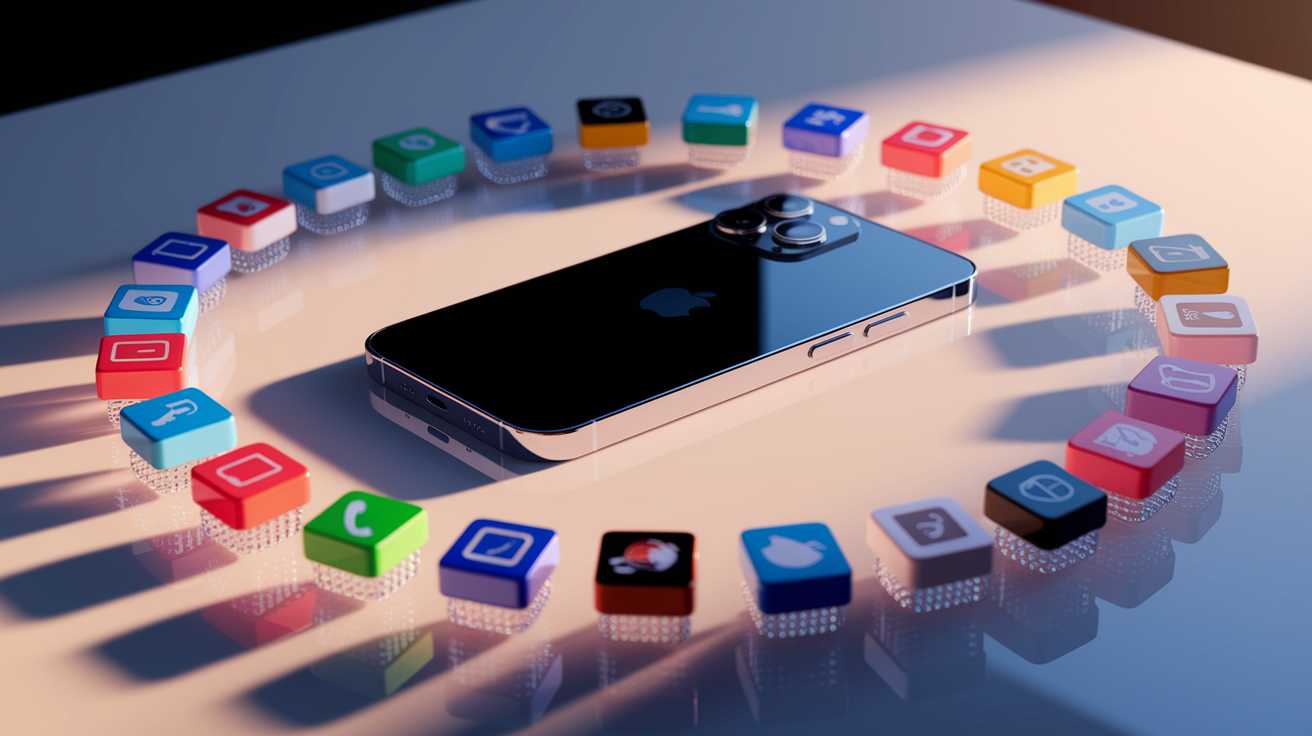
The iPhone that Jobs announced in January 2007 ran only Apple developed applications. Users could make calls, send text messages, browse the web through Safari, check email, listen to music, view photos, and use a few built in utilities like Weather, Stocks, and Notes. No mechanism existed for installing third party software, and Apple initially stated that web applications, programs accessed through Safari rather than installed on the device, would serve as the iPhone’s app platform. This limitation distinguished iPhone from Windows Mobile and Palm devices that supported third party native applications, and it frustrated developers who recognized the iPhone’s potential as an application platform.
Apple launched the App Store on July 10, 2008, alongside the iPhone 3G release. The store offered approximately 500 applications at launch, including both free and paid software that users could install directly on their iPhones through iTunes. This represented a fundamental strategic shift, transforming iPhone from a closed device into an open platform where any developer could create software, subject to Apple’s approval process. The iPhone 3G itself brought 3G cellular connectivity and GPS positioning, priced at $199 for an 8GB model and $299 for 16GB, significantly cheaper than the original iPhone thanks to a revised business model where AT&T subsidized hardware costs in exchange for guaranteed service contracts. Together, faster connectivity and third party apps addressed two major criticisms of the original 2007 iPhone.
The App Store transformed the iPhone’s value proposition from a fixed set of features determined by Apple into an expandable platform whose capabilities grew with each new application. Games like Super Monkey Ball demonstrated that iPhone’s accelerometer and touch interface could create entertainment experiences impossible on other phones. Productivity apps like Evernote and Things turned iPhone into a serious work tool. Social apps like Facebook and Twitter made the device a constant connection to social networks. Each new app category expanded what users considered an iPhone useful for, creating network effects where more apps attracted more users, which attracted more developers, which created more apps.
The January 2007 announcement introduced a revolutionary device, but the platform that emerged through 2008 and beyond established something more significant. An ecosystem where hardware, software, services, and third party developers combined to create value that no single component could achieve alone. The iPhone announced at Macworld was impressive. The iPhone platform that evolved from that announcement became transformative.
Final Words
Apple announced the first iPhone on January 9, 2007, at Macworld Conference in San Francisco.
That moment marked a clear dividing line in mobile technology. Before the announcement, phones had physical keyboards and limited internet capabilities. After June 29, 2007, when the device finally reached consumers, the industry shifted rapidly.
The original pricing of $499 and $599 seemed steep at the time. But the 3.5-inch touchscreen, visual voicemail, and mobile Safari browser delivered capabilities that competitors took years to match.
The App Store arrived a year later, transforming the iPhone from a single device into a full platform. That announcement date remains a defining moment in how we communicate, work, and access information today.
FAQ
When did Apple reveal the first iPhone?
Apple revealed the first iPhone on January 9, 2007, during Steve Jobs’ keynote presentation at the Macworld Conference held at the Moscone Center in San Francisco, California.
What iPhone sold for $190,000?
A factory-sealed original iPhone from 2007 sold for $190,000 at auction due to its rarity as an unopened first-generation model, making it a valuable collector’s item among technology enthusiasts.
Did people have iPhones in 2008?
People did have iPhones in 2008, as the original model released on June 29, 2007, and the iPhone 3G launched in July 2008 with App Store support and faster connectivity.
When did the iPhone get announced?
The iPhone got announced on January 9, 2007, when Steve Jobs unveiled it at Macworld Conference in San Francisco, though the device didn’t become available for purchase until June 29, 2007.