Is the metaverse just tech hype, or the next version of the internet we’ll actually live in?
It’s a persistent, shared 3D space where people use avatars to meet, work, shop, and play across virtual worlds that keep changing even when you log off.
This post explains the metaverse in plain terms—what it is, the tech behind it, real examples, who’s affected, and practical next steps so you can decide whether to try it, build for it, or protect your privacy.
Clear Explanation of the Metaverse for Beginners
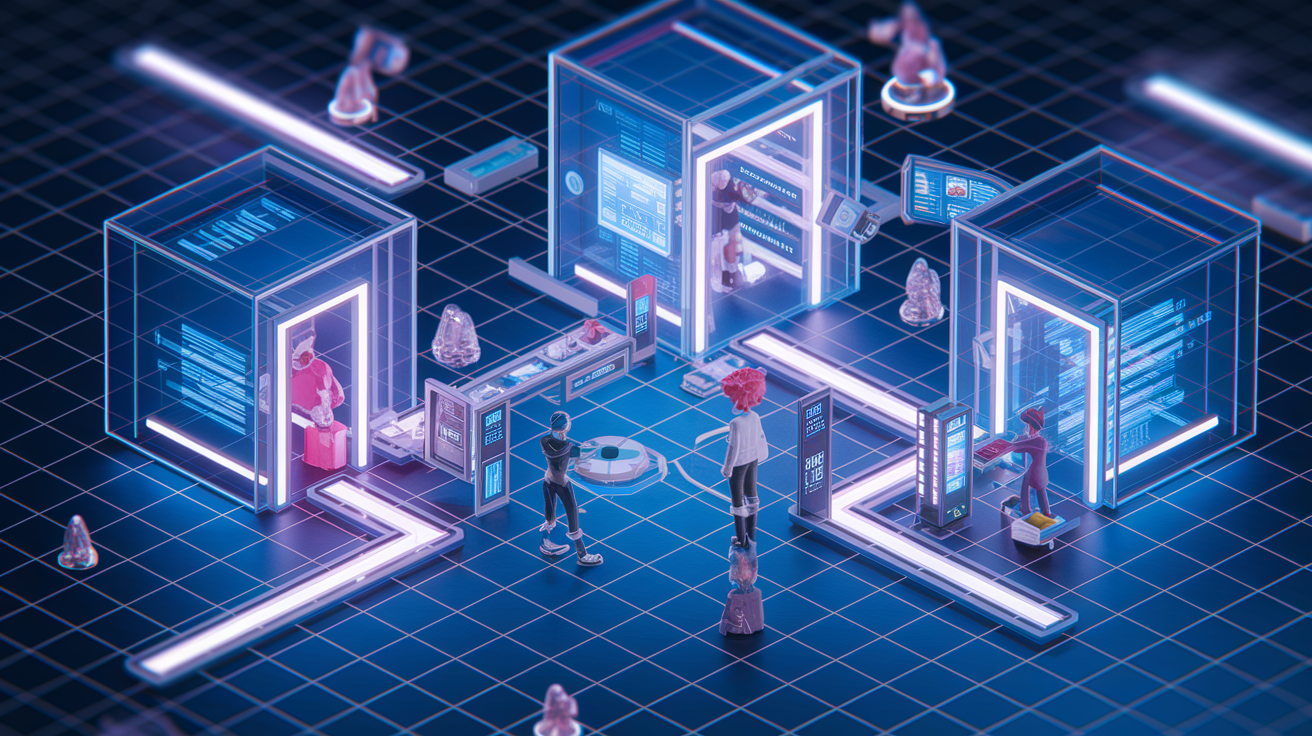
The metaverse is a persistent digital environment where people interact through avatars in shared 3D spaces. It blends virtual reality, augmented reality, and the internet into a continuous experience. Picture a 3D internet where websites become walkable rooms and hyperlinks turn into doorways you actually step through. You can meet friends, attend events, shop, work, or play using a digital version of yourself. Unlike traditional websites you click through, the metaverse lets you move through interconnected virtual worlds that stay active even when you’re offline.
The concept gets people talking because it represents a shift in how we might use the internet. Instead of staring at flat screens and scrolling through feeds, users put on headsets or grab AR devices to enter immersive spaces where digital objects and other people feel present in three dimensions. These spaces support real-time social interaction, digital commerce, and shared experiences that carry forward over time. Your virtual apartment, the items you own, and the communities you join persist between sessions.
Here’s something already happening: thousands of fans gather in a virtual concert hall to watch a live-streamed performance, each represented by a customizable avatar. They can chat, react, move around the space, and even purchase digital merchandise without leaving home. Major artists have hosted events drawing millions of attendees across platforms like Fortnite and Roblox, showing how the metaverse enables shared experiences at a scale physical venues can’t match.
Core Technologies Powering the Metaverse
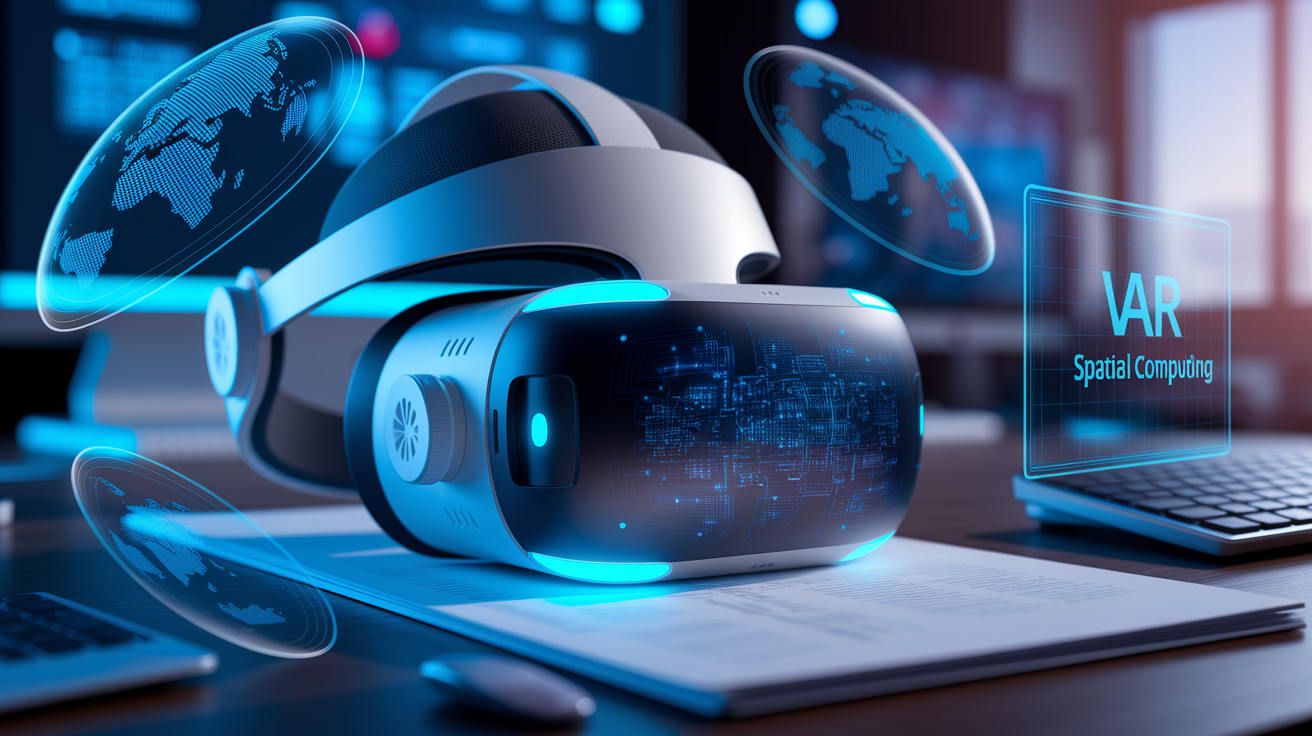
Virtual reality creates fully immersive digital environments by using headsets that block out the physical world and replace it with computer-generated 3D spaces tracked to your head and hand movements. VR hardware like Meta Quest and HTC Vive lets users look around, walk, and interact with virtual objects as if they were physically present. Essential for making digital worlds feel real. Augmented reality takes a different approach by overlaying digital content onto the real world through smartphone cameras or AR glasses, blending physical and digital layers so you can see virtual furniture in your actual living room or digital directions painted on real streets.
Spatial computing combines sensors, cameras, and processing power to understand and map the physical environment in real time. This lets devices anchor digital content to real-world locations and track user position with precision. The technology bridges VR and AR, allowing seamless transitions between fully virtual and mixed experiences. Together, these systems create the foundation for persistent, interactive 3D spaces that respond naturally to user movement and input.
Essential technologies enabling the metaverse:
VR headsets and controllers – Hardware that immerses users in fully digital environments with motion tracking and tactile feedback
AR glasses and smartphones – Devices that project digital overlays onto the physical world for mixed-reality experiences
Blockchain and digital ownership – Decentralized systems that verify and track ownership of virtual assets, currency, and property
Haptic feedback systems – Gloves, vests, and controllers that simulate touch, texture, and physical resistance in virtual spaces
Real-time 3D engines – Software platforms like Unreal Engine and Unity that render interactive 3D worlds and physics simulations instantly
Avatars and Digital Identity

Avatars serve as your representation in virtual spaces. Digital bodies you control that let others see and interact with you in 3D environments. They range from photorealistic scans that mirror your actual appearance to stylized cartoon characters, fantasy creatures, or abstract forms, depending on the platform and your preferences. Customization is central to engagement because users express identity, mood, and creativity through clothing, accessories, body shape, and animations, making each avatar unique and personal.
Digital identity matters in shared virtual worlds because it establishes continuity, reputation, and social presence across multiple sessions and platforms. When your avatar carries forward the same name, appearance, achievements, and social connections from one experience to the next, it builds a persistent sense of self that mirrors real-world identity but with greater flexibility. This consistency enables trust in social interactions, value in virtual property ownership, and recognition in communities. Critical elements for any space where people spend real time.
Key avatar functions:
Communication – Voice, text, and gesture systems that let avatars talk, emote, and signal intent in real time
Expression – Customizable appearance, clothing, and accessories that convey personality, status, or group affiliation
Social presence – Body language, proximity, and eye contact cues that make interactions feel natural and engaged
Virtual Worlds and Environments

Virtual worlds are persistent 3D spaces where users gather, interact, and participate in activities ranging from games and concerts to work meetings and education. These environments can be open-ended sandboxes where users build, explore, and socialize freely. Or structured experiences designed around specific goals like completing quests, attending events, or collaborating on projects. Each world runs on servers that maintain the state of objects, user progress, and environmental changes even when individual users log off, creating a shared reality that evolves over time.
Users interact within these worlds by moving their avatars, manipulating objects, communicating with others, and triggering events or transactions. Navigation typically combines walking, teleportation, or flying mechanics, while interaction uses hand controllers, gaze targeting, or traditional mouse and keyboard inputs depending on the device. The level of immersion varies. Full VR creates a sense of physical presence, AR blends virtual elements into your actual surroundings, and traditional screens offer a window view into 3D spaces without requiring special hardware.
Different types of environments serve distinct purposes and attract different communities. Social hubs like VRChat and Rec Room prioritize casual hangouts, user-generated content, and spontaneous interactions with minimal rules or objectives. Workspace platforms such as Horizon Workrooms and Spatial focus on productivity, offering virtual meeting rooms, whiteboards, and collaboration tools tailored for remote teams. Entertainment zones built into games like Fortnite and Roblox blend gameplay with concerts, movie screenings, and brand activations. Creative platforms like Mozilla Hubs and Engage XR give educators, artists, and event organizers tools to build custom experiences from scratch.
Real‑World Examples of the Metaverse
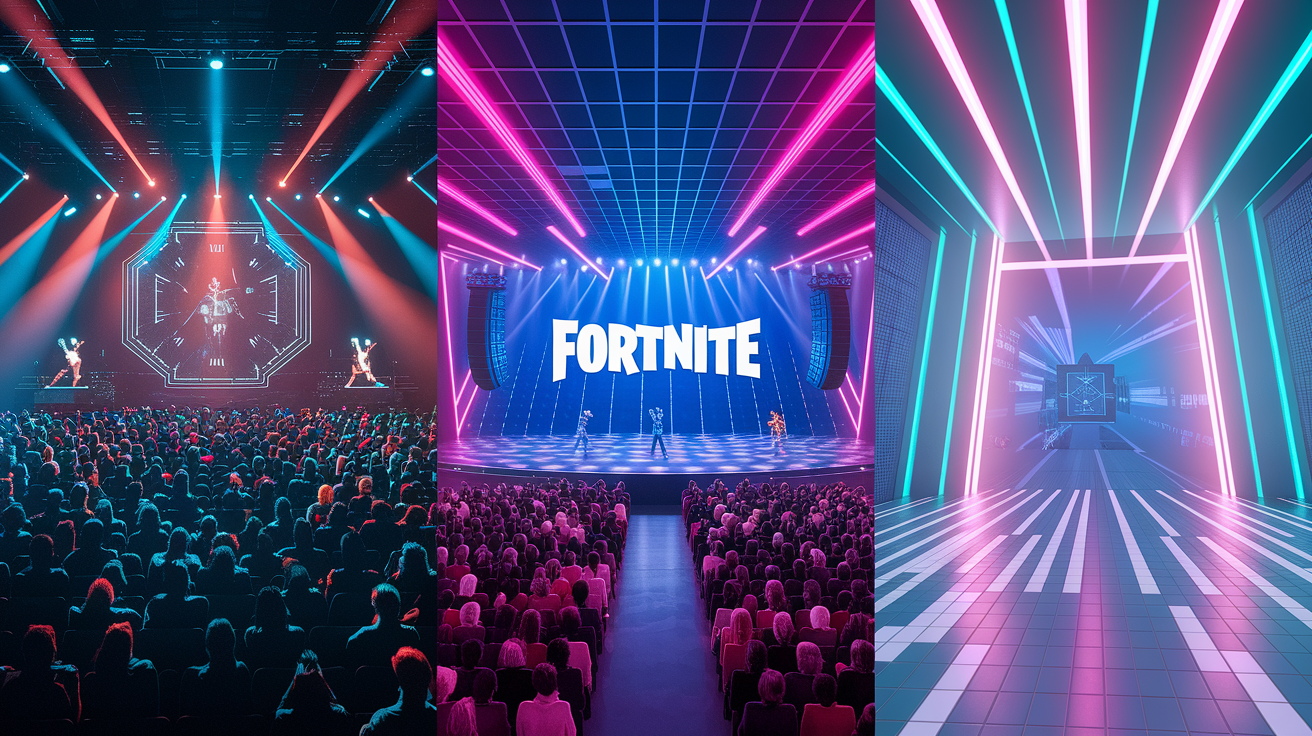
Platforms operating today illustrate how the metaverse functions in practice, offering millions of users shared interactive experiences that blend gaming, socializing, creativity, and commerce. Roblox lets players explore user-generated worlds, attend virtual concerts, and purchase avatar items using the platform’s currency. Fortnite evolved from a battle-royale game into a social space hosting live events like concerts by Travis Scott that drew over 12 million concurrent viewers. Meta’s Horizon Worlds provides social VR spaces where users build environments, host events, and hang out using customizable avatars, accessible via Meta Quest headsets.
These examples show the spectrum of current metaverse experiences, from gaming-first ecosystems to purpose-built social and work environments. Each platform demonstrates key metaverse traits: persistence (worlds and progress remain between sessions), shared presence (multiple users occupy the same space simultaneously), digital economies (virtual goods, currency, and transactions), and user agency (customization, creation, and social interaction).
| Platform | Primary Use | Key Feature |
|---|---|---|
| Roblox | Gaming and user-generated content | Millions of player-created worlds and in-game economy with Robux currency |
| Fortnite | Gaming and live events | Concerts, movie screenings, and brand collaborations in shared battle-royale world |
| Meta Horizon Worlds | Social VR interaction | User-built spaces and avatar-based socializing in fully immersive VR |
| Decentraland | Virtual real estate and commerce | Blockchain-based land ownership, NFT galleries, and decentralized governance via DAO |
Major Companies Developing the Metaverse

Meta (formerly Facebook) leads consumer-focused metaverse development, investing billions into VR hardware through Meta Quest headsets and software platforms like Horizon Worlds and Horizon Workrooms. The company’s 2021 rebrand signaled a strategic pivot toward building interconnected virtual spaces for socializing, working, and entertainment. Targeting widespread adoption by making VR accessible and affordable. Meta’s approach centers on closed ecosystems where users interact primarily within Meta-controlled environments, though the company has stated goals for eventual interoperability.
Microsoft focuses on enterprise and productivity applications, integrating metaverse features into existing tools like Teams through avatar-based meetings and mixed-reality collaboration. Their approach uses Azure cloud infrastructure and HoloLens AR hardware to serve businesses, educators, and government clients with digital twins, virtual training simulations, and remote collaboration spaces. Nvidia builds the infrastructure layer. Real-time rendering technology (RTX), physics simulation (PhysX), and Omniverse, a platform for creating and connecting 3D workflows used by industrial designers, filmmakers, and engineers to build shared digital twins of factories, cities, and networks.
Epic Games contributes through Unreal Engine, the real-time 3D software that powers many metaverse experiences, and Fortnite, which serves as a live testing ground for social features, concerts, and cross-platform events. Their focus combines game development tools with a vision of an open metaverse where creators retain control and revenue from their work. These companies represent different strategic angles. Consumer hardware and software, enterprise infrastructure, and creator-first platforms, each shaping how the metaverse develops and who benefits from its growth.
Key Applications of the Metaverse
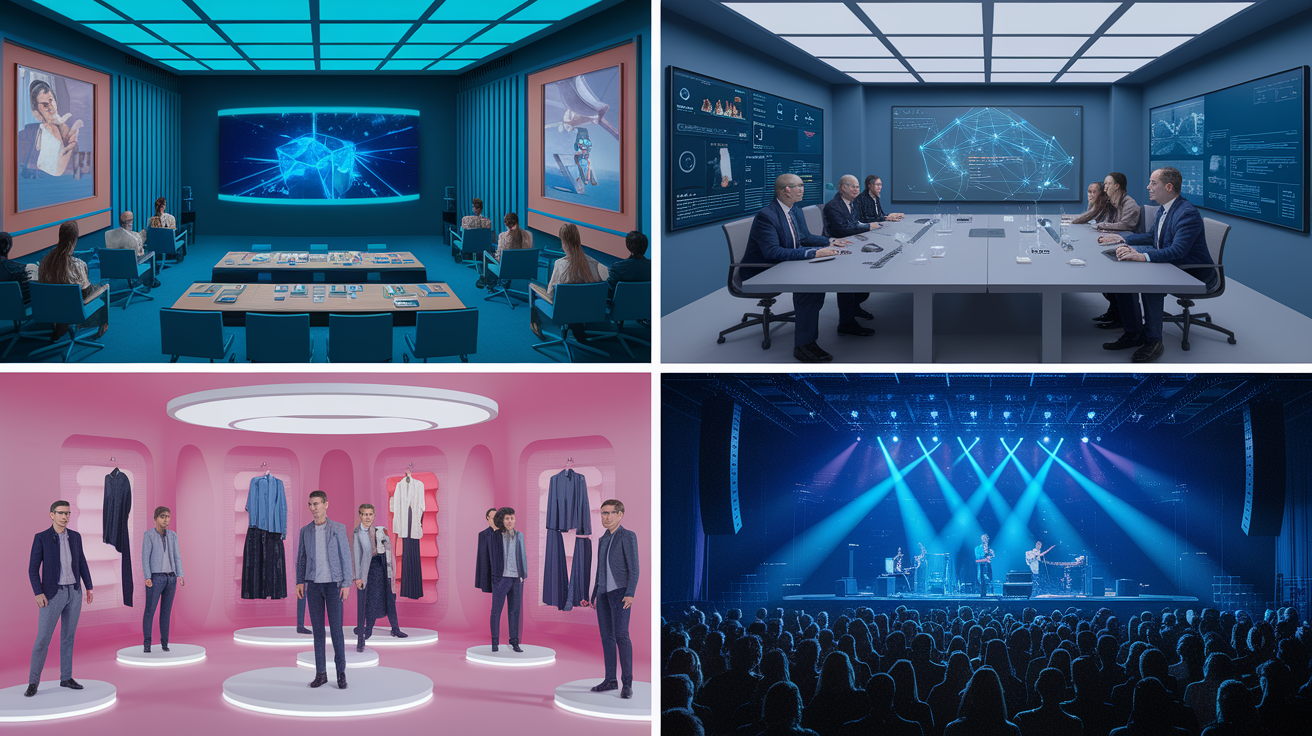
The metaverse enables new forms of work, learning, commerce, and entertainment by providing immersive, shared spaces that go beyond what flat screens and video calls offer. Remote workspaces let distributed teams gather in virtual offices where avatars sit around conference tables, sketch on shared whiteboards, and present 3D models as if everyone were in the same physical room. Microsoft Teams announced avatar and VR/AR features targeting rollout in 2022, and platforms like Spatial and Horizon Workrooms already support these workflows. Virtual classrooms and training simulations place students and trainees inside interactive environments where they can practice procedures, explore historical sites, or conduct chemistry experiments impossible in physical labs. Platforms like Engage XR and VictoryXR are piloting university-level courses and hands-on technical training.
Digital commerce takes shape through virtual storefronts where customers try on clothes using avatars, place furniture in virtual replicas of their homes, or attend brand activations from Nike and Gucci that sell limited-edition digital collectibles tied to physical products. Live events scale beyond venue capacity. Virtual concerts draw millions of attendees who watch performances, socialize, and purchase merchandise without travel or tickets, while conferences and expos host exhibitors, keynotes, and networking in persistent 3D spaces accessible globally.
Major real-world uses:
Education and training – Virtual classrooms, VR field trips to ancient ruins, immersive medical and construction simulations that boost engagement and skill retention
Workplace collaboration – Virtual meeting rooms with interactive whiteboards, 3D data visualization, and avatar presence that make remote teamwork feel more lifelike
Gaming and entertainment – Multiplayer worlds, live concerts, movie screenings, and social hangouts blending play and community
Retail and commerce – AR try-ons for fashion and home goods, virtual showrooms, and branded experiences selling both digital and physical products
Corporate training and onboarding – VR simulations for safety drills, equipment operation, customer service scenarios, and experiential learning programs
Challenges and Limitations

High hardware costs remain a big barrier to widespread adoption. VR headsets range from several hundred to over a thousand dollars, AR glasses capable of robust metaverse experiences are still in early-stage development or priced for enterprise buyers, and the computers or smartphones required to run immersive 3D environments demand recent, high-performance components. Affordability limits access primarily to early adopters, enthusiasts, and organizations with training or collaboration budgets, leaving the majority of potential users unable to participate fully until prices drop or device capabilities improve.
Privacy and data security pose serious risks because metaverse platforms collect detailed behavioral data. Where you go, who you interact with, what you look at, how long you spend in each space, biometric data from headset sensors tracking eye movement and facial expressions, and payment information tied to virtual economies. This data can be exploited for targeted advertising, sold to third parties, or compromised in breaches. The lack of consistent regulation across platforms means users have little control over how their digital identity and activity are stored, shared, or monetized. The immersive nature of VR also raises new concerns about harassment, unwanted contact, and psychological impacts when harmful behavior occurs in spaces designed to feel physically present.
Social and ethical concerns include accessibility issues for users with disabilities (many VR experiences require full mobility and vision), the environmental impact of energy-intensive data centers and hardware production, the potential for addiction or escapism when virtual worlds offer more reward than physical life, and questions about who controls governance, moderation, and content standards in decentralized or corporate-owned spaces. Platform fragmentation means progress, assets, and identity rarely transfer between different metaverse environments, trapping users in walled gardens and preventing the seamless interoperability that defines the vision of a unified metaverse.
Future Outlook of the Metaverse

Analysts predict the metaverse will evolve through gradual, sector-specific adoption rather than an instant leap into a single unified world. Enterprise, education, and gaming will lead near-term growth while consumer social applications mature more slowly. Integration of artificial intelligence will enable smarter virtual assistants, procedurally generated environments that adapt to user behavior, and real-time translation that removes language barriers in global spaces. Holographic displays and improved AR glasses may reduce reliance on bulky headsets, bringing mixed-reality experiences into everyday environments without requiring users to block out the physical world entirely.
Interoperability remains an open challenge but represents a critical goal. If standards emerge that let avatars, assets, and identity move seamlessly across platforms, the fragmented “multiverse” of today could consolidate into interconnected spaces where users maintain continuity regardless of which company’s software they’re using. Decentralized ownership models using blockchain may shift control from corporations to users and creators, enabling new economic structures where people truly own virtual property, art, and goods they can trade or take elsewhere. But commercial incentives, technical complexity, and governance disputes mean broad interoperability is likely years away. Whether the metaverse becomes a single shared universe or a collection of competing platforms remains uncertain.
Future trends over the next 5 to 10 years:
Lighter, more affordable hardware – Next-generation VR headsets and AR glasses with better battery life, resolution, and comfort at lower price points
Broader enterprise adoption – Virtual training, remote collaboration, and digital twins becoming standard tools in manufacturing, healthcare, construction, and logistics
Decentralized ownership and governance – Blockchain-based systems giving users control over digital assets, identity, and platform rules through DAOs and token economies
Mixed-reality blending – Seamless transitions between fully virtual, augmented, and physical experiences as spatial computing and 5G networks mature
Final Words
We jumped straight into what the metaverse means: a persistent 3D internet where VR, AR, spatial computing, avatars, and shared virtual worlds let people meet, work, and attend events.
The post covered core technologies, avatars and identity, real‑world platform examples, major builders, practical use cases, current challenges, and likely future trends.
If you still wonder what is the metaverse explained, this guide gives a clear, practical view and next steps. Try a demo or follow emerging standards — there’s promising progress ahead.
FAQ
Q: What did Mark Zuckerberg say about the metaverse?
A: Mark Zuckerberg said the metaverse is a persistent 3D online space where people can socialize, work, and play via avatars, calling it the next chapter of the internet and a long-term company priority.
Q: Is Meta shutting down the metaverse?
A: Meta is not shutting down the metaverse; it has scaled back some projects and staff but continues investing in VR/AR hardware, software, and research while adjusting timelines and expectations.
Q: Why did Mark Zuckerberg make metaverse?
A: Mark Zuckerberg pushed the metaverse to create immersive social spaces beyond screens, position his company for future computing (VR/AR), and open new social, commercial, and creative opportunities.
Q: Why did the metaverse fail?
A: The metaverse largely failed to meet early hype because of high headset costs, weak user demand, poor cross-platform standards, privacy concerns, and unclear practical benefits for everyday users.