
Imagine discovering someone’s been walking through an unlocked door in your security system for months, and you only found out because they finally got caught. That’s essentially what happens with zero day vulnerabilities. These are security flaws in software that developers don’t know about yet, meaning there’s no patch, no fix, and no defense ready when attackers start using them. Once discovered, these vulnerabilities create a dangerous window where organizations face active threats with zero protection available. Understanding what zero days are and why they matter helps you grasp one of cybersecurity’s most serious risks.
Core Definition and Characteristics of Zero Day Vulnerabilities

A zero day vulnerability is a software security flaw that’s completely unknown to the vendor and whoever’s supposed to fix it. The “zero day” part means defenders literally have zero days to prepare once the vulnerability gets exposed or exploited. By the time anyone discovers the flaw, attackers might already be using it. This creates a situation where organizations face active threats with no official patch available. It’s like discovering someone’s been using a copied key to your building for weeks, and you only found out after they were already inside.
These vulnerabilities come from errors in software design or implementation during development. Even with serious testing and secure coding practices, complex software systems contain thousands or millions of lines of code. Making it virtually impossible to eliminate every potential flaw before release. A single logic error, improper input validation, or memory handling mistake can create an exploitable weakness that stays hidden until a researcher or attacker discovers it.
Why Zero Day Vulnerabilities Are Extremely Dangerous

Zero day vulnerabilities bypass traditional security measures because no signatures, detection rules, or patches exist when attacks begin. Signature based security solutions can’t detect zero day exploits because the threats are completely unknown until it’s too late. This makes zero days the ultimate infection method. They trigger fewer security warnings, require less user interaction than phishing attacks, and slip past defenses that would normally block recognized threats.
The actors exploiting zero day vulnerabilities typically include nation state actors conducting espionage, advanced persistent threat groups targeting specific industries, and sophisticated cybercriminals seeking high value data or financial gain. Private zero day vulnerabilities owned by elite cyber espionage groups remain major security risks precisely because they stay hidden while being actively used. The potential impacts are severe: catastrophic data breaches exposing millions of records, financial losses reaching hundreds of millions, permanent reputation damage, operational disruption. And in some cases compromise of critical infrastructure including power grids, water systems, and healthcare networks.
How Zero Day Vulnerabilities Differ from Known Security Flaws
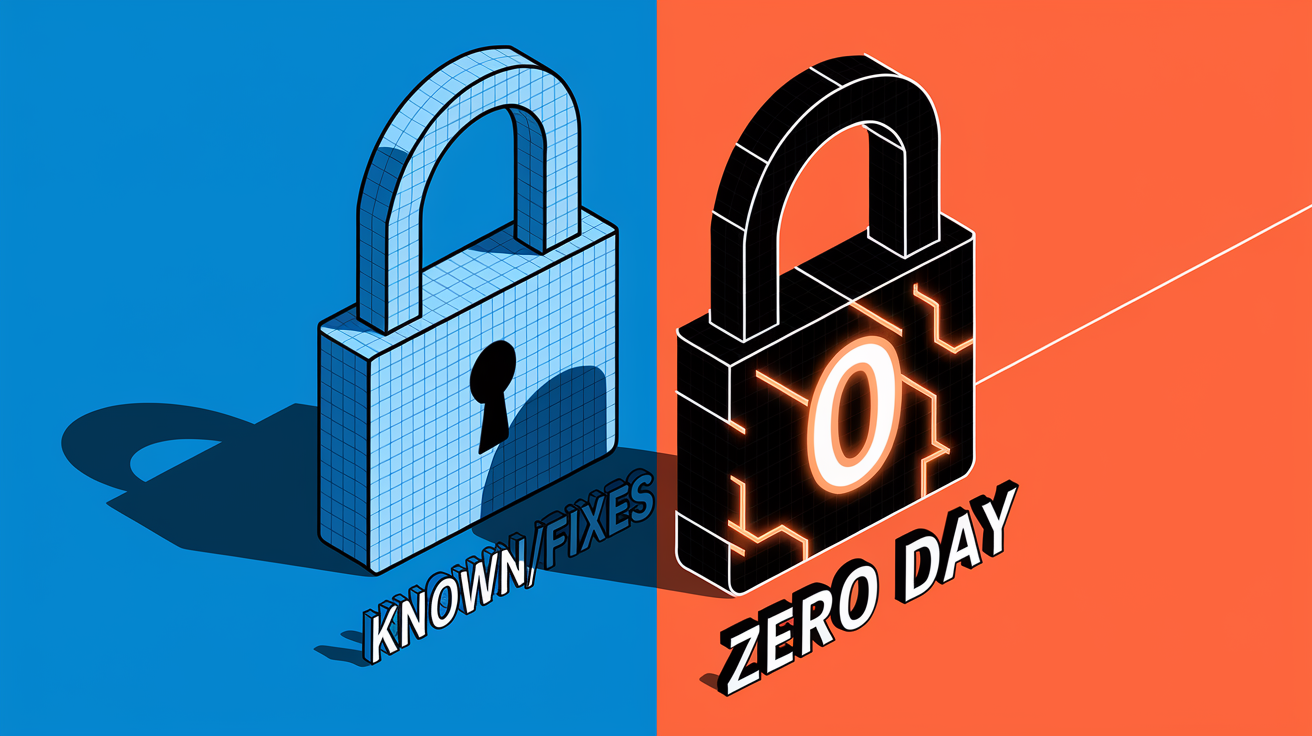
Zero day vulnerabilities are unknown to the software vendor and have no available patches. Known vulnerabilities have been documented, assigned CVE identifiers, and typically have vendor provided fixes available. The fundamental difference is awareness. With known flaws, defenders can take action. With zero days, they remain unaware of the risk.
Once a zero day vulnerability becomes publicly known through security research disclosure or threat intelligence discovery, it transitions to an N day vulnerability. Sometimes called a “one day” attack if exploitation begins immediately after disclosure. This transition creates a race between attackers rushing to exploit newly revealed flaws and defenders scrambling to apply patches.
The vulnerability window spans from the moment a flaw is introduced during development until a vendor creates and distributes a complete fix. Duration varies based on discovery method, vulnerability complexity, and vendor responsiveness. For zero days actively exploited in the wild, this window can persist for months before detection.
N day attacks exploiting known vulnerabilities are far more common than zero day attacks but are significantly easier to defend against through consistent patch management. The Equifax breach resulted from failure to apply an available patch for a known vulnerability, technically making it an N day attack despite catastrophic consequences.
Zero Day Lifecycle: From Vulnerability to Exploit
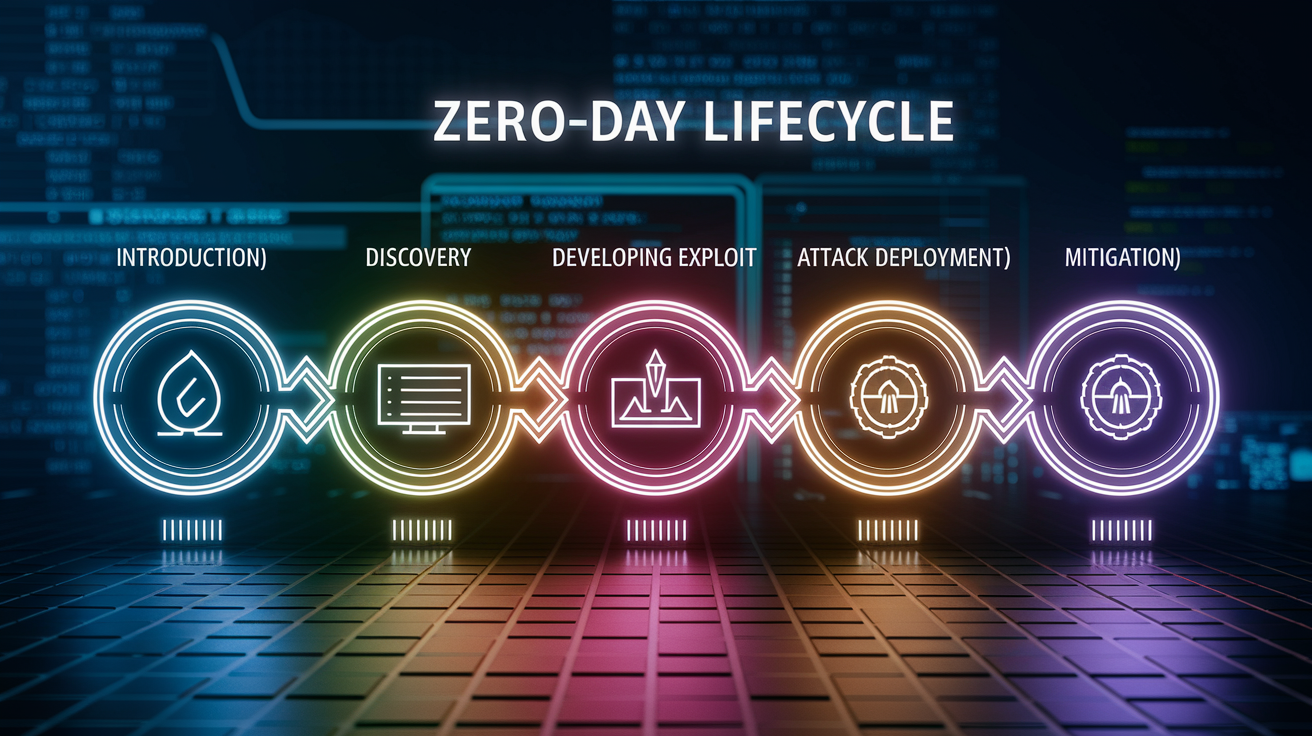
The zero day lifecycle describes how security flaws progress from creation through discovery, exploitation, and eventual resolution. Understanding this progression helps organizations recognize where intervention points exist and why timing matters.
The five lifecycle stages include:
Introduction during development. The vulnerability enters code through programming errors, design flaws, or integration mistakes during software creation.
Discovery by researcher or attacker. Someone identifies the exploitable flaw, either through security research or active threat hunting.
Exploitation development. Attackers create working exploit code that reliably uses the vulnerability to achieve objectives.
Attack deployment in the wild. Threat actors use the exploit against real targets, often before defenders realize attacks are occurring.
Patch creation and mitigation. The vendor learns of the vulnerability, develops a fix, tests it, and distributes the security update to users.
A zero day exploit is the actual malicious code or technique that uses a vulnerability to achieve unauthorized access, execute commands, steal data, or compromise systems. The progression moves from vulnerability (the underlying flaw) to exploit (the tool that uses the flaw) to attack (the actual hostile action against targets). For example, a buffer overflow vulnerability becomes dangerous when attackers write exploit code that triggers the overflow to inject and execute malicious commands.
Private zero day vulnerabilities held by nation state actors and elite cyber espionage groups remain undisclosed and therefore unfixed for extended periods. These represent the highest value intelligence assets because they provide reliable, undetectable access to target systems. Public disclosure changes the equation entirely. Once security researchers publish technical details, the race begins between widespread exploitation and patch deployment. Vulnerability complexity directly affects vendor response time. Simple flaws may receive emergency patches within days, while architectural issues requiring substantial code refactoring can take months.
Zero day attacks prove particularly effective because they operate without signatures in security databases, generate fewer behavioral alerts than known attack patterns, bypass security warnings that would block recognized threats, and require minimal user interaction compared to phishing attacks that depend on human mistakes. Attackers deliver payloads through multiple attack vectors including compromised websites serving exploit kits, malicious email attachments, drive by downloads, and supply chain compromises that inject malicious code into legitimate software updates.
Real World Zero Day Vulnerability Examples

Major zero day attacks throughout history demonstrate the severe real world consequences when unknown vulnerabilities fall into hostile hands. These examples show patterns that help organizations understand attack methods and potential impacts.
| Attack Name | Year | Vulnerability | Impact |
|---|---|---|---|
| Stuxnet | 2010 | Four Windows zero days targeting PLCs | Physical destruction of Iranian nuclear centrifuges |
| EternalBlue/WannaCry | 2017 | SMB protocol flaw (CVE-2017-0144) | Global ransomware affecting 200,000+ systems |
| Zerologon | 2020 | Netlogon protocol (CVE-2020-1472) | Domain admin compromise via authentication bypass |
| Kaseya VSA | 2021 | Endpoint management software flaw | Supply chain attack affecting 1,000+ companies |
| Equifax Breach | 2017 | Apache Struts (patched but not applied) | Personal data of 147 million people exposed |
The Stuxnet worm discovered in 2010 represented unprecedented sophistication, exploiting four separate zero day vulnerabilities in Microsoft Windows to target industrial control systems in Iran’s nuclear program. The attack caused physical damage to centrifuges by manipulating programmable logic controllers while displaying normal operations to monitoring systems. This marked the first confirmed cyber weapon designed to destroy physical infrastructure.
EternalBlue, a Windows Server Message Block protocol vulnerability (CVE-2017-0144), was developed by the U.S. National Security Agency and leaked by The Shadow Brokers in April 2017. Despite Microsoft patching the flaw one month before the leak, massive ransomware campaigns including WannaCry, Petya, and NotPetya spread from May to August 2017. These attacks demonstrated how quickly adversaries can weaponize leaked exploits and how patching failures create widespread vulnerability even after fixes become available.
Zerologon (CVE-2020-1472) allowed unauthenticated attackers with network access to gain domain admin account access through crafted authentication requests to the Netlogon Remote Protocol. Microsoft patched the vulnerability in August 2020, but Ryuk ransomware operators began exploiting it just two months later. One month after security researchers at Secura published technical details. The attack showed how rapidly exploit development follows public disclosure.
The Kaseya VSA attack in July 2021 exploited a vulnerability in widely used endpoint management software, enabling attackers to push ransomware to more than 1,000 companies through a single compromise. This supply chain attack illustrated how zero days targeting management tools create cascading impacts across entire customer bases. The Equifax breach, while technically an N day attack since patches existed, resulted from the company’s failure to apply a security update released in March 2017. Ultimately exposing personal data of 147 million people. This example demonstrates that known vulnerabilities cause damage comparable to zero days when organizations fail to patch promptly.
Detecting Zero Day Exploits in Progress

Traditional signature based security solutions can’t detect zero day exploits because threats remain unknown until it’s too late. Since no prior attack samples exist to generate detection signatures, antivirus software and intrusion detection systems configured to match known patterns will miss zero day attacks entirely.
Behavioral indicators that may signal zero day exploitation in progress include unusual privilege escalation attempts where accounts suddenly request or obtain administrative rights they’ve never needed before. Abnormal data access patterns when users or processes access sensitive databases, file shares, or systems outside their normal work scope. Unexpected network connections where systems initiate outbound connections to unusual IP addresses, geographic regions, or using uncommon protocols. Unusual system file modifications where critical operating system files, libraries, or configurations change without authorized updates. Anomalous account activities like login attempts at odd hours, from unusual locations, or accounts searching for specific data types like credit card numbers. And unexpected code execution where processes run from temporary directories, user profile folders, or other non standard locations.
Defending against zero day attacks requires monitoring data and comparing current activity to an established baseline to detect abnormalities. Behavior based data monitoring can detect the digital footprints of zero day exploit attacks in progress by identifying activities that deviate from normal patterns, even when the specific attack method remains unknown. For example, an accounting department user account suddenly running network scanning tools or attempting to access HR databases represents suspicious behavior regardless of the underlying exploit method.
Modern security solutions use behavioral analysis and anomaly based detection methods that employ machine learning algorithms to establish normal behavior baselines for users, systems, and applications. These tools continuously monitor activities in real time and generate alerts on deviations that may indicate compromise. Rather than asking “does this match a known bad pattern?” these systems ask “does this match known good patterns?” Flagging anything unusual for investigation. This approach provides the only realistic chance of catching zero day attacks during the vulnerability window before patches become available.
Patch Management and Emergency Response to Zero Day Vulnerabilities

When vendors discover a zero day vulnerability being actively exploited, the emergency patching process begins immediately. Development teams must reproduce the vulnerability, understand the root cause, design a fix that completely resolves the issue without breaking existing functionality, test the patch across supported platforms and configurations, and prepare deployment packages. All while attackers continue exploiting the flaw in production environments.
The race to apply updates before exploitation intensifies once patches release. Patch management priorities shift to emergency response mode: identifying all affected systems, testing patches in staging environments to prevent operational disruptions, scheduling maintenance windows that balance security urgency against business continuity, deploying updates systematically, and verifying successful installation. Organizations face difficult decisions about accepting brief operational interruptions versus leaving systems exposed to active threats.
Coordinated disclosure, security advisories, and government alerts play critical roles in emergency response. Vendors issue security bulletins detailing vulnerability severity, affected products and versions, exploitation indicators, temporary workarounds, and patch availability. Government agencies like CISA amplify these warnings and provide sector specific guidance. Coordinated disclosure between researchers and vendors allows patches to reach production before exploit details become public, though this timeline sometimes fails when attackers discover vulnerabilities independently.
Microsoft and Google offer cash rewards through bug bounty programs, with some rewards exceeding $100,000 for severe vulnerabilities. These programs incentivize responsible disclosure by compensating researchers who report flaws directly to vendors rather than selling exploits on underground markets. The financial incentive helps ensure vulnerabilities reach vendors before hostile actors discover them.
The Strutshock vulnerability (Apache Struts framework flaw) was patched by developers in March 2017, but Equifax failed to apply the update. Two months later, attackers exploited the unpatched system, leading to one of history’s largest data breaches. This example demonstrates the critical importance of timely patch deployment. Having available patches provides zero protection if organizations don’t install them promptly.
Prevention and Mitigation Strategies for Zero Day Threats

Organizations need both immediate mitigation techniques during vulnerability windows and long term preventive measures that reduce overall risk exposure. Compensating controls buy time when patches don’t exist, while proactive security posture improvements reduce the likelihood vulnerabilities will be introduced or successfully exploited.
| Strategy Type | Implementation | Timeframe |
|---|---|---|
| Least Privilege Access | Limit user and service accounts to minimum required permissions | Immediate |
| Network Segmentation | Isolate critical systems and limit lateral movement paths | Immediate |
| Virtual Patching | Deploy IPS rules or WAF policies to block exploitation attempts | Immediate |
| Vulnerability Management Program | Systematic identification, assessment, and remediation of security flaws | Long term |
| Secure Development Practices | Integrate security into software development lifecycle with code review | Long term |
| Employee Training & Backups | Security awareness programs and recovery capability maintenance | Ongoing |
Defense requires multi layered cybersecurity combining firewalls, next generation antivirus, endpoint protection, identity management, security information and event management systems, and software patching with focus on prevention rather than detection alone. Organizations should enforce a least privilege model to prevent lateral movement and data exfiltration from zero day attacks. If an attacker compromises a low privilege account, network segmentation and access controls limit their ability to reach high value targets. Zero trust architecture treats every user and device as potentially untrustworthy, verifying every access request regardless of location or network status, continuously validating that entities remain trustworthy throughout sessions rather than granting blanket access after initial authentication.
Vulnerability management programs require identifying assets and potential weaknesses, classifying vulnerabilities by type and severity, prioritizing remediation based on risk assessment considering exploitability and business impact, and remediating through patching or compensating controls. Attack surface management includes limiting administrative privileges to only accounts that absolutely require elevated rights, implementing strong password policies with complexity requirements and regular rotation, using multi factor authentication for all privileged accounts and sensitive systems, and network segmentation that creates security zones preventing compromised segments from affecting the entire environment. Penetration testing provides external validation by simulating attacker techniques to identify exploitable paths before real adversaries find them.
Dynamic Application Security Testing scans running applications to simulate external attacks and uncover vulnerabilities like SQL injection, cross site scripting, authentication bypasses, and insecure configurations. DAST serves as a preemptive measure by continually testing from an outsider’s perspective to identify and address flaws before attacker exploitation. Organizations using DAST report approximately 70 percent reduction in time spent on preliminary application scans because automated testing finds issues faster than manual review. Secure software development practices include threat modeling during design, secure coding standards that prevent common vulnerability classes, mandatory code review before production deployment, and static application security testing that analyzes source code for security flaws during development rather than waiting until deployment.
Employees should be trained to identify phishing attacks and report unusual system behaviors as they’re often the last line of defense when technical controls fail. Security awareness training covering social engineering tactics, safe browsing practices, and incident reporting procedures reduces the likelihood users will inadvertently enable attacks. Critical systems should be backed up regularly with offline or immutable copies that ransomware can’t encrypt, and recovery and incident response plans should be established, tested, and refined through tabletop exercises. Software and security packages including intrusion prevention systems and endpoint protection should be updated as soon as they become available to defend against known zero day vulnerabilities that have transitioned to N day status, closing the window before attackers who moved slowly can exploit newly public flaws.
Final Words
A zero day vulnerability represents one of the most serious threats in cybersecurity, but understanding the lifecycle, detection methods, and mitigation strategies puts you in a stronger defensive position.
The key takeaway: you can’t prevent every zero day, but you can dramatically reduce your risk through layered defenses, behavioral monitoring, and rapid patch deployment.
Start with the basics. Implement least privilege access controls, segment your networks, keep systems current, and train your team to spot unusual activity.
When the next zero day surfaces, you’ll be ready to respond quickly instead of scrambling to understand what went wrong.
FAQ
Q: What is meant by zero-day vulnerability?
A: A zero-day vulnerability is an unpatched software security flaw unknown to the vendor and those responsible for mitigation. The term “zero day” means defenders have zero days’ advance notice to fix the flaw before attacks can occur.
Q: Which of the following best describes a zero-day vulnerability?
A: A zero-day vulnerability is best described as an undisclosed software security flaw that exists without the vendor’s knowledge. These vulnerabilities give attackers an advantage because no patch exists and traditional security tools cannot detect the exploit.
Q: What are the 4 types of vulnerability?
A: The four types of vulnerabilities include zero-day vulnerabilities (unknown to vendors), N-day vulnerabilities (known but unpatched), disclosed vulnerabilities (publicly known with available patches), and configuration vulnerabilities (resulting from improper system settings rather than code flaws).
Q: What is the meaning of zero-day?
A: Zero-day refers to the number of days vendors have to fix a security flaw before attacks occur. When a vulnerability is discovered and immediately exploited, vendors literally have zero days to create a patch, leaving systems exposed until mitigation arrives.
Q: How do zero-day vulnerabilities differ from known security flaws?
A: Zero-day vulnerabilities differ from known security flaws because vendors remain unaware of them and no patch exists. Known vulnerabilities have documented CVE identifiers and available patches, making them easier to defend against through consistent patching programs.
Q: Why are zero-day vulnerabilities extremely dangerous?
A: Zero-day vulnerabilities are extremely dangerous because they bypass traditional security measures that rely on signatures and prior knowledge. Attackers exploit them before defenders can respond, making these flaws the ultimate infection method with minimal security warnings.
Q: What is the lifecycle of a zero-day vulnerability?
A: The zero-day lifecycle progresses through five stages: introduction during software development, discovery by researcher or attacker, exploitation development, attack deployment in the wild, and patch creation. The vulnerability remains a zero-day until the vendor learns about it.
Q: How can organizations detect zero-day exploits in progress?
A: Organizations can detect zero-day exploits in progress through behavioral analysis and anomaly-based detection that monitor for unusual activities. These methods identify suspicious patterns like unexpected privilege escalation, abnormal data access, and unusual network connections without requiring prior threat knowledge.
Q: What is the difference between a zero-day vulnerability and a zero-day exploit?
A: A zero-day vulnerability is the underlying software flaw, while a zero-day exploit is the actual malicious code or technique attackers use to leverage that flaw. The exploit represents an attack in progress, turning the vulnerability into a practical weapon.
Q: How should organizations respond when a zero-day patch becomes available?
A: Organizations should apply zero-day patches immediately upon availability, prioritizing critical systems first. The period between patch release and installation creates a dangerous vulnerability window where attackers race to exploit systems before defenders complete updates.
Q: What prevention strategies work against zero-day threats?
A: Prevention strategies against zero-day threats include implementing least privilege access controls, network segmentation, multi-factor authentication, employee security training, and regular vulnerability assessments. Multi-layered defense combining multiple controls reduces attack surface and limits potential damage from successful exploits.
Q: Can signature-based security detect zero-day attacks?
A: Signature-based security cannot detect zero-day attacks because the threats are unknown until exploitation occurs. Detection requires behavior-based monitoring that establishes normal activity baselines and alerts on deviations, using machine learning algorithms to identify suspicious patterns in real-time.
Q: What is virtual patching for zero-day vulnerabilities?
A: Virtual patching for zero-day vulnerabilities creates temporary protective rules at network or application layers that block exploitation attempts without modifying vulnerable code. This compensating control provides immediate protection during the vulnerability window before official patches arrive.
Q: Who typically exploits zero-day vulnerabilities?
A: Zero-day vulnerabilities are typically exploited by nation-state actors, advanced persistent threat groups, and sophisticated cybercriminals. Elite cyber-espionage groups, usually state-sponsored, own most private zero-day vulnerabilities, though less common than N-day attacks exploiting known flaws.