
You can’t patch a vulnerability you don’t know exists, and that’s exactly what makes zero-day attacks so dangerous. These exploits target security flaws before vendors even discover them, giving defenders zero time to prepare and no patches to deploy. The statistics aren’t encouraging. High-severity vulnerabilities in publicly exposed systems jumped 38% in 2024, and attackers typically weaponize newly discovered flaws within just 14 days. Since no single security control can stop what it can’t recognize, your best defense is layered security. Multiple overlapping protections that catch threats even when individual tools fail. Here’s how to build that defense.
Essential Protection Strategies Against Zero-Day Attacks
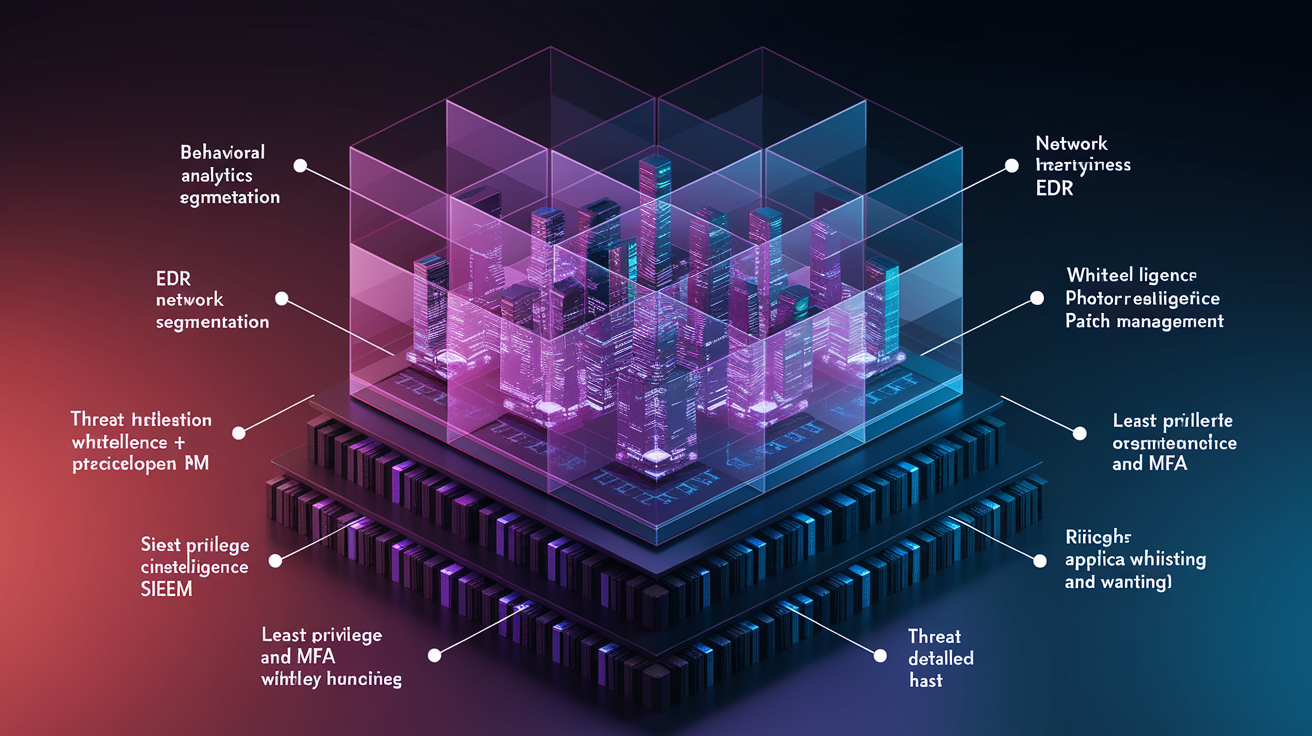
Zero-day attacks exploit vulnerabilities vendors have zero days to fix before exploitation happens. These security flaws stay unknown to software developers until attackers discover and weaponize them, leaving organizations with no advance warning or available patches. The threat landscape got significantly worse in 2024. High-severity vulnerabilities detected across publicly exposed digital footprints jumped by 38%. Once a vulnerability becomes known, the clock starts ticking. The average time between vulnerability detection and exploit release? Just 14 days. That’s a critical window where organizations need to respond fast to avoid compromise.
No single security control can stop zero-day attacks. Defense in depth strategy implements multiple security layers that provide redundancy when primary defenses fail. This approach recognizes that attackers only need to bypass one control to succeed. Defenders must succeed at every layer. Each protection mechanism compensates for potential weaknesses in others, creating overlapping fields of coverage that dramatically reduce the likelihood of successful exploitation. Organizations that rely on single point solutions (whether antivirus, firewalls, or intrusion detection) consistently fail when confronted with sophisticated zero-day attacks that specifically target gaps in their defenses.
8 Essential Protection Strategies (in Priority Order):
-
Deploy behavioral analytics and anomaly detection systems to identify suspicious activity patterns that signature-based tools miss, including unusual process execution, abnormal memory access, and unexpected network connections
-
Implement endpoint detection and response (EDR) solutions for continuous monitoring and automated threat response that tracks process behaviors, system calls, and file modifications across all endpoints
-
Establish network segmentation and zero trust architecture to limit lateral movement by creating isolation barriers between network zones and verifying every access request regardless of location
-
Maintain rigorous patch management with automated deployment to address the critical 14 day response window between vulnerability disclosure and exploit availability
-
Integrate threat intelligence feeds and SIEM platforms for real-time alerting and correlation of security events from diverse sources including endpoints, network devices, and cloud services
-
Enforce least privilege access controls and multi-factor authentication to restrict user permissions and prevent credential-based exploitation even when vulnerabilities exist
-
Implement application whitelisting and web application firewalls to prevent unauthorized code execution and filter malicious network traffic before it reaches vulnerable applications
-
Conduct continuous security monitoring with defined correlation rules and proactive threat hunting to search for Indicators of Compromise and suspicious patterns before they escalate into full breaches
These strategies need to work together as an integrated defense system. Each layer compensates for potential failures in others. Organizations that implement behavioral analytics might catch exploit attempts that bypass their firewalls. Network segmentation contains breaches that evade endpoint protection. Threat intelligence provides advance warning of attack patterns that traditional monitoring might miss. Even with these overlapping defenses in place, rapid response protocols remain essential when prevention controls are bypassed. System isolation, forensic analysis, emergency patches, and temporary workarounds become critical. The 14 day window between discovery and widespread exploitation means organizations must maintain tested incident response capabilities that activate immediately when zero-day indicators appear.
Understanding Zero-Day Vulnerability Mechanics

Zero-day vulnerabilities are security flaws unknown to the vendor with zero days available for remediation before discovery. The term “zero-day” refers to the fact that developers have had zero days to address the vulnerability before attackers begin exploiting it. Unlike known vulnerabilities where patches and defensive guidance exist, zero-day flaws provide no advance warning. No security updates. No vendor-supplied mitigation strategies when exploitation begins.
The vulnerability lifecycle from discovery to exploitation follows a compressed timeline that favors attackers. Security researchers, hackers, or automated scanning tools identify a previously unknown flaw in software code, system configurations, or protocol implementations. Once discovered, the average time for exploit release following vulnerability detection is 14 days. That creates an extremely narrow window for defensive response. During this critical period, attackers develop exploitation techniques, test reliability across different system configurations, and begin targeting vulnerable organizations before vendors even become aware a problem exists. Zero-day vulnerabilities can remain undetected for days, months, or years before developers identify and fix them. Some flaws persist across multiple software versions and affect millions of systems worldwide.
Attackers discover zero-day vulnerabilities through several sophisticated methods. Reverse engineering examines compiled software to understand how code functions and identify potential weaknesses in logic, input validation, or memory management. Fuzzing techniques automatically inject malformed data into applications to trigger unexpected behaviors, crashes, or security failures that indicate exploitable conditions. Manual code analysis reviews source code (when available through open source projects or leaked materials) to spot programming errors, race conditions, or architectural flaws. Collaboration between vulnerability researchers, state-sponsored teams, and criminal organizations accelerates discovery through shared knowledge, tools, and targeting strategies that systematically probe widely used software for exploitable weaknesses.
Zero-day vulnerabilities are valuable commodities in black markets and to state-sponsored actors because they provide reliable access to target systems with minimal detection risk. Exploit brokers purchase zero-day discoveries from researchers conducting illegal activities, paying anywhere from tens of thousands to millions of dollars depending on the target software’s prevalence and the exploit’s reliability. Nation state intelligence agencies stockpile zero-day exploits for espionage operations, infrastructure disruption, and offensive cyber capabilities that require covert access to adversary systems without triggering security alerts.
Behavioral Analytics and Anomaly Detection for Zero-Day Protection

Traditional antivirus software can’t protect against zero-day vulnerabilities because it relies on known malware signatures. Digital fingerprints of previously identified threats. When attackers exploit unknown vulnerabilities with never before seen malicious code, signature-based detection has nothing to compare against. Exploitation attempts pass completely undetected through conventional security controls. Behavioral analytics fill this critical gap by monitoring what software and users actually do rather than matching code against known bad databases. These systems establish baseline patterns of normal activity across systems, applications, networks, and users, then flag deviations that suggest malicious intent even when the specific threat has never been observed before.
Behavioral analytics monitor several critical activity dimensions to detect zero-day exploitation. User activity patterns track login times, access locations, resource usage, and privilege escalation attempts to identify compromised credentials or insider threats. Process behaviors examine how applications execute, which system resources they access, which child processes they spawn, and whether they attempt actions inconsistent with their documented purpose. Network traffic anomalies detect unusual connection patterns, data exfiltration attempts, command and control communications, and lateral movement between systems. System call sequences analyze low-level operating system interactions to identify exploitation techniques like buffer overflows, privilege escalation, and kernel manipulation that bypass application layer security controls.
Behavioral Indicators Suggesting Zero-Day Exploitation:
- Unusual process execution chains where legitimate applications spawn unexpected child processes or execute commands outside their normal operational scope
- Abnormal memory access patterns including attempts to read, write, or execute code in protected memory regions that suggest exploitation of memory corruption vulnerabilities
- Unexpected network connections from applications that typically don’t require internet access or connections to known malicious infrastructure and suspicious IP addresses
- Privilege escalation attempts where standard user accounts suddenly acquire administrative rights or access protected system resources they normally can’t reach
- File system modifications in protected areas including changes to system files, unauthorized installation of drivers, or creation of persistence mechanisms in startup locations
- Lateral movement attempts using legitimate administrative tools to spread across the network in patterns inconsistent with normal IT operations
Automated systems using artificial intelligence and machine learning in managed detection and response can detect suspicious activity and block malicious network traffic in real time. These platforms establish behavioral baselines by observing normal operations over weeks or months, learning typical patterns for each user, application, system, and network segment. Machine learning algorithms identify subtle deviations that human analysts might miss, correlating seemingly unrelated events across thousands of endpoints to detect multi-stage attacks. When behavioral engines identify potential zero-day activity, they automatically trigger containment actions. Isolating affected systems, blocking suspicious network traffic, terminating malicious processes, and alerting security teams for investigation. All before the attack progresses beyond initial exploitation stages.
Endpoint Protection and EDR Implementation Against Zero-Day Threats

Traditional antivirus solutions relied on signature databases updated periodically as new threats emerged. This reactive approach worked adequately when malware development cycles were measured in weeks or months, but completely fails against zero-day exploits that arrive without warning. Endpoint detection and response monitors suspicious behavior patterns missed by signature-based detection methods, representing a fundamental shift from known threat prevention to unknown threat detection and response. EDR solutions assume that some threats will bypass preventive controls and focus on rapid detection, investigation, and response capabilities that minimize attacker dwell time and limit damage even when initial compromise succeeds.
Extended Detection and Response (XDR) solutions like SentinelOne Singularity XDR provide extended endpoint protection with behavioral engines detecting threats across enterprises. Key EDR capabilities extend far beyond traditional antivirus functionality. Continuous monitoring records detailed telemetry from every process, network connection, file operation, registry modification, and user action across all endpoints, creating comprehensive forensic trails that enable after the fact investigation. Automated threat response immediately contains suspicious activity by killing malicious processes, isolating compromised endpoints from the network, blocking command and control communications, and preventing data exfiltration without waiting for human intervention. Forensic data collection preserves evidence of attack methods, lateral movement paths, and data access for investigation, compliance reporting, and criminal prosecution. Integration with threat intelligence automatically enriches detected events with context about known threat actors, attack techniques, and recommended response actions.
Exploit mitigation techniques provide critical defense layers specifically designed to prevent successful exploitation even when vulnerabilities exist in software. Memory protection mechanisms including Address Space Layout Randomization (ASLR) randomize memory locations to prevent attackers from reliably targeting specific memory addresses during exploitation attempts. Data Execution Prevention (DEP) marks memory regions as non-executable to prevent attackers from running malicious code injected into data areas. Control Flow Guard (CFG) validates that program execution follows expected paths, detecting and blocking exploitation attempts that redirect code execution to attacker-controlled locations. Stack canaries detect buffer overflow attempts by placing known values on the stack and verifying they remain unchanged before function returns execute.
Comprehensive endpoint protection requires complete asset inventories covering all systems, software, and devices as the foundation for zero-day prevention. Organizations can’t protect assets they don’t know exist. Shadow IT, personal devices, forgotten servers, and unmanaged cloud resources create blind spots where zero-day attacks establish initial footholds undetected. Deployment must extend across all endpoint types including Windows, macOS, and Linux workstations, mobile devices running iOS and Android, server infrastructure both on premises and in cloud environments, and virtual desktop infrastructure (VDI) systems. Consistent enforcement regardless of device location (whether on corporate networks, remote locations, or traveling internationally) ensures protection follows users rather than relying on network perimeter defenses that fail the moment employees work outside headquarters.
Network Segmentation and Isolation to Limit Zero-Day Impact

Network segmentation limits attack spread through strategic isolation, preventing lateral movement across systems after initial compromise occurs. When attackers successfully exploit a zero-day vulnerability on a single endpoint, unsegmented networks allow them to move freely across the entire environment. Accessing file servers, domain controllers, databases, and sensitive systems without encountering additional barriers. Properly segmented networks contain breaches within specific zones, forcing attackers to overcome multiple additional security controls before reaching high value targets. Each segment boundary provides an opportunity for detection, introduces delays that give security teams time to respond, and requires attackers to expose additional exploitation techniques that behavioral monitoring can identify.
Micro-segmentation strategies create granular security zones around individual workloads and applications rather than traditional network based segmentation. Unlike older approaches that divided networks into large zones (production, development, user networks), micro-segmentation applies policies at the individual workload level, often implemented through software defined networking and host based firewalls. This approach restricts communication to only explicitly authorized connections. A web server can communicate only with its specific database backend, not with every database in the data center. When zero-day exploitation compromises a micro-segmented workload, attackers find themselves isolated within a very small environment with no lateral movement capability to other systems.
Zero trust architecture verifies every user and device accessing network resources before granting access, eliminating the concept of trusted internal networks. The zero trust security model assumes all users, devices, and network traffic are potential threats requiring continuous verification. Rather than assuming systems within the corporate network are safe, zero trust requires authentication and authorization for every access attempt, whether from external or internal sources. This approach prevents compromised credentials obtained through zero-day exploitation from providing uncontrolled access across the environment. Implement principle of least privilege access and zero trust network security architecture with verification protocols that continually assess risk factors including user behavior, device security posture, access location, and requested resource sensitivity.
| Segmentation Strategy | Purpose | Implementation Example |
|---|---|---|
| Perimeter Segmentation | Separates internal trusted network from external untrusted internet | Next-generation firewalls with deep packet inspection at network boundaries filtering all inbound and outbound traffic |
| Internal Network Zoning | Divides internal network into functional areas with controlled inter-zone communication | Separate VLANs for user workstations, servers, management systems, guest WiFi, and IoT devices with firewall rules controlling traffic flows |
| Application-Layer Segmentation | Isolates specific applications and their supporting infrastructure from other systems | Web applications accessible only from designated load balancers, communicating only with authorized database instances |
| User-Based Segmentation | Restricts network access based on user identity, role, and security clearance | Network Access Control (NAC) systems that place authenticated users into appropriate network segments based on Active Directory group membership |
| Device Isolation | Quarantines devices that fail security checks or exhibit suspicious behavior | Automatic VLAN reassignment for devices with outdated patches, disabled security software, or detected malware into isolated remediation networks |
Segmentation prevents lateral movement after initial compromise by forcing attackers to navigate through multiple security boundaries. Each requiring additional exploitation techniques and creating more opportunities for detection. When a zero-day exploit compromises a workstation in the user network segment, proper segmentation prevents that compromised endpoint from directly accessing servers in the data center, jumping to administrative systems, or connecting to other user workstations. Attackers must either exploit additional vulnerabilities in segmentation controls themselves or use compromised credentials that have legitimate cross segment access. Both actions increase detection probability and extend the time defenders have to identify and contain the breach.
Threat Intelligence Integration for Zero-Day Attack Prevention

Threat intelligence encompasses information about emerging threats, attack patterns, adversary tactics, and vulnerability exploitation that helps organizations detect and respond to zero-day attacks before they cause significant damage. Prevention requires deploying threat intelligence solutions and SIEM for collecting telemetry data and analyzing security events from diverse sources with real-time alerting. This intelligence comes from multiple sources: security researchers who discover vulnerabilities in popular software, incident response teams that observe new attack techniques during investigations, government agencies that track nation state cyber operations, security vendors that aggregate telemetry from thousands of customer deployments, and information sharing communities where organizations report attacks they’ve experienced.
Security Information and Event Management (SIEM) platforms integrate threat intelligence with security monitoring by collecting and correlating security events from endpoints, network devices, firewalls, web proxies, cloud services, authentication systems, and applications. Singularity Threat Intelligence with data lake and Purple AI collects and correlates data from multiple sources, creating comprehensive visibility across the entire security environment. SIEM platforms normalize log formats from disparate systems into unified schemas that enable correlation across different event types. When a user authenticates from an unusual geographic location, accesses a sensitive file they rarely touch, then initiates network connections to IP addresses associated with known threat actors (all within minutes), the SIEM correlates these individual events into a high severity alert indicating likely zero-day compromise. Context awareness in threat intelligence eliminates false positives and reduces alert noise by distinguishing between genuinely suspicious activity and benign deviations from normal patterns.
Proactive threat hunting activities use advanced analytics to search for Indicators of Compromise and suspicious patterns that automated detection might miss. Rather than waiting for alerts to trigger, threat hunters formulate hypotheses about how attackers might exploit specific vulnerabilities or bypass existing controls, then search telemetry data for evidence these techniques are occurring. Hunters analyze unusual PowerShell executions, examine registry modifications that establish persistence, investigate legitimate administrative tools used for malicious purposes, and track subtle network behaviors that suggest command and control communications. These investigations often discover zero-day exploitation that occurs beneath the threshold of automated detection systems, identifying attacks days or weeks before they would trigger conventional alerts.
Organizations should subscribe to threat intelligence feeds, monitor software vendor updates, and employ real-time monitoring tools tracking suspicious activity across the environment. Commercial threat intelligence services provide curated feeds focused on specific industries, technologies, or threat actor groups relevant to the subscriber. Community based sharing through Information Sharing and Analysis Centers (ISACs) and industry groups provides peer to peer exchange of indicators and attack techniques organizations are observing. Vendor security bulletins announce vulnerabilities and patches, often including indicators of exploitation and recommended defensive measures. Threat intelligence sharing keeps security teams informed about new vulnerabilities and attack patterns, enabling proactive defense adjustments before zero-day attacks reach the organization.
Patch Management and Software Update Strategies for Zero-Day Defense

The critical 14 day window between vulnerability detection and exploit release demands rapid patching capabilities that minimize exposure once zero-day vulnerabilities become publicly known. Average time for exploit release following vulnerability detection is 14 days, requiring rapid prevention and response strategies that can deploy patches across thousands of systems within days rather than weeks. This compressed timeline leaves little room for traditional testing cycles that might take weeks to validate patches in development environments before production deployment. Organizations must balance the risk of deploying inadequately tested patches against the risk of leaving systems vulnerable during the period when exploit development is most active and widespread attacks typically begin.
Automated patch management systems streamline deployment for operating systems, applications, and firmware by eliminating manual intervention for routine updates. These platforms automatically download security updates from vendor repositories, test them in designated pilot groups, monitor for stability issues or application compatibility problems, then roll out successful patches across production environments on predefined schedules. Rigorously patch systems, audit all resources, assets, inventory, and users while scanning historical event data for patterns that might indicate exploitation occurred before patches were applied. Enable automatic software updates for client operating systems, web browsers, and productivity applications where rapid deployment is critical and compatibility issues are minimal.
Patch Management Best Practices:
- Maintaining comprehensive asset inventories that include all hardware, software, firmware, and application versions so patch management systems know exactly which systems need each security update
- Prioritizing critical systems and vulnerabilities by focusing first on internet facing systems, those processing sensitive data, and vulnerabilities with known active exploitation or public exploit code
- Testing patches in non-production environments that mirror production configurations to identify compatibility issues, application failures, or performance degradation before widespread deployment
- Establishing emergency patching procedures that bypass normal change control processes for zero-day vulnerabilities with active exploitation, enabling deployment within hours rather than days
- Using virtual patching for systems that can’t be immediately updated, deploying intrusion prevention signatures or web application firewall rules that block exploitation attempts while permanent patches are being tested
- Monitoring vendor security bulletins from Microsoft, Apple, Adobe, Oracle, VMware, and other software publishers to receive immediate notification when security updates become available
- Maintaining rollback capabilities including system backups and patch removal procedures that allow rapid recovery if deployed updates cause operational issues
Vulnerability scanning schedules must account for the massive scale of disclosed vulnerabilities. The National Vulnerability Database lists over 260,000 vulnerabilities in commercial and open source software, with over 28,000 new disclosures in 2023. Organizations can’t possibly patch every vulnerability and must prioritize based on factors including exploit availability, system exposure, data sensitivity, and vendor support status. Continuous vulnerability assessment scans both external and internal systems to identify missing patches, insecure configurations, and end of life software that no longer receives security updates. Risk based prioritization assigns higher urgency to vulnerabilities in internet facing systems, those with published exploit code, those affecting systems processing regulated data, and those with high CVSS severity scores indicating significant potential impact.
Real-World Zero-Day Attack Cases and Lessons Learned

Studying actual zero-day incidents reveals attack patterns, organizational vulnerabilities, and defensive gaps that help security teams understand how theoretical risks manifest in real world compromises. These case studies demonstrate that zero-day exploitation affects organizations of all sizes across every industry sector. From small businesses running vulnerable software to large enterprises with sophisticated security programs. The incidents show that early detection and rapid response significantly reduce impact, while delayed identification allows attackers to achieve their objectives before defenders even realize compromise occurred.
Log4j Remote Code Execution (December 2021)
The Log4j remote code execution flaw in 2021 enabled threat actors to remotely execute commands on millions of applications worldwide through widely used components embedded in enterprise software. Zero-day vulnerability in Log4j disclosed December 2021, with first exploitation attempts detected 9 minutes after public disclosure. That demonstrates how rapidly attackers capitalize on newly announced vulnerabilities. The Log4j component was used in hundreds of products including VMware, Apple iCloud, Cisco, IBM WebSphere, Minecraft, and Elastic Search, creating massive exposure that required emergency patching across virtually every organization globally. Attackers exploited the vulnerability by embedding malicious JNDI lookup strings in user controlled data fields (application logs, HTTP headers, form inputs) that triggered remote code execution when Log4j processed the logged data. The widespread use of Log4j in both commercial products and custom enterprise applications meant organizations often didn’t know which systems were vulnerable, requiring extensive scanning and emergency patching campaigns that continued for months after initial disclosure.
MOVEit File Transfer Vulnerability (2023)
The MOVEit file transfer vulnerability in 2023 affected multiple organizations worldwide across government, energy, transportation, retail, communications, and professional services sectors. This demonstrated how single vulnerabilities in widely deployed enterprise software create systemic risk across entire industries. Russian group exploited SQL injection zero-day in MOVEit Transfer launching ransomware attacks on hundreds of organizations including universities, health networks, banks, and government agencies across Pakistan and Germany. LEMURLOOT samples with filenames human2.aspx and _human2.aspx were uploaded to global public repos during MOVEit attack, providing persistent backdoor access that allowed attackers to return even after organizations applied patches. The incident highlighted the challenge of third party software risk. Many affected organizations didn’t operate MOVEit directly but suffered data breaches because their vendors, business partners, or service providers ran vulnerable file transfer systems containing their sensitive information.
VMware ESX Zero-Days (2025)
Microsoft Intelligence Center reported 3 VMware zero-days in 2025: CVE-2025-22224, CVE-2025-22225, and CVE-2025-22226 affecting ESX products including Workstation, Telco Cloud Pattern, vSphere, ESXi, Cloud Foundation, and Fusion. These vulnerabilities in enterprise virtualization infrastructure created particularly severe risk because VMware ESXi hosts typically run multiple virtual machines supporting critical business applications. Compromise at the hypervisor level provides attackers with access to every virtual machine on the host. Organizations running vulnerable ESXi versions faced difficult decisions about emergency patching that required taking down multiple production systems simultaneously, scheduling maintenance windows, and potentially triggering high availability failovers. The incident demonstrated that infrastructure components (hypervisors, storage systems, network equipment) represent high value targets where single vulnerabilities expose large portions of the computing environment.
These incidents share common patterns that inform defensive strategies. Exploitation begins almost immediately after public disclosure. Widespread software deployment multiplies impact across many organizations simultaneously. Attackers target infrastructure and widely used components that affect multiple systems. Delayed patching allows attackers to establish persistent access that survives initial remediation efforts. These cases reinforce why layered defenses are essential. No organization can patch fast enough to close the window between disclosure and exploitation, so behavioral detection, network segmentation, and rapid response capabilities must provide protection even when preventive controls fail.
Sandboxing and Isolation Technologies for Zero-Day Containment

Sandboxing executes suspicious files and processes in isolated environments to observe behavior without risking production systems, providing critical capabilities for analyzing potential zero-day exploits before they can cause damage. When security systems encounter files or processes with unknown reputation (no signature match, unfamiliar code patterns, or behavioral indicators suggesting malicious intent), sandboxes detonate these samples in instrumented virtual environments that monitor every action. Sandboxes record file system modifications, registry changes, network connections, process creation, memory allocation, and system API calls, creating detailed behavioral profiles that reveal malicious intent. Use sandboxing, honeypots, and advanced monitoring solutions to catch malicious activity in real time before it spreads beyond the isolated environment.
Browser isolation technologies protect against drive by download attacks and malicious web content by rendering web pages in remote environments separate from user endpoints. Drive by download exploits allow attackers to install malware on devices by users visiting compromised websites without visible signs of compromise, leveraging zero-day vulnerabilities in browsers, plugins, or JavaScript engines. Remote browser isolation (RBI) executes all web content on cloud based or data center servers, streaming only rendered pixels or safe HTML to user devices. When users visit sites containing zero-day browser exploits, the malicious code executes in the remote environment where it can’t access corporate data, spread to other systems, or establish persistence. This approach assumes all web content is potentially malicious and prevents exploitation regardless of whether vulnerabilities are known or unknown.
Honeypot deployment strategies detect zero-day attack attempts and gather intelligence on attacker tactics by creating attractive decoy systems that have no legitimate business purpose. Organizations deploy honeypots that appear to be vulnerable servers, databases, file shares, or administrative systems in network locations where legitimate users would never access them. Any connection to honeypot systems indicates malicious reconnaissance, lateral movement attempts, or automated scanning that likely represents attack activity. Because honeypots have no legitimate traffic, security teams can investigate every interaction without filtering through massive volumes of normal activity to identify suspicious events. When zero-day attacks spread through the network attempting lateral movement, honeypots detect this activity and provide early warning before attacks reach production systems.
Deception technology creates fake assets and network segments to mislead attackers and provide early warning of intrusion attempts, extending the honeypot concept across the entire network environment. Modern deception platforms automatically generate thousands of decoy credentials, fake network shares, counterfeit application servers, and simulated databases that appear legitimate to attackers but trigger high fidelity alerts when accessed. These decoys mimic real organizational assets including realistic hostnames, IP addresses, file contents, and security configurations that withstand attacker scrutiny. When zero-day exploitation provides initial access and attackers begin reconnaissance activities, they inevitably encounter deception assets and reveal their presence by attempting to access, authenticate to, or exploit these decoys. This provides defenders with immediate notification and detailed forensic data about attacker tools, techniques, and objectives.
Application Security and Secure Development Practices Against Zero-Days

Secure coding practices reduce vulnerability introduction during software development including input validation, output encoding, parameterized queries, and secure API design that prevent entire classes of exploitable flaws. Input validation ensures applications accept only expected data types, lengths, and formats, rejecting malformed input that might trigger buffer overflows, SQL injection, or command injection vulnerabilities. Output encoding prevents cross site scripting and injection attacks by ensuring user supplied data can’t be interpreted as executable code. Parameterized queries separate SQL commands from data parameters, eliminating SQL injection vulnerabilities regardless of input content. Secure API design implements authentication, authorization, rate limiting, and input validation at API boundaries to prevent unauthorized access and abuse.
Code analysis tools and fuzzing techniques identify potential vulnerabilities before deployment by automatically examining source code and testing application behavior under unexpected conditions. Static Application Security Testing (SAST) analyzes source code without executing the program, identifying coding patterns associated with security vulnerabilities including buffer overflows, race conditions, cryptographic weaknesses, and hardcoded credentials. Dynamic Application Security Testing (DAST) tests running applications by sending malformed input, unexpected requests, and malicious payloads to identify vulnerabilities in running code. Fuzzing techniques automatically generate thousands of malformed inputs to test application robustness, triggering crashes and errors that indicate potential zero-day vulnerabilities before attackers discover them. Nine strategies for minimizing zero-day exposure include code analysis tools including fuzzing, secure software development training, and regular security audits that catch vulnerabilities during development rather than after deployment.
Web application firewalls filter malicious network traffic and protect against common exploit techniques by inspecting HTTP requests and responses for attack patterns. WAFs deploy rules that block SQL injection attempts, cross site scripting, path traversal, command injection, and other exploitation techniques before malicious requests reach vulnerable applications. When zero-day vulnerabilities emerge in web applications, WAFs provide temporary protection through virtual patching. Creating rules that block exploitation attempts while developers prepare permanent code fixes. Modern WAFs use machine learning to identify anomalous request patterns that suggest zero-day exploitation even without specific signatures, learning normal application behavior then flagging unusual request patterns, unexpected parameters, or abnormal response codes.
Application Security Controls:
- Application whitelisting to prevent unauthorized code execution by allowing only explicitly approved applications, scripts, and executables to run while blocking everything else
- Buffer overflow protection mechanisms including stack canaries, address space layout randomization (ASLR), and data execution prevention (DEP) that make memory corruption exploitation significantly more difficult
- Runtime application self-protection (RASP) embedded in applications to monitor their own execution, detect exploitation attempts, and automatically terminate malicious activity without external security systems
- Regular security audits and penetration testing conducted by independent assessors who attempt to exploit applications using real world techniques, identifying vulnerabilities before malicious actors do
- Threat modeling during design phases that systematically identifies potential attack vectors, trust boundaries, and security requirements before writing code
- Security focused code reviews where developers examine each other’s code specifically looking for security weaknesses, logic flaws, and violations of secure coding standards
Security awareness training for development teams ensures programmers understand secure coding principles, common vulnerability types, and attack techniques they must defend against. Risk assessments and threat modeling help identify attack surface and prioritize defense strategies including multi-factor authentication and input validation throughout the software development lifecycle. Developers who understand how attackers exploit vulnerabilities write more secure code, implement defense in depth controls, and avoid introducing exploitable flaws that become tomorrow’s zero-day vulnerabilities.
Incident Response Planning for Zero-Day Attack Scenarios
Incident response planning is critical given the 14 day average window for exploit development and the reality that some zero-day attacks will succeed despite layered preventive controls. Organizations deploy rapid response protocols including system isolation, forensic analysis, emergency patches, and temporary workarounds that limit damage and accelerate recovery when zero-day exploitation occurs. Pre-planned response procedures eliminate decision making delays during crisis situations, provide clear roles and responsibilities so teams coordinate effectively under pressure, and ensure critical containment actions occur within minutes rather than hours when every moment allows attackers to expand their access and achieve additional objectives.
Automated response capabilities execute immediate containment actions without waiting for human decision making. Automated response actions should quarantine or isolate compromised hosts by severing network connections to prevent lateral movement and data exfiltration. Systems automatically block malicious IPs identified during investigation, preventing attackers from maintaining command and control communications or establishing additional footholds. Automatic data backup protects against ransomware and destructive attacks by continuously replicating critical data to protected storage that attackers can’t access even after full environment compromise. Security orchestration platforms execute predefined playbooks that coordinate actions across multiple security tools. EDR systems isolate endpoints, firewalls block traffic, identity systems disable compromised accounts, and backup systems snapshot data. All within seconds of initial detection.
Incident Response Workflow (8 Steps):
-
Initial detection and alerting when behavioral analytics, threat intelligence, or monitoring systems identify indicators consistent with zero-day exploitation and trigger high priority alerts to security operations teams
-
System isolation and containment immediately quarantining affected systems from the network to prevent lateral movement while maintaining forensic state for investigation
-
Forensic data collection and analysis gathering memory dumps, disk images, network traffic captures, and log data before evidence is lost or attackers cover their tracks
-
Exploit method identification determining how attackers achieved initial access, which vulnerability they exploited, what tools and techniques they employed, and whether exploitation is ongoing
-
Emergency patching or workaround deployment applying vendor patches if available or implementing temporary mitigations like firewall rules, service disabling, or virtual patching through security appliances
-
Network traffic log review analyzing historical connection logs, proxy records, and firewall logs to identify when exploitation began, which systems were accessed, and whether data was exfiltrated
-
Communication with stakeholders notifying executive leadership, legal counsel, regulatory agencies, affected customers, and business partners according to disclosure requirements and contractual obligations
-
Post-incident analysis conducting retrospective reviews to identify defensive gaps, improve detection capabilities, refine response procedures, and implement permanent fixes that prevent recurrence
Incident response activities include isolating affected systems, deploying web application firewalls, analyzing exploit methods, reviewing network traffic logs, and ongoing monitoring to ensure attackers haven’t established persistent access or secondary footholds. Incident response plans require testing for rapid threat containment when zero-day attacks occur. Tabletop exercises where teams simulate response to hypothetical scenarios. Technical drills that practice containment procedures on test systems. Red team engagements that challenge response capabilities with realistic attack simulations. Regular testing reveals gaps in runbooks, identifies missing technical capabilities, trains personnel on critical procedures, and validates that response times meet organizational objectives.
Vulnerability Assessment and Penetration Testing for Zero-Day Readiness
Penetration testing simulates real world attacks to identify security weaknesses across networks, applications, and systems before malicious actors exploit them. Regular penetration testing helps discover weaknesses before malicious actors exploit them and identifies attack vectors before malicious exploitation, strengthening prevention across digital ecosystems. Professional penetration testers use the same tools, techniques, and methodologies that attackers employ. Reconnaissance to map the attack surface, vulnerability scanning to identify potential weaknesses, exploitation to prove vulnerabilities are genuinely exploitable, privilege escalation to simulate lateral movement, and data exfiltration to demonstrate business impact.
Different penetration testing approaches provide varying levels of realism and coverage depending on organizational goals. Black box testing simulates external attackers with no prior knowledge of the environment, requiring testers to perform reconnaissance, identify systems, and discover vulnerabilities without inside information. This approach most accurately reflects how external threat actors would attack. White box testing provides testers with complete system knowledge including network diagrams, source code, credentials, and architecture documentation, enabling comprehensive security assessments that identify subtle logic flaws and configuration weaknesses that black box testing might miss. Gray box testing provides partial knowledge such as user level credentials or network access but no administrative privileges or detailed architecture information, simulating insider threats or attackers who have compromised initial access but haven’t yet achieved full environment control.
Red team exercises simulate advanced persistent threat scenarios to test detection and response capabilities against sophisticated, multi-stage attacks conducted over extended periods. Unlike standard penetration tests focused on identifying vulnerabilities, red team engagements specifically test whether security operations centers can detect stealthy attackers, whether incident response procedures work under realistic conditions, and whether defensive technologies identify attack patterns that unfold over days or weeks. Red teams employ advanced evasion techniques, custom malware, social engineering, and operational security practices that mirror nation state actors, providing realistic assessment of organizational resilience against the most sophisticated zero-day threats.
| Assessment Type | Frequency | Primary Focus |
|---|---|---|
| Vulnerability Scanning | Continuous or weekly | Automated identification of known vulnerabilities, missing patches, and misconfigurations
Final WordsZero-day attacks exploit the critical window before vendors can patch newly discovered vulnerabilities, but layered defenses significantly reduce your risk. Deploy behavioral analytics to catch unknown threats. Segment your network to contain breaches. Keep systems patched within that 14-day window. Train your team to spot social engineering. Test your defenses through penetration testing. No single control stops every zero-day attack, but when you implement these strategies together, each layer compensates for gaps in the others. That redundancy is what keeps attackers out and your systems running. Start with the highest-impact controls first: EDR, threat intelligence, and rapid patching. Then build out from there. FAQHow can zero-day attacks be prevented?Zero-day attacks can be prevented through layered defense strategies that include behavioral analytics to detect suspicious activity patterns, endpoint detection and response (EDR) solutions for continuous monitoring, network segmentation to limit attack spread, rapid patch management within the critical 14-day window, threat intelligence integration for early warnings, least privilege access controls, application whitelisting, and proactive threat hunting. No single control stops zero-day attacks, so organizations need overlapping security layers that provide redundancy when individual defenses fail. How can organizations protect themselves against zero-day exploits?Organizations protect themselves against zero-day exploits by implementing defense-in-depth strategies with multiple security layers working together. Deploy behavioral analytics and EDR solutions to detect threats that signature-based tools miss, establish network segmentation and zero-trust architecture to contain breaches, integrate SIEM platforms for real-time alerting, maintain automated patch management for rapid response, enforce multi-factor authentication and least privilege access, implement web application firewalls, and conduct continuous security monitoring with proactive threat hunting to identify compromise indicators. Who is responsible for zero-day attacks?Zero-day attacks are carried out by various threat actors including state-sponsored groups targeting critical infrastructure and government systems, cybercriminal organizations seeking financial gain through ransomware and data theft, and advanced persistent threat (APT) groups conducting long-term espionage campaigns. Attackers discover vulnerabilities through reverse engineering, code analysis, and fuzzing techniques, then exploit them before vendors release patches. Organizations cannot control attacker actions but remain responsible for implementing layered defenses to detect and contain exploitation attempts. Where do 90% of all cyber incidents begin?Ninety percent of cyber incidents begin with phishing attacks that deliver malicious code exploiting vulnerabilities, including zero-day flaws. Attackers use social engineering and email-based attacks to trick employees into clicking malicious links, opening weaponized attachments, or providing credentials that enable system access. Effective defense requires combining technical controls like email filtering and endpoint protection with comprehensive security awareness training that teaches employees to recognize phishing attempts, verify sender authenticity, and report suspicious activity through anonymous reporting channels. |