Don’t believe the DALL‑E 4 dates you see on social media: OpenAI hasn’t published an official release date or announcement.
Based on the 15–19 month gaps between DALL‑E 1, 2, and 3, analysts peg a likely window from late 2024 to mid‑2025 if that cadence holds.
That projection isn’t a promise.
In this post I’ll show the evidence behind the estimate, outline likely rollout phases, and point to the signals you should watch so you can plan ahead.
Current Status of the DALL‑E 4 Release Timeline
There’s no official release date for DALL‑E 4. OpenAI hasn’t published anything about it, no blog posts, no developer docs, no product announcements. The official timeline stops at DALL‑E 3, which rolled out in late 2023.
The only thing we can look at is the pattern. DALL‑E 1 showed up in January 2021 as a research demo. DALL‑E 2 launched in April 2022, about 15 months later. DALL‑E 3 arrived in October–November 2023, roughly 18–19 months after that. If you follow that 15–19 month rhythm, most analysts guess we’re looking at late 2024 to mid‑2025 for the next version. But that’s assuming similar training cycles, safety reviews, and integration work.
Treat any specific date you see on social media or forums as speculation unless it’s backed by an official OpenAI link. When they release major image models, they do it properly: research posts, sample galleries, safety docs, staged access details. That’s the only signal worth watching.
- January 2021: DALL‑E 1 research demo published, proof of concept for text‑to‑image at scale.
- April 2022: DALL‑E 2 announced with beta waitlist, better resolution and photorealism (15‑month gap).
- October–November 2023: DALL‑E 3 integrated into paid chat and API, improved prompt‑following and safety filters (18‑month gap).
- Projected late 2024–mid 2025: Industry estimate based on historical cadence. This is a guess, not confirmation.
Historical Development Timeline Leading Up to DALL‑E 4

DALL‑E started as a research demo in early 2021. It proved large neural networks could turn text descriptions into coherent images. DALL‑E 2 came in April 2022 with real quality improvements, higher resolution, staged public access through a waitlist. DALL‑E 3 focused on better compositional accuracy, improved text rendering inside images, tighter integration into chat products. The documented timeline doesn’t mention a DALL‑E 4 release.
Why does this matter? Because even without an official date, you can plan integration roadmaps and budgets around these patterns. The 15–19 month intervals suggest a cycle that balances compute‑intensive training, legal reviews, content moderation, staged rollouts. Any projection for the next version has to account for similar dependencies. Delays of several months from historical patterns are totally plausible if safety reviews or infrastructure readiness take extra time.
| Version | Release Year | Interval From Previous |
|---|---|---|
| DALL‑E 1 | 2021 (January) | — |
| DALL‑E 2 | 2022 (April) | ~15 months |
| DALL‑E 3 | 2023 (October–November) | ~18–19 months |
| DALL‑E 4 (projected) | Late 2024–mid 2025 (estimated) | ~15–19 months (projection) |
Projected DALL‑E 4 Release Window Based on Cadence Patterns
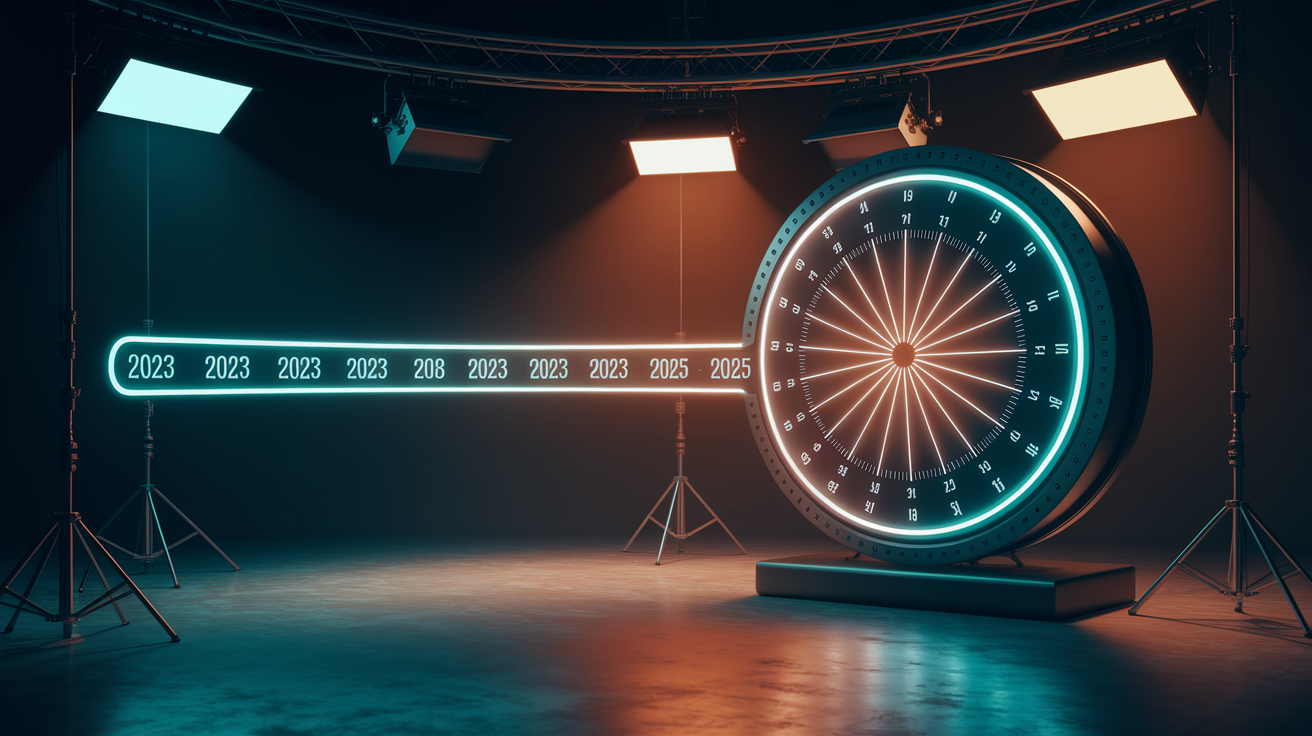
Expert projections point to October 2024 through June 2025 if historical intervals hold. This window comes from the 15–19 month gaps between prior versions, starting from DALL‑E 3’s late 2023 rollout. The midpoint would be around mid‑2025, with the earlier edge (late 2024) representing an accelerated schedule and the later edge accounting for extended safety work or infrastructure delays.
Several things influence whether it lands early or late in that window. Training runs for frontier image models take months of compute time and serious infrastructure coordination, often running parallel to other large projects. Internal safety evaluations (red‑teaming, bias audits, content‑moderation testing) can stretch timelines by weeks or months, especially if new capabilities like video or 3D generation introduce fresh risk surfaces. Integration readiness matters too. The model needs to work smoothly with existing chat products, API infrastructure, enterprise deployment tooling. Legal and licensing reviews have gotten more complex with each generation, particularly around copyright and generated‑content provenance.
Treat any specific date circulating online as speculative unless it’s in an official blog post or product changelog. OpenAI doesn’t pre‑announce exact launch dates for major image models far in advance. They ship when safety, quality, and infrastructure criteria are met. Projections help you plan, but build timeline buffers and watch official channels for confirmation.
Expected Features and Improvements in DALL‑E 4 (Industry Predictions)
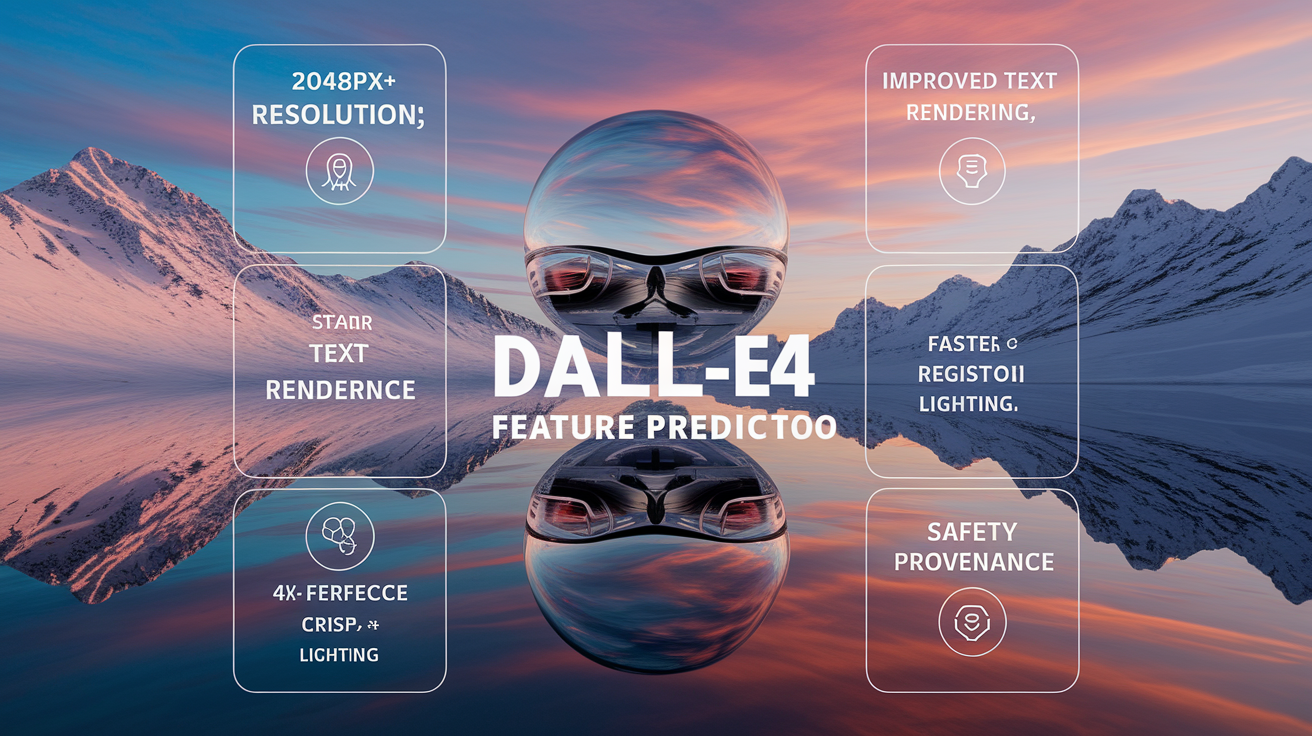
DALL‑E 3 brought real progress in prompt‑following and composition, but users still hit walls with text rendering (character accuracy is inconsistent), resolution limits (native outputs fall short of professional print requirements), and control over fine details like lighting direction or regional edits. Generation latency runs several seconds per image, which slows iterative creative work. Safety filters sometimes refuse harmless requests because of overly broad keyword matching, and enterprise customers can’t fine‑tune or customize styles to maintain brand consistency at scale.
Next‑generation image models typically fix the most visible pain points from the prior version while pushing new capabilities that weren’t possible before. For DALL‑E 4, industry consensus expects quality refinements, speed gains, expanded controllability, balanced against stronger safety and provenance features that respond to regulatory and ethical pressures.
- Higher native resolution: support for outputs at 2048 pixels or larger, cutting the need for post‑processing upscaling and meeting professional design standards.
- Improved text rendering: far better accuracy for words, numbers, multi‑line layouts within images. This is one of the most frequent user complaints.
- Faster inference and lower latency: generation times reduced to enable near‑real‑time iteration, especially for chat‑based workflows and interactive editing.
- Enhanced compositional accuracy: better handling of complex prompts with multiple subjects, spatial relationships, style instructions. Less trial and error.
- Region‑level editing and controllability: more precise inpainting, outpainting, parameter control over lighting, viewpoint, style elements. Finer creative steering.
- Stronger safety and content filters: improved refusal accuracy that blocks harmful outputs while reducing false positives on harmless creative requests, plus expanded provenance metadata (watermarks, content credentials).
- Multimodal and workflow integration: tighter coupling with conversational models for iterative refinement, possible support for short animations or 3D asset generation (speculative), better context retention across multi‑image sessions.
Anticipated Rollout Phases for the DALL‑E 4 Release
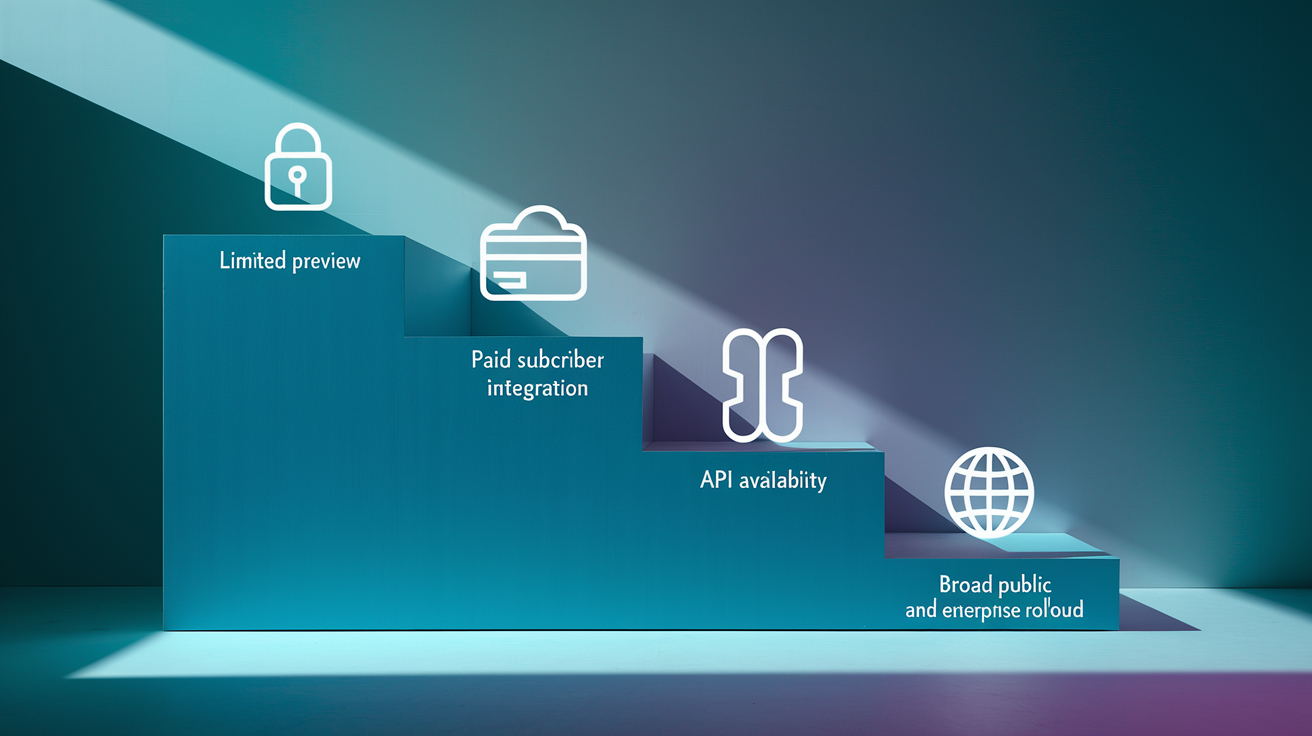
Previous DALL‑E versions followed a staged access pattern built to gather real‑world feedback, stress‑test infrastructure, manage demand spikes. DALL‑E 2 started with a limited researcher and partner preview, then opened a public waitlist that granted access in waves over several weeks. DALL‑E 3 integrated first into a paid chat subscription tier (historically priced at $20 per month), giving subscribers early access before the model appeared in the standalone API. API availability typically lagged consumer integration by a few weeks to a couple of months, letting the company tune rate limits, pricing, safety controls based on observed usage.
Expect a similar phased rollout for DALL‑E 4. Initial access will likely go to internal testers, select research partners, a small group of early adopters through a preview program or higher subscription tier. Once they validate performance, safety behavior, load characteristics, the model will integrate into the main consumer product (chat or web interface) for paying subscribers. API access for developers follows, with documentation updates, SDK releases, tiered pricing structures (per‑image or token‑based costs that vary by model quality). Full public availability comes last, often months after the initial preview. Either through a free tier with usage caps or broad API rollout.
Enterprise and custom‑deployment customers typically face longer timelines because they need additional compliance reviews, contractual terms, infrastructure isolation. Large organizations using the API at scale will want to test the new model in staging environments, review updated safety policies, align internal content‑moderation workflows before rolling it into production applications. Budget for these extra weeks when planning integration schedules.
- Limited preview and early access: internal testing, select partners, invitation‑only groups validate core functionality and gather initial feedback (weeks).
- Paid subscriber integration: model rolls into a subscription tier or chat product, giving paying users first access while the company monitors usage and tunes rate limits (weeks to a month).
- API availability for developers: public API endpoint goes live with documentation, SDKs, commercial pricing, enabling third‑party integrations and custom applications (weeks to months after consumer launch).
- Broad public and enterprise rollout: free‑tier access (if offered) expands, enterprise contracts finalize, the model becomes the default or primary option across all product surfaces (months after initial preview).
Signals That Indicate an Imminent DALL‑E 4 Announcement
Major image‑model releases rarely appear without warning. The company follows a consistent pattern of pre‑launch signals that alert developers, media, the research community to prepare for a new version. Monitoring these channels gives teams enough lead time to plan integration work, allocate budget for API costs, prepare internal safety reviews.
Official blog posts are the most reliable signal. These announcements typically include technical details, sample image galleries, a summary of safety and policy updates, links to documentation or waitlist signup pages. API changelog entries appear alongside or shortly after blog posts, detailing endpoint changes, new parameters, deprecated features, pricing adjustments. Research papers or preprints often accompany or precede product launches, especially if the model introduces novel architectures or training techniques worth publishing. Developer waitlist pages and beta signup forms signal that limited access is coming. Sample image galleries and demo videos, either on the company’s site or shared by verified accounts, provide concrete proof the model is production‑ready. Product documentation updates (new guides, updated code examples, revised safety policies) typically go live within hours of an announcement.
- Official blog post or product announcement with technical details, sample outputs, access information.
- API changelog entry listing new endpoints, parameters, pricing changes, deprecation notices.
- Research paper or preprint publication describing architecture, training methods, novel capabilities.
- Developer waitlist page or beta signup form indicating limited preview access is opening.
- Sample image galleries or demo videos shared through verified company channels.
- Updated product documentation, developer guides, safety policy pages reflecting the new model’s capabilities and usage rules.
Developer & Integration Considerations Ahead of the DALL‑E 4 Release

API availability for previous image‑model versions typically followed consumer product integration by several weeks to a few months, giving the company time to tune rate limits, observe usage patterns, finalize commercial pricing tiers. Developers depending on the latest model for production applications should plan for this lag and prepare fallback logic that continues using the current version until the API endpoint goes live. Documentation updates and SDK releases usually coincide with API availability, meaning integration guides, code samples, client libraries arrive on or shortly after launch day.
Integration dependencies extend beyond the API itself. Applications that cache generated images, apply post‑processing filters, or combine image outputs with other models (for example, vision models for quality scoring or moderation APIs for content review) will need to revalidate those pipelines with the new model’s output characteristics. Higher resolution, different aspect‑ratio defaults, or changes to metadata formats can break downstream tooling if not accounted for. Latency and throughput characteristics may shift, requiring adjustments to timeout settings, retry logic, user‑experience flows.
Enterprise deployments face additional compliance and procurement timelines. Legal teams will want to review updated terms of service, data‑handling policies, safety documentation before approving production use. Security and infrastructure teams may require the model to pass internal audits, especially if outputs are customer‑facing or used in regulated industries (healthcare, finance, education). Budget and procurement cycles can add weeks or months, so start those conversations as soon as an official announcement appears.
- Prepare evaluation datasets now: assemble a representative set of prompts and quality benchmarks so you can test the new model immediately when API access opens, cutting time to production.
- Review and update integration architecture: make sure your application can handle higher‑resolution outputs, new metadata fields, potential changes to rate limits or pricing tiers without breaking existing workflows.
- Allocate budget for tiered API pricing: expect per‑image or token‑based costs that vary by model quality, and plan for higher costs if you move large workloads to the new version.
- Schedule compliance and safety reviews early: involve legal, security, content‑moderation teams as soon as documentation is available, especially if the model introduces new capabilities (video, 3D, fine‑tuning) that need additional policy review.
Final Words
In the action, this post laid out the confirmed status (no official date), the DALL‑E historical cadence, the Q4 2024–Q2 2025 speculative window, expected feature gains, likely rollout phases, signals to watch, and practical developer prep steps.
Treat timelines as projections, not confirmations. Watch official blog posts, API changelogs, and documentation for firm dates, and ignore unverified leaks until they’re sourced.
The dall-e 4 release timeline is still speculative, but you can plan tools and tests now so you’re ready when a formal announcement arrives. Exciting capabilities ahead.
FAQ
Q: Is there a DALL-E 4?
A: The DALL‑E 4 has no official release date or public availability as of mid‑2024; OpenAI hasn’t confirmed it, and no credible leaks provide verifiable timing.
Q: Will GPT-4 no longer be available?
A: GPT‑4 will not automatically disappear when newer models arrive; providers usually keep older models available, though access tiers, pricing, or default options can change.
Q: Is DALL-E better than Midjourney?
A: Whether DALL‑E is better than Midjourney depends on your goals: DALL‑E often favors photorealism and text accuracy, while Midjourney tends toward stylized, artistic imagery.
Q: When did ChatGPT 4 come out?
A: ChatGPT‑4 (GPT‑4) launched on March 14, 2023, when OpenAI released it for ChatGPT users and certain API customers, and expanded access afterward.