
Think a giant company like AT&T would keep your data safe? Think again.
AT&T agreed to $177,000,000 in settlements for two breaches, the 2019 leak and the 2024 Snowflake incident, and affected customers can file claims now.
This post shows who qualifies, what payouts look like (up to $5,000 for documented losses in 2019, $2,500 in 2024), and the deadline: December 18, 2025.
Read on for clear, step-by-step instructions to file correctly and maximize your claim.
Current AT&T Class Action Settlements You Can Claim Now

AT&T customers hit by recent data breaches can file claims right now for a total of $177,000,000 spread across two settlement classes. Both the 2019 breach and the 2024 Snowflake incident are still accepting claims through December 18, 2025.
What’s available to claim:
2019 Data Breach Settlement – $149,000,000 fund covering 73 million people whose Social Security numbers, names, and birth dates were exposed. You can get up to $5,000 if you’ve got receipts for documented losses, or a tiered cash payment if you don’t. If your SSN was compromised, you’re Tier 1 and get five times what Tier 2 gets. Deadline: December 18, 2025.
2024 Snowflake Breach Settlement – $28,000,000 fund for roughly 109 million customers whose call and text records from 2022 got accessed in April 2024. Max reimbursement is $2,500 with documentation, or you get a pro rata slice without it. Deadline: December 18, 2025.
You can file both – If both breaches affected you, submit two separate claims with different loss documentation. Combined max is $7,500.
Gilbert v. AT&T Mobility Services LLC – $1,916,250 settlement for California non-exempt employees who worked between September 21, 2022 and September 3, 2025. This one’s about wage violations and meal/rest break problems. You don’t need to file anything, payments are automatic based on your workweeks. Exclusion/objection deadline is March 6, 2026. Final approval hearing is March 23, 2026.
Most claim forms need a Class Member ID (check your email or mail), basic contact info, and optional documentation if you’re claiming reimbursement. Don’t have an ID? Call the settlement administrator at 833-890-4930.
Background of Major AT&T Class Action Lawsuits

AT&T ended up in consolidated litigation after two massive breaches exposed personal data for tens of millions of customers. The 2019 breach, which AT&T only acknowledged publicly in March 2024, allegedly compromised names, Social Security numbers, and birth dates of about 51 million users. Court filings claimed this data sat exposed and potentially exploited for years before anyone said anything, which led AT&T to force password resets for affected current customers. The delayed disclosure and how much got out became the basis for the first class action. Plaintiffs argued AT&T didn’t have adequate security and dragged its feet on notifying customers after discovering the breach.
Then in April 2024, there was another incident. Hackers got into AT&T’s Snowflake cloud storage account and grabbed call and text records for nearly 110 million U.S. customers spanning 2022. AT&T disclosed this in July 2024 and said customer names weren’t included in what got stolen. Two people allegedly tied to the ShinyHunters hacking group were arrested in connection with similar Snowflake attacks that hit around 165 companies mid-2024. The rapid-fire sequence of breaches, combined with how many people were affected, led multiple lawsuits to get consolidated in federal court.
AT&T hasn’t admitted wrongdoing or liability in either settlement but agreed to the $177,000,000 resolution in March 2025 to avoid drawn-out litigation. AT&T Mobility Services also agreed to settle Gilbert v. AT&T for $1,916,250 without admitting the wage and hour violations alleged by California employees. They chose to resolve claims that it failed to pay minimum wage, overtime, and proper meal and rest breaks instead of fighting it out.
How to File an AT&T Settlement Claim
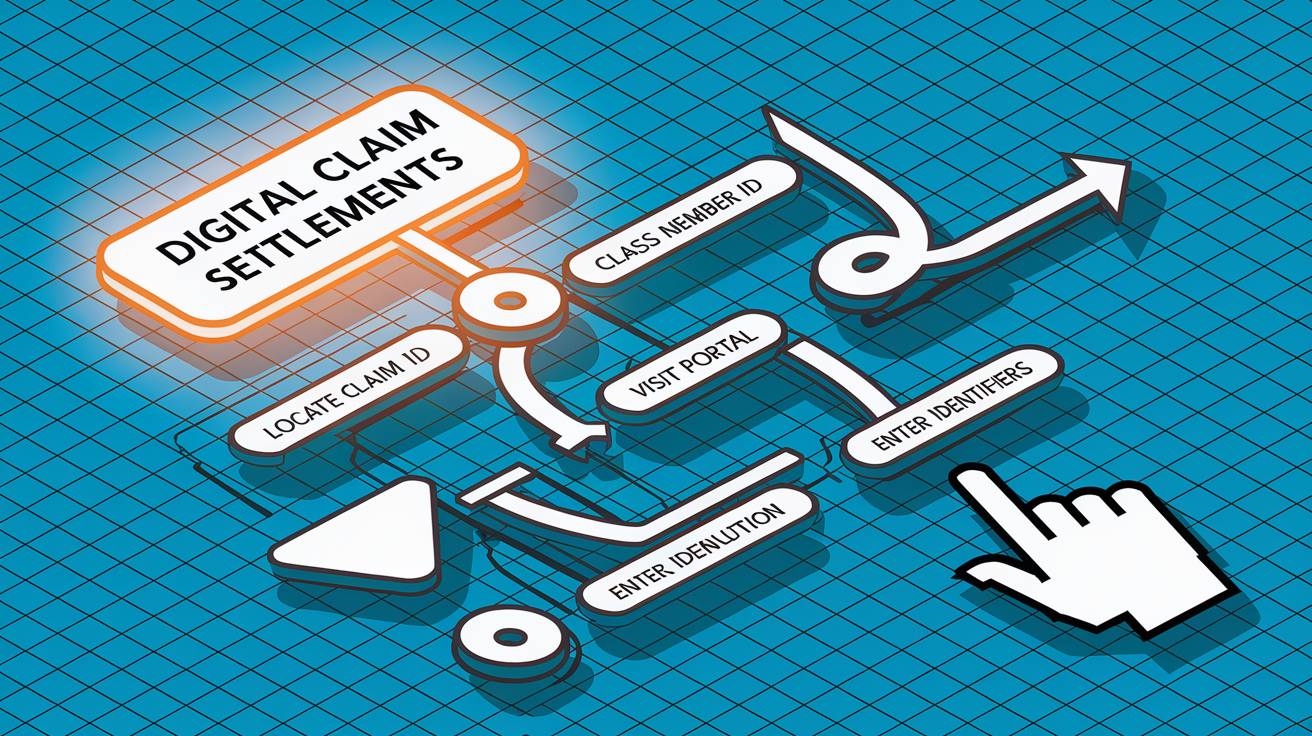
Data breach claims get submitted online through the official portal run by Kroll Settlement Administration at telecomdatasettlement.com. Each claim needs a Class Member ID, typically sent via email or postal mail by the administrator, plus one more identifier like your email address, AT&T account number, or full legal name as it appears on the notice.
Here’s how to file:
Locate Your Class Member ID – Check your email (spam folders too) or postal mail for notices from Kroll Settlement Administration. Can’t find it or didn’t get one? Call 833-890-4930 to retrieve it.
Visit the Official Claims Portal – Go to telecomdatasettlement.com and pick the claim form for your affected breach (2019, 2024 Snowflake, or combined claim). High site traffic might put you in a virtual queue with a short wait.
Enter Required Identifiers – Put in your Class Member ID plus one of these: email address, AT&T account number, or full name. Submit contact information so they can actually pay you.
Upload Documentation (Optional) – Claiming reimbursement for documented losses? You can get up to $5,000 for the 2019 breach or up to $2,500 for the 2024 breach if you attach receipts, bank statements, billing records, or dispute correspondence proving out-of-pocket expenses tied to the specific breach and timeframe. No documentation? You’ll automatically qualify for the tiered or pro rata cash distribution.
Submit Before Deadline and Save Confirmation – Finish your submission online by December 18, 2025. Print or screenshot your confirmation page. Watch your email for updates from Kroll about claim status or if they need clarifications.
Required Documentation and Proof of Eligibility
Want reimbursement for documented losses? You’ll need proof of actual expenses directly tied to the specific data breach. Acceptable evidence includes receipts for identity-theft monitoring services you bought after the breach, bank statements showing unauthorized charges, credit-monitoring subscription invoices, legal or notary fees for identity restoration, and correspondence with financial institutions where you disputed fraudulent activity. Each piece of documentation should clearly show the date of the expense and a description linking it to breach-related harm.
What counts as evidence:
Receipts for identity theft protection services or credit monitoring subscriptions you started after the breach date. Bank or credit card statements highlighting unauthorized transactions or charges you disputed as fraud. Billing records from legal counsel, notaries, or identity restoration specialists. Correspondence with creditors, credit bureaus, or financial institutions where you disputed fraudulent accounts or charges. Invoices for time lost from work related to resolving identity theft (though reimbursement caps still apply). Documentation of costs you paid replacing compromised ID documents like driver’s licenses or Social Security cards.
Don’t have original receipts or statements anymore? Contact your bank, credit card issuer, or service provider to request copies of relevant transaction records for the applicable period. Filing for both the 2019 and 2024 breach reimbursements? Make sure your losses are distinct and separately documented for each claim. Submitting the same receipt twice won’t increase your payout.
Estimated Payouts and Distribution Timeline

Payouts depend on how many valid claims get submitted and the allocation method specified for each breach class. For documented-loss reimbursement claims, individual amounts max out at $5,000 for the 2019 breach and $2,500 for the 2024 Snowflake breach, though actual reimbursement equals your documented expenses up to those limits. Non-documented claims receive a share of the remaining fund after reimbursement claims are paid.
| Settlement Name | Estimated Payout | Distribution Window |
|---|---|---|
| 2019 Data Breach (Documented Loss) | Up to $5,000 per claimant | Expected early 2026 after court approval |
| 2019 Data Breach (Tier 1 SSN Compromise) | 5× Tier 2 amount (final amount TBD) | Expected early 2026 after court approval |
| 2019 Data Breach (Tier 2 Other PII) | Pro rata share (final amount TBD) | Expected early 2026 after court approval |
| 2024 Snowflake Breach (Documented Loss) | Up to $2,500 per claimant | Expected early 2026 after court approval |
| 2024 Snowflake Breach (Pro Rata) | Even share of remaining funds (final amount TBD) | Expected early 2026 after court approval |
| Gilbert v. AT&T Mobility Services (California Employee Wage Claims) | Varies by workweeks; PAGA up to $25,000 | Expected mid-2026 after March 23, 2026 final approval |
Distribution timing depends on court approval schedules and how many claims get filed. AT&T said it expects settlement approval by year-end 2025 for the data breach classes, with payments starting in early 2026 once all claims are validated and allocation calculations are done. Things that could delay distribution include a high volume of claims needing manual review, disputes over documentation quality, appeals filed by objectors, and how long it takes Kroll Settlement Administration to process everything.
Frequently Asked Questions About AT&T Settlements

Here are the most common questions people have when navigating AT&T settlement claims, deadlines, and payment expectations.
Can I file claims for both the 2019 breach and the 2024 Snowflake breach? Yes. If both incidents affected you, submit two separate claims using distinct loss documentation for each breach. Combined max reimbursement can total $7,500 ($5,000 + $2,500).
What happens if I missed the Class Member ID notice? Call Kroll Settlement Administration at 833-890-4930 to retrieve your Class Member ID. They can locate your information using your AT&T account number or contact details on file.
Do I need receipts to receive any payment? No. Claimants without documented losses automatically qualify for the tiered (2019) or pro rata (2024) cash distribution. Submitting receipts only increases your potential payout up to the reimbursement caps.
What if my claim is denied or partially approved? The settlement administrator will notify you by email if they need additional documentation. You typically get a brief window to respond with clarifications or supplemental proof before a final decision.
When will I receive my settlement check or payment? Payments are expected to begin in early 2026 for data breach claims after court approval and claim validation. The Gilbert v. AT&T Mobility Services payments are expected mid-2026 following the March 23, 2026 final approval hearing.
Can I still file if the exclusion and objection deadlines have passed? Yes. The exclusion and objection deadline (November 17, 2025) only affects your ability to opt out or object to the settlement terms. The claims filing deadline remains open until December 18, 2025 for data breach settlements.
What payment methods are available? Settlement administrators typically issue payments via check mailed to the address on file or electronic payment methods specified during the claim submission process. Make sure your mailing address is current with Kroll to avoid delivery issues.
What if I no longer have an AT&T account? Former AT&T customers remain eligible for settlement claims if they held an account during the relevant class periods (2019 breach or 2024 Snowflake breach). Your eligibility is based on account history, not current customer status.
Final Words
In the action, we ran through the active AT&T settlements you can claim now, the lawsuits’ background, and clear steps to file a claim.
We covered required documents, estimated payouts and distribution windows, and answered common FAQs so you know what each claim needs and when payouts arrive.
Next step: check eligibility, gather billing records or emails, and submit before the posted deadlines. If you qualify, file promptly—att class action lawsuit settlement payouts are time-limited, and acting now gives you the best chance to collect.
FAQ
Q: How to claim AT&T settlement?
A: To claim an AT&T settlement, locate the official claim website from the settlement notice, complete the online form, attach required proof (billing or account records), and submit before the listed deadline.
Q: How much will each person get from AT&T settlement?
A: The amount each person gets from an AT&T settlement varies by case and number of valid claims; payouts often range from small refunds to a few hundred dollars, with exact figures in the settlement notice.
Q: How do I check if I’m part of the AT&T settlement?
A: To check if you’re part of an AT&T settlement, visit the official settlement website or notice list, enter your account or claim ID, or contact the claims administrator named in the notice.
Q: When to expect AT&T settlement payout?
A: You can expect an AT&T settlement payout after claims are verified and the court approves distribution; typical windows span months to over a year after final approval, so check the case timeline for specifics.