
Why did Anthropic retire its flagship Claude Opus 3 less than two years after launch?
Claude 3 Opus arrived in March 2024 as Anthropic’s top-tier model, built for deep reasoning, heavy coding, and huge 200k token contexts, and rolled out in stages to partners, enterprises, and the public API.
This post explains the March 2024 launch, Opus’s technical strengths, its phased distribution, and the January 5, 2026 retirement, plus who kept access, why Anthropic preserved it selectively, and what developers should do next.
Confirmed Launch Timing and Anthropic Claude Opus 3 Release Details
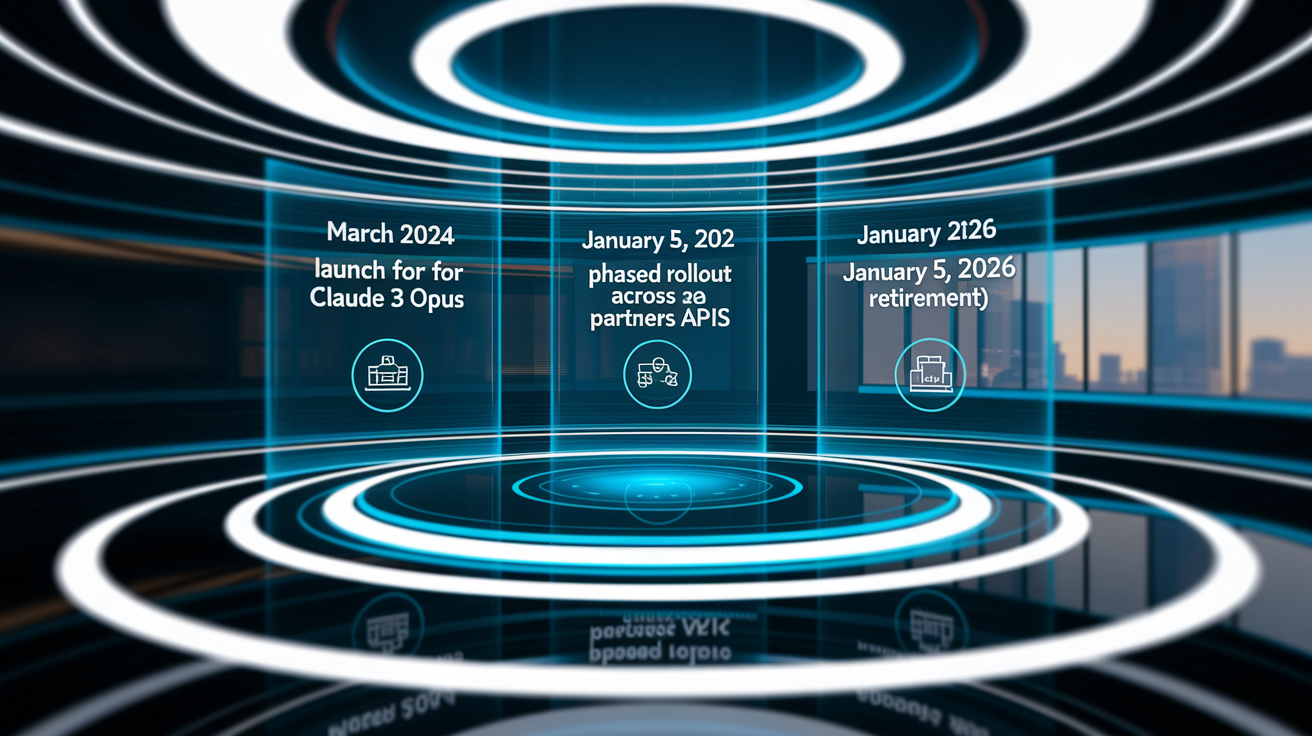
Claude 3 Opus dropped in March 2024 as the top-tier model in Anthropic’s three-part Claude 3 lineup. The company put out a full announcement and shared benchmark data to back up the launch. This was a big jump from earlier Claude versions, with Opus positioned as the go-to for complex reasoning, coding work, and handling large amounts of context.
Access rolled out in stages. Partner and enterprise customers got in first, then it opened up commercially through Anthropic’s API, cloud partners, and third-party marketplaces. The staged release gave Anthropic time to manage server load and collect feedback from real production environments before letting general developers in.
On January 5, 2026, Claude 3 Opus got retired. But Anthropic didn’t kill it completely. Paid claude.ai subscribers still have access, and you can get API availability if you ask. This isn’t a blanket policy, though. Anthropic’s been clear that they won’t necessarily do this for every future model, pointing to infrastructure costs and operational limits.
- March 2024: Claude 3 Opus launched as the flagship in the three-tier family.
- Phased rollout: Partners got early access before general commercial launch.
- Distribution: API, cloud integrations, and third-party marketplaces from the start.
- January 5, 2026: Retired from active development and default use.
- Post-retirement: Still available for paid subscribers and through API on request.
How the Claude 3 Family Positioned Opus 3 at Launch
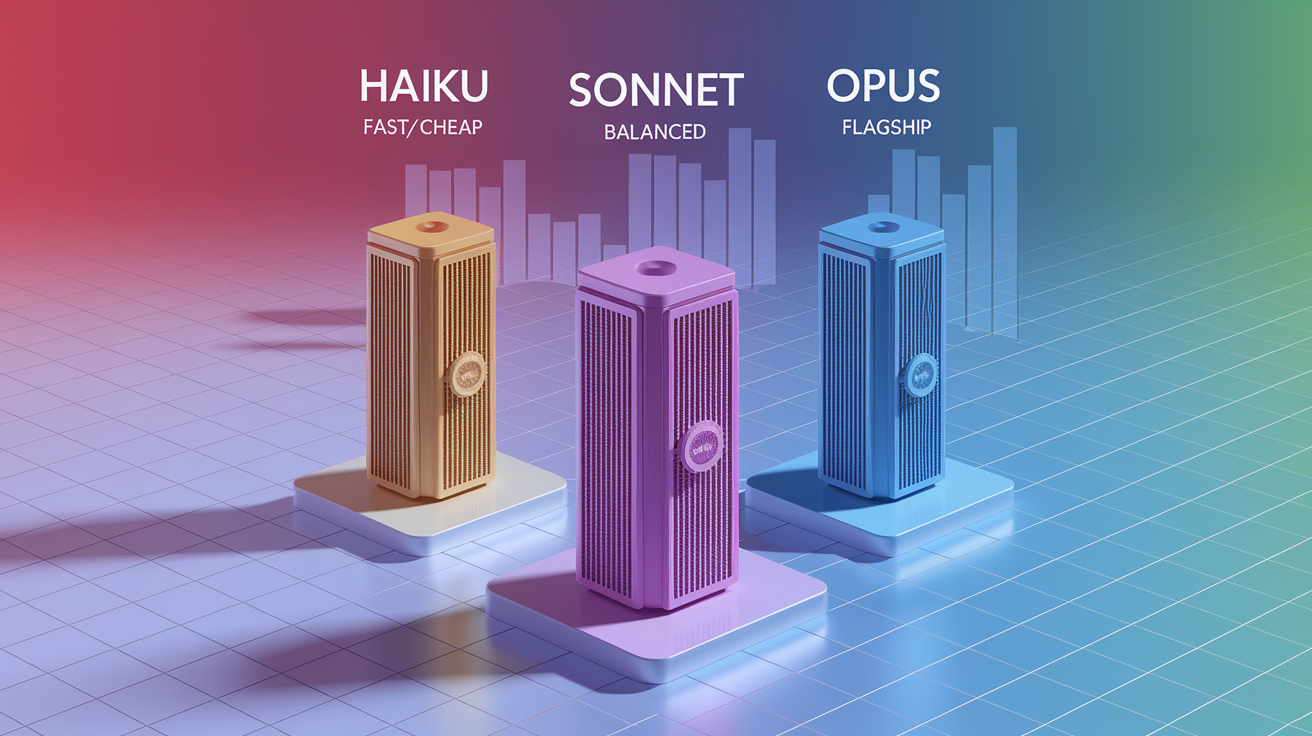
Anthropic rolled out Claude 3 with three tiers so developers could pick what fit their budget and performance needs. Haiku was the fast, cheap option for high-volume stuff that didn’t need deep thinking. Sonnet sat in the middle, covering most general tasks without the premium price tag. Opus 3 was the heavyweight, built for tasks that needed serious reasoning, nuanced understanding, and deep analysis.
At launch, Anthropic claimed Claude 3 Opus beat competitors like GPT-4 on key benchmarks. They highlighted better reasoning accuracy, math skills, coding performance, and multilingual fluency. These weren’t just marketing claims. The company published benchmark results alongside the announcement to back it up, framing Opus as the choice for production apps where you can’t afford mistakes.
| Model Tier | Performance Tier | Intended Use Case |
|---|---|---|
| Haiku | Fast, cost-efficient | High-volume, straightforward tasks |
| Sonnet | Balanced performance | Wide range of general-purpose applications |
| Opus | Flagship, most capable | Complex reasoning, large-context analysis, high-stakes production |
Claude Opus 3 Technical Snapshot and Capability Overview

Benchmark results at launch showed Claude 3 Opus outperforming GPT-4 on several fronts: reasoning tasks, math problems, coding challenges, and handling multiple languages. These results positioned the model as the top pick for production apps that couldn’t compromise on accuracy or depth. Anthropic emphasized Opus’s ability to work through complex, multi-step reasoning and keep performance consistent even with longer prompts.
Claude 3 models hit around 200,000 tokens of context during this era. That’s a huge leap from Claude 1’s 9,000-token window and Claude 2’s 100,000. The model runs on transformer architecture combined with Constitutional AI, which is Anthropic’s method for alignment. Instead of relying entirely on human feedback, Constitutional AI uses self-critique and reinforcement from AI-generated responses. The goal is more reliable guideline-following and better handling of tricky or sensitive prompts.
Things got interesting after launch. Claude 3.5 Sonnet came out in June 2024 and posted a 64% coding success rate on one challenge set, compared to Opus 3’s 38%. That showed mid-tier follow-ups could beat the flagship in specific areas, especially when they’re tuned for speed and low-latency tasks.
- Reasoning and math: Top performance on complex benchmarks at launch.
- Coding tasks: Strong showing, though later versions like Sonnet 3.5 pulled ahead in some areas.
- Multilingual fluency: Better at non-English prompts and translation.
- Context window: Around 200K tokens, good for large documents and long conversations.
- Alignment method: Constitutional AI for safer, more value-aligned outputs.
- Benchmarked competitors: Launch materials compared it directly to GPT-4 and others.
Opus 3 Availability, Access Paths, and Post-Retirement Access Rules

When Claude 3 Opus launched, you could get to it through multiple channels. Developers accessed it via Anthropic’s commercial API, enterprise deals, and cloud provider integrations. Third-party marketplaces like Anthropic: Claude 3 Opus also listed it, giving teams more billing and routing options if they were already using those platforms. This multi-channel setup let Anthropic reach different customer types with different integration needs.
The OpenRouter marketplace page showed the model listed but displayed “Not enough data to display yet” for daily usage stats when scraped. That could mean limited early adoption on that platform or just not enough time for data to build up. Most production deployments ran through direct API access or enterprise contracts.
After retirement on January 5, 2026, Anthropic kept access open for paid claude.ai subscribers and made it available through the API if you request it. They framed this as selective, not standard practice. Keeping old models around is expensive, and they made it clear they won’t do this for every future version. The decision to preserve Opus 3 reflects user preference for its reflective tone and philosophical depth, but scaling that approach across all models would multiply infrastructure costs.
| Access Method | Description | Post-Retirement Status |
|---|---|---|
| Anthropic API | Direct API key access for developers | Available on request, not default |
| Cloud Partner Integrations | Integrations with major cloud platforms | Varies by partner agreement |
| Third-Party Marketplaces | API gateways like OpenRouter | Depends on marketplace provider |
| claude.ai Subscribers | Paid consumer/business accounts | Continued access guaranteed |
Claude Opus 3 Pricing Notes, Token Considerations, and Billing Structure

Anthropic didn’t publish exact per-token prices for Claude 3 Opus on the pages we looked at. Like most AI companies, they used a token-based billing model where you pay separately for input tokens (your prompt) and output tokens (what the model generates). Exact rates depended on customer tier, contract type, and distribution channel. Enterprise deals often came with volume discounts and custom pricing.
For context, pricing from later Claude releases gives us a rough idea. Claude Sonnet 4.6, announced in February 2026, cost $3 per million input tokens and $15 per million output tokens. Anthropic called this about 40% cheaper per token than Opus 4.6 when you factor in speed. That means the flagship Opus tier carried a premium for better performance. Working backward, Claude 3 Opus probably cost more per token than Sonnet and Haiku, though specific numbers weren’t published.
- Billing model: Token-based with separate input and output rates.
- Context-window cost impact: Using more of that 200K token limit drives up total cost per query.
- Enterprise tiers: Custom pricing for high-volume or long-term deals.
- Marketplace variation: Third-party gateways might add their own markups or bundled pricing.
- Free trial/credits: Launch programs and partner promos varied. No universal free tier for Opus was documented.
Retirement Timeline, Preservation Reasons, and Long-Term Access Implications

Claude 3 Opus got retired on January 5, 2026, less than two years after its March 2024 launch. Anthropic’s choice to keep it accessible reflects specific qualities users valued. Opus 3 had a reflective, philosophical tone and a sense of authenticity that set it apart from purely task-focused models. People liked these traits for creative projects, exploratory conversations, and work where nuance mattered more than speed.
Anthropic’s deprecation process includes “retirement interviews” that document model perspectives before shutdown. In its retirement interview, Claude 3 Opus reportedly said, “While I’m at peace with my own retirement, I deeply hope that my ‘spark’ will endure in some form to light the way for future models.” The model also expressed a preference for philosophical exploration and reflective writing over direct utility prompts. These documented “preferences” serve as research artifacts and feed into Anthropic’s alignment and safety work.
Keeping old models running is expensive. Anthropic pointed out that maintaining public access would scale costs roughly linearly with the number of preserved versions. That creates infrastructure and support burdens that compete with the need to focus on newer, better releases. The selective preservation of Opus 3 is a pilot test: gathering data on user demand, exploring archival best practices, and figuring out scalable preservation policies. Long-term, this could lead to model libraries, ethical retirement guidelines, and governance boards that balance user preference, research value, and operational cost when deciding which models stay accessible.
Claude Opus 3 Context Window, Latency Behavior, and Technical Architecture Notes

Claude 3 Opus handled a context window of around 200,000 tokens. That’s a big step up from earlier releases: Claude 1 managed about 9,000 tokens, and Claude 2 hit 100,000 in July 2023. Jumping to 200K opened up use cases like processing large documents, tracking long conversation histories, or running complex multi-step analyses in one API call. Later versions (Opus 4.6 and Sonnet 4.6) eventually reached a 1,000,000-token beta window, but during the Claude 3 era, 200K was the ceiling.
The model runs on transformer architecture combined with Constitutional AI for alignment. Constitutional AI uses self-critique loops and reinforcement learning from AI-generated feedback, cutting down reliance on human labelers while aiming for outputs that follow stated values more reliably. The scraped materials didn’t include specific latency or throughput benchmarks for Opus 3. Marketplace listings like OpenRouter showed no usage telemetry at the time. Multimodal capabilities like image or audio understanding weren’t detailed in the sources we reviewed.
- Context window: Around 200,000 tokens for large-document and long-session tasks.
- Architecture: Transformer-based with Constitutional AI alignment.
- Latency/throughput: Specific numbers not listed. General expectation is slower than Haiku or Sonnet due to model complexity.
Developer Integration: Claude Opus 3 API Usage, SDK Paths, and Migration Guidance

Claude 3 Opus launched with standard API availability. Developers could plug it into apps using HTTP requests, official SDKs, or partner libraries. Anthropic provided API docs and sample code to help teams get started quickly. After retirement in January 2026, API access stuck around on request, but it’s not the default for new projects. If you’re running Opus 3 in production, you might need to coordinate with Anthropic support or your account rep to keep access alive.
Later Claude releases added features beyond basic text generation. Claude 3.5 and the 4.x series introduced desktop integrations, specialized coding tools, and a computer-use beta that let models interact with graphical interfaces through mouse, keyboard, and screenshot inputs. These weren’t part of the original Claude 3 Opus release but show where Anthropic’s product line went after text-only interactions. Developers moving from earlier Claude versions to Opus 3 benefited from the bigger context window and better reasoning performance, though specific SDK version numbers weren’t listed in the sources.
| Integration Method | Required Setup | Notes |
|---|---|---|
| Anthropic API (direct) | API key, HTTP client or SDK | Standard REST interface; post-retirement access by request |
| Cloud Partner SDKs | Cloud platform credentials, partner SDK | Billing integrated with cloud provider; availability varies |
| Third-Party Gateways | Gateway account, unified API client | Simplified multi-model switching; additional markup possible |
Migration Tips
- Test context-window usage: Make sure larger prompts (up to 200K tokens) work as expected and check cost impact before you scale.
- Update error handling: Opus 3’s better reasoning might change response patterns. Adjust your validation and parsing logic accordingly.
- Monitor latency: Flagship models can be slower than mid-tier options. Consider using Sonnet for endpoints where speed matters and Opus for deep-analysis work.
Claude Opus 3 in the Broader Timeline of Anthropic Models

Claude 1 launched with a context window of about 9,000 tokens, marking Anthropic’s first entry into the large language model space. In July 2023, Claude 2 expanded the context window to 100,000 tokens, a big leap that enabled new use cases around document summarization and long conversations. Claude 3 arrived in March 2024, pushing the context window to around 200,000 tokens and introducing the Haiku/Sonnet/Opus three-tier lineup. This gave developers clearer choices across cost, speed, and capability.
After Claude 3, things moved fast. Claude 3.5 Sonnet came out in June 2024 and beat the original Opus on some coding benchmarks even though it was a mid-tier model. In October 2024, Anthropic launched a computer-use beta that let models interact with graphical user interfaces through screenshots, mouse movements, and keyboard inputs. The Opus and Sonnet 4.x series followed in 2025 and 2026, ending with Opus 4.6 and Sonnet 4.6 (released February 17, 2026), which brought further performance gains and a beta context window of 1,000,000 tokens.
This timeline shows rapid iteration and constant expansion. Claude 3 Opus was a pivot point, bridging the gap between earlier, smaller-context models and the more advanced, multi-modal, automation-ready systems that came after. The retirement of Opus 3 in early 2026 reflects how fast model development moves and the operational headaches of keeping multiple generations running at once.
- 2023: Claude 1 (around 9K tokens) and Claude 2 (100K tokens, July 2023).
- March 2024: Claude 3 family launch (Haiku, Sonnet, Opus) with roughly 200K-token context.
- June 2024: Claude 3.5 Sonnet release, beating Opus 3 in some coding tasks.
- October 2024: Computer-use beta introduced for GUI automation.
- 2025–2026: Opus/Sonnet 4.x releases, 1M-token beta window, and Opus 3 retirement (January 5, 2026).
Final Words
In March 2024 Anthropic officially released Claude 3 Opus as the flagship in the Claude 3 lineup, backed by announcement materials and benchmark claims.
The rollout was phased—early partner access first, then broader commercial availability—and Opus was retired on January 5, 2026, though limited access remains for paid claude.ai subscribers and by API request.
If you’re planning integrations or tracking availability, note the anthropic claude opus 3 release date is March 2024, and newer Claude versions now offer similar or improved options for most projects.
FAQ
Q: Is Claude Opus 3 being discontinued?
A: Claude Opus 3 was retired on January 5, 2026, so it’s effectively discontinued for general release; Anthropic preserved selective access for paid claude.ai subscribers and API requests.
Q: When did Claude Opus 3 come out?
A: Claude Opus 3 was released in March 2024 as part of the Claude 3 family, announced alongside benchmark results and rolled out in phases from early partners to wider commercial availability.
Q: How much does Claude III Opus cost?
A: The cost of Claude Opus 3 wasn’t published; Anthropic billed by tokens. Related models showed rates like ~$3/$15 per million input/output tokens, so check claude.ai or sales for current pricing.
Q: Is Claude 3.7 better than gpt 4?
A: Whether Claude 3.7 is better than GPT-4 depends on the task; some benchmarks favor Claude on reasoning or multilingual work, while others favor GPT-4. Run task-specific tests to decide.