
Can an open source model really match GPT-4o for coding?
Alibaba says yes — on September 25, 2024 it launched Qwen 2.5 Coder, a family of code-first models aimed at developers and research teams.
The series runs from 0.5B to 32B parameters, mostly under Apache 2.0, and the 32B Instruct model claims GPT-4o-level coding after pretraining on 5.5 trillion code tokens.
With 128,000-token context windows and both Base and Instruct builds, this release changes how teams pick and deploy code assistants.
Official Details on the Qwen 2.5 Coder Release
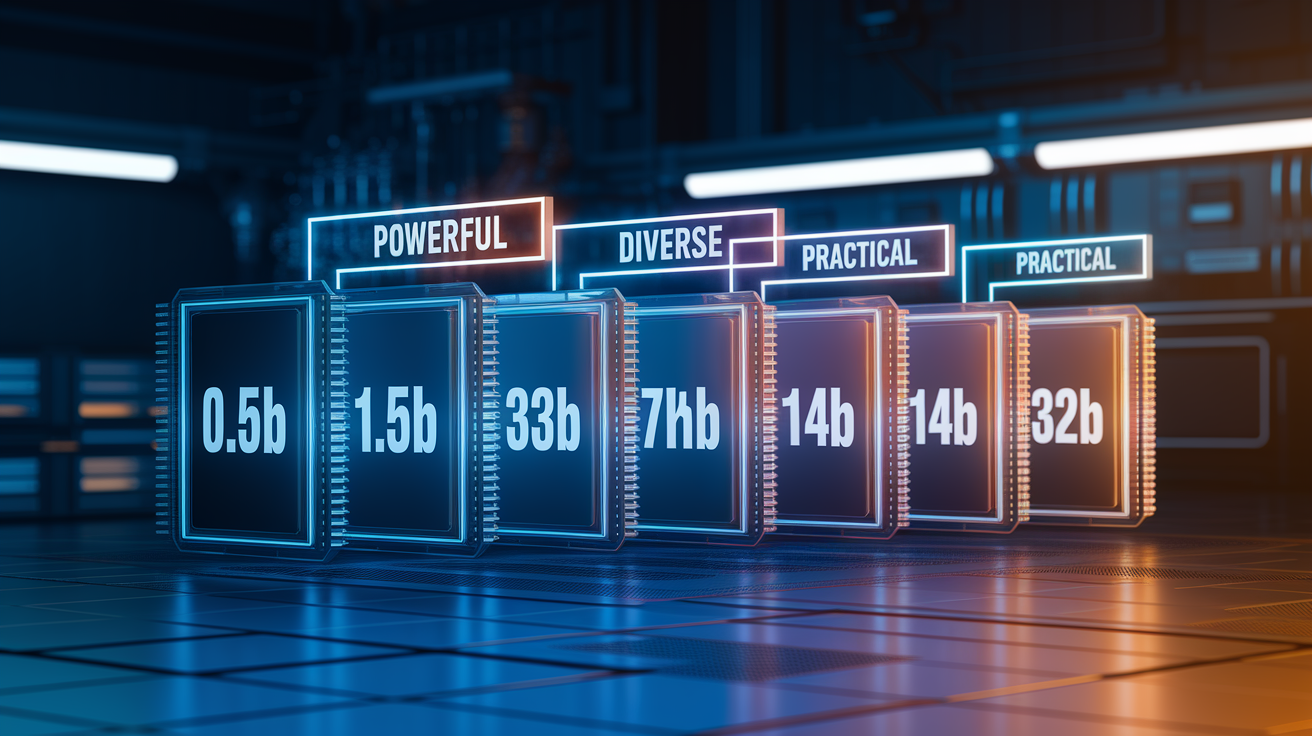
Alibaba dropped the Qwen 2.5 family on September 25, 2024, rolling out a complete lineup of code-focused language models. The Qwen 2.5 Coder series launched as an open source release built around three ideas: “Powerful,” “Diverse,” and “Practical.” The goal? Push open CodeLLMs forward for developers and research teams. The announcement expanded the previous 1.5B and 7B models into a full range designed to work across different hardware setups and use cases.
The release brought six model sizes from 0.5 billion to 32 billion parameters: 0.5B, 1.5B, 3B, 7B, 14B, and 32B. Each size comes in two versions. Base models for fine tuning, Instruct models ready for chat and coding right away. Most models run on Apache 2.0 license, meaning you can use them commercially without restrictions. The 3B variant uses the Qwen-Research license with tighter rules. The licensing split targets different audiences and deployment scenarios but keeps an open source philosophy across the family.
The flagship Qwen2.5-Coder-32B-Instruct stands out as the most capable model in the series. Alibaba claims it delivers coding performance comparable to GPT-4o, positioning it as the top open source code model available right now. The 32B variant showed benchmark results that match proprietary alternatives while staying freely accessible for developers who can meet its hardware needs.
Key facts about the Qwen 2.5 Coder release:
Open source distribution under Apache 2.0 for most sizes (0.5B, 1.5B, 7B, 14B, 32B), with the 3B variant under Qwen-Research license
Six parameter sizes ranging from 0.5 billion to 32 billion, covering devices from edge hardware to multi GPU servers
Dual packaging with Base variants for fine tuning research and Instruct variants ready for immediate chat and coding workflows
Flagship 32B model claimed to reach GPT-4o level coding capabilities while remaining fully open for inspection and deployment
Expanded model family building on earlier 1.5B and 7B releases to cover the full spectrum from lightweight to heavyweight coding assistants
Core Features and Improvements in the Qwen 2.5 Coder Models
The Qwen 2.5 Coder series went through specialized pretraining on 5.5 trillion tokens of code. That’s a massive corpus designed to teach the models syntax, patterns, and problem solving approaches across dozens of programming languages. This code focused training phase followed the base language model training, sharpening the models’ ability to generate syntactically correct code, repair broken implementations, and reason through multi step programming tasks. The training pipeline prioritized real world code repositories and diverse language coverage rather than narrowly focusing on popular languages like Python and JavaScript.
The 32B model hit state of the art results on multiple code completion benchmarks, including Humaneval-Infilling, CrossCodeEval, RepoEval, and SAFIM. These tests evaluate how well a model fills in missing code segments, completes partial functions, and understands repository level context. Critical skills for real developer workflows. The improvements span code generation (writing new functions from descriptions), code repair (fixing bugs or incomplete implementations), and code reasoning (understanding complex logic and making smart architectural decisions).
Major improvements in the Qwen 2.5 Coder release:
Pretrained on 5.5 trillion tokens of code, significantly expanding language understanding and pattern recognition
State of the art code completion performance across five major benchmarks measuring infilling, cross language transfer, and long context understanding
Strong code repair capabilities, with the 32B Instruct model scoring 75.2 on MdEval (multi language repair) and ranking first among open source alternatives
Enhanced reasoning abilities that help the model understand complex codebases and suggest intelligent refactoring or optimization strategies
Technical Specifications of the Qwen 2.5 Coder Models
The Qwen 2.5 Coder series scales from 0.5 billion to 32 billion parameters. Each size balances capability with hardware accessibility. All Coder models support up to 128,000 input tokens, letting developers feed in entire files, large code snippets, or multi file context for tasks like debugging, documentation generation, or refactoring. The long context window addresses a common pain point in code assistance where models lose track of surrounding code, imports, or dependencies.
Output generation tops out at 2,000 tokens for all Coder variants. Enough for complete functions, class definitions, or detailed explanations without requiring multiple rounds of generation. The models got further pretrained on the 5.5 trillion code tokens after the general Qwen 2.5 base training, giving them specialized knowledge of syntax, idioms, and best practices across programming languages. The smallest 0.5B model targets edge devices and local development environments with limited memory, while the 32B flagship requires multi GPU setups or high end consumer cards.
The architecture works with standard transformer based inference frameworks, allowing developers to deploy using popular tools like Ollama, vLLM, or HuggingFace Transformers. Each size offers a Base variant for teams planning domain specific fine tuning and an Instruct variant for immediate use in chat interfaces, code assistants, or API driven workflows.
| Model Size | Input Limit | Output Limit |
|---|---|---|
| 0.5B | 128,000 tokens | 2,000 tokens |
| 1.5B | 128,000 tokens | 2,000 tokens |
| 3B | 128,000 tokens | 2,000 tokens |
| 7B | 128,000 tokens | 2,000 tokens |
| 14B | 128,000 tokens | 2,000 tokens |
| 32B | 128,000 tokens | 2,000 tokens |
Programming Language Support and Coding Capabilities in Qwen 2.5 Coder

The Qwen 2.5 Coder models cover more than 40 programming languages, spanning mainstream languages, functional paradigms, and specialized scripting environments. The training data included explicit emphasis on languages that often receive less attention in other code models. Alibaba’s team specifically highlighted strong performance in Haskell and Racket, two functional languages where many competitors struggle. This broad coverage helps developers working in polyglot codebases, legacy systems, or niche domains where Python centric models fall short.
The models demonstrate three core coding capabilities. Generation: writing new code from natural language descriptions. Repair: fixing broken or incomplete code. Reasoning: understanding complex logic and suggesting architectural improvements. The 7B model already showed strong reasoning abilities in earlier benchmarks, and the 32B variant extends that further with better understanding of repository level context, cross file dependencies, and multi step problem decomposition. These capabilities map directly to real developer workflows like autocomplete, bug fixing, code review, and refactoring.
Supported language categories and key examples:
Mainstream languages: Python, JavaScript, Java, C++, C#, Go, Rust
Functional languages: Haskell, Racket, Scala, F#, OCaml
Systems languages: C, C++, Rust, Assembly
Web languages: JavaScript, TypeScript, HTML, CSS, PHP
Scripting languages: Bash, PowerShell, Lua, Perl
Specialized domains: SQL, R, MATLAB, Julia
Benchmark Results for the Qwen 2.5 Coder Release
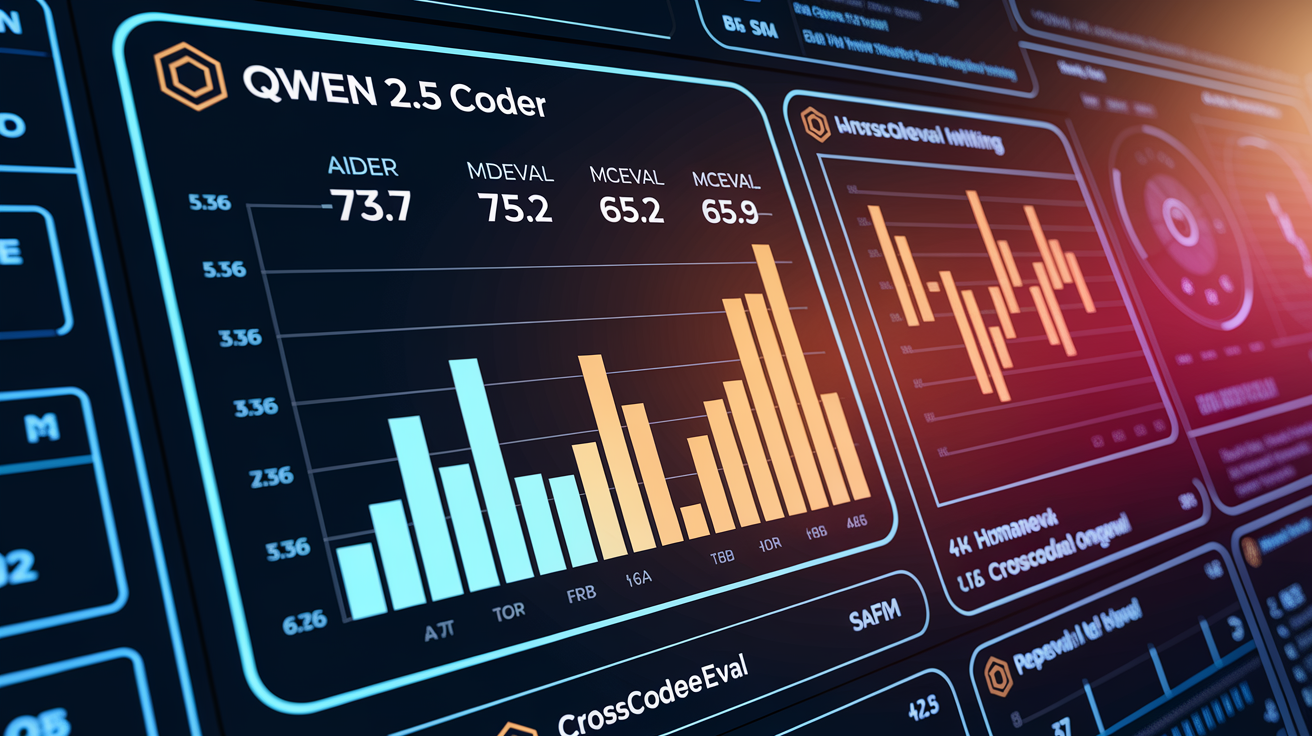
Alibaba evaluated the Qwen2.5-Coder-32B-Instruct across multiple benchmarks designed to test real world coding scenarios. On Aider, a code repair benchmark that measures how well models fix broken implementations, the 32B model scored 73.7. Performance Alibaba claims is comparable to GPT-4o. McEval, which tests multi language code generation, returned a score of 65.9, with particularly strong results on languages like Haskell and Racket where many competing models struggle. MdEval, focused on multi language code repair, gave the 32B Instruct model a score of 75.2, ranking it first among all open source alternatives.
The team took care to prevent benchmark contamination by using out of distribution evaluation settings. For the Instruct models, they relied on the latest four months of LiveCodeBench data (July 2024 through November 2024), ensuring the evaluation problems weren’t present in the pretraining corpus. Base models were evaluated primarily on MBPP-3shot, chosen as more suitable for foundation models without instruction tuning. This approach gives a clearer signal of genuine capability rather than memorization.
Code completion benchmarks used Fill in the Middle mode with a controlled maximum sequence length of 8,000 tokens, matching realistic scenarios where developers ask models to complete partial functions or fill gaps in existing code. The 32B model achieved state of the art results on five completion benchmarks: Humaneval-Infilling, CrossCodeEval, CrossCodeLongEval, RepoEval, and SAFIM. Evaluation metrics varied by dataset. Exact match for CrossCodeEval family and RepoEval, Pass@1 (one time execution success) for SAFIM. Each benchmark defines correct answers differently.
| Benchmark | Score | Model |
|---|---|---|
| Aider (code repair) | 73.7 | Qwen2.5-Coder-32B-Instruct |
| McEval (multi-language generation) | 65.9 | Qwen2.5-Coder-32B-Instruct |
| MdEval (multi-language repair) | 75.2 | Qwen2.5-Coder-32B-Instruct |
Comparing Qwen 2.5 Coder with Qwen 2.0 and Competing Models

The Qwen 2.5 Coder series builds on the earlier Qwen 2 family with expanded model sizes, longer context windows, and significantly more code focused pretraining. Where the previous generation topped out at 7B parameters, the new release extends to 32B, giving teams access to a flagship model that competes directly with proprietary alternatives. The expanded lineup also introduces smaller sizes (0.5B, 1.5B, 3B) designed for edge deployment and local development environments where earlier versions couldn’t fit.
Alibaba’s internal benchmarks and published comparisons claim the 32B Instruct variant reaches GPT-4o level coding performance. A bold assertion backed by the Aider score of 73.7 and first place rankings on several open source leaderboards. While direct head to head comparisons with GPT-4o are limited to the benchmarks Alibaba chose to publish, the results suggest the gap between open source and proprietary code models has narrowed significantly. The team also reported improvements in code reasoning. Understanding multi step logic, identifying architectural issues, and suggesting intelligent refactoring. Areas where earlier open source models often fell short.
Against other open source alternatives, the Qwen 2.5 Coder models claim state of the art performance across completion, generation, and repair tasks. The combination of 5.5 trillion tokens of code pretraining, 128,000 token context windows, and six model sizes gives developers more deployment flexibility than competing families that offer only one or two sizes. The smaller models (7B and below) deliver impressive performance relative to their parameter counts, making them practical for teams that need fast inference on consumer hardware without sacrificing too much capability.
Practical Integration and Usage of Qwen 2.5 Coder
The Qwen 2.5 Coder models integrate into existing developer workflows through multiple channels. Demonstrated integrations include code assistant platforms like Cursor, where the models provide real time autocomplete, bug fixes, and explanations as developers write code. The Instruct variants are chat ready, letting developers ask questions about code snippets, request refactoring suggestions, or generate boilerplate from natural language descriptions without additional fine tuning or prompt engineering.
Alibaba showcased an Artifacts use case through Open WebUI, demonstrating how the models can generate visual or interactive code outputs. Charts, mini web apps, or data visualizations from simple prompts. The team announced upcoming code mode features on an official product site that will enable one click generation of full websites, mini games, and data charts, targeting non developer users who need quick prototypes or simple tools without writing code themselves. These integrations highlight the models’ ability to move beyond autocomplete into full application generation.
Typical integration targets for Qwen 2.5 Coder:
Editor plugins for VS Code, JetBrains IDEs, Vim, and Emacs, providing inline suggestions and code generation
CI/CD pipelines for automated code review, test generation, or documentation updates during build processes
Code assistant platforms (Cursor, GitHub Copilot alternatives) that use the models for chat, autocomplete, and debugging
API workflows where backend services call the model for on demand code generation, repair, or analysis tasks
Deployment Options and Hardware Requirements for Qwen 2.5 Coder
Real world deployment of the Qwen 2.5 Coder models varies significantly by size. A community report demonstrated running the 32B model in Q4 quantization on a single NVIDIA GeForce RTX 3090, achieving approximately 32 tokens per second. Q4 quantization reduces memory requirements and speeds up inference by representing weights with 4 bit integers instead of full floating point precision, making flagship class models accessible to developers with high end consumer GPUs. The tradeoff is a small accuracy loss, though for many coding tasks the impact remains minimal.
Smaller models (0.5B through 7B) run comfortably on laptops, edge devices, or cloud instances with modest resources. The 0.5B and 1.5B variants target mobile or embedded scenarios where developers need local inference without network latency or privacy concerns. Larger models (14B and 32B) typically require either multi GPU setups, high memory cloud instances, or quantization techniques to fit within consumer hardware budgets. The team optimized the models for compatibility with popular inference frameworks like Ollama, making it easy to run locally without deep expertise in model serving.
Alibaba didn’t publish comprehensive system requirements. CPU recommendations, minimum RAM, disk space, or specific VRAM limits for each size. The RTX 3090 example gives a practical lower bound for the 32B model with quantization, but teams planning production deployments should benchmark their target hardware with expected prompt lengths and concurrency levels. For API driven or multi user scenarios, cloud deployment with autoscaling and load balancing remains the safer choice, especially for the larger variants where single GPU setups may struggle under load.
Licensing and Commercial Usage Terms for Qwen 2.5 Coder
Most Qwen 2.5 Coder models carry the Apache 2.0 license, a permissive open source license that allows unrestricted commercial use, modification, and redistribution. The 0.5B, 1.5B, 7B, 14B, and 32B variants all fall under Apache 2.0, making them suitable for startups, enterprises, and developers who need full legal clarity for production deployments. Apache 2.0 requires attribution and includes patent grants, but it imposes no restrictions on revenue generating applications or proprietary derivatives.
The 3B model operates under the Qwen-Research license, which carries tighter restrictions on commercial use. Teams planning to deploy the 3B variant in commercial products should review the Qwen-Research terms carefully, as they may require special arrangements or limit certain business models. The broader Qwen 2.5 family (non Coder models) includes a 72B variant that also requires special commercial arrangements, though that size isn’t part of the Coder specific release. The licensing split reflects Alibaba’s strategy of keeping most models fully open while reserving certain sizes for research or controlled commercial partnerships.
Key licensing differences across model sizes:
Apache 2.0 models (0.5B, 1.5B, 7B, 14B, 32B): Fully permissive for commercial use, modification, and redistribution with attribution
Qwen-Research license (3B): Restricted commercial use requiring special arrangements or agreements with Alibaba
No usage fees: All models are free to download and run. Licensing differences affect legal terms, not access or pricing
Roadmap and Future Updates for the Qwen 2.5 Coder Ecosystem

Alibaba’s team announced plans to continue scaling the Qwen Coder family with larger models and stronger reasoning capabilities. The roadmap emphasizes code centered reasoning: helping models understand complex architectural decisions, debug multi file issues, and suggest intelligent refactoring beyond simple autocomplete. The team requested community collaboration, signaling openness to external contributions, benchmark proposals, and real world feedback from developers deploying the models in production.
No specific timelines or model sizes were announced for future releases, but the scaling philosophy suggests that a 70B or larger Coder variant could follow if the current 32B model proves successful. The team also hinted at exploring specialized variants for specific programming paradigms, languages, or domains where general purpose models still struggle. Community support channels and upgrade procedures weren’t detailed in the announcement, leaving developers to rely on standard model hosting platforms and GitHub repositories for updates and migration guidance.
Final Words
in the action: the Qwen 2.5 Coder family landed on Sep 25, 2024, released as open-source across six sizes with Base and Instruct variants. It expands model capacity and token limits for coding workflows.
The 32B Instruct flagship shows top-tier code completion and repair after pretraining on 5.5T code tokens, while licensing mixes Apache 2.0 with a Qwen‑Research exception for the 3B model.
If you plan to adopt it, test integrations, confirm licensing, and try the qwen 2.5 coder release—there’s clear momentum and useful tooling ahead.
FAQ
Q: Can Qwen 2.5 generate code?
A: The Qwen 2.5 models can generate code. The Coder variants are specifically tuned for code generation, repair, and reasoning, pretrained on about 5.5T code tokens and supporting 40+ programming languages.
Q: Is the Qwen2.5 Coder free?
A: The Qwen 2.5 Coder is mostly free: most sizes are open-source under Apache 2.0, allowing broad use; the 3B variant uses a Qwen-Research license and some larger family members need special commercial arrangements.
Q: Is the Qwen2.5 Coder opensource?
A: The Qwen 2.5 Coder is released open-source for most sizes under the Apache 2.0 license; the 3B model is covered by a Qwen-Research license, so terms vary by model size.
Q: What is the difference between Qwen2.5 and Qwen2.5 Coder?
A: The difference is that Qwen 2.5 Coder models are further pretrained on code (about 5.5T tokens), tuned for coding tasks, provide Base and Instruct variants, and support higher input limits (up to 128k tokens).