Is Alibaba’s Qwen Max the new king of giant AI models, or just a very expensive experiment?
It’s a closed-source, transformer-based model that uses a Mixture-of-Experts design and tops one trillion parameters.
Pretrained on roughly 36 trillion tokens and built for Chinese and English plus 50+ languages, it supports context windows up to 256,000 tokens.
This post breaks down its capabilities, key technical specs, benchmark results, API access, pricing, and what teams should do next if they’re evaluating the Alibaba Qwen Max model.
Qwen Max Overview and Key Specifications
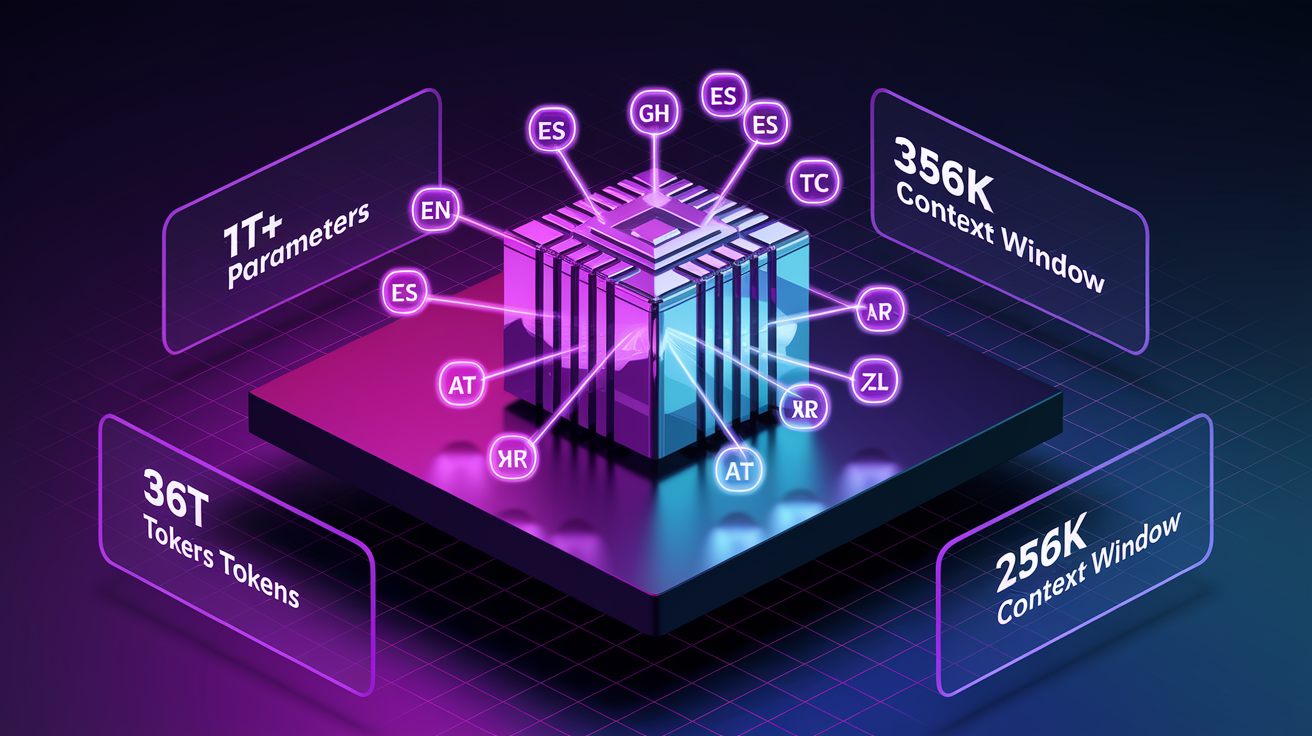
Alibaba’s Qwen Max is one of the biggest, most advanced models in the Qwen family. Built on a transformer architecture, it’s designed for multilingual work and heavy reasoning tasks. The flagship Qwen3-Max-Base has over a trillion parameters and was pretrained on 36 trillion tokens pulled from code repos, technical docs, conversations, and multilingual datasets. It uses an optimized Mixture-of-Experts (MoE) design that splits computation across specialized subnetworks, which keeps performance high while making inference more efficient at scale.
Qwen Max has a custom tokenizer that handles Chinese, English, and dozens of other languages without breaking text into too many fragments. That improves cost efficiency and generation quality for multilingual use. The model supports context windows up to 256,000 tokens, so you can feed it entire codebases, long documents, or complex multi-turn conversations in one go. This extended context is possible thanks to ChunkFlow training techniques, which delivered roughly three times the throughput of standard context parallelism methods during pretraining.
There are three main variants: Qwen3-Max-Base (the foundation model), Qwen3-Max-Instruct (tuned for coding and agent tasks), and Qwen3-Max-Thinking (built for reasoning). Eight companion models cover vision-language processing and content safety. Unlike smaller open-source Qwen releases like the Qwen3-2507 series, Qwen Max is closed-source and only available through cloud APIs. What sets it apart? Top-tier performance on programming benchmarks, better Chinese-language understanding than most Western LLMs, and native integration with enterprise agent frameworks and tool-calling workflows.
| Feature | Specification |
|---|---|
| Parameter Count | Over 1 trillion (Qwen3-Max-Base) |
| Pretraining Data | 36 trillion tokens (multilingual, code, conversational) |
| Architecture Type | Optimized Mixture-of-Experts (MoE) transformer |
| Context Window | Up to 256,000 tokens |
| Tokenization | Custom multilingual tokenizer (Chinese, English, 50+ languages) |
| Deployment Model | Closed-source, cloud-hosted API only |
Performance Benchmarks and Evaluation Results
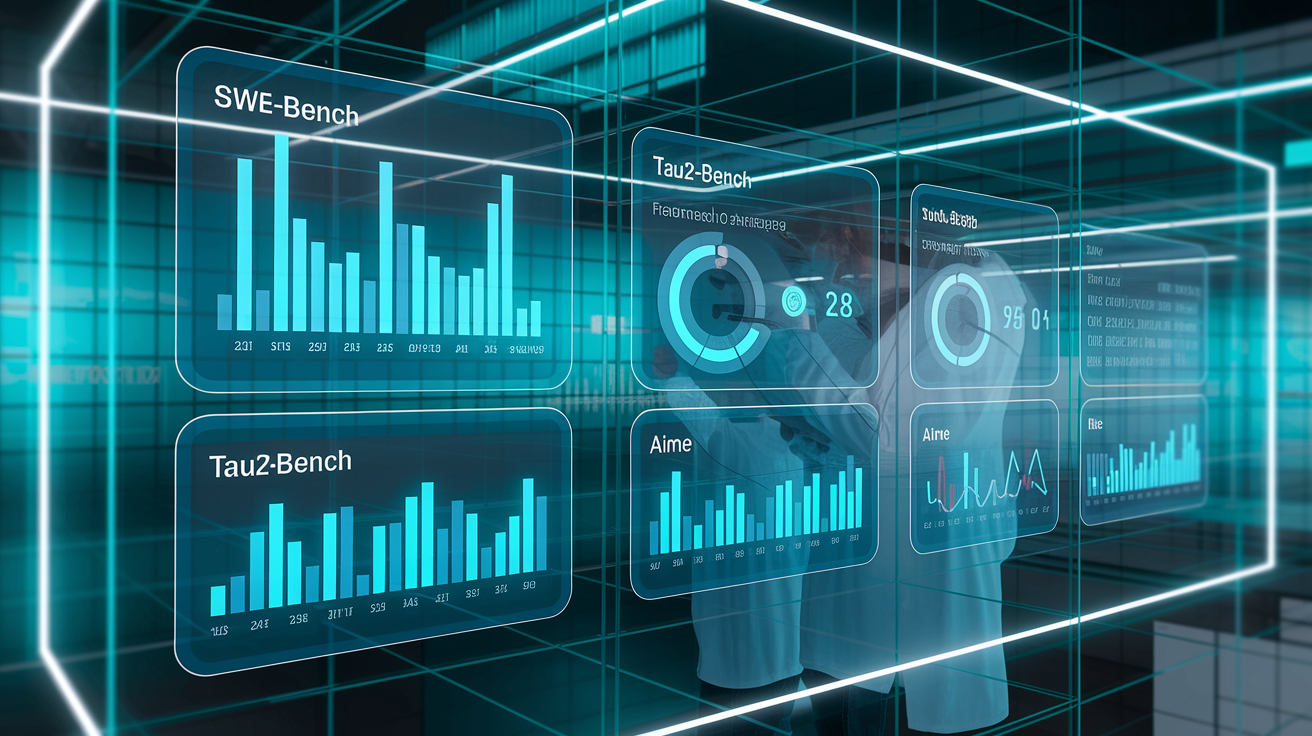
Qwen3-Max-Instruct landed in third place globally on the LMArena text leaderboard during preview testing. It beat GPT-5-Chat and held its own against Claude Opus 3 and DeepSeek V3 across multiple benchmark suites. On SWE-Bench Verified (a test that measures real-world programming problem-solving by running fixes against live GitHub repos), Qwen3-Max-Instruct scored 69.6. That puts it among the best models for practical code generation and debugging. The Tau2-Bench agent evaluation gave it a 74.8, beating both Claude Opus 3 and DeepSeek V2.5 in tool-calling accuracy and multi-step task orchestration. These numbers show the model’s strength in programming workflows and autonomous agent applications where precise API interactions matter.
The Qwen3-Max-Thinking variant integrates parallel test-time computation and code interpretation for chain-of-thought reasoning. In preliminary internal tests, it reportedly hit perfect 100-point scores on both AIME 25 and HMMT 25 mathematical reasoning benchmarks. But this Thinking variant is still in active training and hasn’t been publicly released yet, so those figures reflect controlled test conditions rather than production availability. The earlier Qwen2.5-Max release (evaluated under the model name qwen-max-2025-01-25) showed consistent wins over DeepSeek V3 on Arena-Hard, LiveBench, LiveCodeBench, and GPQA-Diamond. It also matched or beat GPT-4o and Claude-3.5-Sonnet on MMLU-Pro. Base model evaluations against Llama-3.1-405B and Qwen2.5-72B showed significant advantages across most standard benchmarks, confirming the gains from the MoE architecture.
Strong benchmark results don’t always translate to real-world production use, and community discussions reflect that. Some developers have expressed skepticism about the gap between reported scores and practical fidelity, especially for complex multi-turn coding tasks and domain-specific reasoning. Weaknesses that show up in comparative evaluations include occasional hallucination on knowledge-intensive tasks outside the training distribution and higher inference costs compared to smaller open-source alternatives. But those tradeoffs are typical for trillion-parameter closed models.
Core Features and Capabilities
Qwen Max delivers strong generation quality across knowledge synthesis, instruction following, and human-preference alignment. It’s particularly good at multilingual content creation and long-context reasoning tasks. The instruction-tuned variants use curated Supervised Fine-Tuning (SFT) and Reinforcement Learning from Human Feedback (RLHF), so they follow system instructions precisely and produce consistent structured output formats like JSON, XML, and Markdown. Chain-of-thought prompting and reasoning depth are enhanced in the Thinking variant, which applies parallel test-time computation to break down complex queries into verifiable intermediate steps.
Coding support covers multiple languages including Python, JavaScript, Java, C++, and Go. Capabilities extend to code completion, debugging, refactoring, and automated test generation. Summarization and translation workflows benefit from the 256,000-token context window, which lets you process entire technical manuals or legal documents in a single pass without chunking. Advanced assistant capabilities include function calling, tool integration with external APIs, and agent orchestration for multi-step workflows involving database queries, web searches, or computational tools.
Key capabilities:
- Multilingual text generation with native-level fluency in Chinese and English, plus support for 50+ additional languages
- Long-context reasoning up to 256,000 tokens for document analysis, codebase navigation, and extended conversations
- Tool calling and agent workflows with structured function execution and multi-turn orchestration
- Code generation and debugging across major programming languages with real-world problem-solving accuracy
- Structured output supporting JSON schemas, XML templates, and custom formatting instructions
- Summarization and translation optimized for technical, legal, and conversational content at scale
API Access and Integration Instructions

You can access Qwen Max models through Alibaba Cloud’s Model Studio platform, which provides REST API endpoints and SDK libraries for Python, Java, and Node.js. First, register an Alibaba Cloud account, activate the Model Studio service from the cloud console, and generate an API key with appropriate permissions for model invocation. The API follows OpenAI-compatible request and response structures, so migration is straightforward if you’re already using OpenAI’s client libraries. Authentication works via bearer token headers, and all requests go over HTTPS to regional endpoints determined during account setup.
Required parameters for a standard text generation request include the model identifier (qwen3-max for the latest Qwen3-Max-Instruct release, or qwen-max-2025-01-25 for the Qwen2.5-Max variant), input messages formatted as an array of role-content pairs, and optional system instructions to configure behavior or output format. Temperature, top-p sampling, and max token limits control randomness and response length. The stream parameter enables token-by-token streaming for real-time user interfaces. Context caching is supported for repeated prefix sequences, which reduces latency and token costs when processing multiple requests against the same document or conversation history.
Here’s a typical invocation in Python using the OpenAI-compatible client library:
from openai import OpenAI

client = OpenAI(
    api_key="your_api_key_here",
    base_url="https://dashscope.aliyuncs.com/compatible-mode/v1"
)

response = client.chat.completions.create(
    model="qwen3-max",
    messages=[
        {"role": "system", "content": "You are a helpful coding assistant."},
        {"role": "user", "content": "Write a Python function to merge two sorted lists."}
    ],
    temperature=0.7,
    max_tokens=500
)

print(response.choices[0].message.content)
Enterprise deployments can request Service Level Agreements (SLAs), dedicated capacity, and private endpoint configurations through Alibaba Cloud’s enterprise support channels. The Qwen Chat web platform and mobile applications provide no-code access to Qwen3-Max for interactive demos and evaluation. There’s a free tier available for initial testing before committing to production API usage.
Pricing and Deployment Options
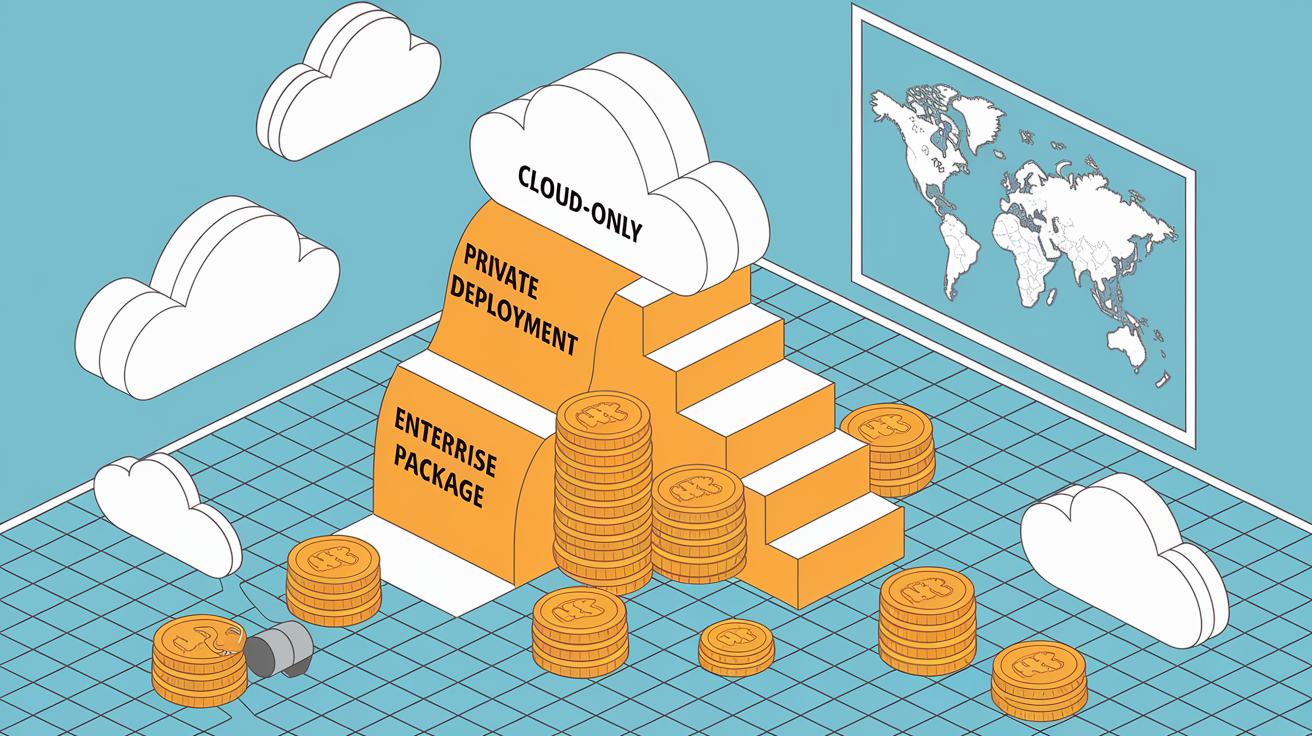
Qwen Max uses a token-based billing model. Reported starting rates via third-party API aggregators are approximately $1.20 per million input tokens and $6.00 per million output tokens. That makes it competitive against comparable closed-source models, though it’s still significantly more expensive than open-source alternatives for individual developers. Alibaba Cloud Model Studio offers tiered pricing structures that include volume discounts for high-throughput applications, dedicated capacity reservations for latency-sensitive workloads, and enterprise packages bundling API access with technical support, SLAs, and compliance certifications. Pricing varies depending on the specific model variant you select. Qwen3-Max-Instruct and Qwen3-Max-Thinking are expected to carry different per-token rates once the Thinking version reaches public availability.
Deployment options are limited to cloud-hosted inference through Alibaba Cloud infrastructure. Qwen Max is closed-source, so it’s not available for local or on-premises installation. Organizations requiring private deployment must engage with Alibaba Cloud’s enterprise sales team to negotiate dedicated instance arrangements. These provide isolated compute environments and custom scaling policies while maintaining the cloud-hosted constraint. For teams needing full control over model weights and infrastructure, Alibaba’s Qwen3-2507 open-source series offers downloadable models suitable for self-hosted deployment. But these variants operate at smaller scale and lower benchmark performance than Qwen Max.
Use Cases and Practical Applications

Qwen Max is deployed across enterprise customer service platforms where multilingual support and long-context conversation tracking are critical. It powers automated response systems that handle technical inquiries, order management, and policy explanations without human escalation for routine cases. Financial services organizations use the model for document analysis workflows, processing loan applications, contract reviews, and regulatory filings that often exceed 100,000 tokens and require precise extraction of structured data alongside natural language summaries. Software development teams integrate Qwen Max into coding assistants for automated code review, bug localization, and test case generation. The model’s strong SWE-Bench performance helps reduce manual debugging time and accelerate CI/CD pipelines.
Multilingual content generation workflows benefit from Qwen Max’s native Chinese-English fluency. Marketing teams use it to draft localized website copy, product descriptions, and social media campaigns that maintain brand voice across language boundaries. Internal automation systems employ the model’s tool-calling and agent capabilities to orchestrate multi-step processes such as data pipeline monitoring, report generation from database queries, and email triage based on content classification and sentiment analysis. Educational technology platforms use Qwen Max for personalized tutoring interactions, generating step-by-step explanations for complex problems in mathematics and computer science while adapting to student skill levels and learning pace.
Common practical applications:
- Enterprise customer support with multilingual conversational agents and ticket routing automation
- Coding assistance for code completion, debugging, refactoring, and automated test generation in IDEs
- Document analysis for contract review, compliance checking, and structured data extraction from PDFs
- Multilingual content creation including localization, marketing copy, and cross-language summarization
- Internal process automation orchestrating database queries, report generation, and workflow triggers via agent frameworks
Comparison With Competitor Models

Qwen Max shows measurable advantages over GPT-4 and Claude in programming benchmarks. The 69.6 SWE-Bench Verified score exceeds most publicly reported results from OpenAI’s GPT-4 Turbo and Anthropic’s Claude 3 Opus on the same test suite. The model’s native Chinese-language understanding surpasses Western-focused LLMs including GPT-4o and Llama 3.1, offering more accurate translations, better idiomatic fluency, and lower hallucination rates when processing Chinese technical documentation or conversational data. Agent and tool-calling workflows show stronger performance on Tau2-Bench compared to Claude Opus 3, reflecting Qwen Max’s optimization for structured function execution and multi-turn orchestration tasks common in enterprise automation scenarios. Cost-effectiveness is competitive with GPT-4 Turbo on a per-token basis, though the closed-source deployment model limits flexibility compared to open-weight alternatives.
Context handling differs significantly between Qwen Max’s 256,000-token window and the 128,000-token limits typical of GPT-4 Turbo and Claude 3.5 Sonnet. Qwen Max can process longer documents and deeper conversation histories without truncation or retrieval-augmented workarounds. Llama 3.1-405B offers comparable context length alongside full open-source availability, allowing teams to deploy the model on private infrastructure and fine-tune weights for domain-specific applications. That’s an option unavailable with Qwen Max’s cloud-only access model. Multilingual quality across 50+ languages remains strong for Qwen Max, though GPT-4 and Claude maintain advantages in lower-resource languages outside the model’s primary Chinese-English training focus.
Relative performance in reasoning tasks shows Qwen3-Max-Thinking achieving reported perfect scores on AIME 25 and HMMT 25 in preliminary tests, matching or exceeding claimed results from OpenAI’s o1 preview model and DeepSeek’s reasoning-optimized variants. Enterprise integration favors Qwen Max for organizations already operating within Alibaba Cloud ecosystems, where native Model Studio support, billing integration, and regional data residency simplify compliance and operational overhead compared to managing multi-cloud API access for GPT or Claude. API accessibility through OpenAI-compatible endpoints reduces migration friction for teams switching from OpenAI models, though differences in response formatting and error handling require validation during initial integration testing.
Final Words
In the action, Qwen Max comes through as a technically mature LLM: clear specs, strong benchmark performance, and notable multilingual and reasoning strengths.
We also covered core features (long context, tool calls, structured outputs), API and integration steps, pricing and deployment choices, practical use cases, and how it stacks up versus GPT and Llama.
If you’re considering the alibaba qwen max model for production or pilots, it’s worth testing now — promising results, with room for targeted validation and tuning.
FAQ
Q: What is Qwen Max and its key specifications?
A: The Qwen Max is part of Alibaba’s Qwen LLM family, using a transformer architecture, large‑scale multilingual training, extended context support, strong instruction following, and broad reasoning capabilities for enterprise use.
Q: How many parameters, context length, and tokenization approach does Qwen Max use?
A: Qwen Max uses a very large parameter count, supports extended context windows, and relies on subword tokenization customized for multilingual coverage and efficient long‑context processing.
Q: How does Qwen Max perform on benchmarks compared to other models?
A: Qwen Max performs strongly on reasoning, MMLU, multilingual, and coding benchmarks, often matching leading models on public tests while showing particular strength in multilingual and long‑context tasks.
Q: What core features and capabilities does Qwen Max offer?
A: Qwen Max offers multilingual generation, long‑context reasoning, tool calling, structured output, robust system instruction handling, and support for coding, summarization, translation, and advanced assistant workflows.
Q: Does Qwen Max handle multilingual tasks and long documents effectively?
A: Qwen Max handles multilingual tasks and long documents effectively, producing fluent cross‑language outputs and sustaining coherent reasoning across extended contexts for multi‑turn applications.
Q: How can developers access Qwen Max via API and what parameters are required?
A: Developers access Qwen Max through Alibaba Cloud’s DashScope API (REST and SDK). Requests need authentication, model name, input text, and optionally system instructions and tool/call configuration.
Q: What are pricing and deployment options for Qwen Max?
A: Qwen Max uses token‑based billing with tiered and enterprise packages. Deployment options include cloud hosting via DashScope or private, on‑premise deployments for sensitive enterprise data.
Q: What practical use cases suit Qwen Max best?
A: Qwen Max fits enterprise customer service, coding assistance, multilingual content generation, summarization, and internal automation, improving response quality, developer productivity, and cross‑language workflows.
Q: How does Qwen Max compare to GPT and Llama models?
A: Qwen Max compares favorably to GPT and Llama, offering competitive reasoning and coding performance, stronger multilingual and long‑context handling, and different enterprise API and deployment choices.