Could a 27B model really match a 70B while using far less compute?
Google’s Gemma 2 claims that and comes in 2B, 9B, and 27B sizes for edge, single‑GPU, and cloud use.
It adds alternating local/global attention, Grouped‑Query Attention, extra RMSNorm layers, and logit soft‑capping to speed inference, stabilize training, and handle longer context.
Benchmarks show strong per‑parameter efficiency: the 2B runs on consumer GPUs, the 9B fits single high‑memory cards, and the 27B runs on one A100/H100 or TPU.
Read on for architecture, benchmarks, hardware, and licensing to help teams pick and deploy the right Gemma 2.
Core Overview of the Gemma 2 Model
Google released Gemma 2 in June 2024, their second-generation lightweight open language model. You get three sizes: 2 billion, 9 billion, and 27 billion parameters. Each one fits a different use case. The 2B runs on edge devices and laptops. The 9B targets single GPU setups. The 27B handles cloud instances without needing multi-GPU splits.
It’s built on the same research foundation as Gemini, but you can actually use it commercially. And modify it. Google claims the 27B competes with Llama 3 70B while using less than half the compute. The 2B beat every GPT-3.5 variant in LMSYS Chatbot Arena tests, despite being small enough to run on consumer hardware. The 9B outperforms Llama 3 8B and similar models in its weight class.
All three versions share new architectural tricks designed to improve training stability, speed up inference, and handle longer context windows. The license is commercially friendly. You can share derivative work, build products, and deploy without restrictive agreements. Pretrained and instruction-tuned checkpoints are on Hugging Face, Kaggle, and Vertex AI Model Garden.
Academic researchers could apply for cloud credits through Google’s program, which ran through August 9, 2024 for the first batch. The entire Gemma family has been downloaded over 10 million times. People use it for code generation through CodeGemma, recurrent inference research with RecurrentGemma, and vision-language tasks via PaliGemma.
Gemma 2 Architecture and Parameter Scales
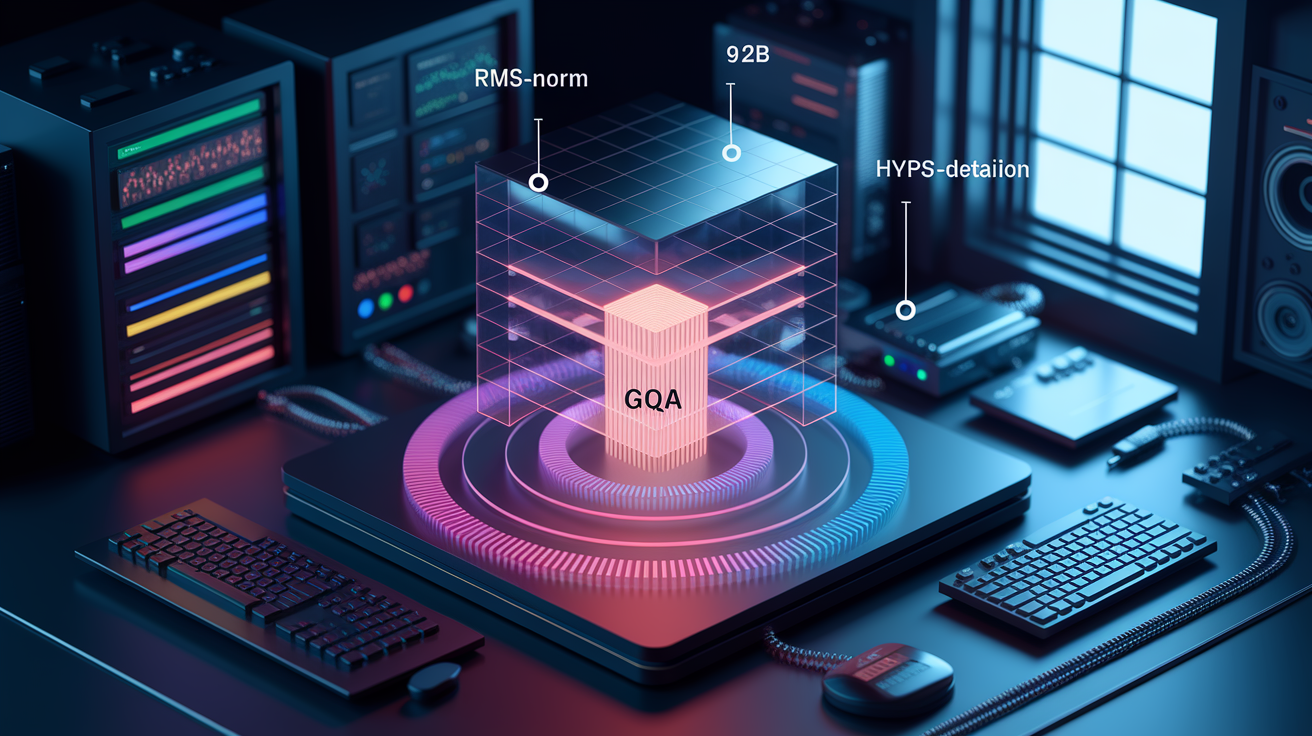
Four structural changes set Gemma 2 apart from standard Transformers. First, alternating local and global attention. Layers alternate between limited window attention and full sequence attention. This cuts compute cost while preserving context modeling. Second, logit soft-capping constrains overconfident predictions by capping logit values before the softmax layer. Better calibration results.
Third, Grouped-Query Attention replaces Multi-Head Attention throughout. Fewer parameters, lower inference memory, comparable accuracy. Fourth, additional RMSNorm layers get inserted before and after feedforward blocks. These stabilize training at scale.
Each size implements GQA differently. The 27B uses head size 128 with 16 heads for key and value projections, yielding dimension 2,048. Query and output projections use 32 heads at the same head size, producing dimension 4,096. The 9B uses head size 256 with 8 heads for key/value (2,048 dimension) and 16 heads for query/output (4,096 dimension). The 2B also uses head size 256 but with 4 heads for key/value and 8 heads for query/output.
Five main enhancements:
Alternating layers of local and global attention for efficient long-context handling. Logit soft-capping to prevent extreme confidence values. Grouped-Query Attention for faster inference with fewer parameters. Pre- and post-feedforward RMSNorm layers to stabilize training dynamics. Increased model depth over width for the same parameter budget, which empirically improves performance.
The 2B and 9B were trained via knowledge distillation from the 27B teacher. Distillation produced gains even when the smaller models saw the same token count as non-distilled baselines. Increasing depth delivered slightly better results than widening when holding parameter count constant.
Benchmark Performance and Model Evaluation
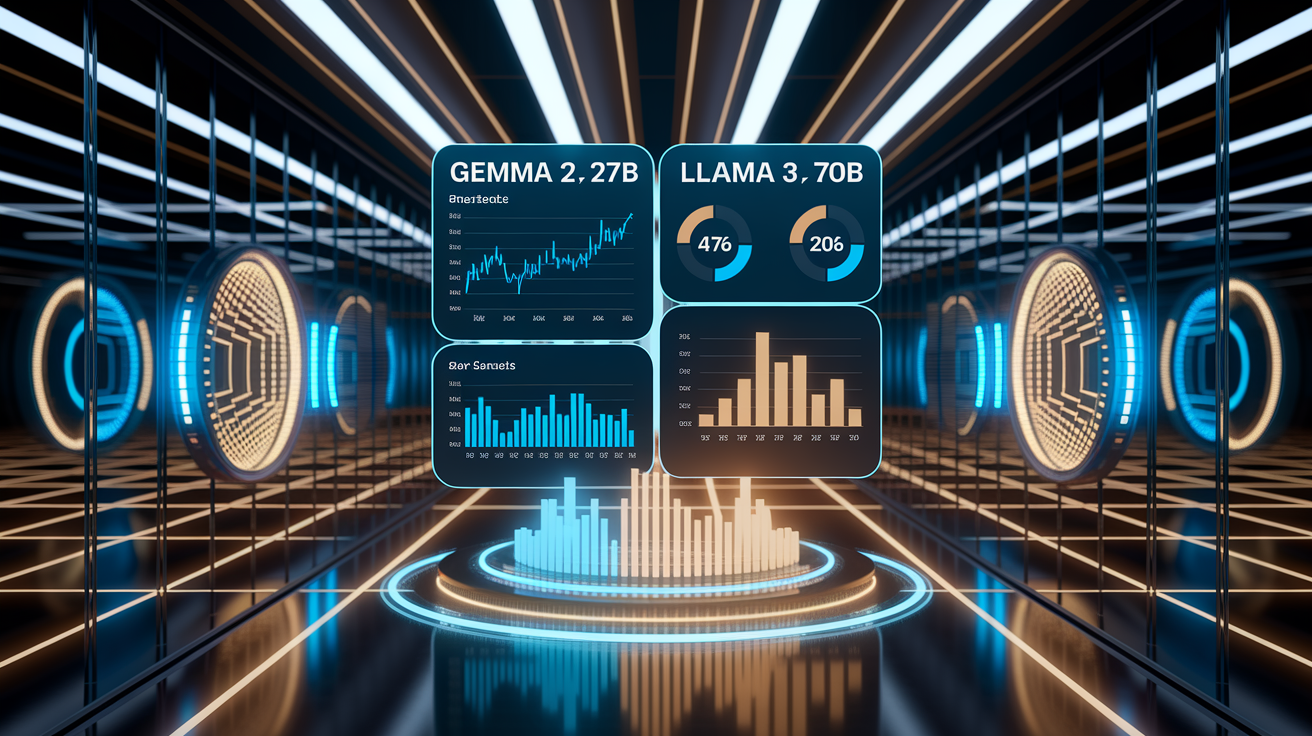
Gemma 2 27B climbed the LMSYS Chatbot Arena leaderboard quickly after release. It beat models more than twice its size on conversational tasks. Google designed it to match or exceed Llama 3 70B performance while using less than half the parameters. On the Hugging Face Open LLM Leaderboard snapshot from April 22, 2024, the pretraining checkpoint was competitive with established baselines in reasoning, language understanding, and code generation.
The 2B outperformed all GPT-3.5 variants on LMSYS Chatbot Arena despite being edge-device sized. The 9B exceeded Llama 3 8B and other same-size open models across multiple benchmark suites. Full breakdowns are in the technical report “Gemma 2: Improving Open Language Models at a Practical Size.”
| Benchmark | Gemma 2 27B | Llama 3 70B |
|---|---|---|
| Chatbot Arena (conversational quality) | Comparable or better | Baseline reference |
| Reasoning tasks (HF Open LLM) | Competitive | Baseline reference |
| Code generation | Competitive | Baseline reference |
| Multilingual understanding | Improved over Gemma 1 | Not directly compared |
| Parameter efficiency (performance per billion parameters) | Higher | Lower |
Google published results on public safety and representational-harm benchmarks as part of responsible AI testing. Pretraining data was filtered. Rigorous testing protocols were applied before release. An open-source evaluation tool called LLM Comparator launched alongside the models. It enables side-by-side quality and safety assessments. A demo comparison between Gemma 1.1 and Gemma 1.0 using LLM Comparator is available as a hosted interactive space.
Comparison Between Gemma 1 and Gemma 2
Gemma 2 delivers higher performance per parameter than Gemma 1 across reasoning, coding, and conversational tasks. Training efficiency improved through pre- and post-feedforward RMSNorm layers and the adoption of Grouped-Query Attention. That reduced memory overhead during both training and inference. Context window handling expanded through the alternating local-global attention mechanism. Gemma 2 can process longer sequences without linear scaling of compute cost.
Fine-tuning stability improved due to logit soft-capping and additional normalization layers. Distilling smaller Gemma 2 models from the 27B teacher produced better outcomes than training from scratch, even when token counts were held constant. This marks a shift in training strategy compared to Gemma 1, where all models trained independently.
The biggest improvements from Gemma 1 to Gemma 2:
Grouped-Query Attention reducing inference memory and increasing throughput compared to Multi-Head Attention. Alternating local and global attention layers enabling efficient long-context modeling without quadratic cost growth. Logit soft-capping preventing overconfident predictions and improving calibration in instruction-tuned variants. Knowledge distillation from 27B to smaller models delivering performance gains over independent training.
Comparison With Competing Open Models
Gemma 2 27B competes directly with Llama 3 70B and Mistral’s larger variants while using significantly fewer parameters. Performance parity or superiority at less than half the size translates to lower deployment costs, reduced VRAM requirements, and faster inference throughput. The 9B model occupies the same deployment tier as Llama 3 8B and Mistral 7B but consistently beats them in conversational benchmarks and reasoning tasks according to LMSYS and Hugging Face leaderboard data.
Licensing sets Gemma 2 apart. Google’s Gemma license permits commercial use and derivative work with minimal restrictions. Some open models carry usage limits or require additional agreements for commercial deployment. Llama 3 carries Meta’s community license, which includes acceptable use policies and scale-based restrictions. Mistral models release under Apache 2.0 or a commercial license depending on the variant. Gemma 2’s license sits between fully permissive Apache-style terms and more restrictive community licenses.
Resource requirements favor Gemma 2 in single-host deployments. The 27B runs at full precision on a single NVIDIA A100 80GB, H100, or TPU host. Llama 3 70B typically requires multi-GPU setups or quantization for similar hardware. The 2B runs on consumer NVIDIA RTX and GeForce RTX GPUs, gaming laptops, and even CPU-only environments via Gemma.cpp. This enables edge use cases that larger models can’t address. Mistral 7B and Llama 3 8B require similar resources to Gemma 2 9B but deliver lower performance in head-to-head benchmarks.
Licensing and Usage Conditions

Gemma 2 releases under Google’s Gemma Terms of Use, a commercially friendly license that permits sharing, modification, and commercialization of derivative models. You can use it for research and production deployment without requiring separate commercial agreements or revenue-sharing arrangements. Restrictions focus on preventing harmful use, including generating content that violates applicable laws, facilitates illegal activity, or causes harm to individuals or groups.
The license doesn’t impose scale-based restrictions or require disclosure of fine-tuned model weights, though developers are encouraged to share responsibly. Attribution is requested but not legally required. Model weights and code distribute through Kaggle, Hugging Face, and Vertex AI Model Garden under the same terms. Developers should review the full license text published alongside model checkpoints to confirm compliance with use-case requirements and jurisdiction-specific regulations.
Hardware Requirements and Deployment Options
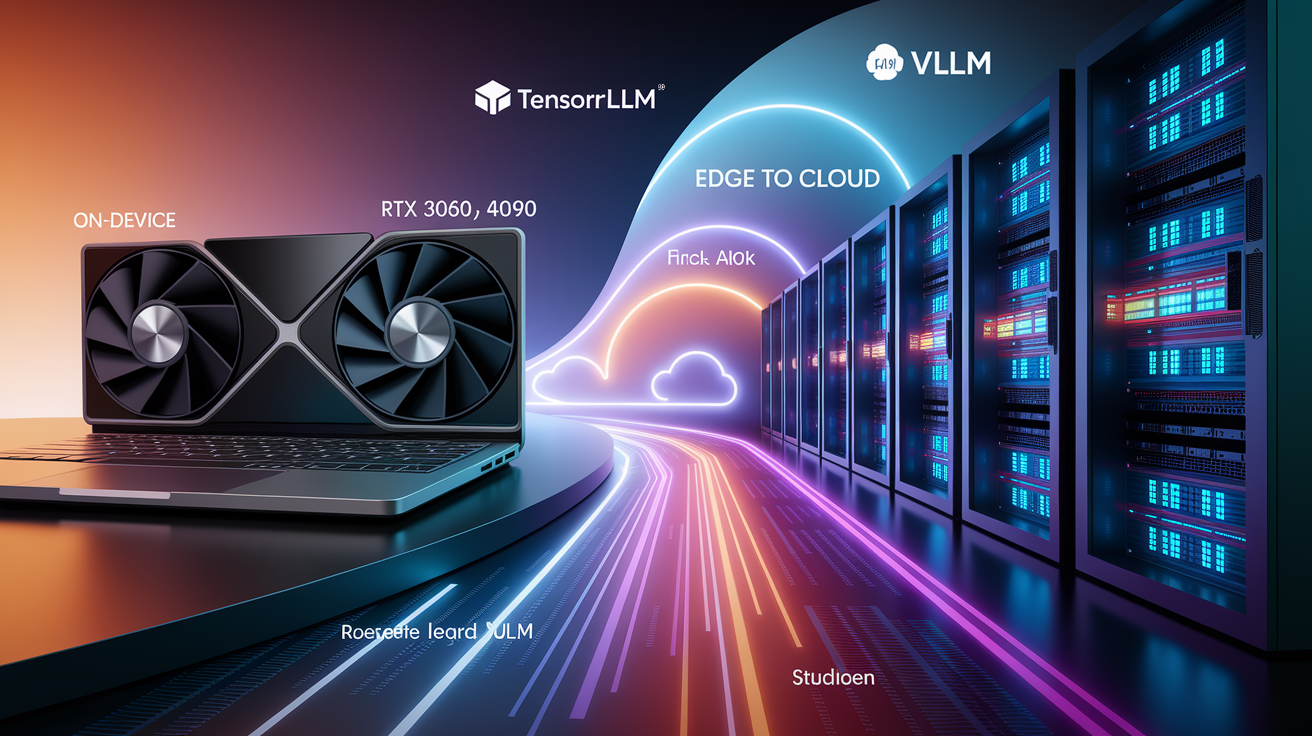
Gemma 2 27B runs at full precision (no quantization) on a single NVIDIA A100 80GB Tensor Core GPU, NVIDIA H100 Tensor Core GPU, or Google Cloud TPU host. This single-host capability reduces deployment costs compared to models requiring multi-GPU inference. The 9B variant fits comfortably on NVIDIA RTX 4090, A6000, and similar 24GB VRAM cards. The 2B runs on consumer hardware including NVIDIA GeForce RTX 3060 (12GB), RTX 4060 Ti (16GB), gaming laptops, and desktops with mid-range GPUs.
CPU-only inference is supported via Gemma.cpp for all model sizes, though throughput is significantly lower than GPU acceleration. Quantized versions (8-bit, 4-bit) further reduce memory requirements. The 27B can run on GPUs with 40GB VRAM. The 9B fits on 12GB cards. Ollama, vLLM, Llama.cpp, and TensorRT-LLM provide optimized runtimes for local and cloud deployment.
Cloud deployment options include Vertex AI (managed inference starting July 2024), Hugging Face Inference Endpoints, and self-hosted instances on AWS, Azure, or Google Cloud. Google AI Studio offers hosted testing without requiring local hardware. Free-tier Colab notebooks support experimentation with all model sizes, though session limits and GPU availability vary. First-time Google Cloud customers may qualify for $300 in credits. Academic researchers could apply for additional credits through the Academic Research Program (applications accepted through August 9, 2024 for initial program cohorts).
Hardware requirements by model size:
2B model: 8GB VRAM (GPU) or 16GB RAM (CPU), runs on consumer laptops and edge devices. 9B model: 24GB VRAM recommended (single GPU), 12GB possible with quantization. 27B model: 80GB VRAM (single A100 or H100) or 40GB with 8-bit quantization. Multi-GPU setups supported via tensor parallelism for all sizes when single-host VRAM is insufficient. TPU deployment optimized for single-host configurations on v4 and v5 generations. Inference optimization via TensorRT-LLM (NVIDIA), vLLM, and NVIDIA NIM microservices.
Integration and Implementation Steps
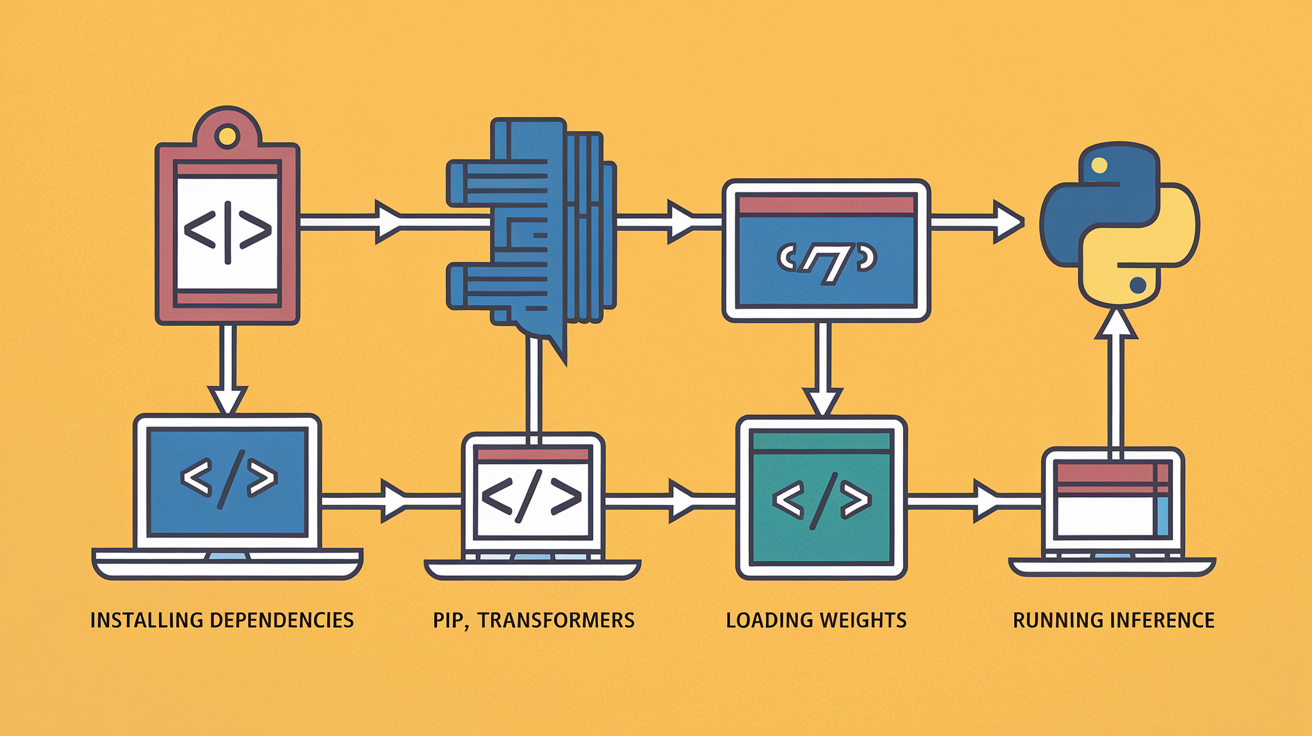
Gemma 2 supports integration through Hugging Face Transformers, JAX, PyTorch, and TensorFlow via native Keras 3.0. Model checkpoints are available on Hugging Face Models, Kaggle, and Vertex AI Model Garden (availability starting July 2024 for Vertex managed deployment). Fine-tuning is supported today via Keras and Hugging Face. Additional parameter-efficient fine-tuning options including LoRA and QLoRA are being worked on by the community and framework maintainers.
NVIDIA provides TensorRT-LLM support and an NVIDIA NIM inference microservice for optimized deployment on NVIDIA GPUs. Optimization for NVIDIA NeMo is listed as coming soon. Runtimes including vLLM, Gemma.cpp, Llama.cpp, and Ollama enable fast inference across hardware ranging from cloud instances to consumer desktops. A new “Gemma Cookbook” published alongside the models provides recipes and practical examples for building applications, fine-tuning, and implementing retrieval-augmented generation.
Implementation steps for deploying Gemma 2:
Install dependencies (Transformers, PyTorch or JAX, and tokenizers library) using pip or conda in a Python 3.9+ environment. Download model weights from Hugging Face or Kaggle by accepting the model terms and using the provided download scripts or the Hugging Face Hub API. Load the model using the Transformers AutoModelForCausalLM class or JAX-based loaders, specifying device placement (cuda, cpu, or tpu). Run inference by tokenizing input text, passing token IDs to the model’s generate method, and decoding output tokens back to text. Fine-tune on custom datasets using Hugging Face Trainer or Keras fit API with task-specific data and appropriate hyperparameters (learning rate, batch size, gradient accumulation). Deploy to production using TensorRT-LLM for NVIDIA GPUs, vLLM for high-throughput serving, or Vertex AI for managed cloud inference with auto-scaling.
The Keras Gemma 2 Quickstart and Keras Gemma 2 Quickstart Chat examples provide working code for chat-style and completion-style inference. Axolotl supports fine-tuning workflows with community-maintained configurations. Responsible Generative AI Toolkit integration includes the open-source LLM Comparator for side-by-side evaluation and the planned open-sourcing of SynthID text watermarking technology for Gemma models.
Practical Applications and Use Cases
Gemma 2 supports coding assistance through CodeGemma variants, which handle code completion, generation, and debugging tasks across multiple programming languages. The 2B enables on-device conversational AI. Community projects like Octopus v2 demonstrate this, an on-device action model. Multilingual capabilities improved in Gemma 2, with community adaptations like Navarasa targeting Indic languages and low-resource language pairs.
Document summarization and structured reasoning benefit from the 27B model’s expanded context handling and improved instruction-following. Chatbot implementations take advantage of the strong LMSYS Chatbot Arena performance. The 2B and 9B deliver GPT-3.5-level conversational quality at significantly lower compute cost. Retrieval-augmented generation examples in the Gemma Cookbook demonstrate how to combine Gemma 2 with external knowledge bases for factual question answering and domain-specific assistance.
PaliGemma, a vision-language variant built on the SigLIP vision model and Gemma language model, extends the family to image and short-video captioning, visual question answering, text-in-image understanding (OCR), object detection, and object segmentation. Pretrained and fine-tuned checkpoints at multiple resolutions support computer vision tasks alongside text-only applications. RecurrentGemma, based on the Griffin architecture, provides efficient recurrent inference for research into alternative attention mechanisms.
Final Words
We walked through Gemma 2’s core design, architecture and parameter scales, benchmark results, and how it compares to Gemma 1 and other open models.
We also covered licensing, hardware needs, integration steps, and practical use cases so you can pick the right size and deployment path. Try small models locally, run benchmarks on your tasks, and confirm licensing for commercial projects.
If you’re ready to test an efficient, open alternative, run a quick pilot with the google gemma 2 model, and you’ll see why it’s worth exploring.
FAQ
Q: What is the Gemma 2 model? What is the Google Gemma model? Is Gemma an AI model?
A: The Gemma family, including Gemma 2, is Google’s set of AI large language models built on Transformer architectures, offering scaled sizes, efficiency improvements, and capabilities for reasoning, coding, translation, and fine-tuning.
Q: What is the latest Google Gemma model?
A: The latest Google Gemma model is Gemma 2, which improves architecture efficiency, expands parameter scales, and boosts long-context reasoning compared to Gemma 1.