Could Meta’s Llama 4 announcement change who wins in AI—open models or closed systems?
Meta just released Llama 4, a family of open-weight models with big jumps in reasoning, long-context handling, and multilingual training.
This matters for researchers, developers, and enterprises that want flagship performance without vendor lock-in.
In this post we lay out the release date, the standout features, licensing and rollout details, and practical next steps to try or deploy Llama 4 safely.
Meta Officially Announces Llama 4
Meta just dropped Llama 4, its next-gen family of open-weight large language models. This is a big deal. We’re talking major jumps in performance, safety, and multilingual capabilities. You can start using it for research right now, and API access for developers plus enterprise tools rolls out later this year. Meta’s framing Llama 4 as a serious upgrade over Llama 3, with gains in reasoning, coding, and long-context understanding. And they’re keeping the permissive licensing that made earlier Llama versions so popular across industry and academia.
The official release hammered home Llama 4’s role in pushing open AI development forward. Meta said they built it to “push the boundaries of what open models can achieve while maintaining safety and responsible deployment.” Architectural innovations, way more training data, and refined alignment techniques are doing the heavy lifting here. Meta’s positioning Llama 4 as a real alternative to proprietary frontier models. You get state-of-the-art capabilities without vendor lock-in.
This release confirms Meta’s sticking with openness as their strategic edge. By making Llama 4 broadly accessible, they’re betting on faster innovation across the AI ecosystem, enabling customization for specialized domains, and making model development more transparent. Early signals suggest they’re targeting technical users who need maximum control and enterprise customers who want production-ready deployment with better governance features.
Key Technical Specifications of Llama 4

Llama 4 brings some real architectural advancements over Llama 3. The new models use a Mixture of Experts (MoE) architecture. That means only a subset of total parameters activates per inference step, which cuts compute cost and latency while keeping output quality high. Meta says the MoE design lets them scale up total parameter counts without proportional increases in inference expense. Llama 4 Maverick carries 400 billion total parameters but only activates 17 billion per forward pass. You get flagship-tier performance at a fraction of the cost of dense models.
Context length got a massive upgrade. Llama 4 Scout supports up to 10 million tokens. That’s an industry-leading context window that lets you summarize entire codebases, batch process hundreds of documents, and tackle long-form reasoning tasks that were previously impossible. Llama 4 Maverick supports up to 1 million tokens, already a huge expansion over Llama 3’s limits. Meta also expanded multilingual training, with over 100 languages receiving at least 1 billion tokens each during pre-training. The total training corpus exceeded 30 trillion tokens. More than double the scale of Llama 3’s dataset, with big boosts in non-English and specialized domain data.
Core improvements:
- Mixture of Experts (MoE) architecture: Llama 4 Maverick uses 128 routed experts plus a shared expert in alternating dense and MoE layers. Scout employs 16 experts across 109 billion total parameters.
- Extended context windows: Scout reaches 10 million tokens. Maverick supports 1 million tokens. Both use a new interleaved attention technique (iRoPE) that eliminates positional embeddings and scales attention at inference time.
- Training data scale: Pre-training corpus surpassed 30 trillion tokens with more than 100 languages represented at 1 billion tokens or more each. Approximately 10x more multilingual data than Llama 3.
- Native multimodality: Llama 4 is the first Llama release to natively fuse text, image, and video tokens in a unified backbone, with pre-training on up to 48 images and inference support for multi-image inputs.
- Precision and efficiency: Entire pre-training pipeline used FP8 precision. Meta reported 390 teraFLOPs per GPU for Behemoth training on 32,000 GPUs, enabled by the new MetaP hyperparameter technique that transfers stable settings across model sizes.
Benchmarks and Performance Improvements

Llama 4 delivers big benchmark gains over Llama 3 across reasoning, coding, multilingual understanding, and safety alignment. Meta claims Llama 4 Maverick outperforms GPT-4o and Gemini 2.0 Flash on widely tracked benchmarks. Llama 4 Behemoth (still in training and used as a teacher model) exceeds GPT-4.5, Claude Sonnet 3.7, and Gemini 2.0 Pro on several STEM-focused evaluations. Scout is positioned as the strongest-in-class compact model for long-context tasks, beating Gemma 3, Gemini 2.0 Flash-Lite, and Mistral 3.1 in head-to-head comparisons.
Performance improvements come from a redesigned post-training pipeline that emphasizes hard-prompt curricula and online reinforcement learning. Meta removed more than 50 percent of “easy” supervised fine-tuning data before RL to prevent over-constraining responses. They used continuous online RL with adaptive filtering to prioritize medium-to-hard prompts. For Behemoth, data pruning reached approximately 95 percent of the initial SFT set. This curriculum design, combined with pass@k analysis to identify difficult reasoning and coding tasks, pushed accuracy higher while maintaining natural, flexible output.
Efficiency benchmarks show clear wins. Llama 4 Maverick delivers more than 40 percent faster inference than Llama 3.3 (70B) on identical hardware. The MoE architecture reduces activated parameters per token, lowering both serving cost and latency. Maverick’s 17 billion active parameters (out of 400 billion total) allow it to run on a single NVIDIA H100 DGX host. Flagship-quality output without expensive multi-GPU deployments.
| Benchmark | Llama 3 Score | Llama 4 Score |
|---|---|---|
| MATH-500 | Not disclosed | Higher than GPT-4.5, Claude Sonnet 3.7 (Behemoth) |
| GPQA Diamond | Not disclosed | Higher than GPT-4.5, Claude Sonnet 3.7 (Behemoth) |
| LMArena experimental chat ELO | Not applicable | 1417 (Maverick) |
| Long-context retrieval (10M tokens) | Not supported | Industry-leading (Scout) |
| Inference speed vs Llama 3.3 (70B) | Baseline | +40% faster (Maverick) |
Release Timeline and Availability

Meta announced a staged rollout for Llama 4. Two models are available for research and developer use right now. Llama 4 Scout and Llama 4 Maverick are live today for public download via Meta’s official distribution channels and major model hosting platforms. Integration into Meta’s consumer products (WhatsApp, Messenger, Instagram Direct, and the web-based AI assistant) is also live. You can interact with Llama 4 in production environments right away.
Enterprise API access and higher-throughput batch inference are rolling out over the next few days across AWS, Azure, and Google Cloud Platform. Meta confirmed that availability is phased by cloud provider and region, with full global rollout expected within the week. The larger teacher model, Llama 4 Behemoth, remains in training and is provided as a preview for research purposes only. It’s not yet released for general deployment. Meta has signaled that Behemoth will be used primarily to improve smaller models through codistillation and might see a future public release once training concludes.
The staged rollout follows this sequence:
- Immediate research and developer access (today): Llama 4 Scout and Maverick available for download and integration via official distribution and model hosting platforms. In-product deployment live in messaging apps and web.
- Enterprise API rollout (next few days): REST API and SDK access expanding across AWS, Azure, and GCP. Higher-scale batch inference and workflow integration coming soon.
- Future releases and events: Llama 4 Behemoth to remain in preview until training completes. Additional technical details and product updates promised at LlamaCon on April 29.
Licensing and Access Options

Meta continues its permissive licensing approach with Llama 4, allowing broad commercial use under updated terms that reflect new safety and governance requirements. The license permits developers and enterprises to deploy, fine-tune, and redistribute Llama 4 models without royalties or per-token fees. That’s the open-weight ethos that made Llama 3 widely adopted. But Meta has introduced additional conditions for very large-scale deployments to ensure responsible use and alignment with safety standards.
The updated license requires enterprises serving more than a specified threshold of monthly active users to request a separate commercial agreement from Meta. This change addresses concerns about misuse at scale and provides Meta with visibility into high-impact deployments. For most developers and companies, the standard license grants full freedom to use Llama 4 in products, services, and internal tools without additional permission. Fine-tuning, distillation, and redistribution of derivative models are explicitly allowed under the terms, provided users comply with Meta’s acceptable use policy and don’t engage in prohibited applications such as surveillance or weapons development.
Compared to Llama 3, the Llama 4 license adds clearer language around safety obligations and enterprise-scale usage. Meta has also published a set of recommended safety tools (Llama Guard, Prompt Guard, and CyberSecEval) as part of the release, strongly encouraging adopters to integrate these mitigations into production deployments. The license doesn’t mandate use of these tools, but positions them as best practices for maintaining alignment and reducing risk. This balance preserves openness while acknowledging the increased capability and potential impact of Llama 4 in real-world systems.
API Details and Integration for Developers

Llama 4 is accessible through a unified REST API, updated SDKs, and SQL-based interfaces that let developers integrate the models alongside existing infrastructure. The REST API supports standard completion and chat endpoints, with new parameters for controlling context length, sampling strategies, and multimodal inputs. Meta has optimized the API for both interactive and batch workloads, with early tests showing significant throughput gains over the Llama 3 API on identical hardware configurations.
SDK updates include support for Llama 4’s extended context windows and multimodal capabilities. Developers can now pass text, image, and video inputs in a single request, with the model handling fusion and cross-modal reasoning internally. The API also exposes control over which experts are activated (for MoE models), allowing advanced users to experiment with routing strategies and tradeoffs between speed and quality. Meta has published sample code and quickstart guides for Python, JavaScript, and Go, with additional language bindings planned based on community demand.
For enterprise users, Meta introduced integration with Unity Catalog–governed data sources and the Agent Bricks AI Gateway (or similar governance layer). These tools provide built-in logging, rate limiting, personally identifiable information detection, and policy guardrails for production deployments. The gateway architecture allows teams to enforce organizational policies (such as blocking certain prompt types or flagging sensitive outputs) without modifying application code. Higher-throughput batch inference is integrated with existing SQL and Python workflows, enabling large-scale document processing, classification, and extraction tasks to run on Llama 4 without rewriting ETL pipelines.
Key API and tooling features:
- REST endpoints with multimodal support: Single API call can accept text, image, and video inputs. Response includes structured outputs and metadata for routing decisions.
- Extended context handling: API automatically manages ultra-long contexts up to 1 million tokens (Maverick) or 10 million tokens (Scout) with optimized chunking and attention scaling.
- Governance and safety layers: Built-in PII detection, rate limiting, and policy enforcement via AI Gateway. Logging and audit trails for compliance and debugging.
- Batch inference integration: SQL and Python interfaces for high-volume processing. Roadmap includes higher-scale batch support for jobs exceeding 1 million files per day.
Comparison: Llama 4 vs Llama 3
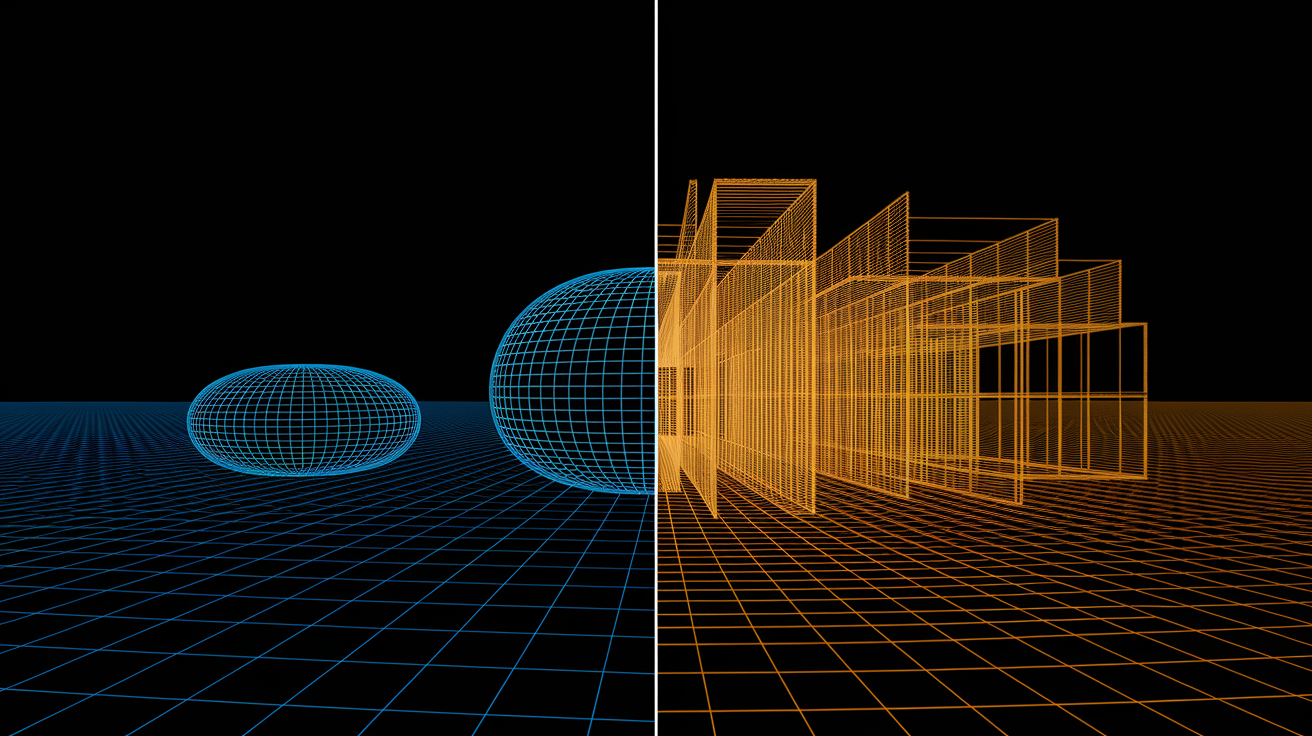
Llama 4 represents a generational leap in architecture, scale, and capability. Where Llama 3 relied on dense transformer layers, Llama 4 introduces Mixture of Experts to reduce inference cost while increasing total model capacity. This shift allows Llama 4 to match or exceed Llama 3’s flagship models in quality while using fewer active parameters per forward pass. Context length has expanded dramatically. Llama 3 supported up to 128,000 tokens in its largest variants, while Llama 4 Scout reaches 10 million tokens and Maverick handles 1 million.
Training data scale also doubled. Llama 3 was pre-trained on approximately 15 trillion tokens. Llama 4’s corpus exceeded 30 trillion tokens with significantly more multilingual coverage and domain-specific data. Safety and alignment pipelines were redesigned for Llama 4, incorporating online reinforcement learning with adaptive prompt filtering and dynamic data pruning. Meta reports that Llama 4 reduces politically biased responses by half compared to Llama 3.3, while cutting refusal rates on debated topics from 7 percent to below 2 percent.
| Category | Llama 3 | Llama 4 |
|---|---|---|
| Architecture | Dense transformer | Mixture of Experts (MoE) with alternating dense and routed layers |
| Maximum context length | 128,000 tokens | 10,000,000 tokens (Scout); 1,000,000 tokens (Maverick) |
| Pre-training data scale | ~15 trillion tokens | >30 trillion tokens; 100+ languages with >1B tokens each |
| Multimodal support | Text only (separate vision models) | Native text, image, video fusion in unified backbone |
| Safety and bias metrics | 7% refusal on debated topics; higher political lean | <2% refusal; ~50% reduction in strong political lean vs Llama 3.3 |
Practical Use Cases and Industry Impact

Llama 4’s expanded context and improved reasoning unlock applications previously out of reach for open models. Enterprises are deploying Scout for ultra-long-context tasks such as summarizing entire codebases, extracting insights from hundreds of documents in a single pass, and performing “retrieval needle-in-haystack” searches across massive knowledge bases. Meta highlighted one customer automating extraction from more than 1,000,000 files per day using Llama 4’s batch inference capabilities, exceeding accuracy targets after fine-tuning on domain-specific labeled data.
Maverick targets high-quality multimodal assistants and cross-lingual workflows. Early adopters report using Maverick for customer support copilots that handle text and image queries simultaneously, code generation with visual context (screenshots, diagrams), and training simulators that combine conversational AI with scenario-based image inputs. The model’s strong performance on reasoning benchmarks makes it suitable for regulated industries like healthcare, finance, and legal, where accuracy and explainability are critical. One crisis-intervention organization deployed a fine-tuned Llama 4 classifier to triage incoming messages, reporting improved response times and reduced burden on human operators.
Behemoth, though not yet publicly released, is being used internally for codistillation to improve Scout and Maverick. Meta’s approach of training a very large teacher model and using it to raise the quality of smaller deployable models is accelerating iteration cycles and reducing the need for extensive labeled datasets. This “teach down” strategy is becoming a common pattern in enterprises that need to balance cutting-edge quality with practical deployment constraints.
Leading sectors adopting Llama 4:
- Software development and DevOps: Codebase analysis, automated documentation, multi-file refactoring, and bug detection using 10M-token context.
- Enterprise automation and knowledge work: Document summarization, contract review, regulatory compliance checks, and cross-lingual content generation.
- Customer support and conversational AI: Multimodal copilots that handle text, image, and video inputs. Real-time translation and sentiment analysis across 100+ languages.
- Research and data science: Long-form reasoning over scientific papers, batch processing of experimental logs, and hybrid text-vision analysis for medical imaging or remote sensing.
Expert Commentary and Community Reactions

Early responses from the AI research and developer communities highlight Llama 4’s competitive positioning against proprietary frontier models. Experts note that Meta’s decision to release models with 400 billion total parameters (Maverick) and 10 million token context (Scout) as open weights represents a major milestone in closing the gap between open and closed ecosystems. Several researchers praised the MoE architecture for democratizing access to large-scale models, pointing out that inference costs comparable to much smaller dense models make Llama 4 viable for startups and academic labs with limited budgets.
Community reaction has focused on the speed of Meta’s iteration cycle and the breadth of improvements in a single release. Developers expressed enthusiasm for the unified multimodal capabilities, calling them a “game changer” for applications that previously required stitching together separate vision and language models. The expanded multilingual support (particularly the depth of training data for 100+ languages) was welcomed by teams building products for global markets. Some early adopters flagged the lack of published pricing and detailed benchmark tables in the initial announcement, requesting more transparency around inference costs and hardware requirements for different deployment scenarios.
Recurring themes in expert and community feedback:
- Competitive quality at lower cost: Maverick’s 17B active parameters deliver GPT-4o-class performance with significantly reduced inference expense, making frontier-tier output accessible to smaller organizations.
- Open ecosystem momentum: Meta’s continued investment in open-weight releases strengthens the argument for transparency, customization, and vendor independence in AI deployments.
- Rapid progress and iteration: The leap from Llama 3 to Llama 4 in less than a year underscores the accelerating pace of model development and the pressure on proprietary vendors to justify closed approaches.
Final Words
In the action, Meta unveiled Llama 4: a faster, safer open model with a larger context window, stronger reasoning, and a staged rollout for researchers, developers, and enterprises.
We ran through specs, benchmark gains over Llama 3, licensing updates, API changes, and real-world use cases like code generation and multilingual work.
If you’re tracking the meta llama 4 announcement, read the API docs, try the research release, and start planning integrations. It’s a solid, practical step forward with more tools likely to follow.
FAQ
Q: Did Meta release Llama 4?
A: Meta officially announced Llama 4; it’s available now to researchers, with a phased developer API and a later enterprise rollout per Meta’s announcement.
Q: How much is Llama 4 Meta?
A: Meta hasn’t published a single retail price; researcher access is under Meta’s permissive terms, while API and enterprise use will involve licensing or fees set by agreement.
Q: Is Meta AI Llama 4 safe?
A: Llama 4 includes enhanced safety training and refined alignment, but no model is risk-free; follow Meta’s usage policies, monitor outputs, and use safety controls in production.
Q: What’s Meta AI with Llama 4?
A: Meta AI with Llama 4 is Meta’s next-generation open model family, offering improved reasoning, larger context windows, upgraded architecture, and tools for researchers, developers, and enterprises.