
Claude 3.5 Sonnet isn’t the newest AI model anymore, but it’s still one of the most practical. Released in July 2024, it runs twice as fast as its predecessor while handling complex reasoning, code generation, and document analysis in one package. The catch? It’s slower than competitors on simple tasks and costs more per token. This breakdown covers what the model actually does well, where it falls short, and whether the trade-offs make sense for your work. No hype, just benchmarks, pricing, and real-world performance data.
Understanding Claude 3.5 Sonnet: AI Model or Poetry Generator?

Claude 3.5 Sonnet is an AI model in Anthropic’s three-tier lineup. It’s not a poetry tool. The “Sonnet” name just marks where it sits: between Haiku (fastest, leanest) and Opus (most powerful, biggest). It launched July 9, 2024, running twice as fast as Claude 3 Opus while getting smarter on reasoning tasks.
The name describes positioning, not what it does best. Sure, Claude 3.5 Sonnet can write sonnets. And haiku. And free verse. But that’s just one thing it handles. Code generation, data crunching, image analysis, business writing… it does all of that too.
If you’re after technical specs, benchmarks, and deployment details, check the sections below. For poetry and creative writing stuff, jump to the Natural Language and Content Generation Capabilities section. That’s where sonnet writing gets covered alongside everything else the model creates.
Technical Specifications and Deployment Options
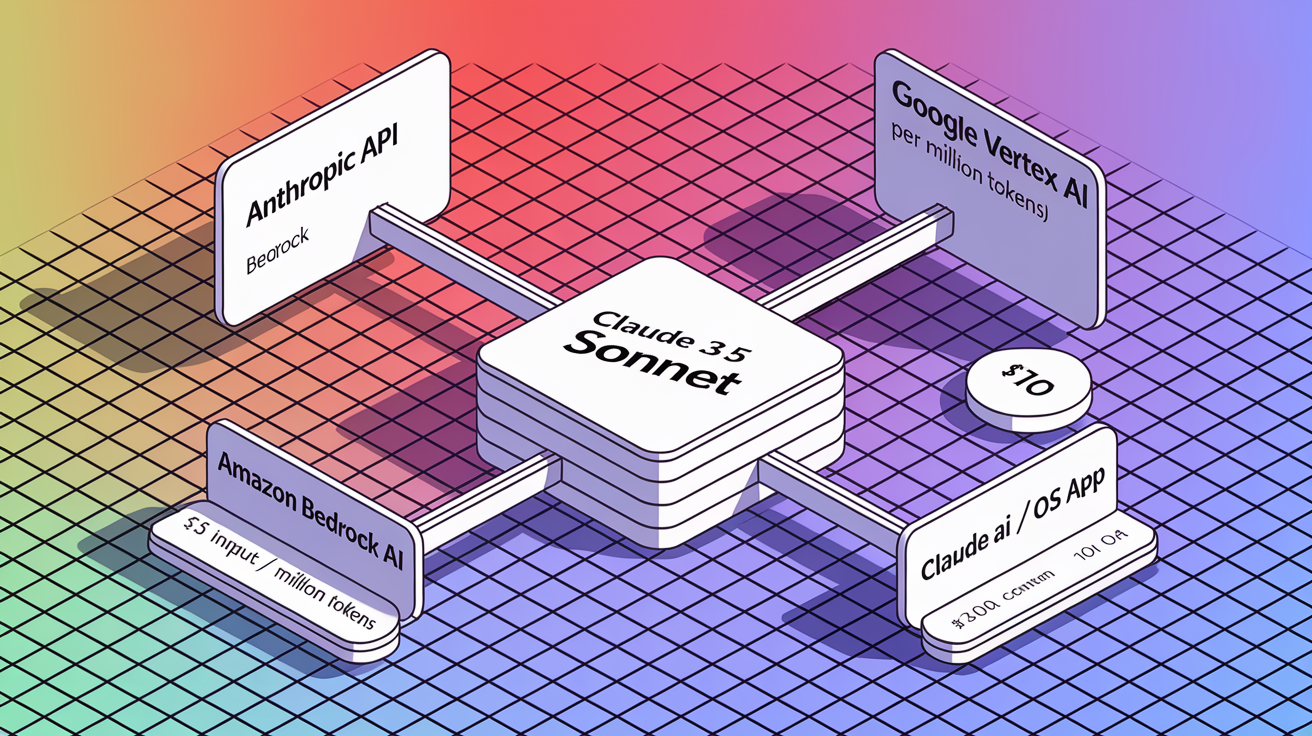
Claude 3.5 Sonnet dropped on July 9, 2024, doubling the speed of Claude 3 Opus without losing reasoning quality. It sits right in the middle of Anthropic’s range, splitting the difference between performance and efficiency. Anthropic built it using Constitutional AI, which earned it an ASL-2 risk label. And they don’t train on your data unless you explicitly say yes.
The model handles a 200,000 token context window. That means you can throw entire documents at it in one go. You can access it through the Anthropic API, Amazon Bedrock, or Google Cloud Vertex AI. Vertex AI gives you access to over 160 models and connects to Google Cloud Marketplace, so you can use existing cloud credits. Each platform provides API docs, sample notebooks, and setup guides.
Pricing works on tokens: $3 per million input tokens, $15 per million output tokens. You can grab provisioned throughput if your workload’s predictable, or go pay-as-you-go if demand bounces around. Either way, the per-token rate stays the same. You just get different capacity guarantees.
Free access exists through Claude.ai and the Claude iOS app, with basic rate limits. Pro and Team Plan subscribers get higher limits for heavier use. Enterprise setups through API, Bedrock, or Vertex AI get custom limits based on what you provision or what tier you’re on.
| Deployment Platform | Access Method | Pricing Model | Additional Features |
|---|---|---|---|
| Anthropic API | Direct API integration | $3 input / $15 output per million tokens | Full feature access, custom rate limits |
| Amazon Bedrock | AWS console, SDK, CLI | Pay-as-you-go or provisioned | ~50 requests or 400K tokens/minute limits |
| Google Cloud Vertex AI | Model Garden, API | Cloud Marketplace billing | Access to 160+ models, spend commitment draw-down |
| Claude.ai / iOS App | Web interface, mobile app | Free tier available | Pro/Team plans with higher rate limits |
Intelligence Benchmarks and Reasoning Performance

Claude 3.5 Sonnet hit 59.4% on GPQA graduate-level reasoning tests. GPT-4o got 53.6%. On BIG-Bench-Hard reasoning evals, it scored 93.1%. The 57-subject MMLU test (undergraduate knowledge across disciplines) came back at 90.4%. These numbers show consistent strength on abstract thinking, reading comp, and domain-specific problem solving.
Math results are mixed. Grade-school problems? The model crushed GSM8K at 96.4%, handling multi-step arithmetic and word problems without breaking a sweat. Advanced problem solving on the MATH benchmark? It scored 71.1% against GPT-4o’s 76.6%. That’s a 5.5 point gap on the hard stuff.
Programming benchmarks show Claude 3.5 Sonnet’s strongest edge. It leads GPT-4o by 5 points and Gemini by 36 points across coding tests. HumanEval Python function tests came back at 92.0%. SWE-bench Verified (real-world coding tasks) hit 49%. Internal agentic coding evals showed 64% problem resolution compared to Claude 3 Opus’s 38%.
Response time averages about 14 seconds per request. That’s way slower than GPT-4o’s 0.40 seconds (155 tokens per second). But there’s a reason for it. The model runs self-correction processes, sometimes churning through over 100 reasoning steps when first attempts fail. That extended thinking improves accuracy on complex tasks. It also slows down everything else.
| Benchmark | Claude 3.5 Sonnet | GPT-4o | Gemini 1.5 Pro |
|---|---|---|---|
| GPQA (graduate reasoning) | 59.4% | 53.6% | Not disclosed |
| BIG-Bench-Hard | 93.1% | Not disclosed | Not disclosed |
| GSM8K (math) | 96.4% | Not disclosed | Not disclosed |
| MATH (advanced math) | 71.1% | 76.6% | Not disclosed |
| HumanEval (Python) | 92.0% | ~87% (estimated) | ~56% (estimated) |
Code Generation and Programming Support Features

Claude 3.5 Sonnet scored 92.0% on HumanEval Python function tests. That means it reliably turns natural language into working code. On SWE-bench Verified (real GitHub tasks like bug fixes, feature adds, refactoring), it completed 49% of challenges. Internal agentic coding evals showed 64% success on multi-step programming problems without human help. Claude 3 Opus only hit 38%. That 26 point jump comes from better debugging logic, cleaner API usage, and stronger ability to track context across big codebases.
GitLab integrated Claude 3.5 Sonnet into dev workflows and measured up to 10% better reasoning quality on code review tasks. No performance slowdown either. The model handles Python, JavaScript, TypeScript, Java, C++, and Go. It writes technical docs, analyzes errors, and debugs through conversation. That 5 point lead over GPT-4o and 36 point lead over Gemini makes it the strongest general-purpose coding assistant among current frontier models.
| Benchmark Test | Claude 3.5 Sonnet Score | Performance Context |
|---|---|---|
| HumanEval (Python functions) | 92.0% | Highest among tested models |
| SWE-bench Verified | 49% | Real-world GitHub repository tasks |
| Internal agentic coding | 64% | 26-point improvement over Claude 3 Opus (38%) |
Vision and Multimodal Processing Capabilities

Claude 3.5 Sonnet beats Claude 3 Opus across standard vision benchmarks. Same architectural approach to multimodal processing, just better execution. It handles images, screenshots, diagrams, and PDF pages within that 200,000 token context window, treating visual stuff as part of document understanding instead of a separate thing.
Chart interpretation is a particular strength. The model pulls data points from bar graphs, line charts, scatter plots, complex visualizations. Then it calculates or summarizes based on what it sees. Charts with overlapping elements, partial labels, weird formatting… things that trip up other vision models don’t slow it down as much.
Text transcription from messy images improved noticeably over previous versions. Whiteboard photos, handwritten notes, low-res scans, compressed screenshots… it reads them. Tables buried in PDFs get extracted while keeping cell relationships and hierarchy intact. Diagram analysis covers flowcharts, architectural drawings, technical schematics. The model identifies components and explains how elements relate to each other.
Natural Language and Content Generation Capabilities

Perfect scores on clarity and logical structure doubled compared to previous versions. That’s from internal testing using blind comparisons. The model generates text that readers find easier to follow. Better paragraph transitions, more coherent arguments across multi-page outputs.
Handling vague business questions got way better. The model passed 78% of tests involving ambiguous requirements, incomplete specs, or requests missing clear parameters. It delivered twice as many perfect answers as earlier versions. Response time for these messy queries dropped 67%. What used to need multiple clarification rounds now gets usable first drafts without extra prompting.
Creative writing includes poetry and sonnet generation as part of the broader language toolkit. Ask it to “Write a Shakespearean sonnet about debugging code at 3 AM” and you’ll get 14 lines with correct rhyme schemes (ABAB CDCD EFEF GG) and iambic pentameter. It handles haiku, villanelles, free verse, prose poetry with similar structural accuracy. These creative functions sit alongside technical writing, business communication, analytical content.
The Sidecar team used Claude 3.5 Sonnet to draft new chapters for the second edition of their book Ascend while matching the first edition’s tone, structure, and terminology. The model analyzed existing chapters, then generated draft content following established style patterns. Real-world proof it can maintain consistency across long-form content spanning tens of thousands of words.
Summarization handles technical documents, research papers, legal texts, conversational transcripts. It extracts key points while keeping necessary context and qualifications instead of just grabbing high-frequency sentences from source material.
Extended Thinking Mode and Advanced Problem-Solving

Extended thinking mode lets Claude 3.5 Sonnet work through problems needing multiple reasoning steps before spitting out a final answer. The model processes over 100 internal reasoning steps when initial approaches fail, exploring alternative solution paths without you having to intervene. This isn’t simple retry logic. It maintains context about failed attempts and adjusts strategy based on which approaches hit dead ends.
Multi-step reasoning chains handle complex tasks: information gathering, intermediate calculations, validation checks, iterative refinement. The model stays coherent across these extended sequences, referencing earlier steps when making later decisions. Ask it to analyze a business scenario and it first identifies relevant factors, then evaluates each factor’s impact, then synthesizes findings into actionable recommendations. Each phase builds on previous conclusions.
Multi-step task completion rates range between 40-54% without human intervention, depending on complexity and domain. Simple workflows with clear success criteria (data formatting, content restructuring, straightforward analysis) trend toward the higher end. Tasks requiring domain expertise, ambiguous requirements, or multiple tools integration fall toward 40%. These autonomous completion rates represent the model’s ability to finish requested work from initial prompt to deliverable output without needing clarification or error correction from you.
Computer Use and Interface Interaction Features

Computer use mode is an experimental capability that lets Claude 3.5 Sonnet navigate interfaces and interact with documentation through generated actions. Announced October 22, 2024, this feature hit public beta for US customers on Google Cloud Vertex AI Model Garden.
The model generates keystrokes and mouse clicks to interact with user interfaces, turning natural language instructions into specific interface actions. Ask it to “find and open the settings menu” and it determines the click sequence needed, navigates nested menus, and locates target options. This extends to form filling, application navigation, and documentation lookup across desktop and web-based interfaces.
Current beta status means it’s still under active development with limited deployment recommendations for production systems. Anthropic and Google Cloud are collecting usage data to improve reliability and expand supported interaction patterns. The technology represents a step toward agentic AI that can complete workflows spanning multiple applications. Though autonomous task completion rates remain in that 40-54% range established for complex multi-step operations.
Artifacts Feature for Collaborative Workflows
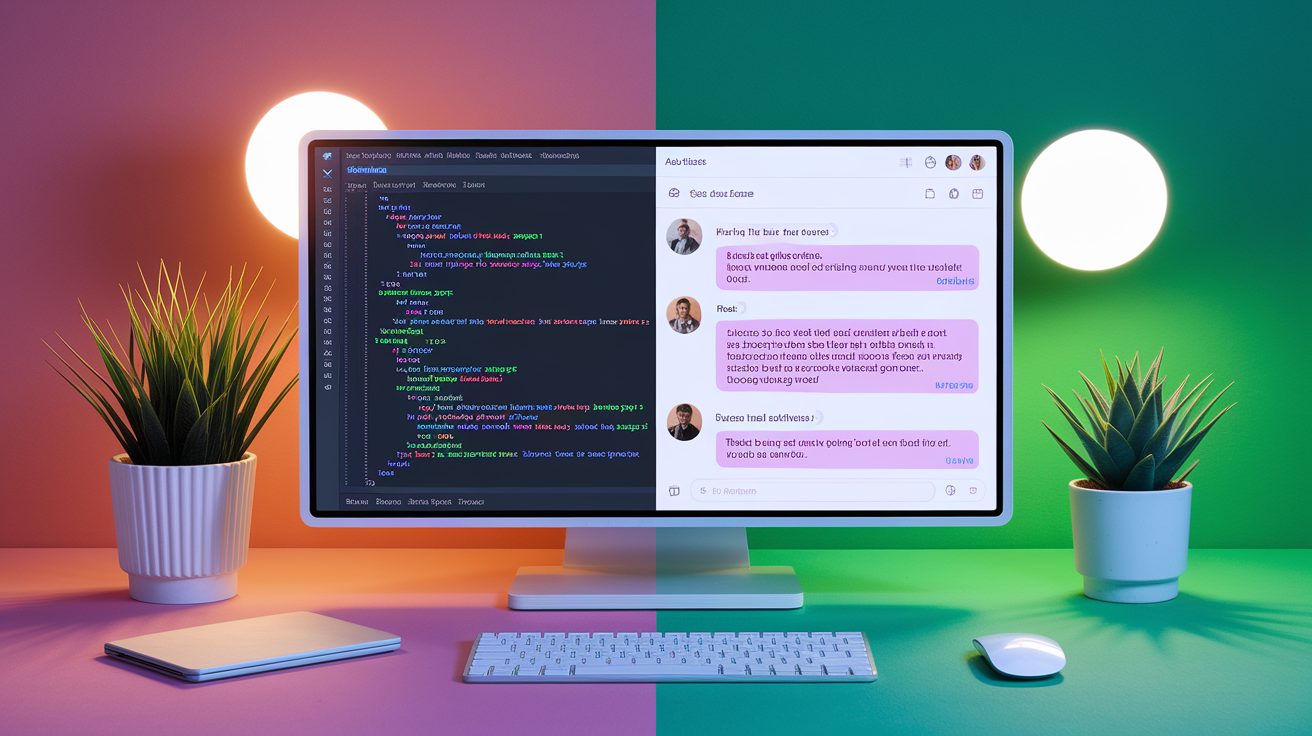
Artifacts create a separate workspace within the Claude interface where generated content appears in real time as the model produces it. You see code, documents, diagrams, or structured data materialize in an editable panel alongside the conversation thread. This separation lets you interact directly with AI outputs without searching through chat history or copying content between applications.
The edit-and-build functionality lets you modify generated content right in the Artifacts panel, then ask Claude to refine specific sections, add features, or adjust formatting based on the edited version. A developer might generate a Python script, edit variable names manually, then ask Claude to add error handling that accounts for the renamed variables. The model processes both the original generation and subsequent manual edits as context for follow-up requests.
Practical applications include iterative content development where outputs need multiple refinement cycles. Writers draft articles, edit paragraphs, then request rewrites of specific sections. Developers generate code scaffolding, modify function signatures, then ask for implementation details matching the updated structure. The collaborative workspace environment cuts friction in human-AI iteration by eliminating copy-paste workflows and maintaining clear context about which version of the content is current.
Business and Enterprise Applications of Claude 3.5 Sonnet
Enterprise adoption spans industries with measurable efficiency gains and expanded service capacity. Organizations deploy the model for automation, analysis, customer interaction, and specialized professional tasks.
Safety audit automation: AES energy company cut safety audit time from 10 hours to 3 minutes using Claude on Vertex AI, processing compliance documentation and identifying potential issues at 200x speed improvement.
Personal AI assistant services: BrainLogic AI serves millions of Latin Americans through the Zapia platform powered by Claude on Vertex AI, handling conversational interactions in Spanish and Portuguese.
Chat platform infrastructure: Quora facilitates millions of daily interactions through their Poe chat platform using Claude models on Vertex AI for natural language understanding and response generation.
Business intelligence processing: Organizations use the 200,000 token context window to analyze quarterly reports, competitive research, and market data in single sessions without document chunking.
Customer support automation: Companies deploy Claude for ticket categorization, response drafting, and knowledge base queries, handling 78% of vague or ambiguous customer questions that previously required human escalation.
Research assistance: Academic and corporate research teams use the model for literature review, data extraction from papers, and hypothesis generation across technical domains.
The improved handling of vague business questions represents particular value for enterprise deployments. Previous versions required extensive clarification before producing useful outputs when faced with incomplete requirements or fuzzy specs. Claude 3.5 Sonnet’s 78% pass rate and doubled perfect answer frequency reduce back-and-forth iterations in business communication, project planning, and strategic analysis tasks.
Known Limitations and Constraints of Claude 3.5 Sonnet
Understanding Claude 3.5 Sonnet’s constraints helps you set realistic deployment expectations and plan appropriate oversight.
Knowledge cutoff at April 2024: The model can’t access information about events, research, product releases, or policy changes after its training data endpoint. You’ll need external tools or retrieval augmented generation for current information.
Mathematical reasoning gap: Scores of 71.1% on the MATH benchmark trail GPT-4o’s 76.6%. That indicates weaker performance on advanced mathematical problem solving requiring complex symbolic manipulation or proof construction.
Response latency trade-offs: Average 14 second response time compared to GPT-4o’s 0.40 seconds makes the model less suitable for applications needing near-instant feedback, despite the reasoning quality improvements this extra processing time enables.
AWS Bedrock rate constraints: Approximately 50 requests or 400,000 tokens per minute limits throughput for high-volume applications without provisioned capacity arrangements.
Autonomous task completion ceiling: Multi-step completion rates of 40-54% without human intervention mean most complex workflows still need oversight, validation, or corrective guidance at multiple checkpoints.
These limitations carry practical implications. Applications requiring up-to-date information need integration with search APIs or knowledge bases. Math-intensive workflows may benefit from specialized tools or hybrid approaches using computational engines. Real-time applications should evaluate whether 14 second latency meets user experience requirements. High-throughput systems need capacity planning around platform rate limits. Complex automation projects should account for human-in-the-loop workflows rather than fully autonomous operation.
Safety Features and Data Privacy Protections
Claude 3.5 Sonnet carries an ASL-2 risk classification through Anthropic’s Constitutional AI approach, which embeds safety principles directly into training instead of applying filters after generation. The UK’s Artificial Intelligence Safety Institute and other external experts ran independent safety testing before release, evaluating potential risks across categories including harmful content generation, deceptive behavior, and dangerous capability development.
Anthropic doesn’t train models on user-submitted data without explicit permission. Conversations, uploaded documents, and API calls stay separate from training pipelines unless you opt in to data sharing programs. This privacy commitment addresses common enterprise concerns about proprietary information, customer data, and confidential business content entering model training sets.
Enterprise deployments get organization policy controls for model access management. Administrators set permission boundaries, define approved use cases, and monitor usage patterns across teams. These security features integrate with existing identity management systems through standard protocols, letting companies apply consistent access governance across AI tools and traditional software applications.
Final Words
Claude 3.5 Sonnet delivers measurable improvements across reasoning, coding, and vision tasks while maintaining Anthropic’s privacy-first approach.
The 200,000 token context window, multi-platform deployment options, and real-world performance gains (like AES cutting safety audits from 10 hours to 3 minutes) demonstrate practical value beyond benchmark scores.
Understanding claude 3.5 sonnet features helps you decide whether the speed-reasoning trade-offs fit your workflow, whether you’re automating research tasks, generating code, or processing complex documents.
The model’s limitations (April 2024 knowledge cutoff, 40-54% multi-step autonomy, math reasoning gap) matter just as much as its strengths when planning deployments.
FAQ
What are Claude 3.5 Sonnet’s key features?
Claude 3.5 Sonnet’s key features include a 200,000 token context window, 2x faster processing than Claude 3 Opus, strong coding capabilities with 92% on HumanEval tests, improved vision processing for charts and documents, and extended thinking mode for complex problem-solving.
What is Claude 3.5 Sonnet best for?
Claude 3.5 Sonnet is best for coding tasks, graduate-level reasoning challenges, visual document analysis, and complex multi-step problem solving where it demonstrates leadership over competing models like GPT-4o in programming benchmarks and reasoning tests.
What is the use of Claude 3.5 Sonnet?
Claude 3.5 Sonnet is used for software development, business intelligence, customer support automation, content creation, data analysis, and research assistance. Real applications include AES energy reducing safety audits from 10 hours to 3 minutes.
What are the benefits of Claude Sonnet?
The benefits of Claude Sonnet include twice the speed of Claude 3 Opus, enhanced reasoning with 93.1% on BIG-Bench-Hard tests, superior coding performance, improved vision capabilities, and flexible deployment across Anthropic API, Amazon Bedrock, and Google Cloud Vertex AI.
Can Claude 3.5 Sonnet write poetry and sonnets?
Claude 3.5 Sonnet can write poetry and sonnets as part of its creative writing capabilities, though the “Sonnet” name refers to its mid-tier model positioning between Haiku and Opus rather than indicating poetry specialization.
What is Claude 3.5 Sonnet’s context window?
Claude 3.5 Sonnet’s context window is 200,000 tokens, enabling comprehensive document processing, extended conversations, and analysis of lengthy materials without losing context or requiring content splitting across multiple requests.
How much does Claude 3.5 Sonnet cost?
Claude 3.5 Sonnet costs $3 per million input tokens and $15 per million output tokens. Free access is available on Claude.ai and the iOS app, with higher rate limits for Pro and Team Plan subscribers.
What are Claude 3.5 Sonnet’s limitations?
Claude 3.5 Sonnet’s limitations include an April 2024 knowledge cutoff, slower response times averaging 14 seconds versus GPT-4o’s 0.40 seconds, a mathematical reasoning gap on advanced problems, and 40-54% autonomous task completion rates.
Is Claude 3.5 Sonnet safe to use?
Claude 3.5 Sonnet is safe to use with an ASL-2 risk rating through Constitutional AI, external safety testing by the UK AI Safety Institute, and a commitment not to train on user data without explicit permission.
What platforms support Claude 3.5 Sonnet?
Platforms that support Claude 3.5 Sonnet include Anthropic API, Amazon Bedrock, and Google Cloud Vertex AI. Free access is available through Claude.ai and the Claude iOS app with paid tiers offering higher rate limits.