
What if the internet stopped being owned by a few big companies and became a place you actually control?
Web3 aims to do exactly that by moving your data, money, and digital stuff onto shared systems called blockchains, where ownership and rules are open and automatic.
That sounds technical, but the main idea is simple: you hold your keys, not a platform.
This post breaks Web3 down in plain terms—what it is, who benefits, the main risks, and the first steps to try it safely.
Simple Breakdown of Web3 for Beginners

Web3 tries to give you more control over your own stuff online. Instead of one big company storing your data and making all the rules, lots of computers run shared systems where you actually own your digital assets and get a say in decisions.
The internet didn’t just appear like this. Web1 ran from about 1991 to 2004 and was basically read-only static pages. Online brochures. Web2 showed up around 2004 and brought us interactivity and social media, but giant platforms ended up controlling your data and content. The term Web3 got popular in 2014 to describe a decentralized next web built on blockchain tech. Bitcoin launched in 2009 as the first major blockchain thing, and Ethereum followed on July 30, 2015, bringing programmable smart contracts that let you build more complex Web3 services.
Here’s one way to think about it: Web1 was a printed library where you could only read. Web2 became a big company mall where everyone sells and communicates, but the landlord owns the space and logs everything you do. Web3 is a cooperative town where residents jointly own and run the shops and services.
What makes Web3 different:
Ownership: You hold digital assets (tokens, data, content) yourself instead of letting a platform hold them for you.
Decentralization: Many computers validate actions instead of one central server calling the shots.
Transparency: Transactions and ownership records sit on shared ledgers anyone can see.
Programmable rules: Smart contracts automatically execute agreements when conditions are met.
Fewer gatekeepers: Not as many middlemen controlling access, payments, or what gets censored.
Here’s the shift:
Web1 (1991–2004)
[Static pages, read-only]
         ↓
Web2 (2004–present)
[Platform-owned services, interactive but centralized]
         ↓
Web3 (2014–present, growing)
[User-owned networks, decentralized ledgers]
Web Evolution Context Leading Toward Web3

Web1 had serious limitations for doing anything interactive. Early websites were basically catalogs. You could browse a company’s contact page or read articles, but you couldn’t comment, upload photos, or buy anything directly. Most people just consumed rather than contributed.
Web2 broke those barriers. Platforms like Facebook, YouTube, and Twitter let anyone publish content, comment, and build communities. But those platforms funded free services by collecting your data and selling ads. Over time, a handful of companies controlled massive amounts of personal information and wielded serious decision power over what content stayed visible. Users created value. Platforms captured most profits and control.
Web3 came up as blockchain technology matured. Bitcoin proved in 2009 that digital currency could work without a central bank, using a shared ledger maintained by thousands of independent computers. Ethereum’s 2015 launch added smart contracts, which meant automated agreements and decentralized apps. Developers saw a chance to rebuild services (messaging, finance, identity) on networks where no single company held master keys. The goal was returning ownership and decision rights to users.
Core Web3 Concepts Explained in Simple Terms

Understanding Web3 means getting a few building blocks that work together to create decentralized services.
Blockchain
A blockchain is a shared, tamper-evident list of records stored across many computers. When someone makes a transaction, the network agrees on it and adds a new block of data to the chain. Everyone keeps the same copy, so changing old records would require overpowering the majority of the network. Practically impossible on large blockchains.
Think of it as a public receipt book that dozens of people keep identical copies of. If one person tries to erase a line, everyone else’s copy still shows the original. Fraud gets caught immediately.
Smart Contracts
Smart contracts are code that runs automatically when set conditions are met. They live on a blockchain and execute agreements without a middleman. A smart contract might release payment to a supplier the moment a shipping sensor confirms goods arrived at a warehouse.
Key traits:
They execute transparently. Anyone can verify the code and the outcome.
No trust required in a third party. The contract itself enforces rules.
They let you build complex services like lending, insurance, and voting without centralized administrators.
Cryptocurrencies and Tokens
Cryptocurrencies like Bitcoin and Ether are digital money native to blockchains. You can send them peer to peer without banks. Tokens are broader. They can represent currency, but also access rights, voting power, or ownership of a digital item.
Holding a governance token might let you vote on how a community fund gets spent. Holding an NFT token proves you own a specific digital artwork or in-game item.
DAOs (Decentralized Autonomous Organizations)
DAOs are groups that manage projects or funds using token-based voting and rules encoded in smart contracts. Members propose actions (spend treasury funds, change a protocol fee) and token holders vote. The smart contract automatically executes approved decisions.
Examples:
A community treasury funding open-source development, voted on by token holders.
An NFT collector group pooling money to buy rare digital art.
A decentralized finance protocol where users vote on interest rates and feature upgrades.
Real-World Web3 Examples and Everyday Use Cases
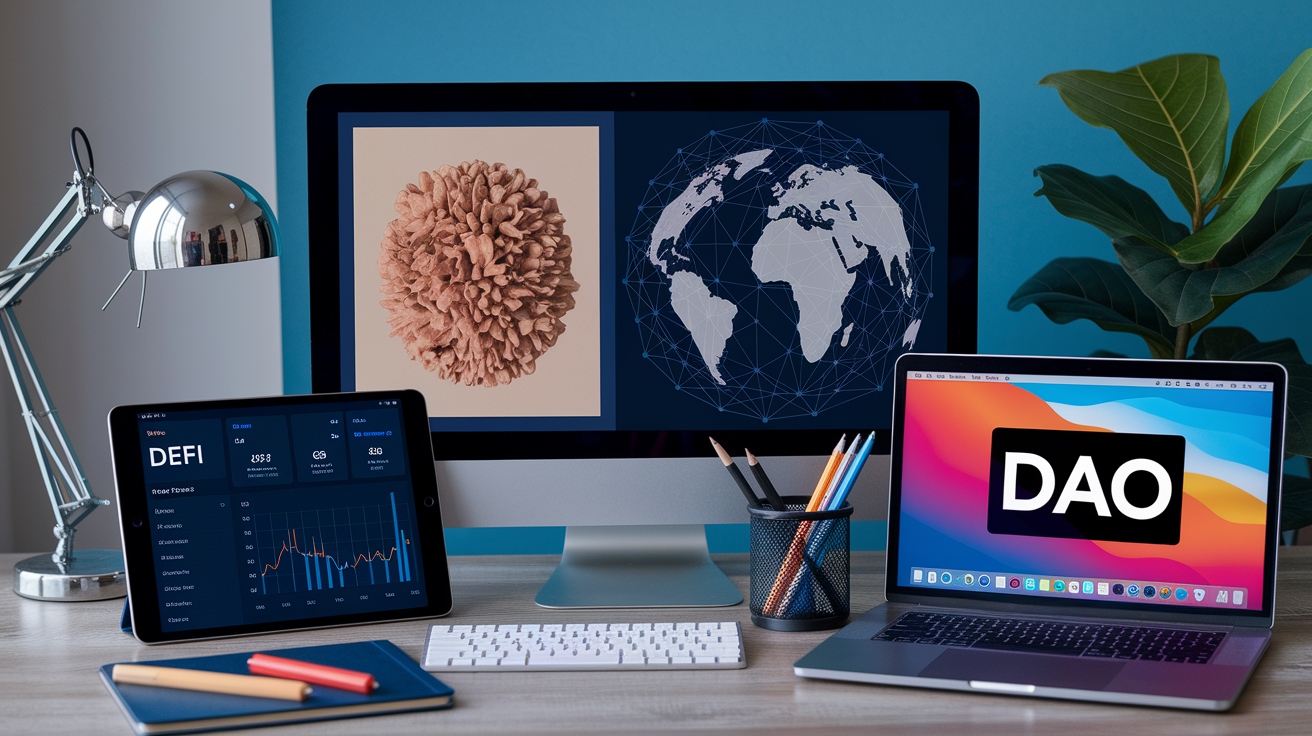
Web3 isn’t just theory. Projects using blockchain and tokens are live today, handling real money and real users. Mainstream adoption is still growing, though.
Decentralized finance (DeFi) lets people lend, borrow, and trade cryptocurrencies without banks. Smart contracts automate loan terms and collateral checks. Another major area is digital art and collectibles. NFTs (non-fungible tokens) give provable ownership of unique digital items. In March 2021, a digital artwork sold as an NFT for $69,346,250. That showed blockchain-based ownership records can carry serious market value. Gaming projects issue in-game assets as tokens that players truly own and can trade or move across compatible games.
Other use cases span identity, supply chains, and community governance. Self-sovereign identity systems let users control personal credentials without relying on a single ID provider. Supply-chain tracking records every step of a product’s journey on an immutable ledger, useful for verifying authenticity or ethical sourcing. DAOs coordinate communities and allocate funds transparently.
Practical examples in action:
DeFi lending platforms: users deposit crypto to earn interest or borrow against collateral, all via smart contracts.
NFT marketplaces: artists mint unique digital pieces. Buyers get blockchain proof of ownership.
Decentralized storage: services like Filecoin split files across many nodes, reducing reliance on one cloud provider.
Community treasuries: DAOs vote to fund grants, events, or protocol improvements.
Tokenized real-world assets: experiments tokenizing real estate shares or winery memberships.
Play-to-earn games: players earn tokens that have market value outside the game.
Fresh Analogies and Simple Visuals to Understand Web3

Another way to picture Web3: imagine a neighborhood park maintained by a homeowners association. In Web2, one large company owns the park, sets all rules, and collects fees. The company can change access policies or raise prices whenever it wants. In Web3, the park is cooperatively owned by everyone who holds a membership token. Decisions about new playground equipment or entry rules get voted on by token holders, and the results are enforced by transparent, automated systems no single person controls.
Or think of Web3 as moving from renting an apartment (Web2) to owning shares in a housing cooperative. In the rental model, the landlord can sell the building or change terms. In the co-op model, you and fellow residents collectively decide the building’s future and share any value created.
Here’s a simple visual showing the structural shift:
┌────────────┐         ┌─────────────────┐         ┌──────────────────┐
│   Web1     │   -->   │      Web2       │   -->   │      Web3        │
│ Static     │         │  Interactive    │         │  Decentralized   │
│ Pages      │         │  Platform-owned │         │  User-owned      │
│ (read)     │         │  (centralized)  │         │  (blockchain +   │
│            │         │                 │         │   smart contracts)│
└────────────┘         └─────────────────┘         └──────────────────┘
Benefits of Web3 in Plain Language

Web3’s biggest promise is giving users direct control over their data and digital assets. When you own tokens or data on a blockchain, no single company can freeze your account, delete your content, or change terms arbitrarily. You carry your identity, money, and digital goods across services without asking permission.
Another advantage is transparency. Every transaction gets recorded on a public ledger, so ownership and history are verifiable by anyone. That openness can reduce fraud and increase trust in systems where participants don’t know each other personally. Programmable smart contracts automate agreements reliably, cutting out middlemen and their fees.
Key benefits:
Greater user control: you hold private keys that prove ownership. Platforms can’t unilaterally revoke access.
Censorship resilience: decentralized networks are harder to shut down or censor by any single authority.
Transparent ownership: blockchain records show clear asset history and provenance.
New business models: creators can earn directly from supporters via tokens, skipping ad-driven revenue.
Web3 Limitations, Challenges, and Risks for Beginners

Web3 has real drawbacks every beginner should understand before committing time or money. Cryptocurrency markets are volatile. Prices can swing by double-digit percentages in a single day, and the overall crypto market peaked near $3 trillion in late 2021 before falling sharply. That volatility makes planning and budgeting difficult.
Security is another major concern. Bugs in smart contracts have caused multimillion-dollar losses when attackers exploited code flaws. Scams are common: fake projects, phishing attacks, and rug pulls (where developers abandon a project and take investor funds) happen regularly. If you lose your private key or send tokens to the wrong address, there’s often no customer service to reverse the mistake.
Regulation remains uncertain. Many countries haven’t decided how to treat crypto assets, DAOs, or NFTs legally, so rules can change suddenly and affect access or tax treatment. Usability is still hard for non-technical users. Managing wallets, understanding gas fees, and securing seed phrases require more caution than logging into a website with a password reset option.
| Risk | Description |
|---|---|
| Price volatility | Crypto values can drop or spike rapidly, making financial planning unpredictable. |
| Scams and fraud | Fake tokens, phishing sites, and fraudulent projects are widespread. Losses are often unrecoverable. |
| Smart contract bugs | Code flaws can be exploited, draining funds from protocols or user wallets. |
| Regulatory uncertainty | Laws vary by country and can change quickly, affecting legal protections and tax obligations. |
How to Safely Start Exploring Web3

If you want to try Web3, start small and focus on learning over earning. Set up a cryptocurrency wallet (software that stores your private keys and lets you interact with blockchains). Popular beginner-friendly wallets include browser extensions and mobile apps that guide you through creating a seed phrase (a secret list of words that restores your wallet). Write that seed phrase on paper and store it securely offline. Losing it means losing access forever.
Before using real money, experiment with test networks that use fake tokens. Many blockchains offer testnets where you can practice sending transactions and using decentralized apps without financial risk. When you’re ready to use actual funds, start with tiny amounts. Enough to learn the process, not enough to hurt if something goes wrong. Stick with projects that have been audited by reputable security firms and verified by active communities.
Safe first steps with a simple dApp:
- Install a wallet: download a trusted wallet (for example, MetaMask for Ethereum), create a new wallet, and securely store your seed phrase offline.
- Get testnet tokens: use a faucet website to receive free test tokens on a blockchain testnet (for example, Goerli or Sepolia for Ethereum).
- Connect to a dApp: visit a simple decentralized app, click “Connect Wallet,” and approve the connection in your wallet extension.
- Try a small action: swap a tiny amount of test tokens or mint a test NFT to see how transactions confirm on the blockchain.
- Review transaction history: check a blockchain explorer (a website that displays all transactions) to see your activity recorded publicly and verify everything worked as expected.
Final Words
Jumping straight in: this post gave a one-sentence Web3 definition, a short Web1→Web2→Web3 timeline, and a beginner-friendly analogy plus an ASCII visual.
We also unpacked blockchain, smart contracts, tokens and DAOs, showed real-world use cases and benefits, and covered risks and safe first steps.
If you still ask what is web3 explained simply, use this guide as a checklist—start small, prefer audited projects, and keep experimenting. It’s approachable, and worth exploring.
FAQ
Q: What is Web3 in layman’s terms?
A: Web3 in layman’s terms is the internet where users own and control data and services via blockchains instead of big companies; it uses tokens and smart contracts to run decentralized applications and governance.
Q: What does Elon Musk think of Web3?
A: Elon Musk has given mixed views on Web3, praising decentralization while criticizing some crypto projects and NFTs; his comments change over time, so check his latest tweets or interviews for updates.
Q: Will AI replace Web3?
A: AI will not replace Web3; they serve different roles and can complement each other—AI automates and analyzes, while Web3 focuses on decentralized ownership, trust, and programmable money.
Q: Is Bitcoin a Web3?
A: Bitcoin is an early decentralized cryptocurrency that helped spark the Web3 idea, but Web3 also includes smart-contract platforms, tokens, DAOs and broader user-owned services beyond Bitcoin’s payment focus.