Most people think Google started the moment they first used it. But the search engine that now handles 8.5 billion queries daily didn’t appear overnight. Google officially launched on September 4, 1998, when Larry Page and Sergey Brin incorporated their Stanford research project into a real company. That date marks when a garage startup began its path to processing 40,000 searches per second and holding 92% market share. Here’s the full timeline of how two PhD students turned a project called BackRub into the verb we use daily.
Google Search Engine Launch Date and Timeline
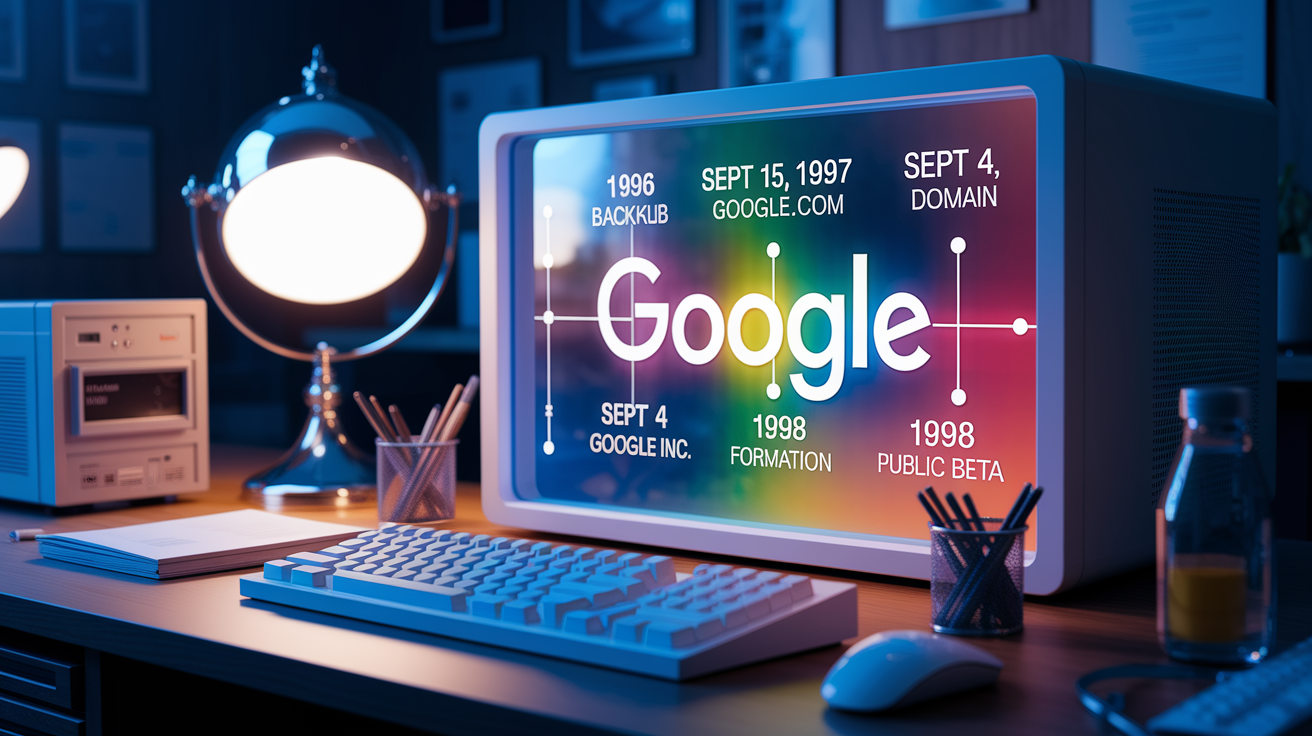
Google Inc. officially incorporated on September 4, 1998, in Menlo Park, California. That’s when Larry Page and Sergey Brin turned their research project into an actual company. But the story started earlier, back when they were PhD students at Stanford.
Here’s how it unfolded:
1996 – BackRub research project starts at Stanford. It launched for Stanford users in August.
September 15, 1997 – The google.com domain gets registered. Goodbye BackRub, hello Google.
September 4, 1998 – Google Inc. becomes a real company in Menlo Park, California.
1998 – The search engine goes into public beta. Now anyone could use it, not just Stanford people.
Page and Brin met as grad students at Stanford in California. Page had been exploring the mathematical properties of the World Wide Web since 1995 for his dissertation. Brin joined him as things developed.
The search engine went public in 1998 after two years of work at Stanford. September 4, 1998 is when Google stopped being an academic project and became a commercial venture, ready to compete in the internet search market.
Origins and Founding: From BackRub Research to Google Inc.

Larry Page started researching the mathematical properties of the World Wide Web in 1995 while working on his dissertation at Stanford. He wanted to understand how web pages connected to each other and what those connections revealed about page importance.
Sergey Brin joined Page’s research during their concurrent PhD programs at Stanford. Together they built a project nicknamed BackRub that studied web page backlinks as a way to determine search relevance. When the search engine first launched for Stanford users in August 1996, there were about 10 million documents on the Web.
The technology behind their research was PageRank, a link analysis algorithm that figured out individual web page value based on how many links pointed to each page and the quality of those links.
The project moved beyond Stanford on September 15, 1997, when someone registered the domain google.com. The name change from BackRub to Google came from googol, a math term for the number 1 followed by 100 zeros. It reflected what the founders wanted to do: organize massive amounts of information.
Google Inc. officially incorporated on September 4, 1998, in Menlo Park, California. The founders worked from a garage at Susan Wojcicki’s place, raising about $1 million in initial funding from family, friends, and investors like Andy Bechtolsheim. A year after the 1998 launch, Google got $25 million in venture capital. The mission was to organize the world’s information and make it universally accessible and useful.
PageRank Technology and Search Innovation

PageRank was the revolutionary algorithm that powered Google’s search engine at launch. It fundamentally changed how search engines evaluated web pages.
Key PageRank features included:
Democratic link voting – The algorithm counted each link to a page as a vote for that page’s importance, making web ranking more democratic than manual curation.
Authority weighting – Links from authoritative pages carried more weight than links from random sites, creating a quality hierarchy.
Objective measurement – PageRank provided mathematical objectivity compared to human curated directories like Yahoo that relied on editors.
Scalable automation – The algorithm enabled automated indexing that could grow with the Web without needing more human effort.
Continuous improvement – Mathematical analysis let the system refine search accuracy automatically as the Web expanded.
PageRank gave Google a competitive edge over existing search engines that relied mainly on keyword density and manual curation. While competitors like AltaVista and Lycos counted how many times keywords appeared on a page, Google analyzed the link structure of the entire Web to determine authority and relevance. This was a breakthrough in search technology that could scale with explosive web growth, processing relationships between millions of pages instead of just analyzing individual page content.
Growth and Market Position: From Startup to Search Leader

Google entered a crowded search engine market in 1998, competing against established players like Yahoo, AltaVista, Lycos, and Excite who dominated internet search during the dot-com era. Yahoo had the largest user base as a portal and directory service. AltaVista had built a reputation for comprehensive indexing. Lycos attracted users with a full featured web portal.
Despite launching years after these competitors, Google’s superior PageRank technology created immediate differentiation. The company processed just 500,000 queries daily in 1999, one year after launch. But users quickly recognized the relevance advantage. The clean interface and accurate results drove rapid adoption even though competitors had larger marketing budgets and established user bases.
Query volume growth showed explosive user adoption as word spread about search quality.
The numbers moved from 500,000 daily queries in mid 1999 to 200 million by 2003-2004, just five years after launch. By 2011, the volume reached 3 billion daily searches. By 2023, Google processed 8.5 billion searches per day. This growth reflected not just internet expansion but Google capturing market share from competitors. The company achieved and maintained over 88% market share starting in January 2009, growing to 92% by June 2023. Venture capital firms recognized this momentum, fueling continued investment in infrastructure and technology development that widened the competitive gap.
| Year | Daily Search Queries | Market Position |
|---|---|---|
| 1999 | 500,000 | Emerging competitor |
| 2003 | 200 million | Growing leader |
| 2004 | 200 million | Strengthening position |
| 2009 | Data not specified | 88% market share achieved |
| 2011 | 3 billion | Dominant leader |
| 2023 | 8.5 billion | 92% market share |
Early Google Search Design and User Experience
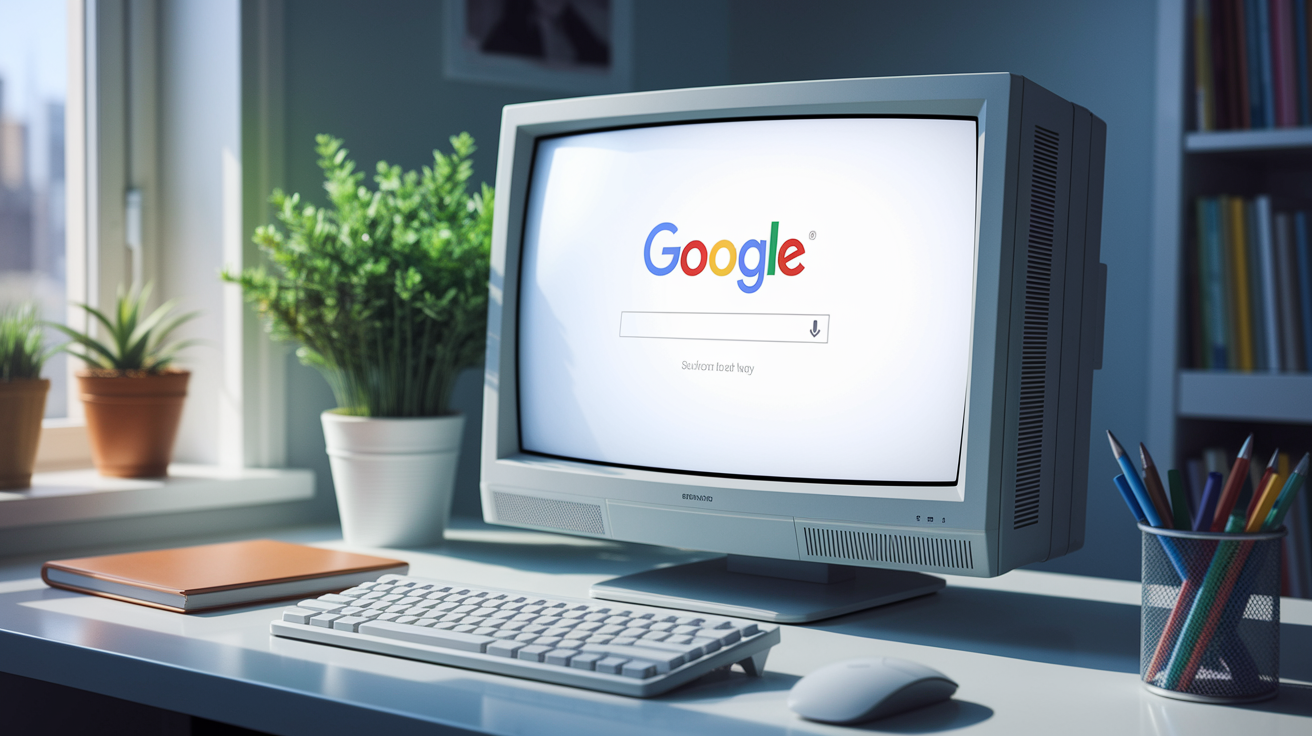
Google’s homepage featured a minimalist design with just the search bar and logo centered on a white background.
This simplicity contrasted sharply with the cluttered portal pages of Yahoo, Excite, and other competitors in 1998. Those sites packed their homepages with news headlines, weather widgets, stock quotes, email links, directory categories, and banner advertising. Busy interfaces slowed loading times on dial-up connections. Google’s clean design focused user attention entirely on search and loaded almost instantly even on slow modems. The absence of distracting content signaled a different priority compared to competitors who tried to keep users on their sites as long as possible.
The first Google Doodle appeared in August 1998 for the Burning Man Festival, adding personality to the minimalist design while keeping the core simplicity. The emphasis on search accuracy and relevance over advertising and content aggregation set the user experience apart from portal style competitors. This design philosophy contributed directly to user adoption. People discovered they could find information faster without navigating through multiple categories or sponsored listings. It created a lasting brand signature that persists in today’s Google homepage.
Google Search Launch Impact on Internet Search History

The 1998 launch of Google marked a pivotal moment in internet search history during the dot-com boom, when hundreds of startups competed for attention and venture capital. Google’s approach fundamentally changed user expectations for search engines by prioritizing relevance and accuracy over portal features, news aggregation, and directory browsing that competitors emphasized.
The evolution from competitor to search industry leader happened within just a few years as users experienced the quality difference.
Current statistics demonstrate unprecedented reach that transformed Google from a search engine into essential internet infrastructure. The platform serves 4.3 billion users out of 4.72 billion total internet users globally, processing 40,000 queries per second and totaling 3.5 billion daily searches. Google holds approximately 83% of global desktop search market share as of July 2023. Notably, 71% of British users believe Google delivers more relevant results than competitors, showing sustained quality perception 25 years after launch. The 1998 innovations in PageRank technology and user focused design created lasting search dominance that influenced digital transformation across industries from advertising to e-commerce to research. The search engine became so synonymous with internet search that “google” entered dictionaries as a verb. People say “I’ll google that” regardless of which search engine they actually use.
Key Milestones After Google Search Engine Launch
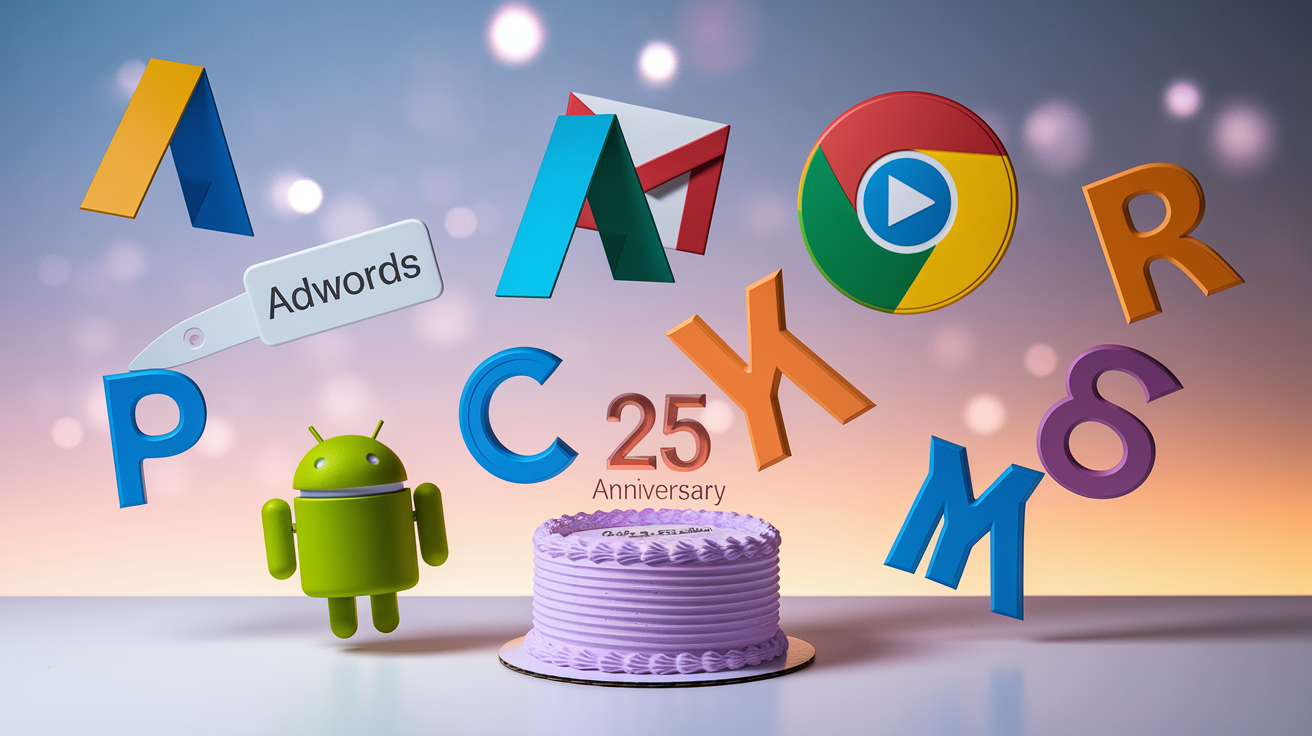
Google expanded rapidly beyond search after the 1998 launch, evolving from a single product search engine into a diversified technology company spanning advertising, communication, video, mobile, and hardware.
Major milestones that shaped the company’s trajectory:
October 23, 2000 – AdWords launched as the first self-serve online advertising platform, creating the revenue model that would fund expansion into other products.
April 1, 2004 – Gmail announced with 8 billion bits of storage capacity, offering 100 times more space than competitors Yahoo and MSN.
August 19, 2004 – Google went public through an IPO on NASDAQ, raising $1.67 billion and achieving a $23 billion valuation.
November 2006 – YouTube acquisition expanded Google into video content and streaming.
September 2, 2008 – Chrome browser launched, entering the competitive browser market against Internet Explorer, Firefox, and Safari.
September 23, 2008 – Android operating system released, establishing Google in mobile operating systems.
August 2015 – Alphabet Inc. restructuring created a parent company structure separating core Google business from experimental ventures.
September 2023 – The company celebrated its 25th anniversary since incorporation.
These milestones connected directly to the foundation established with the 1998 search engine launch. Search remained the core product and primary revenue driver through advertising. But the company diversified into complementary technologies that extended its reach across devices, platforms, and user activities beyond the initial web search functionality.
Final Words
Google officially launched its search engine when the company incorporated on September 4, 1998, but the journey started years earlier at Stanford University.
From a 1996 research project called BackRub to 8.5 billion daily searches in 2023, the timeline shows how PageRank technology and minimalist design transformed internet search.
The founders built something that scaled from 500,000 daily queries in 1999 to global dominance with 92% market share today.
Understanding when Google launched the search engine helps explain why it became the verb we use for finding anything online.
FAQ
What is the oldest search engine in the world?
The oldest search engine in the world is Archie, which launched in 1990 at McGill University to index FTP archives. Before the web-based search engines we know today, Archie helped users locate specific files across internet servers by creating searchable databases of filenames.
What was Google called before 1998?
Google was called BackRub before 1998. Larry Page and Sergey Brin originally named their Stanford University research project BackRub in 1996 because it analyzed web page backlinks to determine relevance. The name changed to Google after they registered the google.com domain on September 15, 1997.
What was the first search engine for the internet?
The first search engine for the internet was Archie, created in 1990, followed by early web search tools like Wandex (1993) and WebCrawler (1994). These pioneered internet search before commercial engines like Yahoo (1994), AltaVista (1995), and Excite (1995) entered the market.
What search engine was created in 1998?
Google search engine was created in 1998. Larry Page and Sergey Brin officially incorporated Google Inc. on September 4, 1998, in Menlo Park, California, transforming their Stanford University research project into a company. The search engine launched publicly in 1998 after years of development that began in 1996.