
Did ChatGPT really launch on November 30, 2022 and change everything overnight?
On that date OpenAI opened ChatGPT as a free research preview powered by GPT-3.5, letting anyone sign up and start chatting.
The release pushed large language models out of labs and into everyday tools almost immediately.
This post walks the timeline—from the launch and early model upgrades to rapid adoption and practical next steps, so you’ll know what happened, who felt the impact, and what to check first.
Core Details of ChatGPT’s Release

ChatGPT went live on November 30, 2022. OpenAI opened it up to everyone as a free research preview. You could sign up with an email or a Google account and start using conversational AI right away.
The “research preview” label wasn’t just branding. OpenAI wanted real-world feedback while the model was still rough around the edges. Launching early meant they could watch millions of people actually use the thing, spot weird edge cases, and catch safety problems before locking in a full commercial product.
It took off fast. Within days, people were sharing screenshots of the bot writing code, drafting emails, breaking down complicated topics, even cranking out poetry. The chat interface felt natural compared to older AI demos that needed technical prompts or API keys. ChatGPT could hold a back-and-forth conversation and admit when it screwed up, which made it feel less like a lab experiment and more like something you’d actually use. That launch was the moment large language models jumped from research circles into everyday life, sparking excitement about getting more done and serious questions about accuracy, bias, and what happens to jobs.
Breakdown of ChatGPT’s Initial Public Release
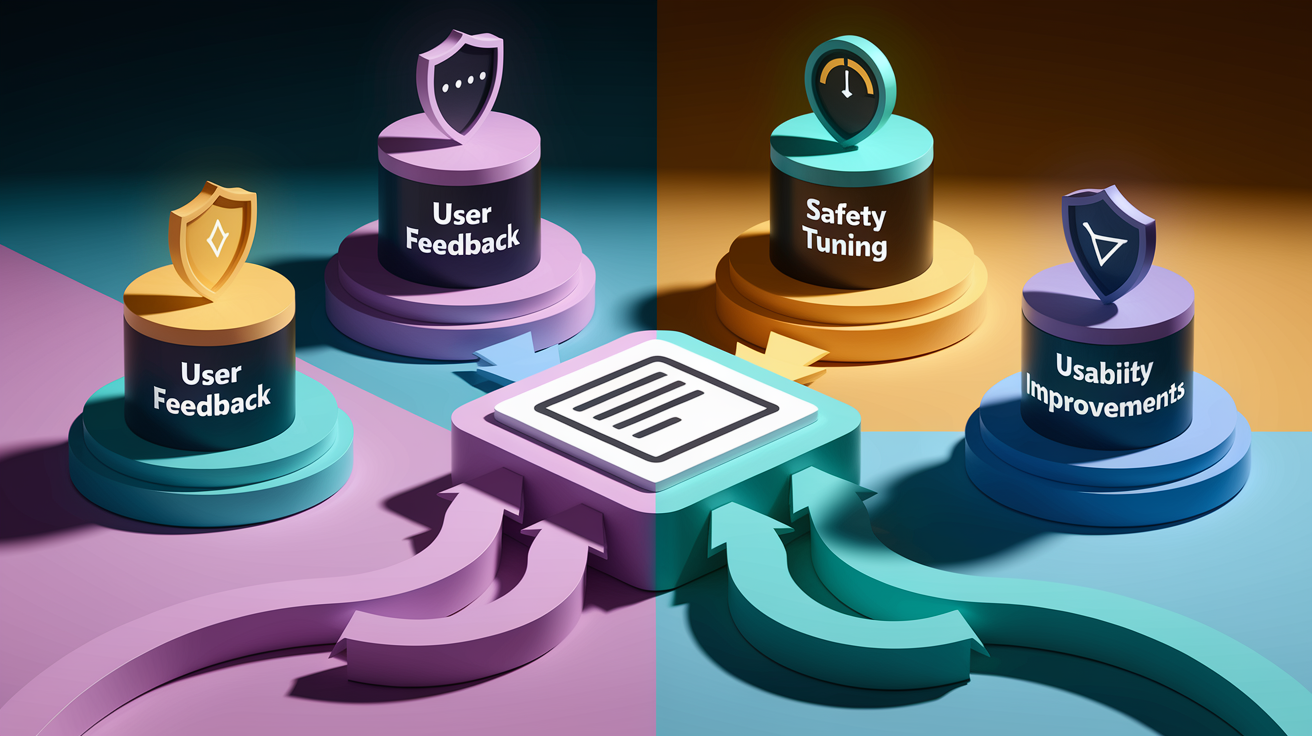
OpenAI built the release as a research preview to collect feedback on what worked, what didn’t, and how people tried to break it. The preview format let them move quickly based on how users actually behaved instead of relying on internal testing.
The first version ran on GPT-3.5, a model tuned specifically for dialogue. GPT-3.5 balanced performance with cost well enough to offer free access while handling traffic that grew faster than pretty much any consumer app in recent history.
The research preview had four main goals:
- User feedback – Gather reports on wrong answers, weird refusals, and harmful outputs to improve the model.
- Safety tuning – Find adversarial prompts and edge cases that slipped past content filters.
- Stress testing – Watch how the system performed under millions of people using it at once.
- Usability improvements – See how non-technical users phrased requests and where the interface confused people.
Evolution of ChatGPT Models (GPT-3.5 to GPT-4o)
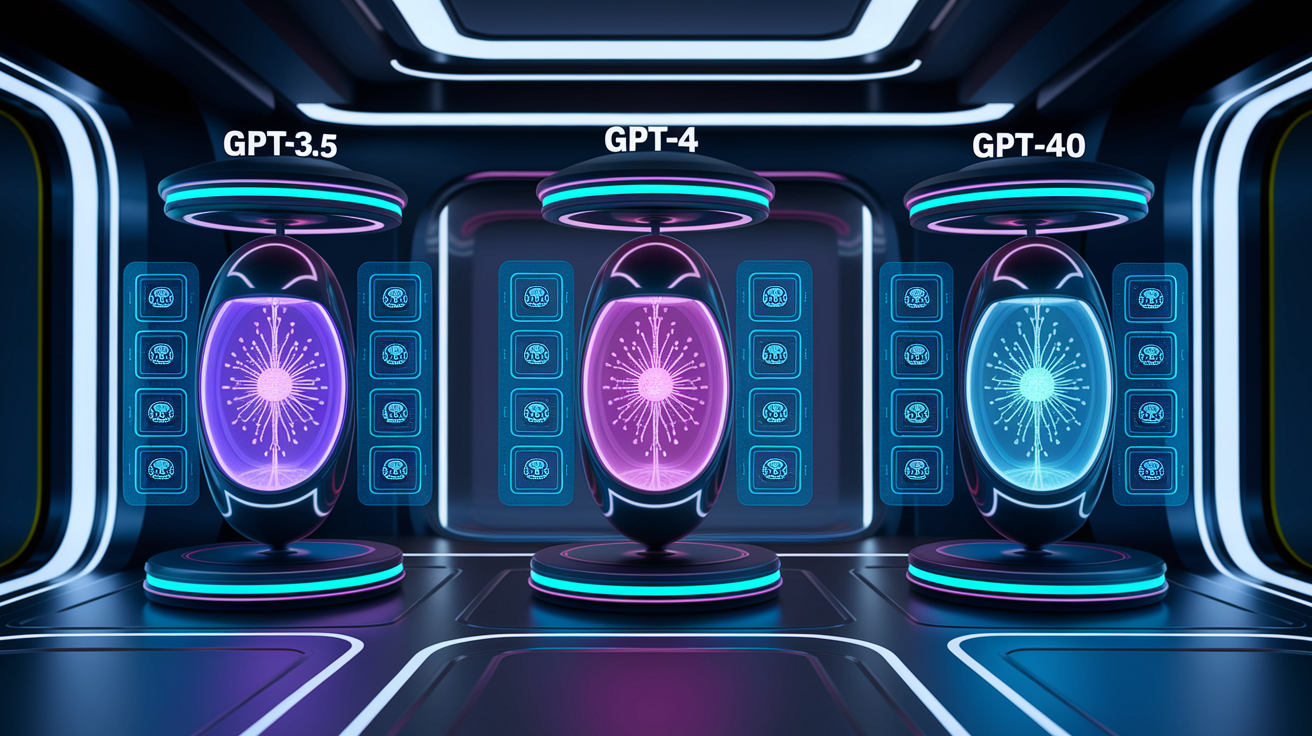
Model upgrades brought better reasoning, faster responses, and support for images and audio over the first two years.
GPT-3.5
GPT-3.5 powered the November 30, 2022 launch. It was a fine-tuned version of the GPT-3 base model, optimized for conversation and trained with reinforcement learning from human feedback. GPT-3.5 handled everyday tasks well enough: drafting text, answering questions, tossing out ideas. But it struggled with complex logic, multi-step math, and instructions that required nuance. Still, its speed and the fact that anyone could use it made it the engine behind ChatGPT’s early explosion.
GPT-4
OpenAI dropped GPT-4 on March 14, 2023, calling it their most advanced model yet. GPT-4 brought big improvements in reasoning, factual accuracy, and the ability to follow complex instructions across longer contexts. It also introduced image inputs, so you could upload photos and ask questions about them. Safety tuning was tighter, cutting down on disallowed content. GPT-4 became available to ChatGPT Plus subscribers and got built into Microsoft’s Bing Chat, marking the first time a frontier LLM showed up directly inside a major search engine.
GPT-4o
GPT-4o launched on May 13, 2024. The “o” stands for “omni.” This model combined text, vision, and audio processing in one architecture, which enabled real-time voice conversations and faster response times. GPT-4o delivered GPT-4-level intelligence at about half the cost and double the speed of the original GPT-4. OpenAI made GPT-4o available to free users, opening up advanced reasoning and multimodal capabilities that used to require a paid subscription.
Each model expanded what ChatGPT could actually do, from basic Q&A and content drafting in GPT-3.5 to technical problem solving and real-time multimodal interaction in GPT-4o.
Adoption Milestones and Public Impact

ChatGPT hit 1 million users within five days of launch. No previous consumer app had moved that fast.
Key adoption milestones:
- 1 million users in 5 days – Reached by December 5, 2022, fueled by viral social media shares and word of mouth.
- 100 million monthly active users by February 2023 – Faster growth than TikTok or Instagram at comparable stages.
- Integration into workflows – Professionals in marketing, customer support, software development, and legal research started using ChatGPT for drafting, brainstorming, and automation.
- Educational adoption – Students and educators experimented with ChatGPT for tutoring, essay feedback, and lesson planning, which kicked off debates about academic integrity.
- Business implementation – Companies launched internal pilots, built chatbots on the ChatGPT API, and explored cost savings from automating routine communication tasks.
The speed of adoption changed expectations for AI tools overnight. Businesses that had ignored machine learning suddenly faced pressure to deploy conversational agents. Educators confronted new plagiarism risks and began rethinking how they assess students. Policymakers and regulators scrambled to understand data use, copyright implications, and labor market effects. Within months, ChatGPT became the reference point for discussions about automation, creativity, misinformation, and the future of work. Institutions across sectors had to respond faster than the technology itself had evolved.
Historical Context of Pre-ChatGPT AI

Large language models evolved from earlier transformer architectures introduced in 2017. OpenAI’s GPT-1 arrived in 2018 with 117 million parameters, showing that unsupervised pre-training on huge text datasets could produce a model capable of downstream tasks with minimal fine-tuning. GPT-2 followed in 2019 with 1.5 billion parameters, generating more coherent long-form text and raising concerns about misuse. OpenAI initially held back the full model because of fears about automated disinformation. GPT-3 came out in 2020 with 175 billion parameters, showcasing few-shot learning and enabling the model to perform new tasks from just a handful of examples without retraining.
But despite these advances, GPT-3 stayed confined to API access and developer communities. Its raw interface required technical prompts, and the cost of running inference limited experimentation to funded projects and research labs. Most consumers never touched GPT-3 directly, even as it powered niche applications like code completion and creative writing tools.
ChatGPT bridged the gap between research capabilities and mainstream usability. By wrapping GPT-3.5 in a simple chat interface and offering free access, OpenAI brought transformer-based AI out of the lab and into everyday tasks. It turned a technology milestone into a cultural moment.
Frequently Asked Questions About ChatGPT’s Launch

Common questions about the launch:
- When did ChatGPT launch? – ChatGPT launched publicly on November 30, 2022.
- What model powered the first release? – The initial version used GPT-3.5, a fine-tuned variant optimized for conversation.
- Why did it become popular so fast? – Free access, an intuitive chat interface, and strong performance on everyday tasks drove viral adoption.
- Was ChatGPT free at launch? – Yes, OpenAI offered free access during the research preview. ChatGPT Plus launched in February 2023 at $20 per month.
- How are updates rolled out? – OpenAI deploys model upgrades incrementally, often testing new versions with subsets of users before full release.
Final Words
ChatGPT launched on November 30, 2022, as a research preview that showed what conversational AI could do. This piece covered that date, the preview strategy, and GPT‑3.5 as the early engine.
We mapped upgrades from GPT‑3.5 to GPT‑4 and GPT‑4o, highlighted rapid user growth, and noted major adoption milestones. We also placed the launch in the timeline of transformer LLMs and answered common launch questions.
If you’re wondering when did chatgpt launch, the answer is November 30, 2022. Expect steady updates and more practical uses ahead.
FAQ
Q: Was ChatGPT made by a woman?
A: ChatGPT was not made by a woman; it was developed by OpenAI, a team of researchers, engineers, and product managers rather than a single individual.
Q: Was AI a thing in 1997?
A: AI existed in 1997; that year IBM’s Deep Blue beat Garry Kasparov, showing progress in narrow, task-focused AI long before today’s large language models.
Q: When did the first ChatGPT model release?
A: The first ChatGPT model released on November 30, 2022, when OpenAI launched a GPT‑3.5–based research preview that quickly gained wide public attention.
Q: When did AI actually begin?
A: AI research began in the 1950s, with early milestones like Alan Turing’s 1950 ideas and the 1956 Dartmouth workshop that first used the term “artificial intelligence.”