What if a single buried cable—or one bad routing change—can cut millions off the internet in minutes?
Backbone failures don’t act like home broadband drops; they cascade through regional and global networks because a few long-haul links and routing mistakes carry huge traffic loads.
This post explains what causes internet backbone failures: physical breaks, BGP and routing errors, hardware and optical faults, cyberattacks, natural disasters, and upstream carrier problems.
Know these core vulnerabilities so you can plan redundancy, monitoring, and faster recovery.
Core Factors Behind Internet Backbone Failures Explained

Internet backbone failures wreck connectivity for millions because every regional network, enterprise link, and edge service depends on a handful of long-haul transit providers. When one segment goes down, thousands of downstream networks lose connectivity at once. This isn’t like a home broadband outage hitting individual households. Backbone failures cascade across entire regions because carrier ecosystems rely on interconnected transport circuits that span hundreds or thousands of miles. A single circuit failure or bad config can isolate cities, data centers, and cloud zones from the global internet.
The usual backbone outage suspects fall into a few categories, each kicked off by different technical or environmental events. Physical damage accounts for a big chunk of incidents. Construction crews strike buried fiber. Vehicles hit utility poles. Severe storms snap aerial cables. Ships drag anchors across undersea routes. Routing protocol failures, especially BGP misconfigs and route leaks, spread incorrect path info globally within minutes. Hardware failures in core routers, optical transponders, and DWDM amplifiers interrupt wavelength-level transport. Cyberattacks, particularly massive distributed denial of service floods, saturate backbone links and overwhelm carrier transit networks. Natural disasters like earthquakes, hurricanes, and floods destroy cable landing stations and long-haul fiber paths. Upstream provider outages create systemic risk because peering hubs and exchange points concentrate traffic from hundreds of networks into shared infrastructure.
Backbone dependencies amplify every failure’s blast radius. A misconfigured border gateway protocol announcement on one autonomous system can reroute traffic incorrectly for peers across continents. A single severed fiber bundle can eliminate redundancy for multiple carriers sharing the same conduit. Power grid failures at critical peering facilities knock entire metro regions offline. You need to understand these core factors because backbone-level incidents bypass local failover mechanisms, leaving enterprises and service providers dependent on carrier repair crews and global routing convergence timelines.
- Physical infrastructure damage – fiber cuts from construction, vehicle strikes, storms, animal interference
- BGP and routing protocol failures – misconfigs, route leaks, hijacks, session resets
- Hardware and optical layer faults – router failures, transponder degradation, amplifier outages
- Cyberattacks and traffic surges – DDoS on transit providers, congestion collapse, viral event spikes
- Natural disasters – earthquakes, hurricanes, flooding, wildfires, tsunamis
- Upstream carrier and peering outages – exchange point congestion, intercarrier signaling errors, private peering link failures
Physical Infrastructure Weaknesses Leading to Backbone Failures

Long-haul fiber optic networks carry petabytes of traffic daily across terrestrial and submarine routes spanning thousands of miles. These cables traverse public rights of way, underwater trenches, and remote corridors where physical protection is minimal. Construction crews excavating for utilities frequently strike buried fiber bundles, severing multiple carriers’ circuits at once. Vehicle collisions damage aerial fiber strung on utility poles. Severe weather (ice storms, hurricanes, tornadoes) snaps cables and topples infrastructure. Animals, particularly rodents and birds, chew through protective sheathing or build nests that short aerial drops. Each physical break requires dispatch of specialized repair teams, splicing equipment, and often permits to access private or hazardous work sites. Outage windows stretch from hours to days.
Undersea cables present unique vulnerabilities because they lie exposed on the ocean floor or buried in shallow sediment. Fishing trawlers drag nets and anchors that snag and cut cables. Earthquakes trigger submarine landslides that sever multiple parallel routes. Ships dropping anchor in shallow waters damage repeaters and optical amplifiers spaced along thousand-kilometer spans. Cable landing stations (the facilities where undersea cables terminate and connect to terrestrial networks) act as critical chokepoints. Damage to a single landing station can isolate entire countries or island regions. Repair ships must locate the fault using optical time-domain reflectometry, retrieve the damaged section from depths exceeding 8,000 meters, splice in new cable, and re-lay the repaired segment. The process often takes weeks.
| Failure Type | Typical Trigger |
|---|---|
| Fiber optic cable cuts | Construction excavation, backhoe strikes, directional drilling |
| Undersea cable damage | Fishing trawler anchors, seismic activity, submarine landslides |
| Environmental degradation | Corrosion of splice enclosures, moisture ingress, UV exposure on aerial fiber |
| Animal interference | Rodents chewing sheath, birds nesting on poles, squirrels short-circuiting aerial drops |
| Construction and excavation strikes | Unlocated or poorly marked conduits, emergency utility work, roadwork |
Routing and BGP-Related Disruptions Across Backbone Networks
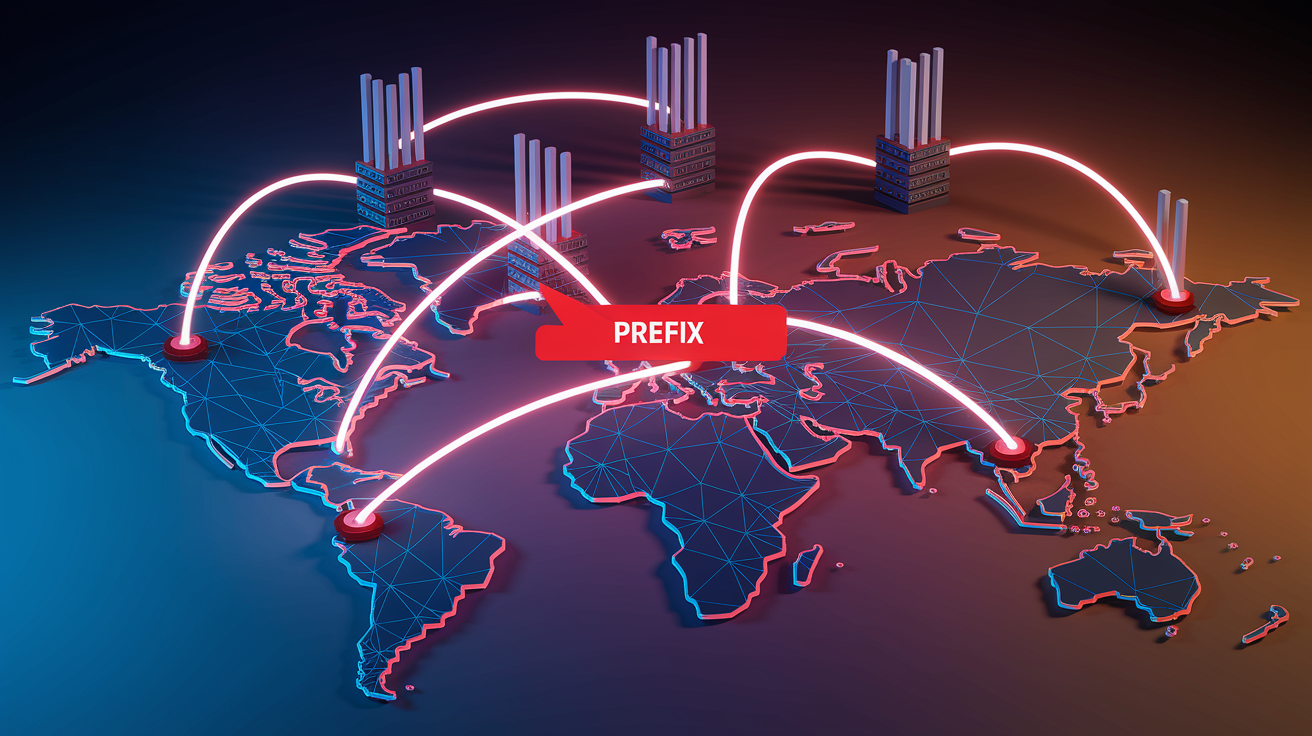
Border Gateway Protocol misconfigs represent one of the most damaging and far-reaching failure modes because BGP announcements propagate globally within minutes. A single incorrect prefix advertisement from a transit provider can redirect traffic for millions of end users through congested or broken paths. Traffic engineering mistakes (like prepending the wrong autonomous system path or failing to filter customer routes) destabilize routing tables across interconnected networks. BGP relies on trust and lacks built-in cryptographic validation, so even well-intentioned config changes can cascade into global instability when peers accept and re-advertise incorrect routes.
BGP Misconfiguration and Global Instability
When a network operator mistakenly advertises a more specific prefix than intended, routers across the internet prefer the longer match and send traffic toward the misconfigured origin. If that origin can’t handle the volume or lacks a valid return path, packets are blackholed. Historical incidents have seen single autonomous systems accidentally announce tens of thousands of prefixes belonging to major cloud providers, financial networks, and content delivery systems. The ripple effect reaches every tier-one transit provider because interdomain routing depends on each participant correctly filtering and validating announcements. One failure point can misdirect traffic for hours until the mistake gets identified, withdrawn, and routing tables converge.
Route Leaks and Hijacks
Route leaks occur when a network advertises prefixes learned from one peer to another peer without proper export filters, violating typical transit relationships. The leaked routes attract traffic that should follow different paths, causing congestion at the leaking network and starving legitimate routes. Malicious route hijacks involve deliberate announcement of IP space belonging to another organization, redirecting traffic for interception or denial of service. Both accidental leaks and intentional hijacks create the same downstream symptom: legitimate routes disappear from routing tables, replaced by paths that lead to unreachable or hostile destinations.
Control Plane Failures
BGP session resets, triggered by software bugs, memory exhaustion, or keepalive timeouts, force routers to re-establish peering and re-exchange full routing tables. During reconvergence, traffic may loop, be dropped, or follow suboptimal paths. Protocol instability (flapping routes that oscillate between available and withdrawn states) consumes CPU cycles and fills logs, degrading router performance. Routing table corruption, caused by memory errors or incomplete database synchronization, leads to inconsistent forwarding decisions across a network’s routers. Each of these control-plane failures can isolate entire autonomous systems until operators manually clear sessions, reload configs, or reboot affected devices.
Routing failures trace back to human error and insufficient validation. Operators apply config changes during maintenance windows without pre-deployment testing in lab environments. Automated orchestration systems push updates across hundreds of devices at once, magnifying the blast radius when a template contains a mistake. Lack of route filtering, failure to implement prefix limits, and absence of RPKI validation allow malformed announcements to propagate unchecked, turning localized errors into internet-wide disruptions.
Hardware and Optical Layer Failures in Backbone Infrastructure

Core backbone routers and optical transport systems operate under continuous high load, making component wear and environmental stress significant outage drivers. Routers processing terabits per second depend on line cards, power modules, cooling fans, and control processors that degrade over time. When a line card fails without redundancy, all circuits terminating on that card go offline at once. Power supply failures can cause entire chassis to reboot or shut down, interrupting dozens of high-capacity links. Optical transponders, which convert electrical signals to light for long-haul transmission, suffer from laser drift, receiver sensitivity loss, and firmware bugs that cause wavelength-level outages. Each wavelength may carry 100 gigabits or more of customer traffic.
DWDM (dense wavelength division multiplexing) systems multiplex dozens of wavelengths onto a single fiber pair, relying on optical amplifiers (typically erbium-doped fiber amplifiers, or EDFAs) spaced every 80 to 120 kilometers. Amplifier failure interrupts all wavelengths on the affected span, requiring truck rolls to remote huts or repeater sites. Aging amplifiers exhibit gain tilt, uneven amplification across wavelengths, and component drift that degrade signal quality until error rates spike and circuits fail. Optical fiber splice problems (poor fusion splices, contaminated connectors, or microbends introduced during installation) create intermittent faults that worsen under temperature fluctuations or physical stress. Environmental factors like excessive heat in equipment shelters, humidity causing corrosion, and particulate contamination on optical interfaces accelerate hardware degradation, increasing the likelihood of unplanned failures during peak traffic periods.
- Frequent device reboots indicating power supply instability or memory faults
- Rising bit error rates on optical interfaces signaling transponder or amplifier degradation
- Link flaps (rapid up-down transitions) caused by marginal signal levels or connector issues
- Temperature alarms from routers or optical shelves warning of cooling system failures
Environmental and Natural Events Causing Backbone-Level Damage

Earthquakes sever terrestrial fiber routes and trigger submarine landslides that cut undersea cables connecting continents. The 2011 Tōhoku earthquake damaged multiple cable landing stations in Japan and disrupted trans-Pacific capacity for weeks. Hurricanes produce storm surge that floods coastal cable vaults, manholes, and landing facilities, introducing saltwater into splice enclosures and corroding fiber connections. High winds snap aerial fiber, topple microwave towers used for backup connectivity, and damage above-ground equipment shelters. Flooding events submerge underground conduits, filling them with water that degrades splices and shorts electrical systems powering optical repeaters.
Wildfires destroy fiber routes when flames melt protective sheathing or burn through utility poles carrying aerial cables. In remote mountain and desert corridors, fires can eliminate the only physical path between metro areas, forcing carriers to reroute traffic over satellite or distant terrestrial detours with severely reduced capacity. Tsunamis generated by seismic activity strike cable landing stations with walls of water, destroying power systems, DWDM terminals, and routing equipment. The 2006 Hengchun earthquake off Taiwan severed seven undersea cables at once, isolating internet and telephony traffic across Southeast Asia for days.
- Earthquakes – ground movement severs buried conduits, triggers landslides over fiber paths, damages cable landing stations
- Hurricanes – storm surge floods vaults and shelters, wind damages aerial fiber and towers
- Flooding – submerges manholes and underground splice points, shorts electrical feeds to repeaters
- Wildfires – burns aerial fiber and above-ground equipment shelters in remote corridors
- Tsunamis – wave impact destroys coastal landing facilities and submerged nearshore cable sections
Natural disasters impose multi-day or multi-week repair windows because damaged infrastructure often lies in hazardous zones inaccessible to repair crews. Submarine cable repairs require chartering specialized ships equipped with remotely operated vehicles and cable-handling gear, navigating to fault coordinates in deep ocean, and performing precision splicing under difficult sea conditions. Restoration of terrestrial routes crossing wildfire burn zones or earthquake-damaged terrain demands new permits, environmental assessments, and sometimes complete route redesign when original paths are permanently lost.
Human Error, Configuration Mistakes, and Operational Failures in Backbone Operations

A single misconfig applied to a backbone router can disrupt millions of users by blackholing traffic, triggering routing loops, or breaking peering sessions. Incorrect IP addressing, VLAN assignments, firewall rules, or routing policy statements introduce errors that automated validation often fails to catch when config templates are reused across devices without per-site review. Large-scale cloud provider outages have been traced to engineers applying incorrect access-control lists that inadvertently blocked health-check traffic, causing load balancers to mark all backend servers as failed. Change-control failures (skipping peer review, bypassing staging environments, or deploying updates during peak traffic hours) multiply the risk that a config mistake will reach production undetected.
Improper change management gaps emerge when approval processes lack technical depth or when rapid incident response bypasses formal review. Engineers under time pressure may apply “quick fixes” that resolve immediate symptoms while introducing latent faults. Patching a BGP session by loosening filters can allow route leaks days later. Inadequate documentation and knowledge transfer mean that config drift accumulates as successive teams make incremental changes without understanding original design intent. Flawed rollout procedures, like deploying changes to all devices in a redundant pair at once, eliminate failover protection and turn a minor mistake into a total outage.
Change Management Gaps
Formal change-approval workflows exist to ensure that proposed modifications receive technical review, impact analysis, and scheduling during low-traffic maintenance windows. When organizations weaken these controls (allowing emergency changes without peer sign-off or skipping lab validation for “low-risk” updates) they expose backbone infrastructure to unchecked errors. A config change that passes automated syntax checks can still contain logic errors (incorrect route-map match clauses, wrong community tags) that destabilize routing once applied. Without mandatory staging and rollback plans, operators discover mistakes only after customer impact begins, extending mean time to recovery while they diagnose and reverse the change under operational pressure.
Misconfigurations and Automation Failures
Configuration-as-code tools (Ansible, Puppet, Chef) reduce manual typing errors by templating device configs and enforcing consistency. But automation magnifies mistakes by propagating flawed templates across hundreds of devices at once. A single incorrect Jinja2 variable or Ansible playbook condition can disable interfaces, shut down BGP sessions, or apply wrong ACLs network-wide within minutes. Automation also introduces dependency risks: when the orchestration platform itself fails (due to credential expiry, API timeouts, or version incompatibility), operators lose the ability to roll back changes quickly, forcing manual device-by-device recovery. Rollback failures extend outages because reverting configs often requires reloading saved states, rebooting devices, or manually re-entering commands. These processes take hours when hundreds of backbone routers are affected.
Cyberattacks and Traffic-Based Disruptions Affecting Backbone Stability
Distributed denial of service attacks targeting transit providers saturate backbone links by flooding routers with malicious packets that consume forwarding capacity and exhaust connection-state tables. Attackers use compromised IoT devices, cloud instances, and reflection techniques (DNS amplification, NTP amplification) to generate terabits per second of junk traffic directed at carrier IP space. Even when these floods don’t breach security perimeters, they cause packet loss and congestion collapse by filling interface queues and triggering random early detection drops. Backbone routers under sustained DDoS load experience CPU spikes as they process and discard attack packets, degrading control-plane stability and delaying BGP updates or keepalive messages.
Traffic spikes from legitimate sources also disrupt backbone stability when capacity planning underestimates demand. Viral events (breaking news, software releases, live-streamed global sports finals) push sudden surges through peering links and transit circuits not designed for that burst rate. Content delivery networks attempt to cache popular objects closer to users, but when cache servers themselves become overwhelmed or when new content bypasses caching entirely (live video, real-time collaboration), origin traffic floods backbone aggregation points. Insufficient elastic scaling at peering exchanges means that a single high-traffic flow can congest shared fabric, affecting unrelated customers and creating cascading slowdowns across interdependent networks.
Cyberattacks on backbone infrastructure extend beyond volumetric floods. Route hijacking for traffic interception allows adversaries to capture sensitive data in transit by announcing more specific prefixes and pulling traffic through attacker-controlled routers before forwarding it onward. Malware targeting router management interfaces (exploiting unpatched vulnerabilities or weak credentials) can alter configs, disable security policies, or create backdoors for persistent access. Ransomware incidents at carrier facilities have encrypted config backups and operational databases, delaying recovery when primary systems fail. Each of these attack modes creates downstream connectivity loss for customers who depend on backbone transit, turning a targeted intrusion into a widespread service disruption.
Upstream Carrier, Peering, and Interconnection Failures Impacting Backbone Connectivity
Backbone outages frequently originate from failures at internet exchange points or in bilateral peering relationships between large transit providers. Exchange points concentrate traffic from hundreds of networks onto shared switching fabric. When that fabric experiences hardware failure, software bugs, or capacity saturation, every connected participant loses reachability to peers. Peering blackout incidents occur when disputes between carriers lead to intentional disconnection of peering sessions, forcing traffic onto longer, costlier transit paths or eliminating routes entirely for networks that depend on settlement-free peering for certain destinations.
Congestion at major peering hubs during traffic surges degrades performance for all participants. If an exchange point’s switching capacity can’t handle peak load, packet loss climbs and latency spikes ripple across member networks. Private peering link failures (dedicated cross-connects between two carriers) interrupt high-capacity direct routes, forcing fallback to public peering or paid transit with lower bandwidth and higher latency. Intercarrier signaling issues, like mismatched BGP timers, authentication failures, or maximum-prefix limits reached unexpectedly, trigger session resets that temporarily blackhole traffic until sessions re-establish and routing converges.
- Peering exchange congestion – shared fabric overload during traffic surges causes packet loss for all members
- Upstream carrier outage – failure at a tier-one provider disrupts connectivity for downstream customers lacking alternate transit
- Internet exchange hardware failure – switch or router failure at the exchange point isolates all connected networks
- Bilateral routing policy errors – misconfigured prefix filters or AS-path rules break private peering sessions
Power Grid and Facility-Level Failures Affecting Backbone Nodes
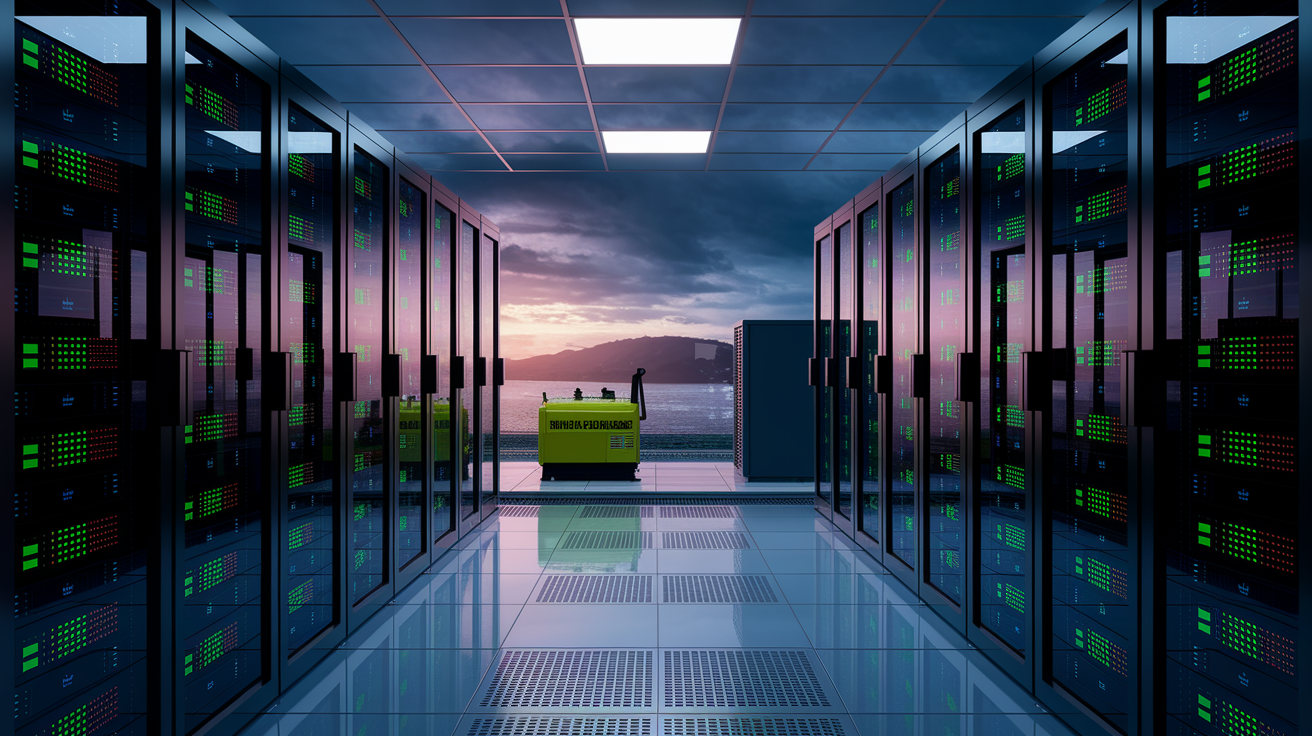
Backbone routers and optical transport equipment require stable electrical power and controlled environmental conditions. When power grid failures strike data centers or carrier-neutral facilities hosting backbone nodes, uninterruptible power supplies and backup generators provide temporary continuity. But UPS runtime is limited, and generator startup or fuel delivery can fail. A power outage lasting longer than UPS capacity forces routers to shut down ungracefully, risking filesystem corruption, incomplete config saves, and difficult recovery procedures. Facilities hosting multiple carriers share electrical infrastructure, so a single substation failure or utility fault can interrupt connectivity for dozens of networks at once.
Cable landing stations depend on reliable power to operate DWDM terminals, optical amplifiers, and environmental controls. When coastal storms or regional blackouts cut grid power, backup systems must sustain operations until commercial power returns or fuel resupply arrives. Cooling failures caused by power instability or HVAC malfunctions raise equipment temperatures, triggering thermal shutdowns in routers and optical shelves designed to protect components from permanent damage. Even brief interruptions in cooling can cause optical transponders to drift out of specification, increasing bit error rates and forcing circuits offline until temperature stabilizes.
Routing node instability follows power anomalies (voltage sags, surges, or frequency fluctuations) that reboot routers or corrupt memory. Devices recovering from unplanned shutdowns must reload configs, re-establish protocol adjacencies, and rebuild forwarding tables, a process that can take minutes during which traffic is blackholed or looped. Regional blackouts affecting fiber landing sites eliminate multiple backbone paths at once, leaving distant networks dependent on satellite links or circuitous terrestrial detours with sharply reduced capacity.
Long-Term Structural Risks and Aging Backbone Infrastructure

Fiber optic cables installed decades ago degrade over time as protective jackets crack, splices corrode, and environmental exposure introduces microbends and signal attenuation. Aging infrastructure risks compound when carriers defer maintenance due to budget constraints or when ownership changes leave asset histories incomplete. Corroded splice enclosures allow moisture ingress, increasing optical loss and creating intermittent faults that appear and disappear with temperature or humidity changes. Fiber routes crossing industrial zones or coastal areas face accelerated degradation from pollutants and salt spray.
Supply chain disruptions for spare parts prolong outages when replacement line cards, optical modules, or amplifier components are unavailable. Vendors discontinue hardware platforms after multi-year lifecycles, forcing operators to stockpile spares or source refurbished units from secondary markets. Economic underinvestment in backbone upgrades leaves networks reliant on platforms nearing end-of-support, increasing the probability that a hardware failure will lack a rapid replacement path. Deferred capacity expansions create bottlenecks where traffic growth outpaces link upgrades, making networks vulnerable to congestion collapse during normal demand spikes.
| Risk Type | Impact Duration |
|---|---|
| Aging fiber with corrosion and environmental degradation | Days to weeks for fault localization and splice repair |
| Degraded optical components (transponders, amplifiers) | Hours to days awaiting spare availability and installation |
| Limited spare-part availability for end-of-life hardware | Weeks to months if replacement requires platform migration |
Backbone Resilience Strategies and Mitigation Techniques
Building resilient backbone infrastructure requires layered defenses that address physical, logical, and operational failure modes. Carrier diversity eliminates single points of failure by contracting with multiple transit providers and establishing peering relationships at geographically dispersed exchange points. Dual-modem designs and hybrid routers maintain connections to two separate carrier networks, enabling automatic failover when the primary path fails. Multiple DMVPN tunnels to several data centers provide primary and backup head-ends, ensuring encrypted connectivity persists even when one data center loses reachability. Virtual router redundancy protocols (VRRP, HSRP) allow pairs of routers to share IP addresses and gracefully fail over without disrupting end-user sessions.
Route diversity extends beyond logical redundancy to physical path separation. Deploying fiber over different conduit systems, avoiding shared rights-of-way, and landing undersea cables at separate beach landings. Geodiverse links protect against regional disasters by routing critical traffic through paths separated by hundreds of kilometers. Out-of-band management networks, using independent cellular or satellite connections, enable remote troubleshooting and config recovery when primary network paths are offline. Dynamic scaling activates additional links or sessions under load, then deactivates them when traffic subsides, balancing cost with availability.
Routing Security and BGP Mitigation
Resource Public Key Infrastructure (RPKI) validation checks that BGP announcements originate from authorized autonomous systems, rejecting hijacked or leaked routes at ingress. Operators configure maximum-prefix limits to prevent peers from overwhelming routing tables with excessive announcements. Prefix filtering based on Internet Routing Registry (IRR) data blocks announcements for unallocated or unassigned address space. Route validation scripts compare live BGP tables against expected policy, alerting when discrepancies appear. Communities and AS-path filters enforce transit relationships, preventing customers from acting as unintended transit providers. Monitoring tools track route origin changes and detect anomalies like sudden shifts in AS-path length or new prefixes from historically stable peers.
Redundancy and Diverse Pathing
Redundant routers in active-active or active-standby configs ensure that hardware failure doesn’t eliminate connectivity. Link aggregation (LAG, LACP) bundles multiple physical interfaces into a logical link that survives individual member failures. Geodiverse fiber routes avoid common failure domains (separate conduits, different carrier sidewalks, independent landing stations) so a single excavation or storm can’t sever all paths at once. Parallel data centers hosting backbone routing functions in different seismic zones and power grids provide site-level resilience. Automated failover tests verify that backup paths activate correctly and that traffic reconverges within service-level objectives when primary links fail.
Operational Preparedness
Continuous monitoring collects telemetry on interface utilization, error rates, optical power levels, temperature, and BGP session states, feeding analytics platforms that detect early warning signs of degradation. Predictive maintenance schedules component replacements based on operational hours, error trends, and vendor lifecycle data, reducing unplanned failures. Config backups stored in version-controlled repositories enable rapid rollback when changes introduce faults. Disaster recovery drills test restoration procedures, ensuring that teams can rebuild routing configs, re-establish peering, and recover from total site loss within documented timelines. Incident response playbooks define escalation paths, communication protocols, and technical recovery steps, reducing decision latency during high-pressure outages. Tabletop exercises simulate cascading failures (simultaneous fiber cut and router hardware fault) validating that redundancy mechanisms and human processes function correctly under compounded stress.
Final Words
We ran through major causes: physical cable damage, routing and BGP errors, hardware and optical failures, natural events, human mistakes, cyberattacks, upstream peering problems, power outages, and aging infrastructure.
The article shows how a single mistake or cut can cascade across carriers and why interdependence widens impact. It also outlined resilience steps: redundancy, route validation, diverse paths, monitoring, and better change control.
Focus first on route validation, path diversity, and change-management checks. Understanding what causes internet backbone failures lets teams pick practical fixes that cut outage time and lower risk.
FAQ
Q: What is the most common cause of network failure?
A: The most common cause of network failure is human error—misconfigurations during maintenance or updates. Hardware faults, physical cable damage, and upstream carrier outages are also frequent contributors.
Q: Who controls the internet backbone?
A: The internet backbone is not controlled by a single entity. It’s operated by many private carriers, internet exchange points, and national operators that interconnect and carry traffic across regions.
Q: What caused the massive IT outage?
A: Massive IT outages are usually caused by misconfigurations, major hardware or power failures, upstream carrier problems, routing errors like BGP mistakes, or large DDoS traffic that saturates links.
Q: What are the three most common Wi-Fi problems?
A: The three most common Wi-Fi problems are interference from other devices or networks, weak signal or poor coverage, and router misconfiguration or outdated firmware causing instability.