When a company gets sued by the FTC for antitrust violations, the process doesn’t follow a single path. The commission can take your case to federal district court or run it through internal administrative hearings, and that choice affects everything from how long the case takes to what kind of judge decides it. This guide walks through both tracks step by step, showing what happens during investigation, how long each phase typically runs, and where settlement opportunities appear before you reach a final ruling.
How the FTC Antitrust Process Works From Start to Finish

The Federal Trade Commission enforces antitrust laws through two different paths: federal district court or internal administrative proceedings. Which one they pick depends on how complex the case is, what kind of relief they want, and timing. District court moves faster, especially when they need preliminary injunctions for mergers that might close soon. Administrative litigation gives you a more structured internal process with judges who actually understand competition economics. Both involve tons of evidence gathering, expert witnesses, and multiple points where you can settle instead of going all the way.
Cases start with preliminary inquiries run by the Bureau of Competition, usually teaming up with the Bureau of Economics. This investigation can last anywhere from six months to over a year. It depends on market complexity, how many companies are involved, and whether the parties cooperate with information requests. Staff collect evidence through voluntary requests at first, then switch to compulsory process once the formal investigation starts. They dig through internal communications, financial records, market data, competitive analysis. They interview company executives, customers, competitors, industry experts to figure out market dynamics and decide if anyone’s breaking antitrust laws.
The investigation hits a critical decision point when commissioners vote on three possible outcomes. They can close it without action if the evidence doesn’t support enforcement. They can approve a negotiated consent decree that settles things with agreed remedies. Or they can file a formal complaint to start enforcement. This commissioner vote is the first major filter, weeding out cases without enough evidence or where competitive harm looks minimal.
Once commissioners vote to move forward with enforcement, cases split into two tracks. Administrative litigation goes before an administrative law judge, then gets commission review, and potentially appeals to federal court. District court litigation means filing directly in federal district court for preliminary and permanent injunctive relief. The administrative track takes longer but you get specialized expertise in competition analysis. The district court track moves faster and becomes essential when mergers would close before administrative proceedings wrap up, causing competitive harm you can’t fix later.
| Proceeding Stage | Typical Timeline |
|---|---|
| Pre-complaint investigation | 6 months to 1+ years |
| Complaint to ALJ hearing | 8 months |
| ALJ initial decision | 13-14 months after complaint |
| Commission review briefs/arguments | 16-18 months after complaint |
| Commission final order | 19-20 months after complaint |
| Federal appeals court | ~22 months after complaint |
| Total administrative track duration | 8-22+ months |
Pre-Complaint Investigation and Evidence Gathering Methods

FTC investigations begin informally with voluntary cooperation from companies under review. Staff make initial contact through phone calls, letters, or information requests to understand market conditions and business practices. These informal investigations let companies cooperate without triggering expanded commission powers or heightened enforcement risk. But things can escalate quickly to formal status when staff need compulsory authority to get documents and testimony. That significantly increases the risk of civil penalties and potential Department of Justice criminal referral for serious violations like price fixing or bid rigging.
Once the FTC starts a formal investigation, the Bureau of Competition gets access to Section 9 subpoena authority and civil investigative demands. These tools force document production, written responses to detailed interrogatories, and sworn testimony from company executives, employees, and third parties with relevant market knowledge. Section 9 subpoenas specifically target alleged unfair methods of competition and other antitrust violations. Civil investigative demands can request massive document productions spanning years of business records. Companies have to search email systems, file repositories, databases for responsive materials.
The types of information requested typically include internal strategic planning documents, pricing communications, competitive analysis, customer contracts, supply agreements, financial performance data. Investigators look for evidence of market power, anticompetitive intent, coordination with competitors, actual or likely competitive harm. They examine how companies make pricing decisions, allocate customers or territories, respond to new market entrants, interact with suppliers and distributors.
Key investigative tools the FTC uses during the pre-complaint phase:
Informal interviews with company personnel, customers, competitors, industry participants to understand market dynamics. Target letters notifying companies they’re under investigation and may face enforcement action. Civil investigative demands requiring production of documents, data, written responses to interrogatories. Administrative subpoenas compelling testimony and document production under formal investigation authority. Depositions of fact witnesses and expert witnesses providing sworn testimony about market conditions and business practices. Compulsory document requests demanding internal communications, financial records, strategic plans, competitive intelligence.
Administrative Litigation Track and Key Procedural Milestones
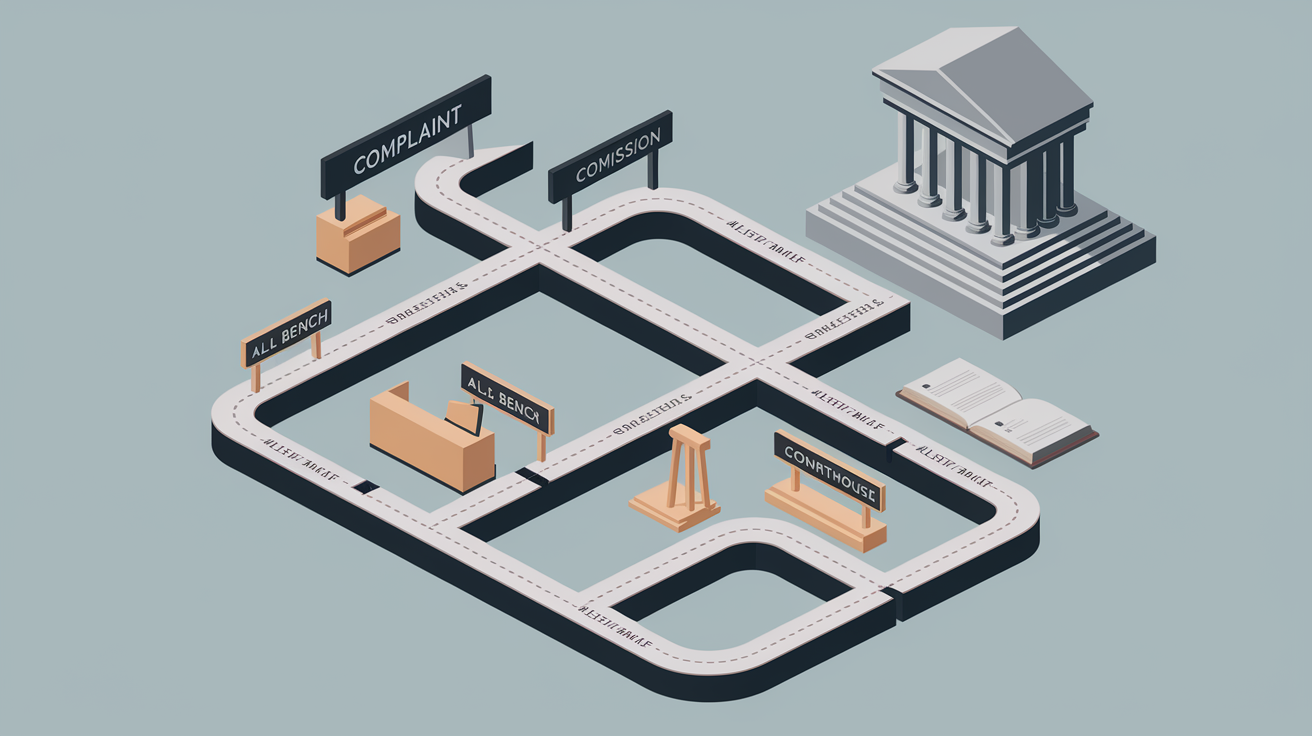
When commissioners vote to pursue enforcement through the administrative track, the case goes through a structured litigation process before an administrative law judge. Timelines and procedures resemble federal court proceedings but they’re tailored to antitrust complexity and economic analysis.
Filing of Administrative Complaint and Pre-Trial Period
The complaint filing triggers an eight month pre-trial period. During this time, complaint counsel representing the FTC and respondents engage in extensive discovery. This includes document requests seeking internal communications and business records, interrogatories requiring written responses under oath, depositions of fact witnesses and expert witnesses. Parties exchange massive volumes of documents, often millions of pages in complex merger or monopolization cases. They conduct witness interviews to develop testimony about market conditions, competitive effects, business justifications for challenged conduct.
Economic experts play a critical role throughout this period. The FTC typically retains industrial organization economists to define relevant product and geographic markets, calculate market shares and concentration levels, analyze barriers to entry, model competitive effects of challenged conduct or transactions. Respondents hire their own economic experts to challenge the FTC’s market definition, present alternative theories of competition, demonstrate procompetitive justifications or efficiency benefits. Expert reports run hundreds of pages with sophisticated econometric analysis, market surveys, financial modeling.
Both sides can file motions to dismiss arguing the complaint fails to state a valid antitrust claim, or motions for summary decision arguing no genuine disputes of material fact exist and the moving party deserves judgment as a matter of law. These motions rarely succeed in antitrust cases given the fact-intensive nature of market analysis and competitive effects. But they help frame legal issues and narrow the scope of the evidentiary hearing.
Evidentiary Hearing Before the Administrative Law Judge
The administrative law judge presides over the hearing similar to a bench trial in federal court, but with greater flexibility in evidence rules and procedure. The hearing can last several weeks or months depending on case complexity, number of witnesses, volume of documentary evidence. Complaint counsel presents the FTC’s case first, calling fact witnesses to testify about market conditions, business practices, competitive harm. They introduce documents showing anticompetitive conduct or intent, and present expert economic testimony demonstrating likely competitive effects.
Respondents then present their defense case. They call their own fact witnesses and experts to challenge the FTC’s theories, present procompetitive justifications, demonstrate efficiency benefits or lack of competitive harm. The administrative law judge actively questions witnesses, probes economic theories, tests legal arguments. Unlike jury trials, the judge considers complex economic evidence, evaluates expert methodology, weighs competing market definitions without simplifying for lay jurors.
The judge makes credibility determinations about conflicting witness testimony, evaluates the persuasiveness of competing economic models, assesses whether the evidence supports a finding of antitrust violation. This process closely resembles federal bench trials with extensive written and oral submissions. But you get specialized expertise in competition economics and antitrust law.
Post-Hearing Briefs and Initial Decision
After the evidentiary hearing concludes, both sides submit proposed findings of fact and conclusions of law. These post-trial submissions can run hundreds of pages, systematically walking through the evidence presented at hearing and arguing how it supports each party’s legal position. The proposed findings cite specific testimony, documents, expert analysis to support factual conclusions about market definition, competitive effects, anticompetitive intent, justifications.
Parties also present closing arguments, either orally or in writing, synthesizing their case and responding to the opposing side’s strongest points. The administrative law judge reviews all evidence, testimony, legal arguments before issuing an initial decision. This decision typically comes 13 or 14 months after the complaint filing. It includes detailed findings of fact, conclusions of law, and if the judge finds a violation, proposed remedies to restore competition. The initial decision reads like a federal district court opinion with extensive factual background, legal analysis applying antitrust precedent, reasoned conclusions about whether the evidence establishes unlawful conduct.
District Court Enforcement and Preliminary Injunction Proceedings

The FTC often chooses federal district court when seeking preliminary injunctions to block mergers or acquisitions that would close before administrative proceedings conclude. Completed mergers prove difficult or impossible to unwind. This creates irreparable harm to competition that monetary damages can’t remedy. The district court track allows the FTC to obtain injunctive relief within weeks rather than the 13 to 14 months required for an administrative law judge’s initial decision. This speed becomes essential when parties structure transactions to close quickly, potentially before thorough investigation and litigation can occur.
Preliminary injunction hearings occur on accelerated schedules, often within 30 to 60 days of filing. The court conducts expedited discovery, hears abbreviated witness testimony, reviews economic evidence on a compressed timeline.
The FTC must satisfy four factors to obtain a preliminary injunction: likelihood of success on the merits of its underlying antitrust claim, likelihood of irreparable harm without injunctive relief, balance of equities favoring the commission, service of the public interest. Courts weigh these factors together. Stronger showing on some factors can compensate for weaker showing on others. The likelihood of success analysis requires the FTC to demonstrate its case has a fair chance of prevailing after full litigation. Irreparable harm typically stems from the inability to restore competition after a merger closes. Lost innovation, reduced customer choice, consolidated market structure prove difficult or impossible to reverse. The balance of equities weighs harm to competition against harm to merging parties from delay or transaction abandonment. Public interest considerations include effects on consumers, workers, suppliers, broader competitive dynamics in the relevant markets.
District court proceedings also offer the path to permanent injunctions after full trial on the merits. If the court grants preliminary relief, the case continues with full discovery, expert reports, eventual trial unless parties settle. The FTC can also negotiate consent decrees during district court litigation. They use the credible threat of injunctive relief to secure favorable settlement terms including divestitures, conduct restrictions, or transaction abandonment.
Commission Review and Internal Appeal Process

Appeals of the administrative law judge’s initial decision go directly to the full commission panel of commissioners who initially voted to pursue enforcement. This creates an unusual appellate process where the decision makers who authorized the complaint review the outcome, rather than an independent appellate body. Critics argue this structure creates bias toward affirming the complaint counsel’s position. Defenders note commissioners apply legal standards objectively and reverse administrative law judges when evidence fails to support enforcement.
The appellate briefing process occurs 16 to 18 months after the initial complaint filing. Respondents file opening briefs challenging the administrative law judge’s factual findings, legal conclusions, or proposed remedies. They argue the evidence fails to support key findings, the judge misapplied legal standards, or the commission should reverse or modify the initial decision. Complaint counsel files response briefs defending the decision and arguing the record supports the judge’s conclusions. Respondents then file reply briefs addressing arguments raised in the commission’s response.
Both sides present oral arguments before the commissioners, typically lasting one to two hours total. Commissioners question counsel about specific evidence, legal precedents, policy implications. They probe weaknesses in each side’s position and test alternative theories or outcomes. The oral arguments give commissioners opportunity to signal their concerns, preview their reasoning, engage directly with the legal and factual disputes.
Commissioners issue a final order around 19 to 20 months after complaint filing. The order includes majority and dissenting opinions explaining the commissioners’ reasoning and legal conclusions. The majority opinion addresses the administrative law judge’s findings, weighs the evidence, applies antitrust legal standards, concludes whether the record establishes a violation. Dissenting commissioners write separate opinions explaining their disagreement with the majority’s factual conclusions, legal analysis, or remedy determination.
The commission can affirm the administrative law judge’s decision in full, reverse it and dismiss the complaint, or modify findings and conclusions. Commissioners have authority to impose final remedies and relief, including divestitures, conduct restrictions, or other measures designed to restore competition. The final commission order represents the agency’s last word before the case moves to federal judicial review.
Federal Judicial Review and Final Appeals

Respondents can appeal the commission’s final order to the federal court of appeals, typically around 22 months after the initial complaint filing. The appeal goes to the circuit court with jurisdiction over the respondent’s principal place of business or the D.C. Circuit. Appellate courts apply different standards of review to different aspects of the commission’s decision. Questions of law receive de novo review. This means the court examines legal issues fresh without deference to the commission’s interpretation. This includes proper application of antitrust statutes, legal standards for proving violations, interpretation of precedent.
Factual findings receive substantial evidence review. Courts ask whether the record contains sufficient evidence that a reasonable mind might accept as adequate to support the commission’s conclusions. This deferential standard recognizes the commission’s expertise in evaluating complex economic evidence and assessing witness credibility. Courts won’t reverse factual findings merely because they might have weighed evidence differently, but only if the findings lack substantial record support.
Appellate outcomes include affirmation of the commission’s order, reversal and instruction to dismiss the complaint, vacation of specific findings with remand for further proceedings, or modification of remedies. Courts affirm when the record supports the commission’s conclusions and legal analysis applies correct standards. They reverse when legal errors infected the analysis or evidence fails to support key findings. Vacation and remand allows the commission to reconsider specific issues, gather additional evidence, or apply legal standards correctly. Remedy modifications occur when the commission’s relief exceeds what’s necessary to restore competition or improperly restricts lawful conduct. Supreme Court review remains extremely rare. It’s reserved for cases involving significant legal questions, conflicts between circuit courts, or novel antitrust issues of national importance.
Legal Standards and Types of Anticompetitive Conduct

The three primary federal antitrust statutes govern FTC enforcement actions. The Sherman Act prohibits contracts, combinations, and conspiracies in restraint of trade plus monopolization and attempts to monopolize. The Clayton Act targets mergers, acquisitions, and exclusive dealing arrangements that may substantially lessen competition. FTC Act Section 5 addresses unfair methods of competition and unfair or deceptive acts or practices.
The FTC applies different analytical frameworks depending on the type of conduct challenged. Per se violations like price fixing and bid rigging are deemed illegal without further inquiry into competitive effects or business justifications. Courts consider these practices so inherently harmful to competition that no defense can justify them. When horizontal competitors agree to fix prices, “We sat down and decided we’d all charge $50 per unit instead of competing,” the analysis ends. Same with bid rigging where competitors coordinate who will submit the winning bid on public contracts through bid suppression, complementary bidding, or bid rotation schemes. Market division agreements where competitors allocate customers, products, or territories also receive per se treatment.
Most conduct undergoes rule of reason analysis weighing procompetitive and anticompetitive effects. The FTC initially must demonstrate the challenged conduct produces actual or likely anticompetitive harm. Typically through reduced output, increased prices, diminished quality, or decreased innovation. This requires defining relevant product and geographic markets, calculating market shares and concentration, showing the conduct’s effect on competition within those markets. Respondents then present procompetitive justifications like efficiency gains, quality improvements, innovation benefits, or legitimate business reasons for the conduct. The FTC can rebut these justifications by showing the procompetitive benefits don’t materialize, less restrictive alternatives exist, or anticompetitive harms outweigh any benefits. The ultimate question asks whether the conduct’s net effect harms competition and consumer welfare.
Supreme Court precedent establishes that all Sherman Act violations also violate the FTC Act. This gives the commission broad enforcement authority beyond traditional antitrust boundaries.
The main categories of anticompetitive conduct the FTC targets include price fixing agreements where competing companies coordinate pricing rather than compete independently. This eliminates the price competition that benefits consumers. Bid rigging schemes involve competitors coordinating responses to public contracts for goods or services through suppressing bids, submitting complementary bids designed to lose, or rotating which competitor wins each contract. Monopolization occurs when a business establishes or maintains exclusive control over a product or service through anticompetitive exclusionary conduct rather than competition on the merits. Anticompetitive mergers substantially lessen competition or tend to create monopolies by eliminating direct competitors, creating dominant market positions, or raising barriers to entry. Market division and customer allocation agreements have competitors dividing products, customers, or territories to give each company an exclusive market and eliminate competition. Group boycotts coordinate competitors to refuse dealing with an entity to prevent new market entrants or disadvantage existing competitors. Exclusive dealing arrangements may violate the Clayton Act when they foreclose substantial market access and create barriers to competition. Learn more about what is the ftc administrative process in antitrust litigation.
Merger Review Under Hart-Scott-Rodino Requirements

The Hart-Scott-Rodino Act amended the Clayton Act in 1976 to require parties to transactions exceeding certain monetary thresholds to file premerger notifications with the FTC and Department of Justice before closing. The current thresholds adjust annually for inflation. Transactions above the size-of-transaction threshold require filing unless an exemption applies. Parties submit detailed information about their businesses, the transaction structure, revenues in relevant markets, competitive overlaps. They pay filing fees that vary based on transaction value. The notification triggers mandatory waiting periods during which agencies review the competitive effects.
The initial waiting period lasts 30 days for most transactions. During this period, staff from both agencies review the filing to determine which agency will investigate based on expertise and industry focus. The FTC typically handles technology, healthcare, pharmaceuticals, communications mergers. The Department of Justice maintains exclusive jurisdiction over telecommunications, banks, railroads, airlines based on regulatory specialization and statutory requirements. Staff conduct preliminary analysis of market concentration, competitive overlaps, potential competitive concerns. They can request additional information voluntarily or clear the transaction if it raises no competitive issues.
When preliminary review identifies potential competitive problems, the investigating agency issues a Second Request for additional documents and information. This dramatically extends the review timeline because the waiting period restarts only after parties substantially comply with the Second Request. Second Requests can demand millions of pages of documents, extensive data production, detailed interrogatory responses. Compliance typically takes two to six months depending on business complexity and document volume. During this extended period, agencies conduct in-depth investigation including customer interviews, competitor analysis, economic modeling, market research. The investigation determines whether the merger likely substantially lessens competition or tends to create a monopoly. Agencies can clear the transaction, negotiate a consent decree with divestitures or conduct restrictions, or file suit in federal district court seeking a preliminary injunction to block the merger.
| Review Stage | Timeline | Key Actions |
|---|---|---|
| Initial filing and waiting period | 30 days | Parties submit HSR forms and supporting documents; agencies assign investigation; preliminary competitive analysis |
| Second Request and extended review | 2-6+ months after substantial compliance | Extensive document production; depositions; customer and competitor interviews; detailed market analysis; economic modeling |
| Final decision or challenge | Variable timing after Second Request compliance | Agency clears transaction; parties negotiate consent decree with remedies; or agency files lawsuit seeking preliminary injunction |
Settlement Options and Consent Decree Negotiations

Settlement negotiations can occur at any stage from preliminary investigation through post-complaint litigation. Parties often prefer consent decrees because they provide certainty about outcomes. They avoid the cost and burden of full litigation, eliminate risk of adverse precedent, allow companies to move forward with modified business practices rather than face prohibitory relief or substantial penalties.
Typical consent decrees include several standard components. Most begin with background recitals explaining the FTC’s investigation, the challenged conduct or transaction, the competitive concerns identified. Many consent decrees include no admission of liability. Parties neither admit nor deny the allegations while agreeing to settlement terms. Some decrees require admissions of specific facts but not legal violations. The core provisions impose behavioral or structural relief designed to remedy competitive harm. Behavioral relief restricts future conduct through prohibitions on challenged practices, requirements for certain business processes, or restrictions on pricing or contracting practices. Structural relief in merger cases typically requires divestitures of specific assets, business lines, or entire divisions to preserve competition. The decree specifies what assets must be sold, the timeline for completing divestitures, requirements for maintaining asset value during the sale process, procedures for commission approval of buyers. Compliance monitoring provisions require periodic reports to the FTC, on-site inspections, retention of independent monitors who verify compliance and report to the commission. Civil penalty provisions establish monetary payments, though these appear less frequently in antitrust consent decrees than in consumer protection settlements. Duration clauses specify how long the decree remains in effect, typically 10 to 20 years for behavioral provisions and until completion for divestitures.
The FTC must publish proposed consent orders in the Federal Register and solicit public comments before final approval. This 30 day comment period allows competitors, customers, consumer advocates, other interested parties to critique the proposed settlement. Commenters can argue the relief inadequately protects competition, express concern about implementation details, or support the settlement as reasonable. Commission staff review comments, respond to significant concerns, may modify the proposed order before submitting it for final commissioner approval.
Consent decrees bind parties to comply with all provisions and subject them to civil penalties for violations of settlement terms. The FTC can seek court enforcement of consent decree obligations, with potential penalties reaching tens of thousands of dollars per violation per day for willful violations.
Available Remedies in FTC Antitrust Enforcement Actions

The FTC pursues only civil enforcement and seeks equitable remedies rather than criminal penalties. This distinguishes commission enforcement from Department of Justice antitrust prosecutions that can charge individuals and corporations with criminal violations punishable by jail time and criminal fines up to $100 million for corporations and $1 million plus 10 years imprisonment for individuals. The FTC lacks criminal prosecution authority and instead focuses on stopping anticompetitive conduct and restoring competitive market conditions through civil relief.
Structural relief proves most common in merger cases where the FTC seeks to preserve competition by requiring divestitures, asset sales, or business line spin-offs. Divestiture orders specify which assets must be sold, acceptable purchaser qualifications, timelines for completion, procedures for commission approval of buyers. The goal is restoring the competitive market structure that existed before the merger or creating a viable competitor to replace lost competition. In monopolization or exclusionary conduct cases, structural relief can require vertically integrated companies to divest upstream or downstream operations, mandate licensing of essential facilities or intellectual property to competitors, or force separation of business units that create conflicts of interest or competitive foreclosure.
Behavioral remedies address ongoing conduct through prohibitions, requirements, restrictions. Common behavioral provisions prohibit specific practices found to violate antitrust laws like exclusive dealing arrangements, loyalty discounts tied to exclusivity, most favored nation clauses preventing lower prices to competitors, or tying arrangements forcing customers to purchase unwanted products. Affirmative requirements can mandate licensing of patents or proprietary technology on fair, reasonable, and non-discriminatory terms, non-discrimination provisions treating competitors equally in pricing or access, or firewall provisions preventing information sharing between business units with competitive conflicts. Reporting and compliance obligations require companies to maintain detailed records, submit periodic compliance reports, grant the FTC access for monitoring and verification. For more information on investigation procedures and enforcement powers, visit ftc investigation process.
Common remedy types the FTC seeks and obtains:
Divestiture orders requiring sale of assets, business lines, or entire divisions to approved buyers within specified timeframes. Preliminary and permanent injunctions prohibiting specific anticompetitive conduct or blocking mergers and acquisitions. Civil monetary penalties for violations of FTC Act provisions, consent decree breaches, or failure to comply with investigative demands. Consumer restitution requiring companies to refund overcharges or compensate harmed customers in cases involving price fixing or other conduct causing measurable consumer harm. Ongoing compliance monitoring with detailed reporting requirements, third-party monitors, FTC inspection rights to verify adherence to settlement terms.
Strategic Considerations for Companies Under FTC Investigation
Companies should engage experienced antitrust counsel immediately upon receiving any FTC contact. This includes informal interview requests, target letters, civil investigative demands, or administrative subpoenas. Early counsel involvement proves critical because procedural missteps during the investigation phase can trigger enforcement action independent of any substantive antitrust violation. Failing to timely respond to a civil investigative demand, producing incomplete documents while representing production as complete, or providing false or misleading testimony can lead to enforcement proceedings based on obstruction rather than underlying competitive concerns. Experienced counsel helps companies understand their obligations, preserve applicable privileges, respond appropriately to commission demands while protecting legitimate business interests.
Conducting privileged internal risk assessments early in the investigation provides critical insight into potential exposure and helps develop coordinated response strategies.
Companies face strategic decisions around negotiating civil investigative demands and administrative subpoenas to narrow scope, protect privileged information, manage compliance burden while maintaining a cooperative posture with commission staff. Civil investigative demands often request broad categories of documents spanning many years. This requires massive document review and production costs. Counsel can negotiate more targeted requests focused on key time periods, specific products or markets, particular business practices most relevant to the investigation. They can propose sampling approaches for voluminous categories, offer to produce key documents first to determine if additional materials prove necessary, establish reasonable timelines for compliance that account for business realities and resource constraints. Protecting privileged information requires careful review to identify and withhold attorney-client communications, work product materials, other protected documents while producing responsive non-privileged materials.
Pre-charge resolution through consent decrees often provides better outcomes than full litigation. It allows parties to shape remedies, avoid public trials with adverse publicity, eliminate the uncertainty and expense of administrative or judicial proceedings extending 18 to 24 months or longer. Companies that engage early and seriously in settlement discussions can negotiate behavioral modifications or structural remedies that address competitive concerns while preserving core business value and strategic flexibility.
Final Words
The FTC antitrust lawsuit process moves through clearly defined stages from preliminary inquiry to final judicial review, typically spanning 8 to 22+ months for administrative cases.
Companies facing FTC scrutiny should understand both enforcement tracks and the critical decision points where commissioners vote to close, settle, or litigate.
Whether through administrative litigation before an ALJ or federal district court proceedings seeking injunctive relief, the process follows predictable timelines with specific opportunities for settlement at every stage.
Early engagement with experienced counsel and strategic response to civil investigative demands can significantly influence outcomes and potentially resolve matters before formal complaints.
FAQ
Q: How long does the FTC antitrust investigation process take from start to finish?
The FTC antitrust investigation process takes anywhere from 6 months to over 2 years depending on the pathway. The pre-complaint investigation typically lasts 6 months to 1+ years, followed by 8-22+ months of administrative litigation if a complaint is filed, with total administrative track duration reaching approximately 22 months after complaint filing.
Q: What are the two main enforcement pathways the FTC uses for antitrust cases?
The FTC uses two enforcement pathways for antitrust cases: federal district court proceedings or internal administrative litigation. The choice between these pathways depends on case complexity, desired remedies, and timing requirements, with district court often chosen for time-sensitive merger challenges requiring preliminary injunctions.
Q: What investigative tools does the FTC use during pre-complaint investigations?
The FTC uses several investigative tools during pre-complaint investigations including informal interviews, target letters, civil investigative demands, administrative subpoenas under Section 9 authority, depositions, and compulsory document requests. These tools allow the Bureau of Competition to gather internal communications, market data, financial records, and competitive analysis documents.
Q: What happens during the 8-month period after the FTC files an administrative complaint?
During the 8-month pre-trial period after filing an administrative complaint, both complaint counsel and respondents engage in discovery including document production, interrogatories, and depositions of fact and expert witnesses. Parties also have opportunities to file motions to dismiss or for summary decision before the evidentiary hearing.
Q: Who presides over FTC administrative antitrust hearings?
An administrative law judge (ALJ) presides over FTC administrative antitrust hearings, acting as both presiding officer during the hearing and decision-maker issuing findings of fact and conclusions of law. The ALJ conducts proceedings similar to a federal bench trial, receiving evidence and evaluating witness credibility.
Q: When does the FTC choose federal district court instead of administrative litigation?
The FTC chooses federal district court instead of administrative litigation when seeking preliminary injunctions to block mergers or acquisitions that would close before administrative proceedings conclude. District court offers an accelerated timeline with preliminary injunction hearings often occurring within weeks of filing compared to the longer administrative process.
Q: Who reviews appeals of administrative law judge decisions in FTC antitrust cases?
Appeals of administrative law judge decisions go directly to the full commission panel—the same FTC commissioners who initially voted to pursue enforcement action. This commission review occurs 16-18 months after complaint filing through appellate briefing and oral arguments, with final commission orders issued around 19-20 months post-complaint.
Q: Can companies appeal the FTC Commission’s final antitrust order?
Companies can appeal the FTC Commission’s final antitrust order to the federal court of appeals, typically around 22 months after initial complaint filing. Federal appellate courts review questions of law de novo while applying substantial evidence standards to factual findings, with potential outcomes including affirmation, reversal, vacation, or remand.
Q: What are the three main federal antitrust statutes the FTC enforces?
The three main federal antitrust statutes are the Sherman Act (prohibiting restraints of trade and monopolization), the Clayton Act (targeting mergers and exclusive dealing), and the FTC Act Section 5 (addressing unfair methods of competition). Under Supreme Court precedent, all Sherman Act violations also violate the FTC Act.
Q: What is the difference between per se violations and rule of reason analysis?
Per se violations like price fixing and bid rigging are deemed illegal without further inquiry because they are so harmful to competition. Rule of reason analysis applies to most other conduct, weighing procompetitive and anticompetitive effects to determine whether behavior unreasonably restrains trade or substantially lessens competition.
Q: What anticompetitive conduct does the FTC most commonly target?
The FTC commonly targets price fixing agreements, bid rigging schemes, monopolization through exclusionary conduct, anticompetitive mergers that substantially lessen competition, market division and customer allocation agreements, group boycotts to exclude competitors, and exclusive dealing arrangements that foreclose market access. Each category requires different proof standards and analytical frameworks.
Q: What is the Hart-Scott-Rodino premerger notification requirement?
The Hart-Scott-Rodino Act requires parties to transactions exceeding certain thresholds to file premerger notifications with the FTC and Department of Justice before closing, triggering mandatory 30-day waiting periods. If agencies issue a second request for additional information, the waiting period extends significantly until parties substantially comply.
Q: Which industries does the FTC focus on for merger enforcement?
The FTC focuses merger enforcement primarily on technology, healthcare, pharmaceuticals, and communications industries. The Department of Justice has exclusive enforcement authority over telecommunications, banks, railroads, and airlines sectors, creating clear agency jurisdiction over different economic sectors.
Q: Can companies settle FTC antitrust investigations without going to trial?
Companies can settle FTC antitrust investigations through consent decree negotiations at any stage from preliminary investigation through post-complaint litigation. Settlement negotiations offer certainty and control over outcomes, avoiding the costs and uncertainty of full litigation while allowing parties to shape behavioral or structural relief provisions.
Q: What is required during the public comment period for FTC consent orders?
During the public comment period for proposed consent orders, the FTC solicits feedback on whether the settlement adequately protects competition and consumer welfare. This process allows interested parties, competitors, and consumers to provide input before the commission finalizes negotiated settlements with investigating parties.
Q: What types of remedies can the FTC obtain in successful antitrust enforcement?
The FTC can obtain equitable remedies including divestiture orders, preliminary and permanent injunctions, civil monetary penalties, consumer restitution, and ongoing compliance monitoring with reporting requirements. The commission pursues only civil enforcement seeking structural or behavioral relief rather than criminal penalties like jail time.
Q: What is the difference between structural and behavioral remedies in antitrust cases?
Structural remedies include divestitures, asset sales, and business line spin-offs designed to restore competitive market structure, particularly in merger cases. Behavioral remedies include prohibitions on certain conduct, mandatory intellectual property licensing, non-discrimination requirements, and firewall provisions between business units to prevent anticompetitive coordination.
Q: What mistakes should companies avoid during FTC antitrust investigations?
Companies should avoid failing to timely respond to civil investigative demands, providing incomplete document production, and making procedural missteps that can trigger enforcement action regardless of underlying allegation validity. Engaging experienced antitrust counsel immediately upon FTC contact and conducting privileged internal risk assessments prevents costly errors.
Q: Why is pre-charge resolution valuable in FTC antitrust investigations?
Pre-charge resolution through consent decrees provides control over outcomes and avoids additional costs and uncertainty of civil litigation. It allows parties to shape remedies, avoid public trial, eliminate outcome uncertainty, and maintain better business relationships than protracted enforcement proceedings that may damage reputation.