
Are signature-based defenses already too slow for zero-day attacks?
Zero-day exploits arrive with no patch and no signature, so matching tools often miss them.
Watching how software and users behave, and feeding that with real-time threat intelligence, catches suspicious actions even when the bug is unknown.
This post argues that combining behavior detection, sandboxing, and actionable threat feeds shortens response time and limits damage.
Read on to learn what changes to make now: where to add monitoring, which feeds to trust, and practical steps to block or contain zero-day attacks before patches arrive.
Understanding Zero-Day Attacks and Their Risks

A zero-day attack exploits a vulnerability that’s completely unknown to the vendor and the public. There’s no patch. Defenders get zero notice to prepare. Attackers find these flaws through reverse engineering, fuzzing, or just buying them from vulnerability brokers. Then they turn the flaw into working exploit code and deliver it through phishing emails, sketchy websites, compromised software updates, or third-party suppliers.
Traditional security tools work by matching signatures. They look for known patterns of malicious code. Zero-day exploits don’t have signatures because they’re brand new. By the time the vulnerability goes public and a patch drops, attackers may have already been using it for days or months. That head start lets them dig in, move across networks, and steal data before anyone realizes there’s been a breach.
The damage hits hard across multiple fronts. You get immediate operational chaos, long-term reputation hits, and serious financial costs. Common impacts:
- Credential theft through memory scraping or bypassing authentication
- Ransomware deployment after the initial break-in
- Data exfiltration of intellectual property, customer records, or financial data
- Silent infiltration that enables ongoing espionage and surveillance
Behavior-Based Detection and Anomaly Monitoring

Signature-based antivirus and firewall rules look for known attack patterns. When an exploit is genuinely new, those defenses see nothing wrong. Behavior-based detection flips the approach. Instead of matching signatures, it watches how processes, users, and network connections actually behave. Machine-learning models build baselines for normal activity across endpoints, servers, and cloud workloads, then flag deviations that suggest compromise, even when the specific exploit is unknown.
These systems monitor memory allocations, system calls, file access patterns, and network flows in real time. When a process suddenly asks for elevated privileges it never needed before, or a workstation starts scanning internal IP ranges at 3 a.m., behavioral analytics raise alerts. Zero-day exploits still need to do recognizable things. Inject code. Escalate privileges. Communicate with external servers. Anomaly detection can catch them before damage spreads.
Behavioral indicators that need immediate investigation:
- Unexpected privilege escalation by a non-administrative account or service
- Abnormal outbound traffic to unfamiliar domains or IP ranges
- Unrecognized process execution from temporary directories or user profiles
- Rapid file modification or encryption activity across shared drives
- Unexplained memory consumption or process injection attempts in system-critical binaries
Threat Intelligence and Vulnerability Insights

Threat intelligence platforms pull together real-time data on emerging attack patterns, exploit kits circulating in underground markets, and indicators of compromise seen across thousands of networks. Security teams use these feeds to understand which vulnerabilities are being actively exploited, which threat actors are targeting specific industries, and which tactics are gaining traction before formal vendor advisories show up. When a new zero-day appears in a targeted campaign, early intelligence reports can guide defensive adjustments hours or days ahead of a public patch.
Indicators of compromise travel faster than patches. File hashes, domain names, registry keys, network signatures. Organizations that actually use threat feeds can block known command-and-control infrastructure, quarantine suspicious binaries flagged by peer networks, and adjust firewall rules to prevent exploit delivery even when the underlying vulnerability stays unpatched. Shared intelligence networks, including sector-specific ISACs and vendor-run telemetry programs, speed this up by pooling observations from millions of endpoints.
Automated threat-feed integration turns intelligence from a manual research task into a continuous defensive layer. Security information and event management platforms consume structured feeds, correlate them with internal telemetry, and trigger alerts when an endpoint contacts a flagged IP address or downloads a file matching a known exploit hash. This shrinks the window between exploit release and defensive response from weeks to hours.
Sandboxing and Isolated Execution Environments

Sandboxes offer a controlled, isolated environment where suspicious files, email attachments, or URLs can be detonated and watched without risking production systems. When a user gets an attachment with no prior reputation, the sandbox executes it in a virtual machine, monitors all file writes, registry changes, network connections, and memory injections, then delivers a verdict before the file ever reaches the endpoint. Advanced sandboxes use multiple OS images, evasion-detection techniques, and behavioral scoring to catch malware designed to recognize and evade analysis.
Isolated execution stops zero-day payloads at the perimeter. Even when an exploit successfully triggers a vulnerability inside the sandbox, the damage stays contained to a disposable virtual instance. Security teams review detailed logs of what the malware attempted (privilege escalation, credential dumping, lateral movement) and use those insights to tune detection rules, harden configurations, and block similar attacks across the entire environment.
| Method | Primary Benefit |
|---|---|
| File detonation in virtual machines | Observes exploit behavior before reaching endpoints |
| URL sandboxing for web links | Blocks drive-by downloads and malicious redirects |
| Inline email attachment analysis | Prevents weaponized documents from reaching inboxes |
| Memory and process inspection | Detects in-memory exploits and fileless attacks |
Network Segmentation and Access Control

Network segmentation divides an environment into smaller zones, each with its own access policies and firewall rules. When a zero-day exploit compromises a single workstation or server, segmentation prevents the attacker from moving freely to other systems. Instead of one flat network where any compromised device can reach every other device, segmentation forces attackers to breach additional controls at each boundary. That slows their progress and increases the chance of detection.
Microsegmentation takes this further by isolating individual workloads or application tiers, even within the same data center or cloud account. A web server in one segment can’t directly communicate with a database in another unless explicit policy allows it. Zero-trust models enforce identity verification and device posture checks at every access decision, treating internal traffic with the same scrutiny as external requests. This limits the blast radius when an unknown exploit grants initial access.
In cloud and hybrid environments, microsegmentation uses software-defined policies rather than physical network hardware. Security groups, network security groups, and service meshes enforce least-privilege rules dynamically, adapting to workload migrations and container orchestration. When an attacker exploits a zero-day in a containerized application, microsegmentation prevents lateral movement to adjacent containers or the underlying host.
Best practices for segmentation:
- Isolate sensitive data stores and administrative systems from general user networks
- Require multifactor authentication and device compliance checks for access to privileged segments
- Log all inter-segment traffic for anomaly detection and forensic analysis
- Review and update segmentation policies quarterly to reflect changing application architectures
Patch Management and Virtual Patching

Rapid patch deployment shortens the window between public disclosure and remediation. On average, exploits appear in the wild within 14 days of a vulnerability being disclosed. Organizations need to prioritize critical patches for internet-facing assets and software from vendors with known exploit activity. Automated patch management systems schedule updates, test them in staging environments, and roll them out to production endpoints with minimal manual intervention. That cuts human delay and ensures consistency.
Virtual patching creates protective rules at the network or host level without modifying the vulnerable application itself. Intrusion prevention systems, web application firewalls, and runtime application self-protection tools intercept exploit attempts and block malicious payloads based on attack signatures or behavior patterns. Virtual patches are essential for legacy systems that can’t be updated, air-gapped environments, or during the window between disclosure and vendor patch availability.
Steps for rapid patch management:
- Maintain an authoritative inventory of all software, versions, and internet-exposed endpoints
- Subscribe to vendor security advisories and threat intelligence feeds to receive early warnings
- Prioritize patches by exploitability, asset criticality, and exposure to untrusted networks
- Deploy patches to a test group first, validate functionality, then roll out organization-wide within 72 hours for critical vulnerabilities
Endpoint Protection and Hardening

Endpoint detection and response tools observe process behavior in real time, blocking exploit chains before they complete. When a zero-day exploit tries to inject code into a legitimate process, escalate privileges, or disable security software, EDR platforms recognize the sequence as suspicious and terminate the process, quarantine the endpoint, or roll back changes. Because EDR operates at the kernel or hypervisor level, it sees low-level system calls that application-layer defenses miss. It catches exploits that evade traditional antivirus.
Hardening reduces the attack surface by removing unnecessary services, disabling unused network protocols, and enforcing strict execution policies. Organizations disable legacy protocols like SMBv1, remove administrative rights from standard user accounts, enforce multifactor authentication for all remote access, and use application whitelisting or controlled folder access to prevent unauthorized binaries from executing. Each hardening measure closes a potential exploitation path, forcing attackers to find alternative techniques or abandon the target.
Endpoints act as the primary entry vector for most zero-day attacks. Phishing emails deliver malicious attachments to user workstations. Drive-by downloads exploit browser vulnerabilities. Software supply-chain compromises inject backdoors into endpoint agents. By combining behavioral detection, privilege restrictions, and continuous monitoring, endpoint defenses transform individual devices from easy targets into hardened, observable assets that raise immediate alerts when exploitation attempts occur.
Recommended Tools and Frameworks for Zero-Day Protection
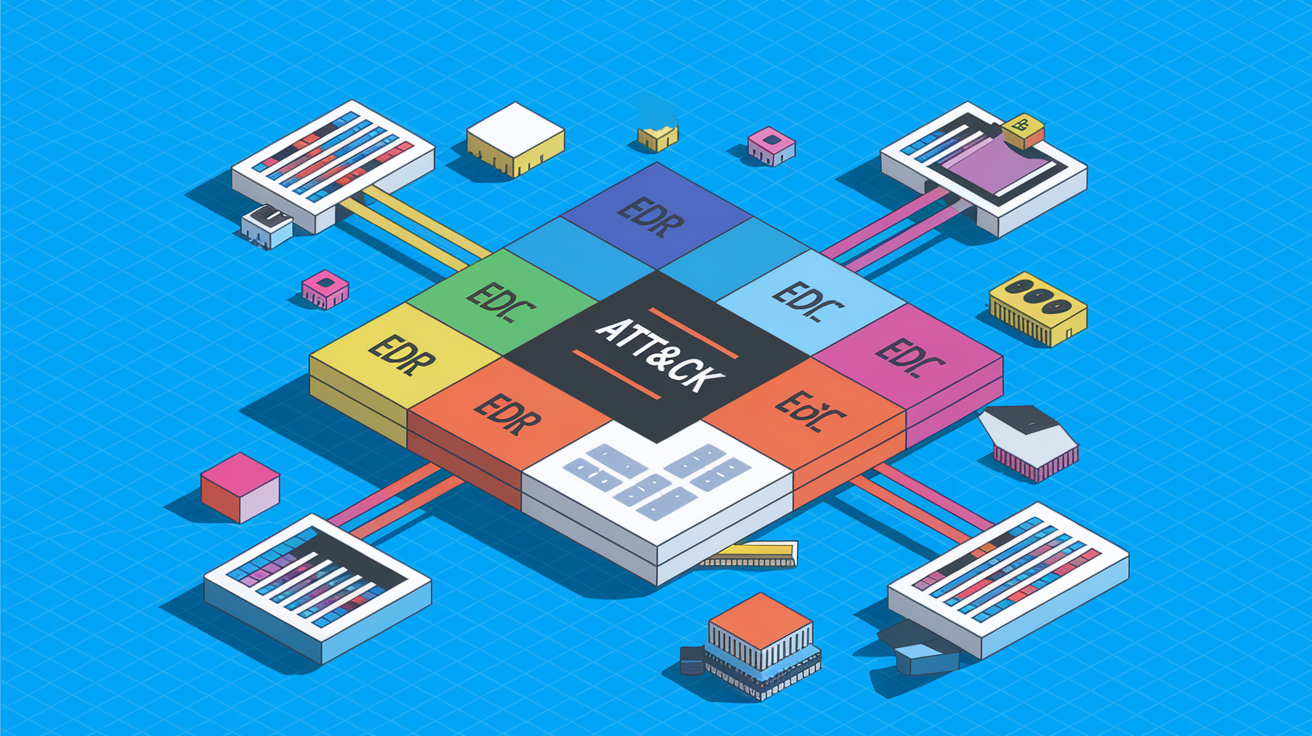
Standardized frameworks guide organizations in mapping defenses to attacker techniques. The MITRE ATT&CK framework catalogs real-world tactics, techniques, and procedures, letting security teams identify gaps in detection coverage and prioritize controls that address the most common zero-day exploitation patterns. Attack surface reduction rule sets, built into modern operating systems, block common exploit behaviors like Office macro execution, script-based attacks, and credential theft from memory.
Defensive tools need to integrate seamlessly to share telemetry, automate response, and cut the time between detection and containment. A centralized security information and event management platform correlates logs from endpoints, networks, cloud services, and threat intelligence feeds, surfacing anomalies that isolated tools would miss. When one system flags a suspicious process and another sees the same endpoint contacting a known command-and-control domain, the combined signal triggers immediate isolation.
Tool categories you need for zero-day protection:
- Exploit mitigation engines that block memory corruption techniques and return-oriented programming
- EDR suites with autonomous prevention, behavioral analytics, and forensic reconstruction
- Threat intelligence platforms that ingest structured feeds and enrich telemetry with context
- Attack surface reduction rule sets for operating systems and high-risk applications
- Sandbox analysis tools for detonating files, URLs, and email attachments in isolated environments
Final Words
in the action, this article explained how zero-day attacks work, why they’re dangerous, and practical defenses: behavior-based detection, threat intelligence, sandboxing, network segmentation, patching, and endpoint hardening.
It showed who should act and what each control reduces: blind spots, lateral movement, and attack windows.
For teams building a plan, combine these controls, automate patching and threat feeds, and rehearse containment. This practical zero day attack prevention lowers exposure and boosts recovery. Start small, iterate, and you’ll steadily strengthen your defenses.
FAQ
Q: What is a zero-day attack in security?
A: A zero-day attack in security is an exploit that targets a previously unknown software vulnerability before a patch exists, letting attackers gain access, steal credentials, or install persistent backdoors without signatures.
Q: Can a zero-day attack be prevented? / Which of these is a good way to prevent zero-day attacks?
A: A zero-day attack can’t be fully prevented, but you can reduce risk with behavior-based detection, threat intelligence, sandboxing, microsegmentation, rapid or virtual patching, strong endpoint defenses, and strict access controls.
Q: Who is most at risk from zero-day attacks?
A: Organizations and users most at risk from zero-day attacks are high-value targets—government agencies, critical infrastructure, large enterprises, and anyone running unpatched or legacy software, exposed internet services, or weak identity controls.