
What if a single undisclosed bug can lurk in your systems for months while attackers quietly steal data?
That’s the essence of the zero day vulnerability lifecycle, the path a flaw takes from creation through weaponization, exploitation, disclosure, and resolution.
This post maps each phase, gives typical timelines, explains who’s affected (developers, operations teams, and end users), and lists practical steps you can take to shorten the zero-day window and limit damage.
Comprehensive Breakdown of the Zero‑Day Vulnerability Lifecycle Phases

A zero-day vulnerability is a software flaw with “zero days” available to fix once it becomes actively exploitable. The vulnerability itself is the defect in the code. A zero-day exploit is the weaponized code or technique that takes advantage of that defect. A zero-day attack is the actual compromise that occurs when an attacker uses the exploit against live systems before a patch is available.
The lifecycle starts with flaw creation during coding, design, or integration. Common sources include memory errors (buffer overflows, use-after-free), logic flaws (authentication bypasses, race conditions), and insecure configurations. Discovery happens when researchers or attackers find the flaw using reverse engineering, automated scanners, or code reviews. Weaponization follows rapidly, sometimes within hours, as the discoverer builds a proof-of-concept and tests it against different software versions and endpoint protections.
Exploitation in the wild is the highest-risk phase. Attackers gain initial access through phishing, malicious sites, or direct attacks on public-facing applications, then perform lateral movement, privilege escalation, and data exfiltration while installing persistence mechanisms. The zero-day window extends from this first exploitation until the vendor releases a patch. This window can last days if disclosure is responsible and coordinated, or months to years if the flaw is kept secret and exploited continuously.
Disclosure brings the vulnerability to public or vendor attention, triggering patch development. Vendors must investigate, reproduce the flaw, engineer a fix, and issue an advisory. Patch deployment is the final defender-controlled stage, where IT teams must close the “patch gap” by applying updates, verifying installs, and monitoring for successful rollout. Obsolescence arrives when patches are widely deployed and exploit code loses effectiveness, though unpatched legacy systems can remain vulnerable indefinitely.
Timeline ranges across the lifecycle:
- Weaponization: Hours to days after discovery, depending on exploit complexity and attacker skill
- Zero-day window (responsible disclosure): Days to weeks, with vendor coordination shortening public exposure
- Zero-day window (secret exploitation): Months to years, especially for nation-state or high-value criminal campaigns
- Patch development: Days to weeks for critical flaws; longer for complex architectural issues or third-party dependencies
- Patch deployment: Weeks to months in enterprises due to testing, approvals, and staged rollouts; immediate for emergency advisories like CISA’s 24-hour CitrixBleed 2 deadline
Early‑Stage Zero‑Day Vulnerability Discovery and Analysis

Discovery is the moment a flaw transitions from latent defect to known exploit opportunity. Researchers and attackers use similar tools but with different incentives. A researcher who finds a privilege-escalation bug in a web framework typically follows responsible disclosure, notifying the vendor privately and giving them time to patch before any public announcement. An attacker who finds the same bug will weaponize it immediately and exploit it silently, preserving the zero-day window for maximum operational advantage.
Common discovery techniques used by both researchers and attackers:
- Static code analysis scans source or compiled code for known patterns like unvalidated inputs, hardcoded credentials, and unsafe function calls without executing the program
- Dynamic analysis runs the software in a controlled environment and monitors behavior, memory usage, and inter-process communication to spot runtime anomalies
- Fuzzing bombards input fields, APIs, and file parsers with malformed or unexpected data to trigger crashes, hangs, or exploitable memory corruption
- Symbolic execution treats program inputs as symbolic variables and explores possible execution paths mathematically to find edge cases that lead to security violations
- Binary diffing compares a patched version of software against the prior vulnerable version to reverse-engineer what the vendor fixed, then reproduces the original flaw
- Reverse engineering disassembles compiled binaries to understand internal logic, discover hidden features, and locate undocumented entry points attackers can abuse
When attackers discover a flaw first, the downstream timeline is entirely adversarial. They control disclosure, exploitation speed, and target selection, leaving defenders blind until the attack surfaces in logs or incident reports. When researchers discover it first and report responsibly, vendors gain a head start to engineer and deploy fixes before attackers can weaponize public proof-of-concept code. The difference between these two paths can mean the gap between a coordinated patch rollout and a global supply-chain compromise.
Zero‑Day Exploit Development and Weaponization Mechanics

Once a flaw is discovered, weaponization turns the abstract vulnerability into executable attack code. Attackers start with a proof-of-concept that demonstrates the bug can be triggered reliably. They then build a payload tailored to the target environment, embedding commands for initial access, privilege escalation, or data theft. Testing against different software versions, operating systems, and endpoint security products ensures the exploit works across a range of real-world configurations.
Obfuscation and evasion techniques are layered in to bypass antivirus signatures, sandbox environments, and behavior-monitoring tools. Attackers encrypt payloads, randomize code structure, and use fileless execution techniques that run malicious scripts directly in memory without touching disk. Some exploits chain multiple vulnerabilities together, using a less-severe bug to gain an initial foothold and then escalating through a second flaw to achieve remote code execution or kernel-level access.
| Technique | Purpose | Example Behavior |
|---|---|---|
| Sandbox evasion | Bypass automated analysis systems that detonate suspicious files in isolated environments | Check for VM artifacts, delay execution, detect debugger presence before activating payload |
| Exploit chaining | Combine multiple vulnerabilities to achieve deeper access than a single flaw allows | Use authentication bypass to enter a web app, then escalate via a separate privilege-escalation bug to reach administrative functions |
| Polymorphic code | Change the exploit’s binary signature with each deployment to evade signature-based detection | Recompile with different encryption keys, variable names, and instruction order while preserving exploit logic |
Weaponization timelines are short. Skilled attackers or nation-state groups can move from proof-of-concept to operational exploit in hours, especially for well-understood vulnerability classes like memory corruption or SQL injection. The faster the weaponization, the shorter the window for defenders to detect, investigate, and deploy mitigations before large-scale exploitation begins.
In‑the‑Wild Zero‑Day Exploitation and Attacker Operations

Active exploitation is where the zero-day transitions from theoretical risk to operational breach. Attackers use the exploit to gain initial access, often through phishing emails with malicious attachments, drive-by downloads from compromised websites, or direct attacks on public-facing applications and network appliances. Once inside, they escalate privileges by exploiting operating-system or application flaws to move from standard user accounts to administrative or Domain Admin credentials.
Lateral movement follows. Attackers enumerate internal networks, discover additional systems, and spread using stolen credentials, remote execution tools, or additional zero-day exploits. Persistence mechanisms are installed to survive reboots and credential rotations, including backdoor user accounts, scheduled tasks, registry modifications, and implants that masquerade as legitimate system processes.
Data exfiltration is the final operational goal for espionage and theft campaigns. Attackers compress and encrypt sensitive files, then transfer them to external command-and-control servers using encrypted channels, cloud storage APIs, or DNS tunneling to blend with normal traffic. Signature-based defenses fail here because the exploit code and attack patterns don’t match any known signatures. Behavior-based detection is the only reliable method during this phase.
Common exploitation indicators that signal zero-day activity:
- Unusual account queries searching for high-value artifacts like password hashes, API keys, or customer databases
- Abnormal outbound network traffic to rare or newly registered domains, especially encrypted connections to non-business IP ranges
- Privilege escalation attempts such as elevation to Domain Admin, creation of service accounts with excessive permissions, or unauthorized access to identity management systems
- Anomalous process spawns where legitimate applications (Office, browsers, PDF readers) launch unexpected child processes like PowerShell or command-line tools
- Unexpected lateral movement including remote desktop sessions initiated outside normal business hours, file transfers between segmented network zones, or access to systems the user has never touched before
Every attack leaves digital footprints in logs, file metadata, authentication records, and network flow data. Organizations that establish behavioral baselines for Active Directory, VPN access, DNS queries, and Web Proxy traffic can detect deviations that indicate zero-day exploitation even when signature-based tools remain blind.
Navigating the Zero‑Day Window, Disclosure Paths, and Patch Development

The zero-day window is the period between the first in-the-wild exploitation and the moment a vendor releases a patch. Length varies dramatically depending on who discovers the flaw and how disclosure is handled. If attackers find it first and exploit silently, the window can stretch for months or years until defenders or researchers independently discover the activity and reverse-engineer the vulnerability.
Disclosure paths shape the timeline. Responsible disclosure means a researcher privately notifies the vendor, shares technical details under NDA, and agrees to delay public announcement until a patch is available. Coordinated disclosure adds a third party, such as a CERT or government agency, to manage communication and set a fixed timeline for vendor remediation before public release. Public disclosure happens when researchers or vendors publish details immediately, triggering a high-risk race because attackers can reverse-engineer the flaw from the advisory and start exploiting unpatched systems within hours. Vendor-initiated disclosure occurs when a vendor detects exploitation, investigates, and issues an emergency advisory even before a patch is ready. Government equities processes apply when a flaw has intelligence or law-enforcement value. Agencies weigh whether to disclose and enable patching or retain the exploit for operational use.
Five disclosure paths and their operational characteristics:
- Responsible disclosure: Researcher privately notifies vendor, patch developed before public release, shortest zero-day window for defenders
- Coordinated disclosure: Vendor and researcher work with CERT or industry group, fixed timeline (often 90 days) balances patch development and public accountability
- Public disclosure: Researcher or vendor publishes details immediately, highest urgency for defenders but also highest risk of rapid attacker weaponization
- Vendor-initiated disclosure: Vendor detects in-the-wild exploitation, investigates, and issues advisory, may include workarounds or mitigations before patch is ready
- Government equities process: Intelligence or law-enforcement agency discovers flaw, decision to disclose vs retain for operations, timeline opaque to public and vendors
Patch development requires vendors to reproduce the vulnerability, understand root causes, engineer a fix, and test against regressions. Complex flaws affecting core libraries, operating-system kernels, or cryptographic implementations can take weeks to resolve safely. CVE (Common Vulnerabilities and Exposures) assignment provides a public identifier, and advisories detail affected versions, severity scores, and next steps. The patch gap (the time between patch release and deployment) is where many breaches occur, because attackers accelerate exploitation once the flaw is public and proof-of-concept code is circulating.
Enterprise Patch Deployment, Verification, and Post‑Patch Risk Management

Patch deployment is the final defender-controlled phase, and timing is critical. Organizations must balance speed with stability, testing updates in staging environments before rolling them to production. Regression testing checks that the patch doesn’t break existing functionality, especially in environments with custom integrations, legacy applications, or complex middleware stacks.
Automated patch management platforms inventory assets, track patch levels, and deploy updates across endpoints, servers, and network devices. Staged rollout minimizes risk by applying patches to small pilot groups first, monitoring for issues, then expanding deployment. Verification confirms the patch installed correctly, the vulnerability is closed, and systems return to normal operation. For high-criticality flaws, vendors may issue hotfixes or micro-patches that address the specific vulnerability without a full software update, reducing testing overhead and deployment time.
Rollback procedures are essential. If a patch introduces instability, crashes, or conflicts, IT teams must be able to revert systems quickly and notify vendors. The Equifax breach in 2017 is a cautionary example. Apache Struts released a patch for a critical remote code execution flaw in March 2017. Equifax failed to apply the update in time, and attackers exploited the unpatched vulnerability months later, exfiltrating personal data on 147 million individuals. The vulnerability was known, the patch was available, and deployment simply didn’t happen fast enough.
Typical enterprise patch phases after vendor release:
- Staging: Test the patch in a non-production environment that mirrors production configurations, dependencies, and workloads
- Testing: Run automated and manual regression tests, check application compatibility, and monitor for performance degradation or new errors
- Deployment: Roll out the patch in waves, starting with less-critical systems, then expanding to high-value assets and user endpoints
- Verification: Scan patched systems to confirm the update installed, check vulnerability status with scanning tools, and review logs for post-patch anomalies
Defensive Measures Mapped to the Zero‑Day Vulnerability Lifecycle Stages
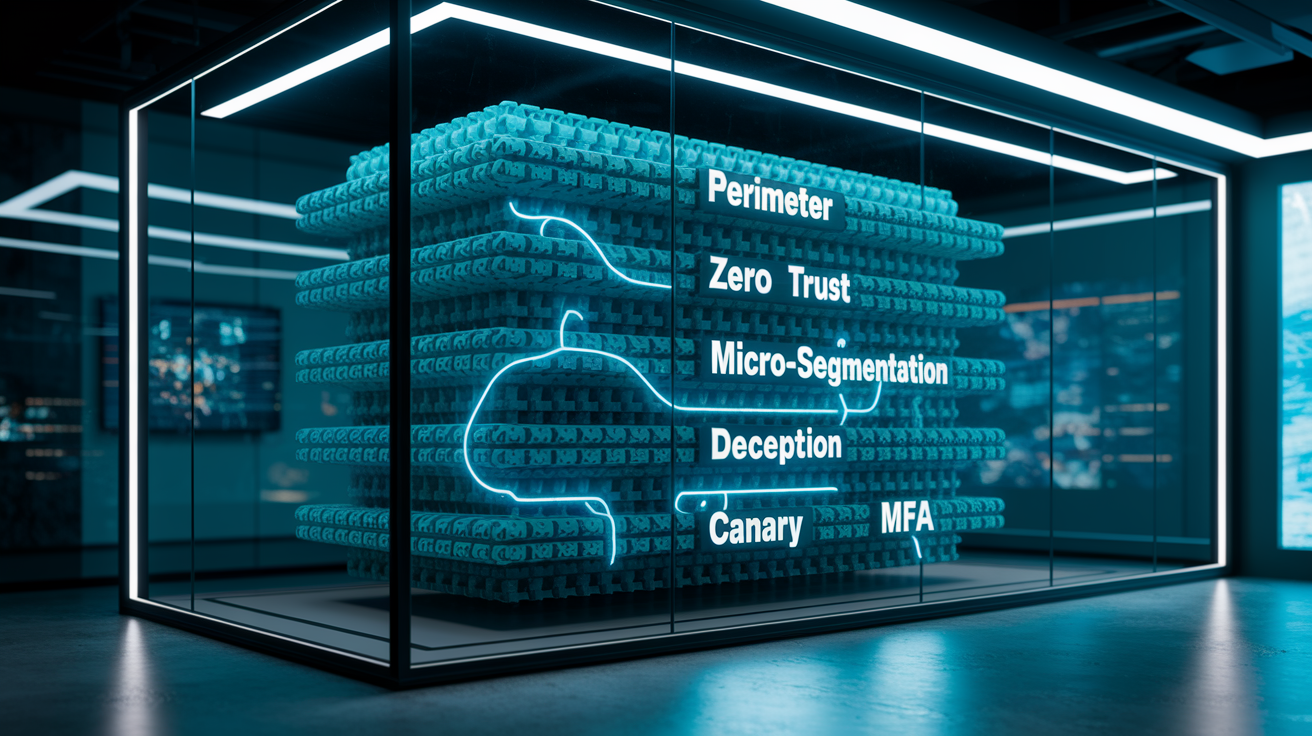
Effective zero-day defense requires controls at every lifecycle stage. Pre-discovery prevention focuses on reducing the attack surface and limiting the impact if a zero-day is exploited. Secure software development lifecycle practices catch vulnerabilities during coding and integration. Code reviews, static analysis, and automated testing in continuous integration pipelines flag memory-safety issues, logic flaws, and insecure configurations before they reach production.
Runtime application security monitors live software behavior to detect exploitation attempts. Tools that establish behavioral baselines for process execution, memory access, and network communication can flag anomalies like unexpected process spawns, unauthorized file modifications, or atypical outbound connections. This approach works even when signature-based defenses can’t recognize the exploit, because the malicious behavior deviates from normal application activity.
Zero Trust Architecture assumes breach and enforces continuous verification. Multi-factor authentication, micro-segmentation, and least-privilege access limit lateral movement if attackers exploit a zero-day to gain an initial foothold. Network segmentation divides infrastructure into smaller zones with strict firewall rules, so a compromised web server can’t easily pivot to internal databases or identity systems. Regular privilege reviews and role-based access controls reduce the number of accounts with administrative rights, shrinking the pool of high-value targets for privilege-escalation exploits.
Proactive patch management and threat intelligence complete the defense-in-depth strategy. Automated asset inventories track software versions, subscribe to vendor advisories and threat feeds, and prioritize deployment based on exploitability scores and asset criticality. Security teams that monitor compiler warnings in CI builds, adopt internal EPSS (Exploit Prediction Scoring System) frameworks, and use differential traffic analysis can detect subtle indicators of zero-day activity before widespread exploitation occurs.
| Lifecycle Stage | Recommended Controls | Purpose |
|---|---|---|
| Flaw creation / Development | Secure SDLC, static analysis, peer code reviews, automated testing in CI/CD pipelines | Catch memory errors, logic flaws, and insecure configurations before production deployment |
| Discovery / Weaponization | Bug bounty programs, responsible disclosure policies, threat intelligence feeds | Incentivize early reporting, gain visibility into emerging exploits, and monitor underground markets |
| Exploitation / In-the-wild | Runtime monitoring, behavioral baselines, endpoint detection and response (EDR), network traffic analysis | Detect anomalous behavior that signals zero-day exploitation, even without signatures |
| Zero-day window | Zero Trust Architecture, micro-segmentation, least privilege, MFA, deception technologies (canary tokens) | Limit blast radius and attacker dwell time by assuming breach and enforcing strict access controls |
| Patch development / Disclosure | Vendor backchannels, CVE monitoring, virtual patching via WAF or IPS, emergency change-control procedures | Gain early warning, apply temporary mitigations, and prepare rapid deployment once patch is released |
| Patch deployment / Post-patch | Automated patch management, staged rollout, regression testing, patch verification scanning, rollback plans | Close the patch gap quickly while minimizing risk of deployment failures or system instability |
Real‑World Zero‑Day Lifecycle Case Examples and Impact Insights
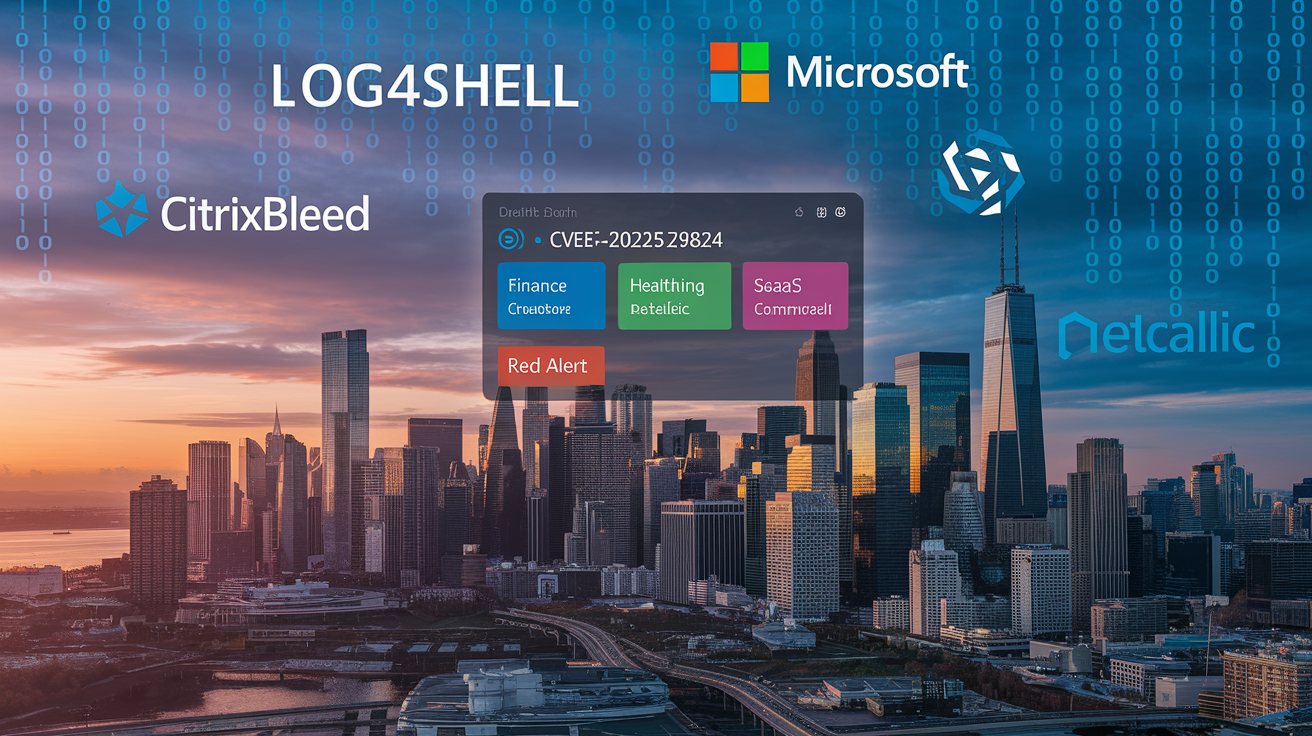
Log4Shell, discovered in late 2021, affected millions of Java applications using the Apache Log4j logging library. The vulnerability allowed remote code execution without authentication through crafted log messages. Weaponization was near-instant once proof-of-concept code circulated. Attackers scanned the internet for vulnerable endpoints and deployed cryptocurrency miners, ransomware, and espionage tools within hours. The zero-day window was short due to coordinated disclosure, but the patch deployment phase stretched for months as organizations struggled to inventory all systems using the vulnerable library, especially in nested dependencies and third-party software.
CitrixBleed 2, tracked as CVE-2025-5777, was discovered mid-June 2025 and allowed unauthenticated attackers to extract memory contents from Citrix NetScaler appliances. CISA issued an unusually short 24-hour patching deadline for federal agencies, reflecting the high risk of credential theft and lateral movement. The incident showed how disclosure timelines compress when exploitation is imminent and high-value targets are exposed.
Microsoft CVE-2025-29824 enabled privilege escalation through the Windows Common Log File System. The Storm-2460 threat group exploited it against targets in the U.S., Venezuela, Spain, and Saudi Arabia, focusing on IT, financial services, and retail sectors. The case shows how zero-days are often used in targeted campaigns rather than mass attacks, with attackers tailoring exploitation to specific industries and geographies.
Commvault Metallic SaaS platform vulnerability CVE-2025-3928 allowed remote authenticated attackers to access Microsoft 365 application secrets and sensitive configuration data. Nation-state actors confirmed exploitation, highlighting how cloud-based platforms and third-party SaaS providers introduce supply-chain risk. A single zero-day in a widely adopted service can expose downstream customer data across hundreds of organizations.
Impact across sectors and attack surfaces:
- Finance: Zero-days targeting payment gateways, trading platforms, or banking applications can enable direct financial theft, fraud, and regulatory penalties for data breaches
- Healthcare: Exploitation of medical devices, EHR (electronic health record) systems, or hospital networks can disrupt patient care, expose protected health information, and trigger HIPAA violations
- SaaS platforms: Vulnerabilities in cloud services amplify impact through multi-tenancy, where a single exploit can pivot across customer environments and exfiltrate data at scale
- Operating systems: Kernel-level zero-days in Windows, Linux, or macOS grant attackers the highest privilege level, enabling persistent backdoors, rootkits, and full system control
- Supply chain targets: Exploits in managed service provider tools (like the Kaseya VSA attack in July 2021) allow attackers to compromise thousands of downstream customers simultaneously through trusted vendor access
Final Words
In the action, we traced every stage of the zero day vulnerability lifecycle, from flaw creation and discovery through weaponization, in-the-wild exploitation, disclosure, patching, and enterprise rollout.
You saw timelines, attacker tactics, disclosure paths, and the controls defenders should map at each phase.
Use this as a checklist: prioritize behavior-based detection, tighten the SDLC and patch programs, and practice coordinated disclosure. The zero day vulnerability lifecycle is manageable when teams plan, test, and collaborate, so keep iterating and you’ll reduce the patch gap and overall risk.
FAQ
Q: What is a zero-day of vulnerability?
A: A zero-day vulnerability is a software flaw unknown to the vendor and unpatched, leaving systems exposed until a fix is released; attackers can exploit it immediately, so defenders must detect, mitigate, and patch fast.
Q: What is the life cycle of zero-day attack? / What is the lifespan of a zero-day exploit?
A: The life cycle of a zero-day attack (the exploit’s lifespan) is flaw creation → discovery → weaponization → in‑the‑wild exploitation → disclosure → patching → deployment → obsolescence; weaponization can take hours, windows often last days to months.
Q: What are the 5 stages of the cybersecurity lifecycle?
A: The five stages of the cybersecurity lifecycle are: 1) Identify assets and risks, 2) Protect with controls, 3) Detect incidents, 4) Respond to events, and 5) Recover services and apply lessons learned.