Your doctor’s office just sent you a recall letter about a medical device you’re using, but the FDA announced that recall three weeks ago. Why the delay, and where should you have been checking yourself? Medical device recalls follow a cascade notification system that reaches manufacturers first, then healthcare facilities, and finally patients. That built-in lag means waiting for a letter could leave you using a recalled device longer than necessary. Understanding where recalls are announced and how to monitor them yourself closes that gap and helps you catch safety issues faster.
Device Recall Announcement Process and Channels

How are device recalls announced depends on what kind of product you’re dealing with and which agency oversees it. For medical devices, that’s the Food and Drug Administration (FDA), which is part of the Department of Health and Human Services. They handle recalls, safety alerts, and market withdrawals. The Consumer Product Safety Commission (CPSC) takes care of general consumer products like electronics and household items, while the National Highway Traffic Safety Administration (NHTSA) manages vehicle recalls. When it comes to medical devices specifically, recalls break down into two types: voluntary recalls where manufacturers spot problems and take action, and FDA-mandated recalls when companies don’t act on known safety issues.
The announcement process starts when a manufacturer or healthcare facility identifies a defect. This happens through post-market surveillance, adverse event reports, quality testing, or patient complaints. The manufacturer investigates to figure out how big the problem is, conducts a health hazard evaluation, and assesses which devices and lot numbers are affected. They notify the FDA and propose a recall strategy that includes a classification recommendation, communication plan, and corrective actions. The FDA reviews this proposal, assigns an official recall classification based on health risk, and approves the announcement approach. Once that’s done, the manufacturer and FDA coordinate a public announcement through multiple channels at once. Timing and intensity depend on the severity classification.
Recall notices follow what’s called a cascade notification model because patient names and contact information aren’t typically shared with manufacturers under privacy regulations. The manufacturer first notifies the FDA, then sends formal recall notices to hospitals, clinics, and physician offices that purchased the affected devices. These healthcare facilities then send letters to all patients who received recalled devices, explaining the recall reason and available options. For devices registered directly to patients (like some insulin pumps or continuous glucose monitors where patients complete registration cards), the manufacturer can notify the patient directly. This creates a parallel notification path that reaches patients faster.
Recall announcement methods span multiple official channels to make sure the message reaches healthcare professionals and consumers. The FDA Medical Device Recalls database is the searchable official repository with detailed information on years of device recalls, updated regularly as new recalls are announced and existing ones move through corrective actions. The MedWatch program lets consumers and healthcare professionals sign up for safety alert emails covering medical devices, prescription and over-the-counter medicines, food ingredients, vaccines, cosmetics, pet food, and livestock feed. The FDA publishes weekly enforcement reports listing all new recalls across product categories with links to detailed recall announcements. You’ll also see FDA press releases for high-profile or urgent recalls, direct mail to healthcare facilities with registered device purchases, email alerts to facility safety officers and biomedical equipment managers, manufacturer website announcements on dedicated recall or safety pages, and increasingly, manufacturer social media accounts for time-sensitive notifications.
Timing expectations vary a lot by recall classification and whether the recall is voluntary or mandatory. Class I recalls involve reasonable probability of serious adverse health consequences or death, so they require immediate multi-channel announcements within days of FDA approval. This often includes emergency phone calls to healthcare facilities and overnight courier delivery of written notifications to make sure critical information reaches frontline clinicians without delay. Class II recalls, where device use may cause temporary or medically reversible adverse consequences, follow standard notification schedules typically completing announcements across all channels within two to three weeks. Class III recalls are the lowest level, where device use won’t likely cause significant health consequences but violates FDA regulations. These follow routine notification timelines that may extend several weeks. Voluntary recalls typically announce faster than FDA-mandated recalls because manufacturers control their own communication timeline, while mandatory recalls require additional FDA review steps before public announcement.
Every recall announcement must contain specific standardized information so consumers and healthcare providers can take immediate action. Required elements include the device name, common name, and technical description with enough detail to identify affected products. Complete manufacturer information including company name, address, and recall coordinator contact details. A clear explanation of the reason for recall describing the specific defect or malfunction. A health hazard evaluation explaining potential risks to patients if they continue using the device. Affected lot numbers, serial numbers, model numbers, and catalog numbers that precisely identify recalled units. Distribution dates showing when affected devices were shipped to help facilities and patients determine if their device falls within the recall window. Recommended corrective actions with specific instructions such as “return device for software update,” “follow revised monitoring protocol,” “device may remain in use with additional precautions,” or “immediately discontinue use and contact physician.” And contact information for consumers and healthcare professionals to ask questions or report problems. The announcement must distinguish between corrections, where the device stays with the patient but receives updates or label changes, and removals, where the device returns to the manufacturer for repair, replacement, or disposal.
| Resource | Purpose | How to Access | Update Frequency |
|---|---|---|---|
| Medical Device Recalls Database | Searchable archive of all device recalls with detailed technical information, affected products, and corrective actions | FDA website recall database search tool, filterable by device name, manufacturer, recall date, or classification | Updated within 24-48 hours of new recall announcements, with ongoing status updates as recalls progress |
| MedWatch Safety Alerts | Email subscription service delivering urgent safety communications about medical products directly to subscribers | Sign up through FDA MedWatch portal with options to select specific product categories of interest | Sent as recalls are announced, typically same-day or next-day for urgent safety issues |
| Weekly Enforcement Reports | Comprehensive listings of all FDA enforcement actions including recalls, market withdrawals, and safety alerts across all product types | Published on FDA website every Wednesday, available as web pages or downloadable PDF documents | Weekly publication every Wednesday covering actions from the previous week |
Understanding Device Recall Classifications and Announcement Urgency
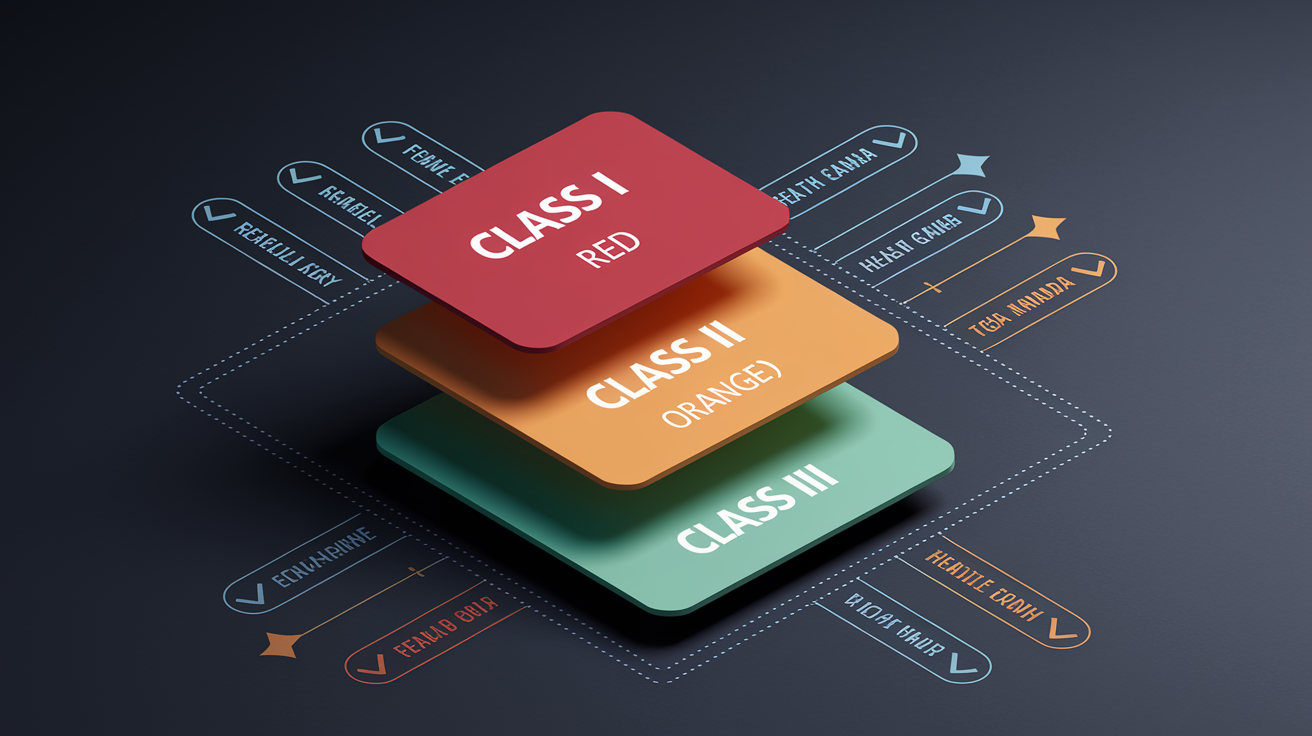
The FDA uses a three-tier classification system that categories recalls by health risk severity. This directly determines how aggressively recalls are announced and how quickly responses are required. It helps prioritize communication resources and sets clear expectations for manufacturers, healthcare facilities, and patients about response urgency.
Class I recall represents the most serious category. It involves reasonable probability of serious adverse health consequences or death. Examples include pacemakers that suddenly stop functioning due to battery defects, infusion pumps delivering incorrect medication doses because of software errors, surgical instruments breaking during procedures and leaving fragments in patients, or ventilators failing to deliver adequate oxygen. Class II recalls occur when device use may cause temporary or medically reversible adverse consequences, or when the probability of serious health consequences is remote. Typical Class II situations include insulin pumps with incorrect bolus calculation displays that patients can verify before delivery, hearing aids with software glitches causing uncomfortable volume spikes, diagnostic imaging equipment producing slightly degraded image quality that doesn’t affect diagnosis, or mobility devices with minor stability issues manageable through proper use. Class III recalls represent the lowest level where device use won’t likely cause significant health consequences but the device violates FDA regulations. These often involve labeling errors, packaging defects, or minor deviations from manufacturing standards discovered during inspections. Medical device recalls are rare overall because devices are rigorously tested to the highest standards before market approval.
Classification level determines announcement strategy and required response speed. Class I recalls trigger immediate notifications through all channels simultaneously. This includes emergency phone calls to healthcare facilities within 24 hours, overnight courier delivery of written notifications to hospitals and clinics, same-day posting to FDA databases and MedWatch alerts, press releases to major news outlets, and direct manufacturer outreach to registered device owners. Healthcare facilities receiving Class I notices must immediately locate affected devices, assess which patients have them, and contact those patients within days using all available contact methods. Class II recalls use a standard multi-channel approach typically completing within two to three weeks, with formal written notifications, database postings, and facility outreach following established protocols without the emergency urgency of Class I. Class III recalls follow routine notification schedules that may extend several weeks, often announced through weekly enforcement reports and database updates without immediate facility phone calls.
Classification helps consumers and healthcare providers prioritize their response actions based on actual risk levels rather than reacting uniformly to all recalls. Most patients experience no problems even when their device is subject to an advisory. Understanding classification provides perspective on whether immediate action is necessary or whether scheduled follow-up during a routine appointment is appropriate. Manufacturers must provide regular status updates on recall effectiveness. Weekly reports for Class I, biweekly for Class II, and monthly for Class III, demonstrating progress in notifying facilities and implementing corrective actions.
Finding and Monitoring Device Recall Announcements

Proactive monitoring is especially important for patients with implanted devices or those using life-sustaining equipment. Announcement delays can occur between manufacturer notification to facilities and facility notification to patients. While healthcare providers play a primary role in notification, patients bear some responsibility for awareness, particularly for devices they use at home or implanted devices they’ll have for years.
Here are seven steps for staying informed about device recalls:
-
Keep detailed device records including brand name, manufacturer, model number, serial number, lot number, and implant or purchase date in an accessible location. Take photos of device labels and store in your phone and email them to yourself for backup.
-
Sign up for FDA MedWatch email alerts through the FDA website, selecting medical devices as a category of interest to receive notifications as recalls are announced.
-
Periodically search the FDA Medical Device Recalls database by your device name or manufacturer every three to six months. The database allows searches by device type, manufacturer name, recall date range, or specific product names.
-
Register devices with manufacturers when registration programs are available by completing registration cards included with devices or registering through manufacturer websites. This enables direct notifications bypassing the healthcare facility intermediary.
-
Maintain updated contact information with all healthcare providers including primary care physicians, specialists, and the hospital or clinic where devices were implanted. Confirm they have your current cell phone, email, and mailing address at every appointment.
-
Follow relevant patient advocacy organizations on social media such as condition-specific nonprofits or device user groups that often share recall announcements and provide community discussion about experiences and responses.
-
Set calendar reminders to check FDA enforcement reports quarterly as a backup, browsing through the medical device section to catch any announcements that might have missed you through other channels.
Device tracking systems work significantly better when patients register their devices because manufacturers maintain databases of registered serial numbers connected to patient contact information. Unique device identifiers (UDIs), which appear as barcodes on device packaging and in electronic health records, help track which specific units went to which facilities. But privacy regulations prevent manufacturers from accessing patient names from hospital records. When patients complete registration cards or online forms, they explicitly authorize manufacturers to contact them directly about safety issues. This creates a direct notification path that reaches patients within days rather than waiting weeks for facilities to process and mail letters. Registration programs vary by manufacturer and device type. Implantable cardiac devices typically have robust registration systems while many diagnostic devices and durable medical equipment lack formal registration, making proactive checking more important for these categories.
Coordination with healthcare providers creates an additional safety net for recall awareness. Schedule check-ins with your physician’s office or specialty clinic periodically, asking if they’ve received any safety communications about your specific device model. Medical practices receive hundreds of notifications annually and occasionally miss flagging specific patients, so your inquiry prompts records review and ensures you haven’t been overlooked. For implanted devices, ask during routine follow-up appointments whether any advisories or updates have been issued, and confirm the office has your device serial number correctly recorded in your chart for matching against recall notifications.
Taking Action When Learning of a Device Recall

Don’t panic upon learning of a recall. Medical device recalls are rare and most patients experience no problems even when their device is subject to an advisory. Recalls rarely require immediate device removal because the health risks of suddenly stopping a therapeutic device often exceed the risks identified in the recall, especially for life-sustaining devices like pacemakers, insulin pumps, or ventilators.
Read the entire recall announcement carefully before taking any action. Pay particular attention to the affected lot numbers, serial numbers, and model numbers listed. Locate your device information from device cards, packaging, user manuals, or medical records to verify whether your specific unit is actually included in the recall. Many recalls affect only certain production batches manufactured during specific date ranges while identical-looking devices from other batches are unaffected. Check each identifier the announcement lists because devices may share model names but differ in serial number ranges, and only devices matching all specified criteria fall within the recall scope. If you can’t locate your device information, contact the clinic or hospital where you received the device to request your serial number from their records.
Contact your healthcare provider immediately for personalized guidance rather than making device decisions independently. Physicians receive detailed clinical guidance beyond what public announcements contain, including risk-benefit analyses specific to different patient populations, alternative treatment options, and monitoring protocols during the transition period. Your doctor will assess your individual health situation, evaluate how dependent you are on the device, consider your specific risk factors, and provide tailored recommendations. For example, a recall announcement might state generic language about potential malfunction risk, while your cardiologist knows your specific heart condition, whether you have backup pacing needs, and whether your device history shows any concerning patterns that elevate your personal risk above the general recall population. Never stop using a recalled device until talking to your doctor, unless the recall notice specifically instructs immediate cessation. Abrupt discontinuation can be dangerous.
Specific corrective actions that may be outlined in recall announcements include:
Scheduling software updates where devices receive firmware patches addressing the identified defect, typically completed during office visits or remotely for internet-connected devices. Returning the device to the manufacturer or designated service center for inspection, repair component replacement, or complete device exchange with a corrected unit. Following new monitoring schedules with more frequent check-ups, self-monitoring of specific symptoms, or additional diagnostic tests to detect early signs of the defect manifesting. Reviewing and following updated instructions or labels that clarify proper use, explain previously undocumented limitations, or provide new protocols for safe operation. Arranging for device repair or replacement through your healthcare facility, which coordinates with manufacturers on approved corrective procedures covered under warranty or recall programs.
Document any adverse events or unusual device behavior you experience after learning of the recall, even if you’re unsure whether they’re related to the defect. Note dates, symptoms, circumstances, and any conversations with healthcare providers. Report problems through the FDA MedWatch voluntary reporting system or manufacturer customer service channels. Your reports contribute to ongoing safety monitoring that may reveal problems not initially recognized during the recall investigation. For many recalls, especially Class II and III, continued medical monitoring becomes the recommended action rather than immediate device changes, with physicians watching for early warning signs while the device continues providing necessary therapy under closer supervision.
International Device Recall Announcement Coordination

Medical devices are often sold internationally, requiring coordinated announcements across multiple regulatory agencies when safety issues affect products distributed to different countries. Manufacturers must notify each country’s regulatory authority separately based on distribution records showing where specific device lots were shipped. The FDA handles notifications for devices distributed in the United States, Health Canada manages Canadian market devices, the European Medicines Agency coordinates with national authorities across European Union member states, the Therapeutic Goods Administration (TGA) oversees devices in Australia, and the Pharmaceuticals and Medical Devices Agency (PMDA) regulates the Japanese market. Each regulatory body requires its own formal recall notification following local procedures, filing requirements, and approval processes before manufacturers can announce recalls publicly within that jurisdiction.
Regulatory agencies share safety information through international networks including the International Medical Device Regulators Forum (IMDRF) and bilateral information exchange agreements. This enables faster global awareness when serious device defects emerge. When one agency receives a recall notification, they alert counterpart agencies in countries where the device is also marketed, potentially accelerating local investigations and recall decisions. Announcement timing may vary by days or weeks depending on each agency’s review process. One country might approve immediate public announcement while another requires additional data analysis or manufacturer clarification before authorizing the recall communication. This coordination prevents information gaps where patients in some countries learn of serious risks while others remain unaware, though complete simultaneity across all jurisdictions is rare.
Announcement wording, required corrective actions, and recall classifications may vary by jurisdiction based on local regulations and healthcare system differences. A device classified as Class II in the United States might receive a different severity rating in Europe based on how each system evaluates health risks. The specific corrective actions required, such as software update procedures, return logistics, or monitoring protocols, reflect how healthcare is delivered in each country. Consumers should check their own country’s regulatory website for applicable announcements rather than relying solely on FDA information, because the FDA database only covers devices distributed within the United States and may not reflect actions taken in other markets or additional guidance issued by other national authorities for the same device model.
Final Words
Device recalls are announced through multiple coordinated channels to ensure patients, healthcare providers, and the public get critical safety information quickly.
The FDA Medical Device Recalls database serves as the official source, supported by MedWatch alerts, weekly enforcement reports, direct manufacturer notifications to healthcare facilities, and press releases.
Understanding how device recalls are announced helps you stay informed through proactive monitoring, device registration, and maintaining updated contact information with your healthcare providers.
Most recalls require simple corrective actions like software updates or label changes rather than device removal. If you learn your device is recalled, verify your specific model is affected, then contact your doctor for personalized guidance before making any changes to device use.
FAQ
What should I do if atorvastatin is being recalled?
If atorvastatin is being recalled, first verify your specific lot number matches the recall announcement. Don’t stop taking the medication until you consult your doctor or pharmacist, who can assess your individual situation and provide guidance on alternative treatments or next steps.
How are consumers notified of recalls?
Consumers are notified of recalls through multiple channels including FDA database announcements, MedWatch email alerts, weekly enforcement reports, press releases, manufacturer websites, and direct notifications from healthcare providers. Doctors and hospitals receive direct notices from manufacturers and then contact their patients about affected devices or medications.
Is there a recall on Verapamil?
To check if Verapamil is currently recalled, search the FDA’s drug recall database or MedWatch alerts for the most current information. Recalls change frequently, so checking official FDA resources directly provides the most accurate and up-to-date status for any specific medication.
Is Vyvanse recalled?
To verify if Vyvanse is recalled, check the FDA’s drug recall database or sign up for MedWatch alerts for current notifications. Contact your pharmacist or prescribing doctor immediately if you find a recall affecting your specific lot number for guidance on continuation or alternatives.