Remember when a company threw away a brand worth billions overnight? That’s exactly what happened when Twitter became X on July 23, 2023. Elon Musk announced the rebrand in a late-night tweet, and within 24 hours the blue bird vanished, the domain changed, and 450 million users woke up to a platform they barely recognized. Here’s the complete timeline of how one of tech’s fastest rebrands unfolded, what actually changed beyond the logo, and why it still matters for anyone using the platform today.
The Official Twitter to X Rebrand Timeline
Twitter became X on July 23, 2023, when Elon Musk announced the rebrand in a late-night tweet. The whole thing happened fast. Within 24 hours, the blue bird logo disappeared, the domain started redirecting, and one of the internet’s most recognizable brands went through a complete visual overhaul that caught 450 million monthly users off guard.
- July 23, 2023: Musk announced the rebrand to X in an evening tweet, saying the Twitter brand was done
- July 24, 2023: The blue bird vanished, replaced by a black and white X logo across web and mobile apps
- Late July 2023: The domain x.com started redirecting to twitter.com, so you could reach the platform either way
- July 24, 2023: Mobile app icons changed to show the new X logo on iOS and Android
- July 24, 2023: Crews removed physical signage at Twitter headquarters in San Francisco, taking down the bird logo from the building
- Late July 2023: Official communications shifted to X Corp terminology across business channels
What made this rebrand unusual was how aggressively it rolled out. Most big corporate rebrands take months with gradual transitions, customer warnings, phased rollouts. This one happened overnight with almost no warning, forcing users, businesses, advertisers, and media to immediately adjust. The speed reflected how Musk’s been running platform changes since the acquisition. Fast execution, limited consultation.
Background and Strategic Vision Behind the Rebrand
Elon Musk bought Twitter for $44 billion in October 2022, closing the deal after months of legal fights and attempts to back out. Right after taking control, he restructured everything under X Corp, signaling early on that he had bigger plans than just running the existing platform. Creating X Corp served as the legal foundation for what would become a much broader transformation.
The X brand means something personal to Musk going back over 20 years. He founded x.com in 1999 as an online banking company during the early internet boom. That venture merged with Confinity to form PayPal, which became one of the most successful digital payment platforms. Musk’s expressed attachment to the X brand throughout his career, using it for SpaceX and Tesla’s Model X. The Twitter acquisition gave him a chance to revive the brand for what he’s calling his most ambitious project yet.
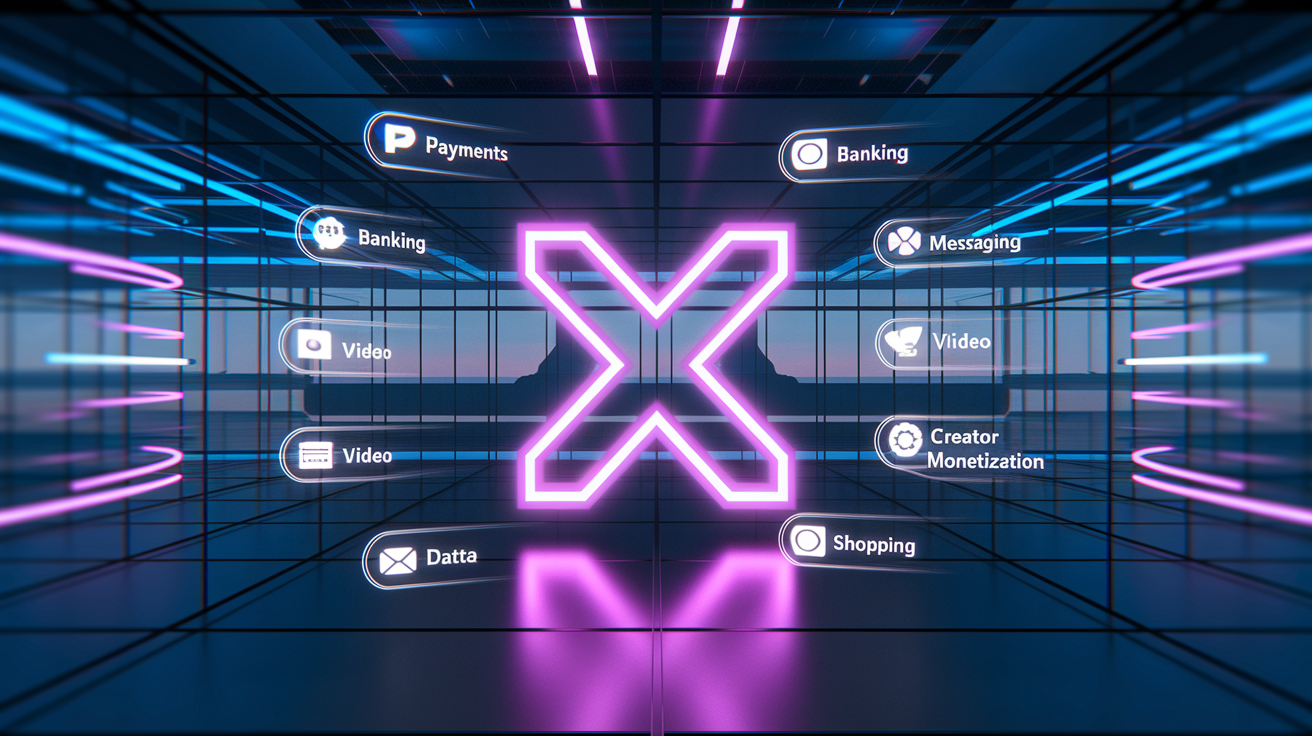
The rebrand isn’t just about changing the name. It’s about transforming Twitter from a social media platform into an everything app, a comprehensive digital utility modeled after China’s WeChat. This super app concept aims to integrate multiple services into one platform where you can handle communication, payments, content, and financial transactions without switching apps. Planned features include:
- Payment processing: peer-to-peer transfers, merchant transactions, digital wallet functionality
- Banking services: checking accounts, savings products, direct deposit
- Extended video: multi-hour uploads, live streaming, creator monetization
- Messaging: encrypted DMs, group chats, voice and video calling
- Creator monetization: subscription tiers, tipping, ad revenue sharing
- Financial services: stock trading, crypto transactions, investment products
- Shopping integration: product listings, checkout, marketplace features
The everything app vision comes from Musk’s belief that Western markets don’t have anything like WeChat, which dominates daily digital life in China. WeChat users can message friends, pay bills, book appointments, order food, hail rides, manage investments, access government services, all in one app. Musk sees Twitter’s existing user base and real-time infrastructure as the foundation for building something similar for global markets.
This represents more than a name change. It’s a transformation from a social media platform focused on short posts and conversation into a digital utility handling multiple aspects of your financial and communication needs. Musk’s attachment to the X brand, combined with his track record and the structural changes since acquisition, suggests he views this as central to his business strategy rather than an impulse decision.
Platform Changes and New Terminology
The X rebrand brought dramatic visual and branding changes, but the core functionality stayed the same. You can still follow accounts, like posts, repost content, reply to conversations, send DMs, and scroll through feeds.
| What Changed | Details |
|---|---|
| Logo | Blue bird removed, replaced with black and white X symbol |
| Subscription service name | Twitter Blue became X Premium with expanded features |
| Video length limits | Extended to 2 hours for premium users (previously limited to minutes) |
| Character limits | Removed previous 140 character limit, extended to thousands for premium users |
| URL and domain | twitter.com redirects to x.com, both URLs currently work |
The user experience stayed consistent despite the visual overhaul. If you used Twitter the day before the rebrand, you could log in as X and immediately know how to navigate, post, and interact. The home feed, notification panel, search, trending topics, profile structure all kept their familiar layouts. This helped reduce friction during the transition, even as the branding changed completely.
No official replacement for “tweet” was announced. Musk and the company didn’t introduce new vocabulary for core actions. Posts are still widely called tweets, sharing is still retweeting, and user identifiers remain Twitter handles. Internal documentation initially mixed terminology, sometimes using Twitter terms and sometimes trying X-branded alternatives, which created confusion.
The reality is that users, media outlets, businesses, and even Musk himself keep using original Twitter terminology months later. News articles reference tweets, users say they’re tweeting, retweeting persists despite the X logo. This shows how deeply Twitter’s terminology embedded itself in internet culture over nearly two decades. Changing a logo and domain is far easier than changing how millions of people describe their actions.
Business Impact and Market Response

The overnight rebrand shocked 450 million monthly users who logged in to find one of the internet’s most recognizable brands had disappeared. Immediate public reaction mixed confusion, frustration, nostalgia for the blue bird, and criticism about abandoning valuable brand equity. Social media filled with farewell messages, memes, debates over whether this made strategic sense.
The rebrand created immediate practical challenges for businesses and organizations that had built their digital presence around Twitter. Companies needed to update creative assets, revise social media guidelines, modify ad campaigns, train teams on new branding. Marketing materials, presentations, website footers, promotional content all referenced Twitter and required updates. The URL change from twitter.com to x.com disrupted link tracking, broke analytics dashboards, complicated SEO strategies optimized around Twitter domains.
The platform displayed messages about improvements coming to analytics.twitter.com while letting users download historical tweet analytics and access beta versions of account analytics. This transition period created gaps in reporting and made it tough for businesses to maintain consistent performance tracking. Social media managers found themselves rebuilding measurement frameworks and explaining metric discrepancies to stakeholders.
- User concerns: confusion over terminology, worry about platform stability, uncertainty about future direction, attachment to Twitter brand identity
- Threads response: Meta launched Threads weeks before the X rebrand, positioning it as a stable alternative with familiar mechanics
- Bluesky activity: the decentralized platform saw signup surges as users explored options beyond X
- Mastodon growth: open source alternative gained traction among users skeptical of centralized platform changes
- Media reaction: extensive coverage questioning the business logic of abandoning a brand valued in the billions
The timing coincided with increased competition from emerging platforms. Threads launched in July 2023, capitalizing on user uncertainty around Twitter’s direction under Musk’s ownership. The X rebrand gave competitors additional ammunition. They offered stability and familiar branding while X represented dramatic change and uncertain direction. Some users migrated to alternatives, though X retained most of its user base and continued handling the same volume of real-time conversation.
Brand value considerations sparked debate among marketing experts and business analysts. Twitter had built one of the most recognizable brands in tech over 17 years, with the blue bird and “tweet” terminology becoming part of everyday language. Studies estimated Twitter’s brand value in the billions. That equity vanished overnight. Critics argued abandoning this recognition made the everything app vision harder to achieve, not easier, since X started from zero in brand awareness outside existing Twitter users.
The controversy extended beyond branding specialists to everyday users who felt emotional connections to Twitter as a cultural touchpoint. The platform had facilitated global movements, breaking news, political revolutions, countless personal connections since 2006. Removing the blue bird felt to many like erasing that history, even though the underlying service and community persisted.
User adaptation continues months later. Some embrace the X branding, others maintain Twitter terminology out of habit, many mix both depending on context. Engagement metrics show that despite dramatic change and vocal criticism, usage patterns remained relatively stable. People kept posting, scrolling, interacting at similar rates, suggesting the rebrand was jarring but didn’t fundamentally break the behaviors that keep users returning.
The Evolving X Platform and Future Outlook

X appears permanent as the platform continues evolving under Musk’s ownership. Unlike previous controversial changes that got reversed, the rebrand involved complete restructuring under X Corp, full domain migration, integration into Musk’s broader business strategy. The company hasn’t signaled any return to Twitter branding, and ongoing development focuses on building out the everything app vision rather than preserving legacy identity.
The roadmap toward becoming a comprehensive digital utility depends on successfully launching payment systems, video features, creator tools that justify the super app positioning. Early steps included extending video upload limits, expanding character counts for premium subscribers, testing creator revenue sharing. These lay groundwork for more ambitious integrations like peer-to-peer payments, shopping functionality, financial services that would transform X from a communication platform into a daily utility handling multiple aspects of digital life.
Future feature rollouts will determine whether the everything app vision succeeds or whether X remains primarily a rebranded social media platform. User adoption of payment features, engagement with long-form video, willingness to consolidate multiple services into X will signal whether Musk’s bet on platform transformation pays off. The success or failure of these expansions, not the rebrand itself, will ultimately define whether changing Twitter to X was visionary strategy or costly misstep.
Final Words
Twitter officially changed to X on July 23, 2023, marking one of the fastest and most dramatic rebrands in tech history.
The overnight transformation from the iconic blue bird to the black-and-white X logo shocked 450 million users and fundamentally altered one of the world’s most recognizable brands.
While the visual identity shifted completely, core functionality stayed intact. Users still follow, like, and post the same way they did before the rebrand.
The long-term success of X depends on whether Musk’s everything app vision translates into real feature expansion beyond social media. For now, the platform continues evolving under new ownership with an ambitious roadmap ahead.
FAQ
Why was Twitter changed to X?
Twitter was changed to X to align with Elon Musk’s vision of transforming the social media platform into an everything app. The rebrand supports his long-term strategy to expand the service beyond social media into payments, banking, video, messaging, and creator monetization, similar to China’s WeChat.
Does Elon Musk have US citizenship?
Elon Musk has US citizenship after becoming a naturalized citizen in 2002. He was born in South Africa in 1971, moved to Canada in 1989, and later relocated to the United States, where he obtained American citizenship while building his business empire.
How do I change X back to Twitter?
You cannot change X back to Twitter because the rebrand is permanent and controlled by the platform owner. The domain x.com now redirects from twitter.com, the logo replaced the blue bird, and the company officially operates as X, though users still reference original Twitter terminology.
What is the 4-1-1 rule on Twitter?
The 4-1-1 rule on Twitter (now X) suggests posting four pieces of relevant content from others, one soft promotional post, and one hard promotional post. This guideline helps maintain audience engagement by balancing educational and promotional content without overwhelming followers with self-promotion.
When exactly did Twitter become X?
Twitter became X on July 23, 2023, when Elon Musk announced the rebrand via tweet. The iconic blue bird logo was removed and replaced with the black-and-white X logo on July 24, 2023, completing the overnight transformation that shocked 450 million monthly active users.
What happened to the Twitter blue bird logo?
The Twitter blue bird logo was removed on July 24, 2023, and replaced with a black-and-white X logo as part of the complete rebrand. The physical signage at company headquarters was also removed, eliminating one of the world’s most recognizable social media brand identities.
Are tweets still called tweets on X?
Tweets are still commonly called tweets on X because no official replacement term was introduced during the rebrand. Users, media, and even Elon Musk continue using original Twitter terminology including tweets, retweets, and Twitter handles despite the platform’s name change.
What is X Premium?
X Premium is the paid verification subscription service that replaced Twitter Blue after the rebrand. The premium subscription offers enhanced features including longer video uploads, extended character limits for posts, and verification badges, maintaining similar benefits under the new platform branding.
How did users react to the Twitter to X rebrand?
Users reacted to the Twitter to X rebrand with shock and confusion when the overnight change occurred in July 2023. The sudden transformation of a globally recognized brand sparked controversy, with some users migrating to competitor platforms like Threads, Bluesky, and Mastodon.
What is the everything app vision for X?
The everything app vision for X aims to transform the platform from social media into a comprehensive digital utility offering payments, banking, video, messaging, and financial services. This concept, modeled after China’s WeChat, represents Musk’s strategy to create a global all-in-one digital platform.