
Think Airbnb started as a polished app? It began with three air mattresses in 2007 and didn’t become a continuous booking platform until August 2008.
Founders Brian Chesky, Joe Gebbia, and Nathan Blecharczyk tested the idea at a design conference in October 2007, then rebuilt the site and targeted the 2008 Democratic National Convention to scale beyond events.
This post explains why August 2008 marks Airbnb’s operational launch, who was affected, and the steps they took from the airbed prototype to a platform that accepted listings and bookings year-round.
Key Date Overview of Airbnb’s Operational Start

Airbnb officially began operations in August 2008 in San Francisco. That’s when the company stopped being an experiment and became a real accommodation platform. Brian Chesky, Joe Gebbia, and Nathan Blecharczyk founded the service after testing the core idea during a design conference in late 2007. August 2008 is when things got serious. The platform moved beyond a single event and started accepting listings and bookings continuously.
The path to that August launch started in October 2007. Chesky and Gebbia hosted three guests on air mattresses in their San Francisco apartment during the ICSID/IDSA World Congress. They charged $80 per night per airbed and promoted it through design blogs and conference channels. A freelance HTML developer built the initial website, which they branded “AirBed & Breakfast.” That prototype became the foundation for the operational platform nine months later.
Key dates in Airbnb’s operational start:
- October 2007: First prototype test during a San Francisco design conference, three guests on airbeds at $80 per night
- Summer 2008: Site completion and targeted launch around the Democratic National Convention in Denver, generating hundreds of listings
- August 2008: Official start of continuous operations as a booking platform
- March 2009: Company name simplified from “AirBed & Breakfast” to “Airbnb” following Y Combinator acceptance
Early Origins Leading Up to Airbnb’s 2008 Operations
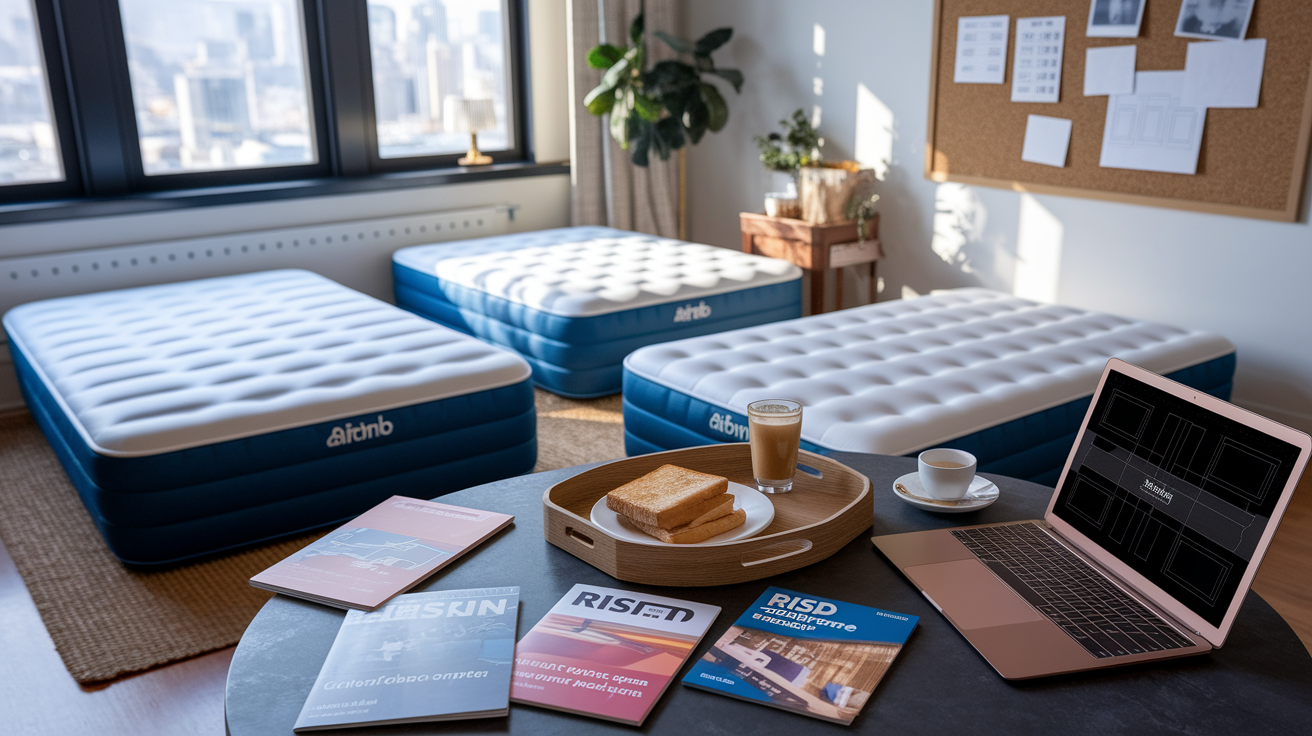
The idea that led to Airbnb’s August 2008 launch came from a practical need. They needed to cover rent. In early 2007, Brian Chesky decided to move to San Francisco to join Joe Gebbia, who was already living in a three-bedroom apartment on Rausch Street in the South of Market neighborhood. Their monthly rent jumped to $1,150, and Chesky showed up with around $1,000 in his bank account. The two RISD graduates had to get creative. They’d met and worked together in summer 2004 at the Rhode Island School of Design in Providence, forming a partnership that would eventually change how people travel.
In October 2007, Chesky and Gebbia learned that the Industrial Designers Society of America conference would bring thousands of designers to San Francisco, creating a hotel shortage. They saw an opportunity to solve their rent problem and test a hospitality concept. Within days, they sketched wireframes and mockups for a simple website, hired a freelance developer to build basic HTML pages, and listed three air mattresses in their apartment at $80 per night. They promoted it through design blogs and conference organizers, targeting the professional designers attending the late October event.
The Air Mattress Prototype That Sparked Airbnb
The October 2007 experiment worked immediately. Three designer guests booked the airbeds within days of the site going live, each paying $80 per night to sleep in the SoMa apartment. The founders provided breakfast and showed their guests around San Francisco during the conference. The bookings generated enough revenue to help cover that month’s rent. More importantly, they proved that strangers would pay to stay in someone else’s home when hotels were unavailable or expensive.
The success of the three airbed test convinced Chesky, Gebbia, and Nathan Blecharczyk (who joined during the early product build phase) that the concept could scale beyond a single event. Over the following months, they refined the prototype and prepared to launch a fully operational platform that could handle multiple listings and bookings simultaneously. That set the stage for the August 2008 operational start.
Airbnb’s 2008 Product Launch and Initial Operations

Moving from the October 2007 prototype to continuous operations required a more robust platform and a larger test event. The founders completed the site in summer 2008 and chose to target the Democratic National Convention in Denver, scheduled for late August. The convention would draw tens of thousands of visitors to a city with limited hotel capacity. Same supply and demand imbalance that made the design conference experiment successful. The DNC focused strategy worked, generating hundreds of listings across Denver and proving the platform could handle multiple hosts and guests simultaneously across a single city.
August 2008 marks the formal beginning of Airbnb’s ongoing operations because the company transitioned from event specific experiments to a continuous booking platform. After the Denver convention, the site remained live and began accepting listings in other cities. Hosts could create accounts and list spaces on an ongoing basis rather than for a single event. The operational infrastructure was now in place. Functioning website, payment processing, and the beginnings of a host and guest community. The August 2008 launch represented the point where Airbnb became a business with regular operations rather than a series of one time tests.
The progression from prototype to operational platform followed three clear steps:
-
October 2007 prototype: Single apartment test during a design conference in San Francisco, hosting three guests on air mattresses to validate the core concept and generate rent money.
-
Summer 2008 DNC focused release: Targeted launch around the Democratic National Convention in Denver, scaling to hundreds of listings and demonstrating the platform could support multiple hosts and guests simultaneously in one city.
-
August 2008 operational start: Transition to continuous operations with the site remaining live after the convention, accepting new listings across multiple cities and establishing ongoing booking activity.
Founders and the Formation of Airbnb as an Operating Company

The three founders brought complementary skills that enabled Airbnb to move from concept to operational company. Brian Chesky and Joe Gebbia met in summer 2004 at the Rhode Island School of Design, where they studied industrial design and developed a collaborative working relationship. After graduation, both worked in design roles before deciding to start a company together, eventually choosing San Francisco as their base. When the rent crisis and design conference opportunity converged in 2007, they had the creative problem solving background to see the air mattress idea as a viable business concept rather than just a short term financial fix.
Nathan Blecharczyk joined as the technical co-founder during the early product build phase, bringing the engineering skills needed to turn wireframes into a functioning website. Chesky and Gebbia had the hospitality vision and design expertise, but Blecharczyk provided the technical foundation that allowed the platform to accept listings, process bookings, and scale beyond a handful of manual transactions. The combination of design thinking, hospitality instincts, and technical execution enabled the company to begin operations in August 2008 with a working product rather than just an idea.
| Founder | Role | Notable Early Contribution | Background |
|---|---|---|---|
| Brian Chesky | Co-founder, CEO | Developed hospitality vision; co-hosted first guests in October 2007 | Industrial design graduate from RISD; moved to San Francisco mid-2007 |
| Joe Gebbia | Co-founder, Chief Product Officer | Co-created prototype concept and design; secured Rausch Street apartment | Industrial design graduate from RISD; based in San Francisco before Chesky |
| Nathan Blecharczyk | Co-founder, CTO | Built technical infrastructure for the first operational website | Engineering background; joined during early product-build phase |
| Freelance HTML Developer | Early contractor | Built the initial AirBed & Breakfast website for the October 2007 test | Hired to create the first prototype site before Blecharczyk joined full-time |
Funding and Support That Enabled Airbnb’s Operations to Scale
Airbnb’s operational sustainability after the August 2008 launch depended on securing funding to support product development and marketing. In the months following the DNC event, the founders faced a common startup challenge. They’d proven the concept worked during specific events, but needed capital to build a platform that could attract hosts and guests year round in multiple cities. Traditional investors were skeptical of the home sharing model. They viewed it as a niche solution for conference overflow rather than a scalable business. The founders needed creative fundraising methods and early believers who understood the platform’s potential.
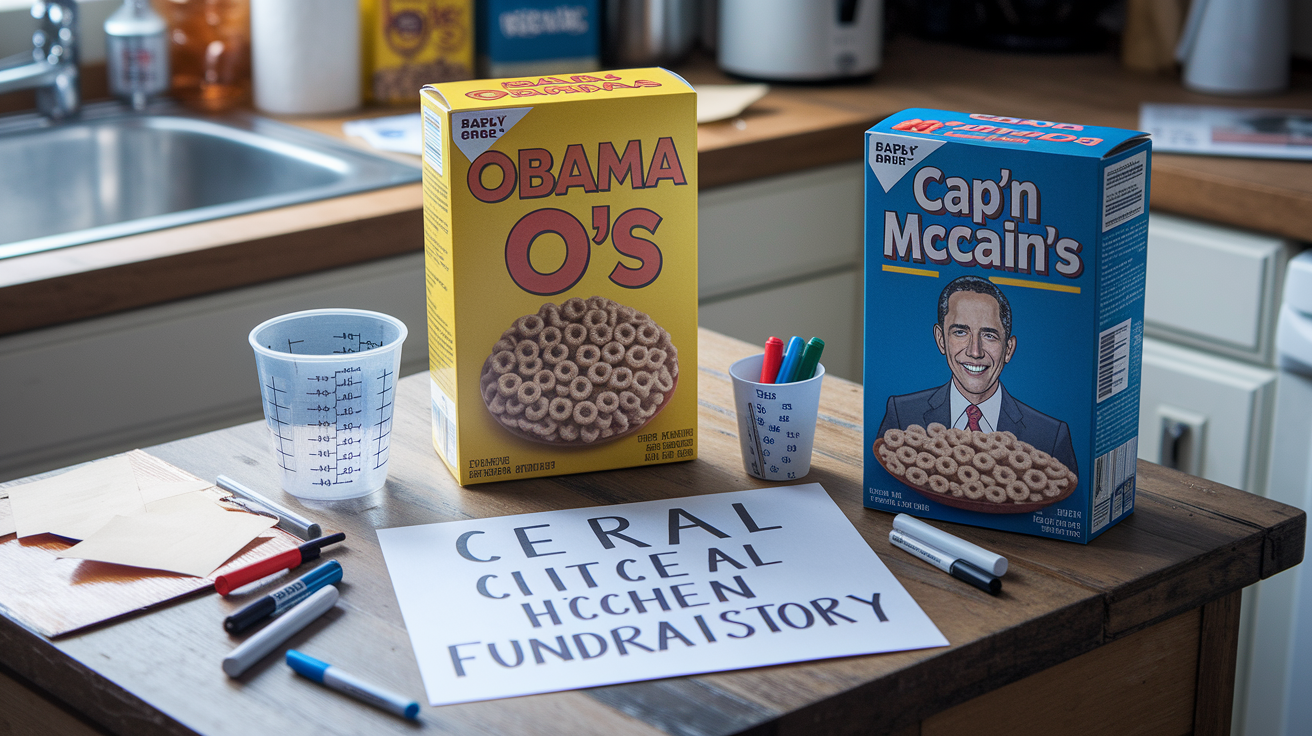
The cereal box fundraiser became one of the most memorable early funding stories. In late 2008, the founders created limited edition cereal boxes tied to the presidential election, selling “Obama O’s” and “Cap’n McCain’s” at $40 each. They hand assembled 1,000 boxes and sold them to supporters, raising $30,000 that kept operations running during a critical cash flow period. The unconventional fundraising caught the attention of Paul Graham, who saw the cereal stunt as evidence of the founders’ determination and resourcefulness. In early 2009, Graham invested $20,000 and accepted Airbnb into Y Combinator, providing both capital and credibility at a pivotal moment.
The Y Combinator acceptance in early 2009 led directly to the company’s first major venture investment. Sequoia Capital invested $600,000 in 2009 after the founders refined the product and business model during the accelerator program. This seed round gave Airbnb the resources to improve the platform’s technology, expand beyond event driven bookings, and begin building the host and guest community that would drive long term growth. The funding progression from cereal boxes to Sequoia represented the bridge between the August 2008 operational start and the scalable company Airbnb would become.
The Cereal Box Fundraiser
The founders purchased bulk cereal, designed custom boxes with political themes, and hand assembled 1,000 units in their apartment. “Obama O’s, The Breakfast of Change” featured the Democratic candidate’s image and campaign slogans, while “Cap’n McCain’s, A Maverick in Every Box” targeted Republican supporters. Each box sold for $40, a significant markup over grocery store cereal, but buyers were paying for a collectible tied to the historic 2008 election. The stunt generated $30,000 in revenue and attracted media attention, demonstrating the founders’ willingness to pursue unconventional paths when traditional funding sources said no. Paul Graham later cited the cereal story as a key factor in his decision to back the company, noting that founders willing to sell cereal boxes to survive would likely do whatever it took to make the business succeed.
Timeline of Airbnb’s Early Operational Milestones After 2008
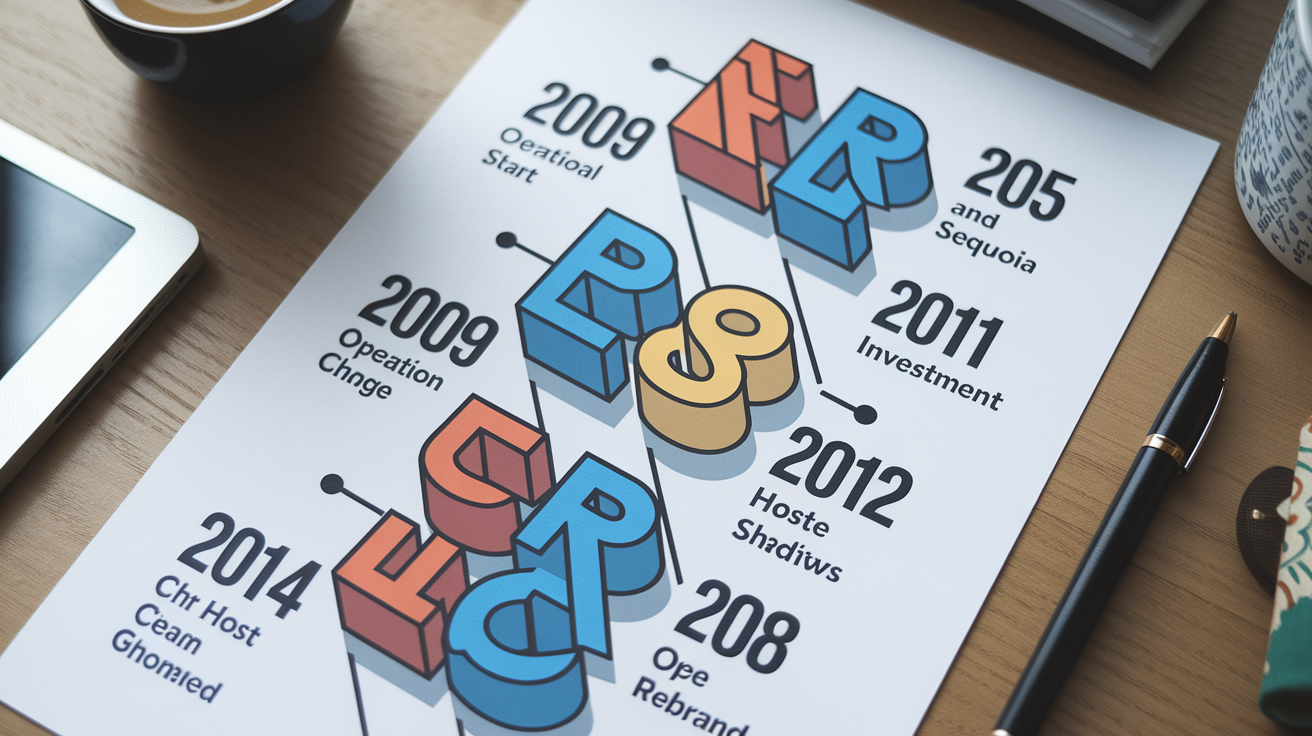
Airbnb’s progression from the August 2008 operational start to a global platform unfolded through a series of strategic product, branding, and geographic milestones. In March 2009, the company simplified its name from “AirBed & Breakfast” to “Airbnb,” signaling a shift from air mattresses and breakfast to a broader vision of short term accommodation. The rebrand coincided with the Y Combinator program and the Sequoia investment, giving the company both a cleaner identity and the capital to expand beyond event driven bookings. Early growth focused on adding listings in major U.S. cities and refining the platform’s search, booking, and payment features to support year round activity.
International expansion accelerated through strategic acquisitions and capital raises. The company acquired Accoleo to speed its entry into European markets, establishing operations that would eventually span 191 countries. By 2011, Airbnb faced its first major trust and safety crisis when a host’s home was vandalized, prompting the introduction of the Host Guarantee program. The initial policy covered up to $500,000 in damage or theft, a figure that increased to $1,000,000 in 2012 as the company prioritized host protections and platform safety. These early safety investments helped build the trust infrastructure necessary for peer to peer lodging to scale globally.
Key operational milestones from 2008 through 2014:
- August 2008: Official start of continuous operations following the Democratic National Convention in Denver
- March 2009: Name simplified from “AirBed & Breakfast” to “Airbnb”; Y Combinator acceptance and Sequoia $600,000 seed investment
- 2011: Launch of Host Guarantee program covering $500,000 in damage or theft after a high profile vandalism incident
- 2012: Host Guarantee coverage increased to $1,000,000; Open Homes program launched following Hurricane Sandy to provide emergency lodging
- 2014: Major rebrand introducing the Bélo logo and warmer red peach visual identity, signaling expansion beyond accommodation
- 2016: Launch of Airbnb Experiences in November, adding local activities and tours hosted by community members
Operational Model and Market Context at the Start of Airbnb’s Operations
When Airbnb began operations in August 2008, it entered a short term rental market that lacked a dominant peer to peer platform. Travelers typically chose between hotels, motels, and bed and breakfasts, with limited options for renting someone’s home or spare room. Craigslist allowed individuals to post short term rental ads, but offered no booking infrastructure, payment processing, or trust mechanisms. Airbnb’s operational model addressed these gaps by creating a two sided marketplace where hosts could list spaces and guests could search, book, and pay through a single platform. The company facilitated transactions, held payments until check in, and began building review systems that reduced information asymmetry between strangers.
The early user base consisted largely of budget conscious travelers attending conferences, festivals, or events in cities where hotel prices spiked due to high demand. The Democratic National Convention launch demonstrated that Airbnb could attract both hosts (who saw an opportunity to earn income during a peak demand event) and guests (who needed affordable alternatives to sold out or expensive hotels). This event driven growth pattern continued through 2008 and 2009, with listing activity concentrated around major gatherings where traditional accommodation options were limited. The operational challenge was transitioning from event spikes to consistent, year round bookings across multiple cities.
Legal frameworks for short term rentals were underdeveloped or nonexistent in most cities when Airbnb started operations. Zoning laws, tax codes, and hospitality regulations generally assumed that people rented homes for long term leases or operated as licensed hotels and bed and breakfasts. The peer to peer model occupied a grey area, neither clearly legal nor explicitly prohibited in most jurisdictions. This regulatory ambiguity allowed Airbnb to grow quickly in its early years, but also set up future conflicts with cities, hotel industries, and housing advocates. The company’s August 2008 operational start occurred in a market context where the rules for home sharing platforms hadn’t yet been written, giving Airbnb space to establish its model before facing organized regulatory pushback.
Final Words
August 2008 is the moment: Airbnb moved from an air mattress experiment to a functioning platform in San Francisco. This post traced the October 2007 airbed prototype, the DNC-focused beta, the founders’ roles, early funding, and the key milestones that followed.
If you still want a single answer to when did airbnb start operations, it’s August 2008, following the 2007 test and the summer 2008 site launch. That start set the stage for fast growth and new ways for people to host and travel.
FAQ
Q: When did Airbnb start becoming a thing?
A: Airbnb started becoming a thing in August 2008 when it began formal operations in San Francisco, after a successful October 2007 air‑mattress prototype that hosted three guests during a design conference.
Q: What is the 75-55 rule in Airbnb?
A: The 75-55 rule in Airbnb is not an official Airbnb policy and isn’t widely recognized; for fees and payout splits, check Airbnb’s Help Center or your host settings for the actual, variable rates.
Q: Why is Airbnb not popular anymore?
A: Airbnb not being as popular in some places usually reflects stricter local regulations, hosting caps, higher prices, more competition, and guest safety or quality concerns—impacts vary by city and traveler type.
Q: Who is the richest Airbnb owner?
A: The richest Airbnb owner is Brian Chesky, Airbnb’s co‑founder and CEO, who holds the largest stake and is generally listed as the wealthiest founder tied to the company.