
When Cloudflare’s shield fails, websites don’t slow down, they disappear in seconds.
DNS queries time out, CDN edge caches stop serving pages, and WAF rules go quiet; during the Nov 18, 2025 incident DNS timeouts hit 32% and HTTP 5xx errors spiked to 18%.
The result: payments fail, logins freeze, APIs return errors — from three‑person startups to Fortune 500s.
This post shows what breaks, who it hurts, and quick steps to reduce risk: verify DNS fallbacks, add multi‑CDN or origin failover, tighten retries, and improve monitoring now.
Immediate Effects and Real‑World Cloudflare Outage Impact

When Cloudflare’s infrastructure fails, websites don’t gradually slow down. They vanish. DNS queries time out, returning nothing. CDN edge servers stop serving cached pages. WAF rules go silent, leaving origins exposed or unreachable. The November 18, 2025 outage showed DNS failure rates hitting 32% during peak disruption, while HTTP 5xx errors spiked to 18% of all requests. Users attempting to load a site saw blank browser tabs, gateway timeout messages, or spinning loading indicators that never resolved.
The business consequences arrive within seconds. Payment processors reject checkout requests. Single sign‑on flows freeze mid‑authentication. API calls from mobile apps return network errors. Form submissions vanish without confirmation. Customer support dashboards lock out agents mid‑conversation. These breakdowns don’t discriminate by size or sector. A three‑person SaaS startup and a Fortune 500 platform both go dark if they share the same edge infrastructure.
Major platforms felt the impact simultaneously during recent incidents. ChatGPT became unreachable. Uber riders couldn’t request cars. Spotify playlists stopped loading. Canva designers lost access to projects mid‑edit. League of Legends players saw connection drops. The outage’s shared‑infrastructure nature means one misconfiguration or latent bug can disable thousands of unrelated businesses in the same minute.
Common user‑visible disruptions during Cloudflare outages include:
Failed payment transactions that leave customers uncertain whether charges succeeded
Broken login and authentication flows preventing access to dashboards and user accounts
Form submission errors causing lost leads, support tickets, and user‑generated content
Site‑wide timeouts and 502/503 errors making entire applications appear offline
Mobile app connectivity failures with cryptic “network unavailable” messages despite working WiFi
Cloudflare Outage Timeline and Escalation Patterns

Cloudflare outages follow a recognizable progression. Detection typically begins when internal monitoring flags abnormal traffic patterns or cascading service failures. The November 18, 2025 incident started at 11:20 UTC with an unusual traffic spike that exposed a latent bug in bot‑mitigation services. Over the next hour, the error propagated across DNS resolvers, CDN edge nodes, and routing layers, turning isolated anomalies into a global outage. Mitigation efforts began in early afternoon UTC, but full user‑facing recovery took several additional hours as caches resynchronized and routing tables stabilized.
The staged nature of these failures creates confusion for operators. Early symptoms look like isolated regional issues or application bugs. By the time the scope becomes clear, millions of requests have already failed. The January 22, 2026 BGP route leak followed a similar pattern. Traffic was silently misdirected for minutes before user reports flooded in. The February 4, 2026 edge instability event showed yet another variant, with control‑plane issues triggering intermittent DNS and TLS termination failures that appeared and disappeared across different regions.
| Timestamp (UTC) | Event Type | Impact Description |
|---|---|---|
| 11:20 | Detection | Internal monitoring flags abnormal traffic spike and service crashes |
| 11:45 | Escalation | DNS timeout rate exceeds 30%; HTTP 5xx errors climb above 15% |
| 12:30 | Peak Impact | Widespread service unavailability; major platforms report total downtime |
| 14:10 | Mitigation Start | Configuration rollback initiated; routing stabilization begins |
| 16:00 | Partial Recovery | DNS resolution restored in most regions; CDN caching still degraded |
| 18:30 | Full Restoration | All services operational; lingering cache sync delays for some customers |
Technical Breakdown of Cloudflare Outage Causes

Understanding why Cloudflare outages happen requires looking at the intersection of automation, configuration management, and distributed systems fragility. The three major incidents between November 2025 and February 2026 each exposed different failure modes in globally distributed infrastructure. None were caused by external attacks. All originated from internal changes that triggered cascading failures across interconnected services.
Configuration and Software Triggered Failures
The November 18, 2025 outage began with a routine configuration update to a bot‑mitigation service. The change itself was unremarkable, a standard operational adjustment made thousands of times before. But it activated a latent bug that caused the service to generate an uncontrollably large file. As the file grew, it overwhelmed database permissions checks and consumed resources across routing and proxy layers. The bug had existed for months, dormant until the specific configuration pattern triggered it. Once activated, the crashing bot‑mitigation service sent error signals upstream, causing DNS resolvers to fail health checks and CDN edge nodes to bypass caching logic. The cascading retry storms amplified the initial failure, turning a single‑service crash into a multi‑layer outage.
Configuration‑driven failures reveal a hard truth about modern infrastructure. Any change, no matter how small, can interact with unknown code paths. Automated configuration systems move fast and operate at scale, but they lack the context to predict how a permission tweak or feature flag will behave under load. The line between a safe update and a global outage is often invisible until crossed.
Routing and Control‑Plane Failures
The January 22, 2026 BGP route leak showed a different failure pattern. An automated routing policy misconfiguration caused Cloudflare to advertise incorrect network paths to upstream ISPs. Traffic destined for Cloudflare edge nodes was rerouted through the wrong autonomous systems, creating unreachable black holes. Applications remained technically online. Origin servers were healthy, DNS records were valid. But users couldn’t reach them because the network layer was advertising bad directions. BGP has no built‑in validation for advertised routes, so the leak propagated across the internet within minutes.
The February 4, 2026 edge and control‑layer instability exposed yet another risk surface. When the control plane that manages DNS resolution, TLS certificate distribution, and security gateway configuration becomes unstable, edge nodes lose their instructions. DNS servers can’t resolve queries because they can’t fetch updated zone files. Firewalls can’t enforce rules because policy updates time out. The edge nodes themselves remain running, but without control‑plane coordination they effectively become non‑functional. Unlike a clean crash that triggers failover, this type of degradation creates partial, unpredictable failures that are harder to diagnose and route around.
Cloudflare Outage Impact on Businesses and Revenue

Revenue loss from a Cloudflare outage begins the moment users can’t complete actions. E‑commerce checkout flows freeze mid‑transaction. SaaS platforms lock out paying customers. API‑dependent mobile apps display error screens. Advertising impressions vanish because pages won’t load. Subscription renewals fail because payment processors can’t reach authentication endpoints. The impact scales with transaction volume. A site processing $10,000 per hour loses roughly $1,667 for every ten minutes of downtime, assuming linear transaction distribution. High‑traffic businesses hit during peak hours face exponentially higher losses.
Beyond direct revenue, outages create measurement blind spots. Analytics platforms stop receiving page‑view data. Conversion funnels show gaps where users dropped off, not because they abandoned intentionally, but because the infrastructure disappeared. A/B tests become invalid when one variant experiences different downtime than another. Customer behavior insights vanish for the outage window, making it impossible to separate normal churn from outage‑driven abandonment. These telemetry gaps persist long after services restore, creating weeks of uncertainty in dashboards and reports.
Outages also trigger cascading operational costs and risks.
SLA credit exposure when uptime guarantees breach contractual thresholds, requiring refunds or service credits
Customer support surges as confused users flood helpdesks, overwhelming agent capacity and driving up support costs
Cart abandonment spikes that persist for hours or days after restoration, as trust‑damaged users delay purchases
Reputational harm and social amplification when users publicly share downtime frustrations, creating lasting brand perception damage
Compliance workflow interruptions in regulated industries where identity verification, payment processing, or audit logging depends on uptime
Customer churn acceleration when outages provide the trigger event for at‑risk customers to finally switch providers
Cloudflare DNS, CDN, and Security Layer Failures Explained
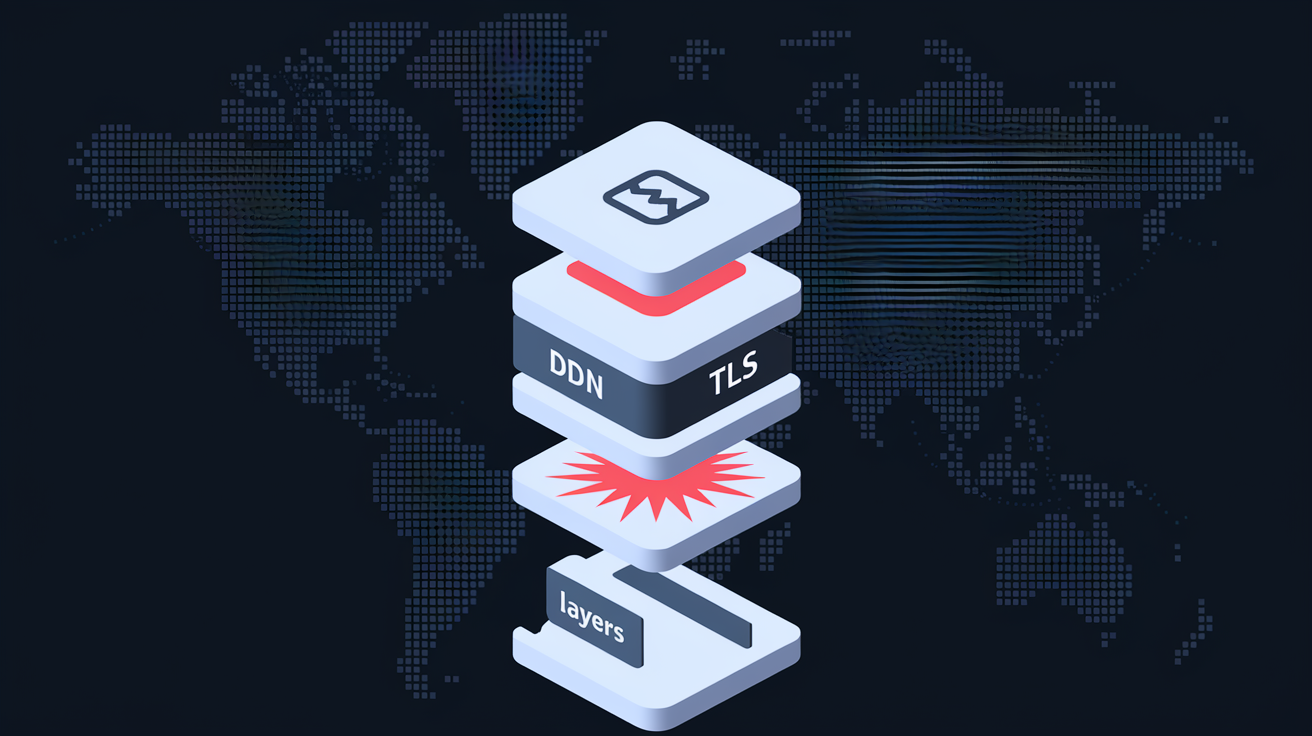
DNS failures are the most immediate and visible Cloudflare outage symptom. When authoritative DNS servers stop responding to queries, browsers can’t translate domain names into IP addresses. The request chain halts before it even reaches the CDN or origin. During the November 2025 outage, DNS query timeout rates exceeded 30%, meaning nearly one in three lookup attempts returned nothing. Users saw “DNSPROBEFINISHED_NXDOMAIN” errors or spinning browser tabs. Even users with cached DNS records eventually hit timeouts as TTL windows expired and refresh attempts failed.
CDN edge failures create a different symptom pattern. Static assets stop serving from nearby edge locations, forcing requests back to distant origins, if they succeed at all. TLS termination breaks, causing certificate errors or connection refusals. Cached pages vanish, turning a fast‑loading site into a slow or unreachable one. WAF rules and bot‑protection logic go silent, either blocking all traffic indiscriminately or allowing everything through unfiltered. API gateway layers stop routing requests correctly, causing mobile apps and third‑party integrations to fail with generic network errors.
The layered nature of Cloudflare’s architecture means failures cascade unpredictably. A control‑plane issue might leave DNS working but break TLS. A routing problem might allow some queries through while timing out others based on user location or query type. These partial failures are harder to diagnose than total blackouts because symptoms vary by endpoint, region, and time. An application can appear healthy from one monitoring location while users in another geography see complete unavailability.
Major Websites and Services Affected During Cloudflare Outages
The November 2025 and early 2026 outages demonstrated how Cloudflare’s market position makes its failures systemic. When the infrastructure failed, services across unrelated industries went dark simultaneously. Social platforms, productivity tools, transportation apps, and entertainment services all shared the same failure window. Not because they were connected operationally, but because they relied on the same underlying edge network.
The breadth of impact showed how deeply Cloudflare is embedded in internet infrastructure. A dating app, a transit agency, and a creative design platform have nothing in common except their CDN and DNS provider. When that shared dependency fails, they fail together. Some experienced total unavailability. Others saw regional or intermittent outages depending on which edge locations and services were affected.
High‑profile affected services during recent Cloudflare outages:
X (formerly Twitter), intermittent loading failures and timeline refresh errors
ChatGPT, complete inaccessibility and session timeout errors
Spotify, playback interruptions and library sync failures
Uber, ride request failures and driver‑matching errors
Canva, project load failures and asset rendering timeouts
League of Legends, login errors and matchmaking service disruptions
NJ Transit and other public services, real‑time schedule and tracking outages
Measuring Cloudflare Outage Severity Through Observability and SRE Metrics
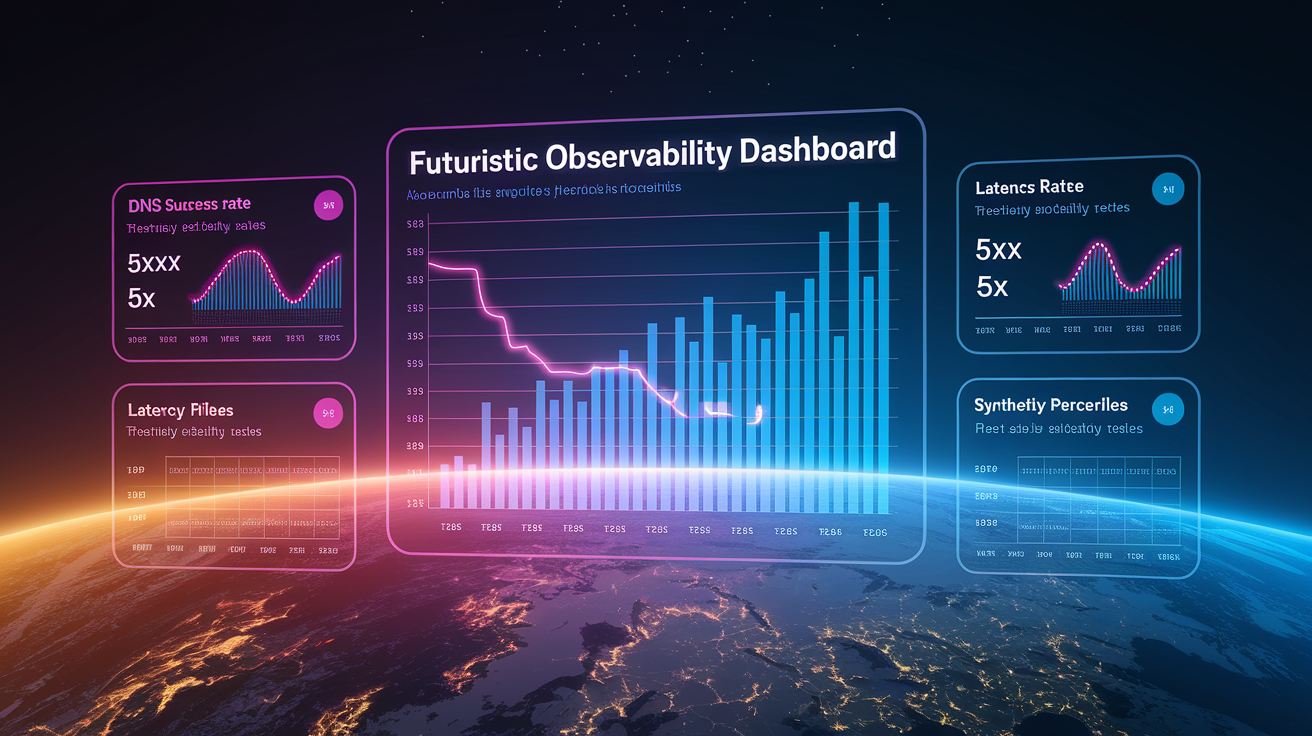
Quantifying outage impact requires real‑time telemetry across multiple layers. DNS query success rates show whether users can even find your site. HTTP error rates reveal how many requests fail after DNS resolution succeeds. Latency percentiles capture degraded performance even when requests eventually complete. The November 2025 outage pushed HTTP 5xx error rates to 18% at peak and DNS failure rates above 30%. Numbers that translate to hundreds of thousands of failed user interactions per minute for high‑traffic services.
Synthetic monitoring becomes critical during Cloudflare outages because real‑user monitoring depends on the same infrastructure that’s failing. When CDN Workers crash or edge analytics pipelines break, telemetry stops flowing. You lose visibility into the scope and duration of impact precisely when you need it most. Multi‑region synthetic tests running from diverse providers can continue measuring reachability, response times, and error rates even when embedded analytics go dark. Tracking Mean Time to Detect (MTTD) and Mean Time to Resolve (MTTR) reveals whether your monitoring can spot provider‑level failures before user reports flood in.
| Metric | What It Shows | Typical Outage Behavior |
|---|---|---|
| DNS Query Success Rate | Percentage of name lookups that return valid IP addresses | Drops from 99.9%+ to 60‑70%; timeouts and NXDOMAIN errors surge |
| HTTP 5xx Error Rate | Server‑side failures as percentage of total requests | Spikes from baseline <0.1% to 15‑20%; 502/503 errors dominate |
| Latency P95/P99 | How slow requests become for high‑percentile users | Climbs from <100ms to multi‑second; many requests never complete |
| Reachability (Synthetic) | Can monitoring probes reach endpoints from diverse locations | Global reachability drops below 50%; regional variance high |
SLA Exposure, Legal, and Compliance Risks From Cloudflare Outages

Service level agreements typically guarantee uptime percentages, 99.9% or higher, with financial credits when actual uptime falls short. A six‑hour outage in a 720‑hour month pushes availability to 99.17%, breaching most enterprise SLAs. Customers can claim credits, but the process requires documentation, ticket filing, and contractual review. The credits rarely cover actual revenue loss. They’re usually capped at a percentage of monthly fees. A $5,000 per month contract might yield a $500 credit for a major outage, while the business lost $50,000 in transactions.
Compliance risks extend beyond financial penalties. GDPR’s availability principle requires that personal data remain accessible to data subjects on request. If authentication systems fail and users can’t access their profiles or request data deletion, you’re potentially non‑compliant even though the failure originated upstream. Regulated sectors, FinTech platforms processing payments, HealthTech services managing patient records, face operational audit flags when critical workflows experience multi‑hour disruptions. Incident reports must explain why single‑vendor dependencies weren’t mitigated, and regulators may classify the outage as an operational resilience failure rather than an unforeseeable external event.
Building Resilience: Multi‑CDN, Multi‑DNS, Failover, and Dependency Mapping
Resilience starts with eliminating single points of failure. A secondary DNS provider outside Cloudflare ensures name resolution survives even if Cloudflare’s authoritative servers go dark. The secondary provider should use different infrastructure, different control planes, and ideally different geographic footprints. DNS failover mechanisms can automatically shift traffic when health checks detect query timeouts or elevated error rates. Configuring this correctly requires TTL tuning. Short TTLs enable fast failover but increase query load; longer TTLs reduce load but slow recovery.
Multi‑CDN strategies distribute static assets and cached content across two or more providers. When one CDN fails, traffic shifts to the other through DNS weighting, origin shields, or intelligent routing layers. This approach adds cost and complexity. You’re paying for redundant capacity and managing configuration across multiple platforms. But it bounds your maximum downtime to the time required for failover automation to activate. Load balancers and traffic managers can perform active health checks against CDN endpoints and reroute based on real‑time availability.
Dependency mapping reveals hidden upstream risks. Many businesses discover during an outage that their payment processor, authentication provider, or CRM platform also relies on Cloudflare. Even if you’ve built multi‑CDN resilience, your checkout flow still fails if your payment gateway is down. Mapping these transitive dependencies requires tooling that traces API calls, DNS lookups, and third‑party scripts to identify shared infrastructure. Chaos engineering, intentionally simulating DNS failures, CDN slowdowns, and authentication drops, validates whether your failover logic actually works under realistic failure conditions.
Five technical actions to reduce Cloudflare outage impact:
Add a secondary authoritative DNS provider with automated health‑check‑driven failover and sub‑60‑second TTLs on critical records
Implement multi‑CDN caching using traffic management platforms that route based on real‑time origin and edge health
Deploy synthetic monitoring from multiple regions and providers to maintain visibility when embedded analytics pipelines fail
Map and audit third‑party dependencies to identify shared infrastructure risks in payment, authentication, and SaaS tooling
Run quarterly chaos experiments that simulate total Cloudflare unavailability and measure failover speed and completeness
Cloudflare Outage Response Playbook and Communication Flow
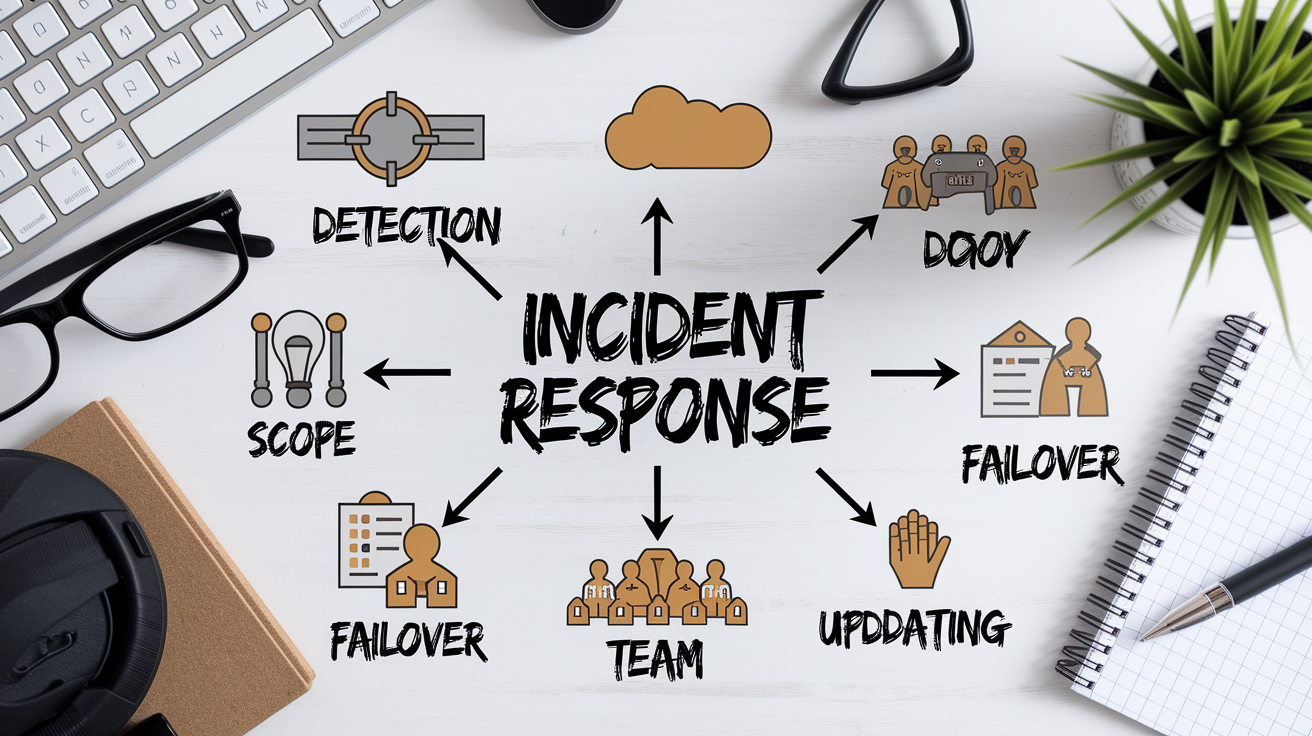
Incident response during a Cloudflare outage follows a compressed timeline. First detection often comes from monitoring alerts or user reports before official provider status updates appear. Engineering teams must quickly determine whether the issue is local (application bug, origin failure) or upstream (provider‑level outage). Checking Cloudflare’s status page, running dig +short NS yourdomain.com to verify DNS resolution, and inspecting HTTP headers with curl ‑I yourdomain.com for Cloudflare traces can confirm the scope within minutes.
Internal coordination requires clear escalation paths. Incident commanders should activate the outage playbook, notify customer‑facing teams, and prepare holding statements for support channels. Engineering focuses on activating failover mechanisms if available, while support drafts customer communications explaining the situation without over‑promising resolution times. External communication should acknowledge the issue quickly. Users already know something is broken. And provide updates at predictable intervals even when there’s no new information. Transparent, frequent communication reduces trust loss and support ticket volume.
Structured response actions during a Cloudflare provider outage:
Confirm scope and provider status using independent DNS checks, status page monitoring, and synthetic tests from multiple locations
Activate failover to secondary DNS or CDN if configured, verifying traffic shift completion through real‑user metrics
Notify customer‑facing teams immediately with templated holding statements and expected update frequency
Post public status updates on your own status page within 10 minutes of confirmation, even if details are limited
Document timeline and impact metrics in real time for post‑incident analysis and potential SLA credit claims
Prepare rollback or manual routing changes to bypass Cloudflare entirely if outage duration exceeds tolerance thresholds
Post‑Incident Analysis and Lessons Learned From Cloudflare Outages
Effective post‑mortems focus on what the organization controls, not what the provider should fix. Cloudflare’s November 2025 incident report acknowledged a latent bug triggered by routine configuration and committed to better change validation. Your post‑mortem should focus on why you couldn’t failover faster, what monitoring gaps delayed detection, and which dependencies you didn’t know existed. Blameless analysis identifies systemic weaknesses, missing redundancy, inadequate testing, unclear playbooks, not individual mistakes.
Recovery delays teach important lessons about distributed system behavior. Even after Cloudflare applied a technical fix, cache resynchronization and routing table stabilization caused lingering degradation for hours. Users in some regions recovered quickly; others saw intermittent failures well into the evening. Post‑incident metrics should capture not just time‑to‑fix but time‑to‑full‑user‑recovery, measured through synthetic tests and real‑user error rates. This distinction reveals whether your monitoring would’ve declared victory prematurely.
Configuration governance emerged as a clear theme across multiple incidents. Treating edge configuration as production code, requiring peer review, automated validation, and staged rollouts, prevents changes from propagating globally before their impact is understood. Observability investments should extend beyond application metrics to include upstream provider health, DNS resolution success rates from diverse vantage points, and reachability tests that don’t depend on the provider you’re testing.
Core operational improvements after analyzing Cloudflare outages:
Implement policy‑as‑code and peer review for all DNS and CDN configuration changes with automated validation before production deployment
Extend monitoring to track upstream provider health independently using third‑party DNS checks and multi‑region synthetic tests
Conduct quarterly failover drills that simulate total Cloudflare unavailability and measure team response speed and communication effectiveness
Map and document all transitive dependencies on Cloudflare infrastructure, including payment gateways, authentication services, and third‑party APIs
Final Words
in the action, this post laid out what users see when Cloudflare fails: DNS timeouts, 5xx errors, login and checkout breaks, and global reachability loss.
We walked the timeline and root causes, including configuration changes, BGP leaks and edge instability, and showed how to measure severity with DNS failure and 5xx spikes, business fallout, and legal exposure.
Use the playbook and resilience steps to reduce cloudflare outage impact: add secondary DNS, run synthetic tests, map dependencies, and practice incident drills. You’ll be better prepared next time.
FAQ
Q: What is the impact of Cloudflare outage?
A: The impact of a Cloudflare outage is widespread service disruption: DNS timeouts, CDN/WAF routing failures, and HTTP 5xx spikes (reported up to ~18%), causing failed logins, checkouts, and app connectivity; check status and enable failovers.
Q: What sites are impacted by Cloudflare outage?
A: Sites impacted by a Cloudflare outage are any domains using its DNS, CDN, or security layers—ranging from major platforms like X, ChatGPT, Spotify, Uber, Canva, and League of Legends to smaller businesses and government sites.
Q: Why did Cloudflare go down again?
A: The reason Cloudflare went down again is usually a technical trigger such as a latent bug in a config change, a BGP route leak, or control‑plane/edge instability; vendor postmortems list those root causes.
Q: Does the US government use Cloudflare?
A: The US government does use Cloudflare for some agencies and public services, but adoption varies by agency, contract, and security needs; check specific agency domains or procurement records for confirmation.