Does buying promising rivals years ago make a company a monopoly today?
That question sits at the center of the FTC’s long antitrust fight with Meta over Facebook, Instagram, and WhatsApp.
In November 2025 Judge Boasberg ruled for Meta, finding the company lacked the current monopoly power the law requires, partly because TikTok and YouTube now constrain it.
The decision matters for users, advertisers, developers, and regulators because it resets how courts define markets for free apps and what evidence agencies must bring.
Watch for appeals, market-share data, and shifts in enforcement strategy.
Core Facts and Status of the Meta Antitrust Case

The FTC went after Meta in December 2020, claiming the company illegally locked down the “personal social networking” space. Their complaint zeroed in on two big deals: Instagram in 2012 and WhatsApp in 2014. According to the agency, Meta ran a “buy or bury” playbook, snapping up would-be rivals before they could threaten Facebook’s grip. The FTC also pointed to strict rules Meta slapped on outside developers as more proof the company was squashing competition.
After an updated complaint in 2021 and years of sifting through documents, the case went to trial in spring 2025. Six weeks, no jury, just U.S. District Judge James E. Boasberg working through mountains of data, expert reports, and internal Meta emails. The FTC wanted Meta broken into three separate companies, forcing the sale of Instagram and WhatsApp.
On November 18, 2025, Judge Boasberg ruled for Meta. The core problem? The FTC couldn’t prove Meta holds monopoly power right now, which is the whole point of a Section 13(b) claim under the FTC Act. The judge found Meta’s slice of the broader social media market had dropped well under 33 percent, and that platforms like TikTok and YouTube were putting real pressure on how Meta operates. Without proof of current monopolization, the court never had to decide whether those old acquisitions or developer policies actually broke antitrust law.
Current lawsuit status:
- Filing date: December 2020 (FTC complaint), amended 2021
- Trial: Six weeks, bench trial, spring 2025
- Core allegations: Monopolization through Instagram/WhatsApp buys and restrictive developer terms
- Final ruling: Meta wins, November 18, 2025. FTC couldn’t show current monopoly power
Market Definition Disputes Within the Meta Antitrust Case
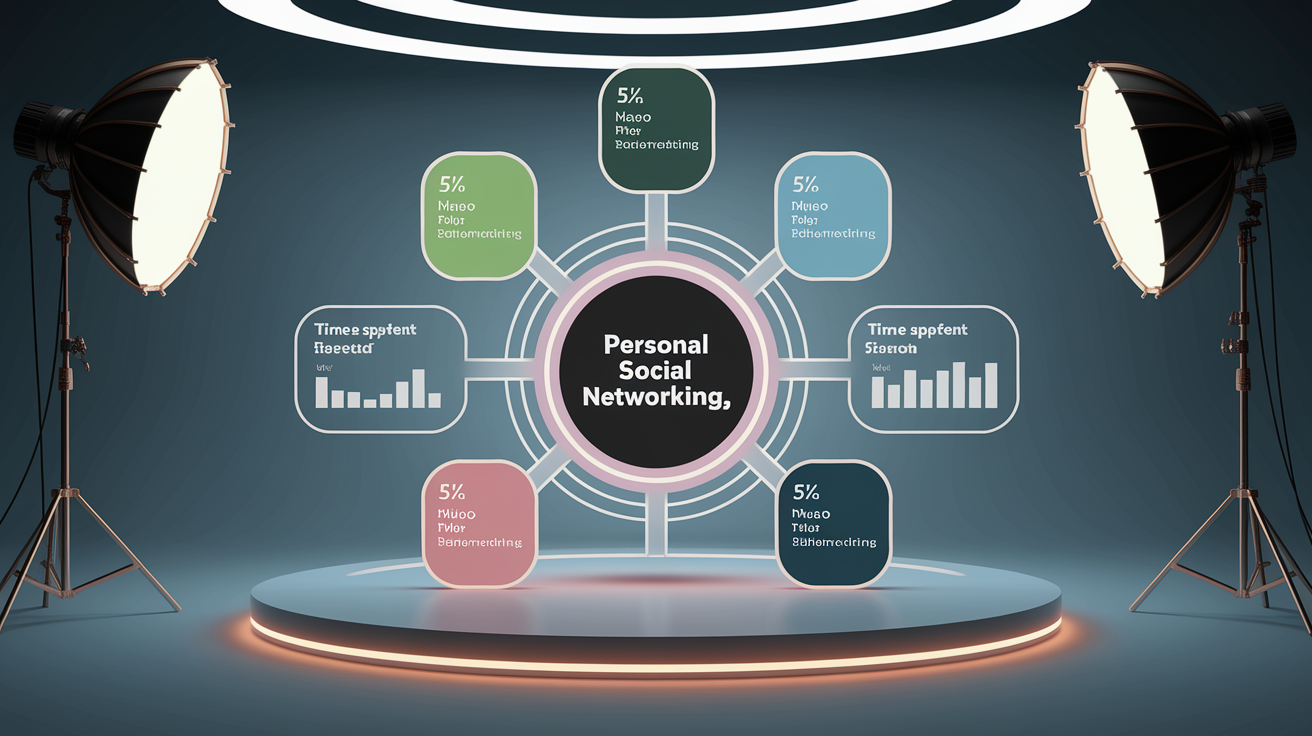
The whole Meta case really came down to one thing: what actually competes with Facebook and Instagram?
The FTC drew a tight circle around something it called “personal social networking.” That market included Facebook, Instagram, Snapchat, and MeWe. That’s it. Under that lens, Meta looked dominant and faced barely any competition. The agency’s argument? Personal social networking does something unique. It connects you with people you actually know, which entertainment platforms just can’t replicate.
Judge Boasberg wasn’t buying it. He went with a much wider social media market that pulls in TikTok and YouTube. The ruling pointed to hard evidence showing people treat all five platforms as swappable. Time-spent data revealed users shifted hours away from Facebook and Instagram once TikTok landed in the U.S. There was a half-day TikTok outage in January 2025 that sent traffic immediately toward Facebook, Instagram, and YouTube. Randomized studies showed people view these services as interchangeable for a lot of what they do each day. The court also noticed Meta itself started chasing TikTok and YouTube with algorithm-driven short videos. Within this bigger market, Meta’s share fell under 33 percent, way below what courts usually need to presume monopoly power.
| Platform | FTC Position | Court Finding |
|---|---|---|
| Facebook/Instagram | Dominant players in “personal social networking” market | Significant but non-dominant share of broader social media market (under 33%) |
| TikTok | Excluded (serves “entertainment” rather than personal connection) | Included (strong substitution with Meta apps; January 2025 outage showed immediate user shift) |
| YouTube | Excluded (video platform, not personal networking) | Included (overlapping features, user base, and Meta’s competitive response to YouTube’s short video products) |
Evidence Presented in the Meta Antitrust Litigation

The FTC leaned on three main pieces of evidence to argue Meta has monopoly power. First, they pointed to Meta’s high profits, saying sustained fat margins mean there’s no real competitive pressure. Second, the agency introduced a “quality-adjusted price” argument. Since Meta’s apps are free, the FTC claimed Meta degraded the product instead, loading up ads and pulling back on privacy. That amounts to a price hike paid in attention and data. Third, they said Meta engages in price discrimination, offering different ad experiences to different users, something only a firm with serious market power can pull off.
The court shot down all three. It found Meta’s profits could just as easily come from better ad-targeting tech, smart product bets, and network effects that reward quality, not dominance. On quality-adjusted price, the judge said Meta’s apps had “continuously improved” with new features, better video tools, upgraded messaging. Higher ad loads reflected added functionality, not monopolistic squeezing. The price discrimination evidence showed Meta optimized ad delivery individually but didn’t prove the company could degrade service for a locked-in user base and get away with it.
Meta’s defense wasn’t theoretical. The company brought quantitative, real-world data showing how users actually behave when platforms go dark or new options show up. The court found this empirical stuff way more convincing than profit-margin inferences and internal strategy memos.
Key evidence the court credited:
- Time-allocation data tracking daily usage across Facebook, Instagram, TikTok, YouTube, and Snapchat, showing people switch platforms constantly.
- The January 2025 TikTok outage. When TikTok went offline for half a day, traffic instantly jumped to Meta properties and YouTube. Clear substitution.
- India’s 2020 TikTok ban, a natural experiment that showed users reallocated time to Instagram Reels and YouTube Shorts.
- A randomized payment study where researchers paid participants to cut usage of specific apps, revealing strong switching patterns among all five platforms.
- Converging product features. Meta’s Reels, YouTube’s Shorts, Snapchat’s Spotlight. All mimicking TikTok’s short video format in direct competitive response.
Meta’s Acquisitions and Their Role in the Antitrust Case
Meta buying Instagram in 2012 and WhatsApp in 2014 sat at the heart of the FTC’s case. The agency said these were classic “killer acquisitions,” meant to wipe out emerging rivals before they could turn into full Facebook competitors. Internal emails showed Meta execs saw both companies as threats, and the FTC argued Meta overpaid precisely because their competitive value, if left independent, justified the premium.
The court applied Section 13(b) of the FTC Act, which demands proof of ongoing or imminent violations, not just past bad behavior. Judge Boasberg made it clear: you need to prove Meta “has monopoly power now,” not that it did over a decade ago when the deals closed. The ruling found that even if Instagram and WhatsApp posed competitive threats back in 2012 and 2014, the market had changed so much by 2025 that those old acquisition decisions didn’t support a finding of present monopolization. TikTok exploded. YouTube pivoted to short video. Snapchat kept innovating. The court also noted Meta had deeply integrated Instagram and WhatsApp into its infrastructure, product roadmap, user experience. Unwinding the deals without clear proof of ongoing harm? Practically messy, and the FTC didn’t clear the bar.
Why the acquisitions weren’t unwound:
- Section 13(b) requires proof of current monopoly power, not historical dominance at the time of acquisition.
- Market dynamics shifted massively between 2012/2014 and 2025, with TikTok and YouTube emerging as major competitive constraints.
- Deep product integration and over a decade of joint development made structural separation complicated without demonstrable ongoing consumer harm.
Legal Standards and Antitrust Framework Applied to Meta
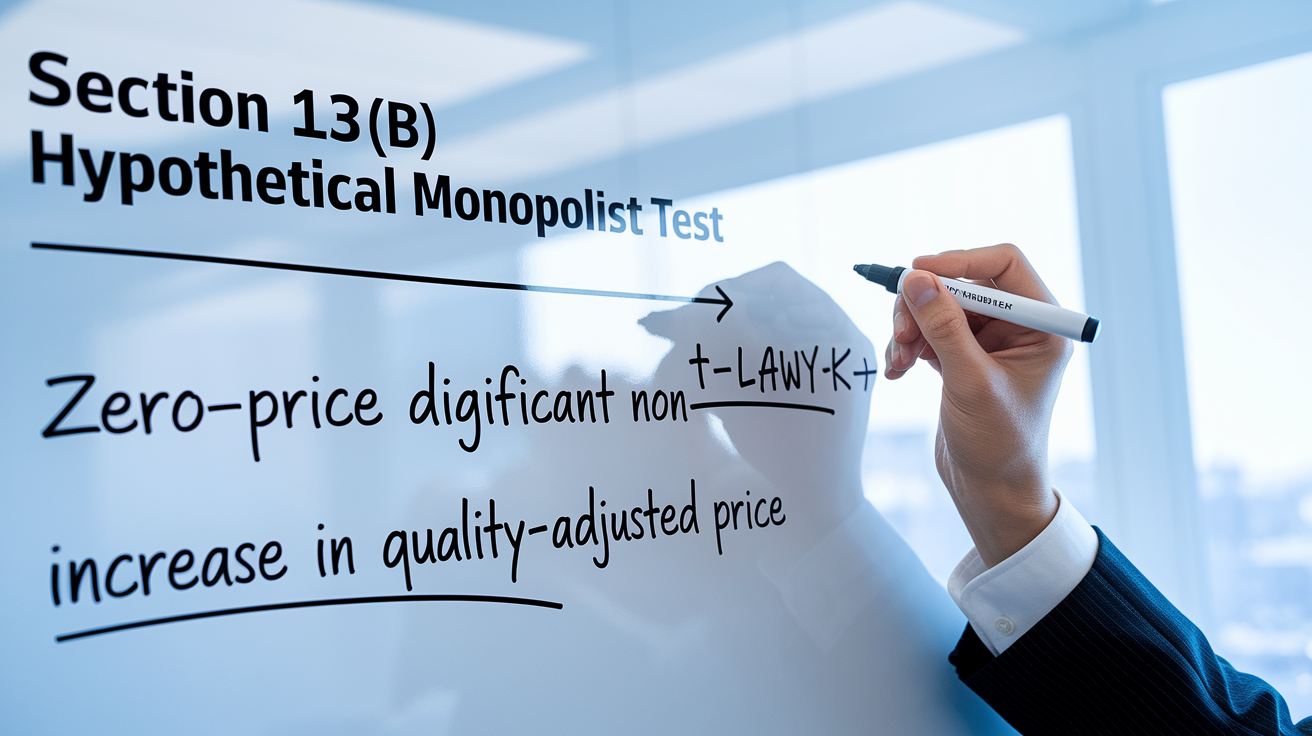
The court built its analysis around Section 13(b) of the FTC Act, which lets the agency seek permanent injunctions to stop ongoing or imminent antitrust violations. Unlike claims for past damages, Section 13(b) focuses on what’s happening now. That meant the FTC had to prove Meta possesses monopoly power today, regardless of what the market looked like when Instagram and WhatsApp got bought. The gap between the 2012 and 2014 transactions and the 2025 trial became the whole ballgame. Markets that move fast make it tough for plaintiffs to show decade-old conduct still harms competition.
Judge Boasberg used the hypothetical-monopolist test, a standard tool in merger analysis, but had to adapt it for zero-price digital services. Consumers pay nothing to use Facebook, Instagram, TikTok, or YouTube, so traditional price-increase analysis doesn’t work. Instead, the court asked whether a firm controlling Facebook and Instagram could profitably impose a “small but significant nontransitory increase in quality-adjusted price.” Think higher ad loads, reduced privacy, fewer features. The FTC said Meta had done exactly that, pointing to increased advertising and data collection over time. The court disagreed. Meta’s apps had added features, improved video and messaging tools, responded to competitive pressure from TikTok and YouTube. The judge said users likely prefer current app versions to earlier ones, which undercut the claim that Meta degraded quality to extract monopoly rents.
Because the FTC couldn’t prove Meta held monopoly power within the properly defined market, the court never reached the remedies phase. The case ended on the liability question. No findings on whether the Instagram or WhatsApp acquisitions violated Section 2 of the Sherman Act or whether Meta’s historical developer restrictions constituted exclusionary conduct. The ruling made it clear that high profits alone, even in concentrated markets, don’t establish monopoly power when alternative explanations like product quality, network effects, or superior technology are equally plausible.
Parallel Lawsuits and State AG Actions Related to Meta
Forty-six U.S. states, plus D.C. and Guam, filed a separate antitrust complaint against Meta in December 2020, running alongside the FTC’s case. The state attorneys general said Meta kept its monopoly through restrictive policies forced on third-party app developers who wanted access to Facebook’s platform. According to the complaint, these policies made competing social apps limit their functionality or risk getting cut off from Facebook’s user base. Classic “buy or bury” behavior. The states also went after the Instagram and WhatsApp deals, arguing they wiped out nascent competitive threats.
The state lawsuit hit a critical procedural wall: timing. Meta had dropped the restrictive platform access policies in 2018, two years before the complaint got filed. The Instagram and WhatsApp deals closed in 2012 and 2014. On April 27, 2023, a panel of the U.S. Court of Appeals for the D.C. Circuit refused to revive the states’ case. The court held that the attorneys general had waited too long to challenge conduct and transactions that happened years earlier. The appellate court applied the doctrine of laches, which blocks plaintiffs (even sovereign states) from bringing claims when unreasonable delay harms the defendant or undermines the integrity of the legal process. The D.C. Circuit noted Meta had integrated the acquired companies and changed its business practices in reliance on the absence of legal challenge. Retrospective remedies? Impractical and unfair.
| Party | Claim | Outcome | Key Date |
|---|---|---|---|
| 46 States + D.C. + Guam | Monopolization via restrictive platform policies and acquisitions | Dismissed for laches (waited too long to sue) | April 27, 2023 (D.C. Circuit) |
| Federal Trade Commission | Monopolization via Instagram/WhatsApp acquisitions and developer restrictions | Judgment for Meta (failed to prove current monopoly power) | November 18, 2025 (District Court) |
| Meta Platforms, Inc. | Defendant in both actions | Prevailed in both cases | 2023 (states), 2025 (FTC) |
| D.C. Circuit (Appellate) | Review of state AG claims | Affirmed dismissal, citing integration and delay | April 27, 2023 |
Broader Implications of the Meta Antitrust Rulings
The back-to-back losses for government enforcers in the Meta cases expose a basic problem in digital market antitrust: how do you address potentially anticompetitive conduct when the relevant technology and competitive landscape change faster than litigation can move? The D.C. Circuit’s laches ruling and Judge Boasberg’s market definition analysis both point to the same difficulty. Unwinding mergers that closed over a decade ago is hard, especially when the acquired companies have been deeply integrated and when new competitive threats have popped up in the meantime. The rulings tell us enforcers have a narrow window to challenge acquisitions in fast-moving sectors. Wait years or lean on retrospective evidence and you’ll often lose.
The court’s reliance on empirical substitution data raises the bar for future monopolization claims in digital markets. Time-spent metrics, natural experiments like the TikTok outage, randomized trials. Theoretical models and qualitative factors like high market share or network effects might not cut it if defendants can present robust, real-world evidence of competitive constraints. The ruling also says courts will credit product evolution and feature convergence as signs of competition, even among platforms that started with different primary functions. TikTok’s growth and Meta’s response with Reels showed the court that competition happens across product categories, not just within narrow slices defined by user intent or original purpose.
For tech companies, the decision provides a playbook for defending monopolization claims. Invest in quantitative consumer research, document competitive responses to rival innovations, show product improvements over time. For regulators, the outcome suggests future enforcement will need earlier action, tighter market definitions backed by hard substitution data, and a clearer theory of ongoing consumer harm rather than historical dominance.
Future regulatory challenges for digital platforms:
- Proving current monopoly power in markets where new entrants (like TikTok) rapidly gain share and shift competitive dynamics.
- Defining relevant markets in zero-price, ad-supported services where traditional price-based tests don’t apply and quality adjustments are subjective.
- Timing enforcement actions before acquisitions close and products integrate, avoiding laches defenses and the practical difficulties of post-merger divestitures.
Final Words
The FTC alleged Meta used Instagram and WhatsApp buys and buy-or-bury tactics to monopolize personal social networking, and a 2025 bench trial tested those claims.
The court focused on market definition and empirical substitution evidence — finding strong competition from TikTok and YouTube and rejecting many of the FTC’s theoretical proofs. That outcome kept unwinding acquisitions off the table.
For anyone tracking the meta antitrust lawsuit: the ruling raises the bar for proving monopoly in fast-moving digital markets and pushes regulators to build stronger, data-driven cases. That’s useful. Future enforcement should be clearer and more evidence-based.
FAQ
Q: What did the FTC allege against Meta?
A: The FTC alleged that Meta monopolized personal social networking by buying rivals like Instagram (2012) and WhatsApp (2014) and using “buy or bury” tactics to reduce competition.
Q: Which acquisitions were central to the lawsuit?
A: The acquisitions central to the lawsuit were Instagram (2012) and WhatsApp (2014), which the FTC said helped Meta cement dominance in personal social networking.
Q: What was the case timeline and final ruling?
A: The FTC sued in December 2020, held a six-week bench trial in spring 2025, and Judge Boasberg ruled for Meta on November 18, 2025, denying the FTC’s monopoly claim.
Q: Why did the court reject the FTC’s narrow market definition?
A: The court rejected the FTC’s narrow “personal social networking” market because evidence showed strong substitution with TikTok and YouTube, so a broader market kept Meta’s share below monopoly thresholds.
Q: What evidence did the court find persuasive and what failed?
A: The court found empirical natural‑experiment data persuasive—TikTok outages, India’s TikTok ban, randomized tests—and rejected the FTC’s profit and theoretical price claims as insufficient to prove current monopoly power.
Q: Why did the court decline structural remedies like breaking up Meta?
A: The court declined structural remedies because Meta’s share in the broader market was under 33%, TikTok/YouTube imposed competitive constraints, and Section 13(b) requires proof of present violations.
Q: How did Section 13(b) shape the legal standard and outcome?
A: Section 13(b) required proof of current or imminent violations; the court used a hypothetical‑monopolist test adapted for zero‑price apps and found the FTC didn’t meet that standard.
Q: What role did market events like the TikTok outage play?
A: Market events such as the TikTok outage showed immediate user diversion to Meta and YouTube, supporting broad substitution and weakening the FTC’s claim of Meta’s dominant market control.
Q: What happened to the separate state attorneys general lawsuit?
A: State AGs filed a bipartisan suit in December 2020 alleging restrictive platform policies; the D.C. Circuit dismissed it for laches on April 27, 2023, citing delayed challenges to old conduct.
Q: What are the broader implications for antitrust enforcement in tech?
A: The ruling shows courts prefer contemporaneous, empirical evidence over retrospective theories, making unwinding decade‑old mergers harder and shifting enforcement toward data‑driven proof of present power.
Q: Can the FTC or states appeal, and what’s likely next?
A: The FTC and states can appeal; likely next steps include appellate review, adjusted enforcement strategies focused on modern market definitions, and possible legislative proposals addressing platform power.
Q: What should developers, advertisers, and users do now?
A: Developers, advertisers, and users should monitor platform policies and competition shifts, diversify ad and distribution strategies, and watch appeals or regulatory changes that could affect platform access.