Can a company be punished for simply being big?
Article 102 TFEU answers yes in part: it doesn’t ban size, but stops dominant firms from using their market power to distort trade between EU Member States or shut out rivals.
This post breaks down how dominance is measured, the main types of abuse, including excessive pricing, tying, refusal to supply and margin squeeze, the enforcement tools and fines, and what companies and buyers should do next.
Core Explanation of Article 102 TFEU

Article 102 TFEU bans abuse of a dominant position by one or more firms within the internal market, or a big chunk of it, when that abuse might affect trade between Member States. It’s self-executing. No need for national laws to make it work.
Here’s the thing: dominance itself isn’t illegal. A company can totally hold a dominant spot if it earned that through fair competition. What Article 102 goes after is conduct by dominant firms that messes with competition and hurts consumers, suppliers, or other players in the market.
The whole point? Stop powerful companies from using their market muscle in ways that kill fair competition, limit what consumers can choose, or block new players from getting in. Article 102 works alongside merger rules and cartel bans by tackling solo moves that can seriously distort competition, even without any shady agreements or mergers. It’s about keeping markets open so firms compete on efficiency, new ideas, and price instead of dirty tricks or exploitation.
For Article 102 to kick in, trade between Member States has to be affected. That’s a pretty broad test. It catches most stuff done by dominant firms inside the EU, even if the direct hit lands in just one country.
What Article 102 really aims to do:
- Block dominant firms from ripping off customers or suppliers with unfair prices, lousy contract terms, or garbage quality.
- Protect actual competition by stopping practices that shut out rivals or jack up their costs.
- Keep markets open and alive, where entry and growth stay possible for competitors who are just as efficient.
- Make sure market power that was earned the right way doesn’t get twisted to wreck competition in related or downstream markets.
Determining Dominance in EU Competition Law

Dominance means a company can act pretty much on its own, without worrying too much about competitors, customers, or consumers. A dominant firm has enough economic muscle to ignore the usual competitive pressures that keep most companies in check. Figuring out dominance isn’t just one number. It’s a bunch of factors, starting with market share but also including all sorts of market characteristics.
Market share is where you start. In practice, the European Commission treats shares under about 40% as unlikely to mean dominance. Above 50%? There’s a presumption you’re dominant, though you can fight that with evidence of real competitive pressure. Between 40% and 50%, it really depends on everything else. And market share alone doesn’t seal the deal. Authorities have to define the relevant market first by figuring out substitute products and geographic boundaries, then look at where the firm sits in that market.
Then come the qualitative bits. High barriers to entry that don’t go away easily, stuff like economies of scale, network effects, regulatory licenses, or owning essential infrastructure, can shield a dominant firm from new competition. Whether big, smart buyers have enough clout to push back matters too. If a firm controls supply chains, distribution, IP, or key inputs, that can lock in dominance. And if a company’s held a huge market share for years without serious erosion from rivals or new entrants, that’s a red flag.
| Assessment Factor | Description |
|---|---|
| Market share | Above 50% usually means dominant; under ~40% probably not; how long you’ve held it and how stable it’s been also count. |
| Barriers to entry and expansion | High barriers (sunk costs, regulations, network effects, exclusive deals) keep the incumbent safe and cut competitive pressure. |
| Countervailing buyer power | Big, informed buyers who can negotiate or switch suppliers might limit how freely the firm can act. |
| Control over essential inputs or infrastructure | Owning critical stuff (patents, networks, data, platforms) that rivals need but can’t easily copy strengthens dominance. |
Common Forms of Abuse Under EU Law

Abuses split into two types: exploitative, which directly harm trading partners, and exclusionary, which mess with competition by shutting out or weakening rivals. Exploitative abuses happen when a dominant firm takes advantage of its position to grab unfair value or impose unfair conditions. Think excessive pricing, discriminatory terms, or refusing to deal at all. Exclusionary abuses try to protect or pump up dominance by making it tougher for competitors to compete, grow, or get in.
Case law and enforcement have identified a bunch of specific moves:
Exploitative pricing and unfair trading conditions: Charging prices way out of line with economic value, forcing unbalanced contract terms, or trashing product quality without reason when customers can’t go elsewhere.
Predatory pricing: Pricing below cost to wipe out competitors, then jacking prices back up once rivals are gone or too scared to enter.
Refusal to supply or denial of access: Withholding a product, service, or input (especially something essential or indispensable for downstream competition) without a good reason, locking rivals out.
Margin squeeze: For vertically integrated firms, setting upstream input prices and downstream retail prices so there’s not enough margin left for equally efficient competitors to make money downstream.
Tying and bundling: Making customers buy a tied product to get the dominant one (contractual tying), or making it impossible to buy them separately through tech integration. Also includes multiproduct discounts that push customers toward bundles and freeze out single-product rivals.
Exclusivity, loyalty rebates, and conditional discounts: Offering discounts or payments in exchange for purchasing commitments, exclusivity, or volume targets that trap customers and cut their ability or desire to buy from rivals, squeezing out competition without actually competing on price or quality.
EU Enforcement Process and Institutional Roles

The European Commission runs Article 102 TFEU enforcement at EU level. It can launch investigations on its own or after complaints. Once an investigation starts, the Commission can demand information, raid company offices unannounced (dawn raids), and interview staff. Companies must cooperate. Dodging requests or giving misleading info can trigger separate fines.
If the Commission’s early review points to a violation, it sends a Statement of Objections laying out the facts, legal thinking, and tentative conclusions. The firm gets to reply in writing and ask for a hearing. After reviewing the defense and any new evidence, the Commission can close the case, accept binding commitments from the firm that fix the competition problems, or issue a formal ban. Ban decisions can slap fines up to 10% of the company’s total worldwide turnover from the prior year and force the firm to stop the abuse and put remedies in place.
National competition authorities (NCAs) in each Member State also apply Article 102 alongside their own national rules. NCAs can investigate and punish abuses that hit cross-border trade, and they work together through the European Competition Network to stay consistent. If an NCA takes action, the Commission can still jump in if the case raises big EU-wide issues. National courts can apply Article 102 in private lawsuits too, letting victims claim damages and seek injunctions.
Landmark Article 102 TFEU Case Law
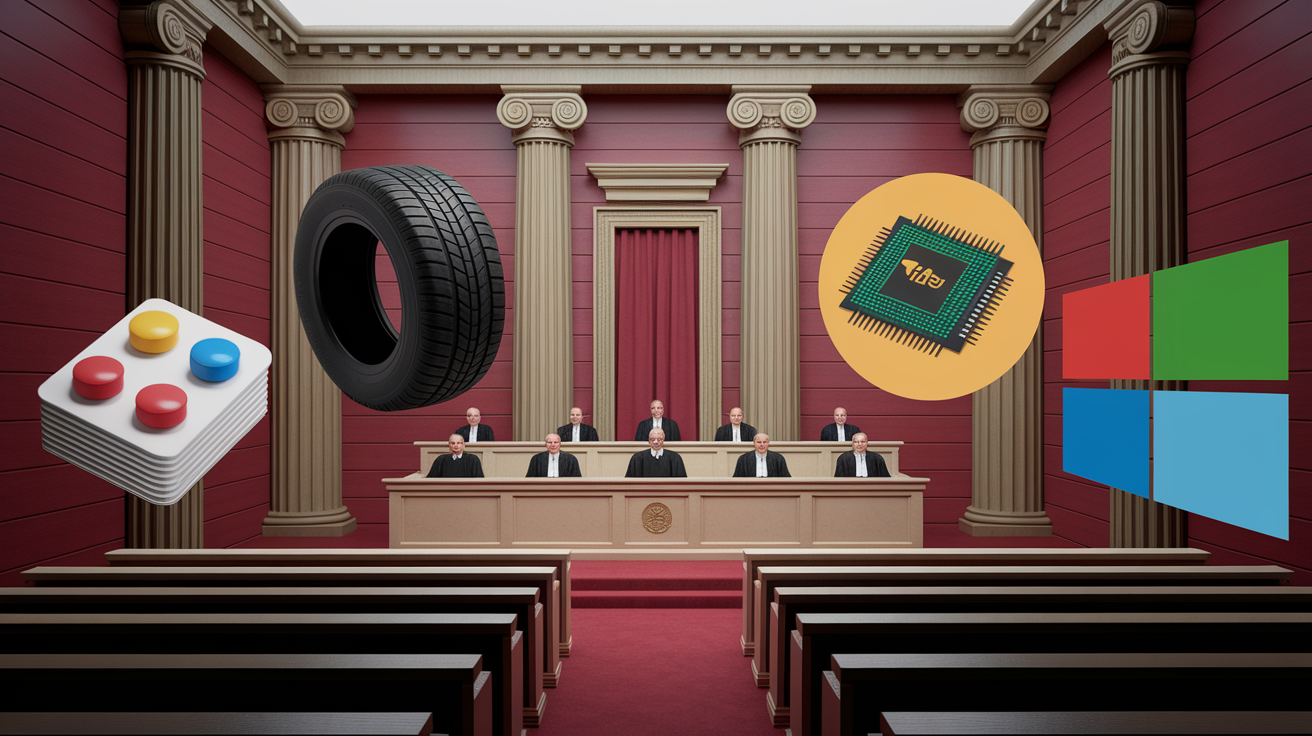
In Hoffmann‑La Roche, the European Court of Justice laid down basic principles on dominance and loyalty rebates. The court said even lawfully earned market power can’t be abused to shut out competition. Hoffmann‑La Roche’s fidelity rebates (discounts tied to customers buying all or most of what they needed exclusively from the dominant supplier) were abusive because they locked customers in with no efficiency reason and made it harder for competitors to win business.
Michelin clarified the rules for quantity and loyalty rebate schemes. The court ruled that rebates tied to individualized purchase targets can work like outright exclusivity clauses. The abuse was in how the rebates were structured and the lack of clear, objective criteria, which made it hard for customers to judge the real economic benefit and for rivals to compete. Michelin reinforced that dominant firms have a “special responsibility” not to mess up genuine competition.
In Intel, the court tackled exclusivity payments and conditional rebates. Intel had paid computer makers to use its chips exclusively or to delay or cancel launches featuring rival chips. The General Court first said you needed detailed effects analysis, but the Court of Justice held that when a rebate or payment is clearly capable of restricting competition (because it’s tied to exclusivity or something similar), the Commission can presume anticompetitive effects without proving actual foreclosure in every case, unless the firm can show the conduct wasn’t capable of restricting competition.
The Google Shopping case showed self-preferencing by a dominant platform. The Commission found Google abused its dominance in general internet search by systematically giving its own comparison shopping service better placement in search results than rival services, which were subject to generic ranking algorithms that could bury them. The conduct funneled traffic to Google’s own service and cut rivals’ visibility, hurting competition in the separate comparison shopping market. The Commission hit Google with a €2.42 billion fine.
Microsoft’s tying of Windows Media Player to Windows led to a major ban and ongoing compliance monitoring. The Commission ruled that bundling the media player with the dominant operating system shut out competition in the media player market by cutting rivals off from the distribution channel that mattered most: pre-installation on new PCs. Microsoft had to offer a version of Windows without the player and hand over interoperability info to rival server software developers. The case proved even “free” bundling of a secondary product can be abusive when it uses dominance to muscle into adjacent markets.
Penalties and Remedies for Abuse
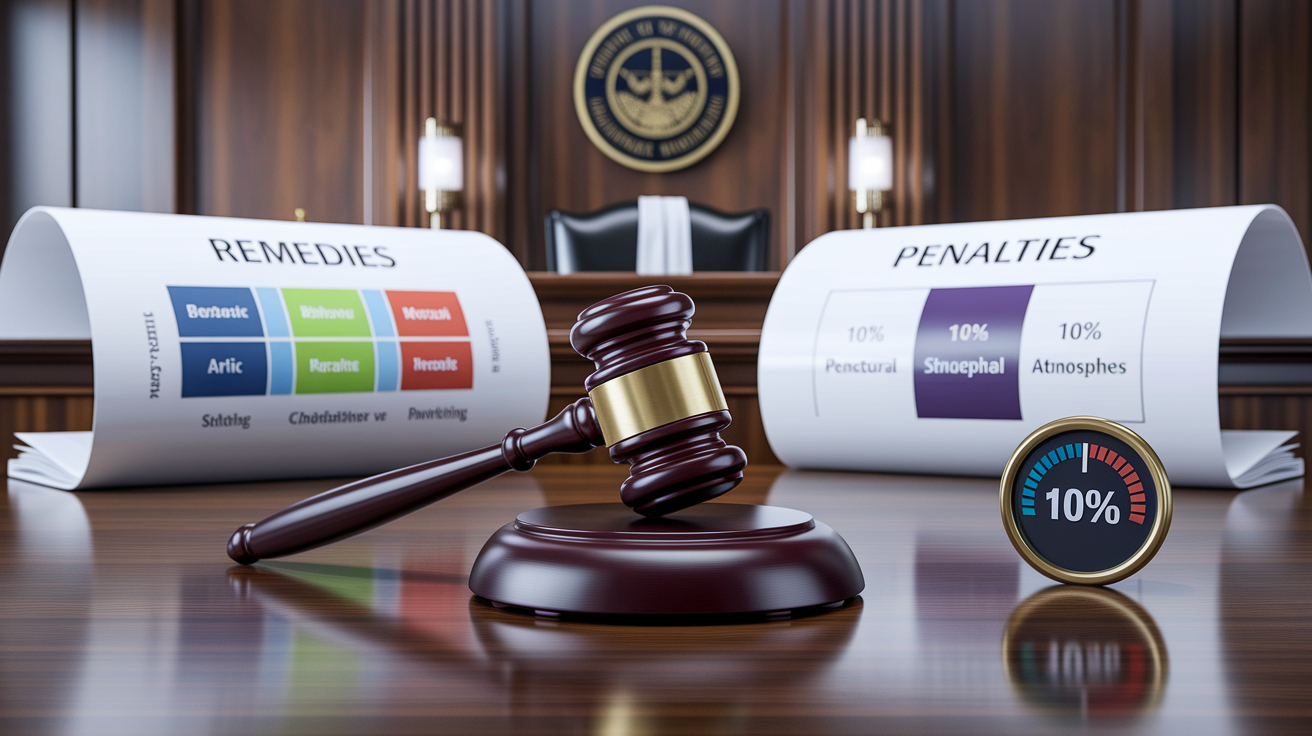
The European Commission can hit firms with big fines for breaking Article 102 TFEU. Fines max out at 10% of the company’s total worldwide turnover in the year before the decision, calculated at group level. The Commission’s fining guidelines look at how serious the abuse was and how long it lasted. Serious abuses with big market impact and long duration get higher fines. Things that make it worse, like repeat violations or blocking the investigation, can pump up the penalty. Things that make it less bad, like passive participation or cooperation, can bring it down.
Beyond fines, the Commission can impose remedies to stop the violation and get competition back on track. Behavioural remedies make the dominant firm change specific practices, like stopping exclusive deals, supplying competitors fairly, or unbundling products. Structural remedies, like selling off assets or businesses, are available but only used when behavioural fixes won’t work or aren’t practical. In reality, behavioural remedies are way more common.
Firms can also offer commitments to address the Commission’s concerns without a formal finding of wrongdoing. If the Commission accepts binding commitments, it closes the investigation and watches for compliance. Breaking commitments can bring financial penalties. Private enforcement adds another layer. Victims of abuse can sue for damages in national courts across the EU, and Commission decisions can be used as evidence in those cases.
Compliance Guidance for Companies

Firms that are dominant or might be should set up internal systems to spot and manage Article 102 risk. A compliance program starts with clear policies defining what’s off limits and laying out approval processes for business decisions that could raise competition issues. Training for commercial, legal, and senior management teams makes sure employees get the “special responsibility” of dominant firms and can recognize red flags like exclusivity clauses, tying, loyalty rebates, margin squeeze risks, or refusals to supply.
Regular audits and risk checks help catch dodgy practices before they trigger enforcement. Dominant firms should document the business reason for pricing, rebate structures, bundling, and supply decisions, keeping real-time evidence that shows pro-competitive reasons and consumer benefits. This documentation is critical if you need to defend your conduct later.
Practical steps:
- Run periodic internal audits of commercial agreements, pricing algorithms, and supply policies to screen for exclusionary or exploitative stuff.
- Set up cross-functional review committees to vet high-risk decisions like new rebate schemes, refusals to supply, or product integration plans.
- Keep detailed records of cost benchmarks, efficiency reasons, and market analyses backing your pricing and commercial strategies.
- Watch customer complaints, rival pushback, and market share data to catch early warning signs of foreclosure or market power abuse.
- Bring in outside competition lawyers for legal opinions on complex arrangements, especially in digital, multi-sided, or newly merged markets where dominance tests and abuse theories are still evolving.
Recent Developments and Emerging Trends

Article 102 TFEU enforcement is pushing into digital markets, where network effects, data advantages, and platform ecosystems create unique dominance patterns. Big digital platforms can hit and lock in dominance fast through user lock-in, control over critical interfaces, and special access to huge datasets. The Commission has opened formal investigations into algorithmic self-preferencing, using data from business users, and tying digital services. These cases test old abuse theories in settings where multi-sided platforms, zero-price services, and real-time personalization make market definition and effects analysis messier.
The Digital Markets Act (DMA), which started applying in 2023, brings ex-ante regulation for the biggest digital platforms, called gatekeepers. The DMA sets specific obligations like interoperability, data portability, and bans on self-preferencing, without needing proof of dominance or abuse case by case. The DMA works separately from Article 102, but it fills in gaps by setting baseline conduct rules and cutting the need for long investigations for the most systemic platforms. Article 102 still fully applies, including to conduct outside the DMA’s scope and to firms below gatekeeper thresholds.
Final Words
We covered Article 102 TFEU — what it bans, how dominance is measured, common exploitative and exclusionary abuses, enforcement steps, landmark cases, penalties, and practical compliance actions.
If you run or advise firms, prioritize market assessments, internal audits, clear behavioural policies, and staff training. Also monitor the Digital Markets Act and ongoing investigations.
Stay alert to cases about abuse of dominant position eu, apply the guidance here, and you’ll reduce legal risk while keeping your business competitive and ready for change.
FAQ
Q: What does Article 102 TFEU prohibit?
A: Article 102 TFEU prohibits undertakings from abusing a dominant position when that conduct may affect trade between EU Member States, aiming to keep competition fair and undistorted.
Q: Who can be held liable under Article 102 TFEU?
A: Article 102 TFEU applies to undertakings—companies or groups carrying out economic activity—that hold a dominant market position and whose conduct can affect trade between Member States.
Q: How does the EU determine dominance under Article 102?
A: The EU determines dominance by defining the relevant market, assessing market share (often above 40% signals dominance), and weighing barriers to entry, buyer power, and control over supply or distribution.
Q: What are common forms of abuse under Article 102?
A: Common forms of abuse include predatory pricing (below-cost sales), tying, refusal to supply, excessive pricing, loyalty rebates, and margin squeeze, all aimed at harming rivals or consumers.
Q: How is Article 102 enforced and who investigates abuses?
A: Article 102 is enforced by the European Commission and national competition authorities, which can investigate, request information, carry out dawn raids, and issue binding decisions and remedies.
Q: What penalties and remedies can authorities impose for Article 102 breaches?
A: Authorities can impose fines up to 10% of worldwide turnover and order behavioural remedies (pricing or access changes) or structural remedies (divestitures) to restore competitive conditions.
Q: What practical steps should companies take to comply with Article 102?
A: Companies should run regular antitrust audits, train commercial teams, monitor pricing and exclusivity terms, document decision-making, and seek legal advice to reduce the risk of abuse findings.
Q: How does the Digital Markets Act affect Article 102 enforcement?
A: The Digital Markets Act introduces ex‑ante rules for very large online platforms, complementing Article 102 by preventing certain gatekeeper practices before they cause widespread competitive harm.
Q: Which landmark cases shaped Article 102 legal principles?
A: Key cases include Hoffmann‑La Roche (exclusive dealing), Michelin (pricing), Intel (rebates), Microsoft (tying/foreclosure), and Google Shopping (search bias), each refining tests for dominance and abuse.